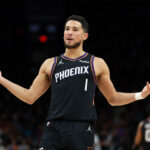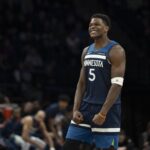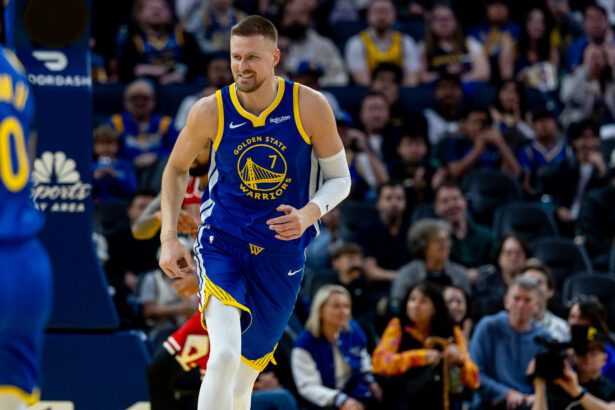
On Monday, Shams Charania reported that the NBA’s Board of Governors is set to vote next week, on March 24-25, on whether to formally explore expansion with two specific markets in mind: Las Vegas and Seattle.
That does not mean the league is adding teams immediately, but it does mean expansion has moved from long-term speculation to a real process with a timeline. According to ESPN, the target for those two franchises to begin play is the 2028-29 season. After years of vague talk, yesterday felt like the clearest sign yet that Seattle is finally on track to get basketball back and that Las Vegas is next in line for a full-time NBA franchise.
That is what makes this exercise worth doing now. If expansion is truly coming, front offices around the league are already thinking through the painful part of the process: who stays protected and who gets exposed.
Spotrac’s expansion draft framework lays out the key rules clearly.
– Existing teams are allowed to protect up to eight (8) players
– Players eligible to be protected are players who are not on expiring contracts and Restricted Free Agents
– Teams must expose at least one (1) player
– Teams may not lose more than one (1) player in an expansion draft
So today, we are going team by team and projecting the eight players each franchise would likely protect if the expansion draft were held right now.
Atlanta Hawks
Jalen Johnson
Onyeka Okongwu
Jonathan Kuminga
Nickeil Alexander-Walker
Dyson Daniels
Zaccharie Risacher
Corey Kispert
Asa Newell
This eight-man group is pretty easy to justify for the Hawks. Jalen Johnson, Onyeka Okongwu, Jonathan Kuminga, Dyson Daniels, Zaccharie Risacher, and Asa Newell are the core upside bets, while Nickeil Alexander-Walker and Corey Kispert make sense as proven rotation pieces who still fit the age curve better than the older guards.
CJ McCollum is the obvious notable omission, but under the expansion draft framework, expiring-contract players are not eligible to be protected, and he is heading into unrestricted free agency after 2025-26.
Buddy Hield and Gabe Vincent are more debatable, but the logic is still clean. Hield is 33, Vincent is 29, and both project more as useful short-term depth than long-term building blocks.
By contrast, Daniels is 23, Risacher is 20, and Newell is 20, which is exactly the kind of controllable talent expansion protection should prioritize.
Boston Celtics
Jayson Tatum
Jaylen Brown
Derrick White
Payton Pritchard
Sam Hauser
Neemias Queta
Hugo Gonzalez
Baylor Scheierman
The Celtics’ first four are easy: Jayson Tatum, Jaylen Brown, Derrick White, and Payton Pritchard are clear locks. After that, Sam Hauser feels too valuable to expose because every contender wants size and shooting on a movable contract. The last three spots are the real debate, but Neemias Queta, Hugo Gonzalez, and Baylor Scheierman make the most sense if they are protecting both present value and affordable upside.
The big omissions would be Nikola Vucevic, Jordan Walsh, Luka Garza, and Max Shulga. Vucevic is still useful, but at 35, he is not the kind of long-term piece teams usually spend a protection slot on, plus he is expiring. Walsh has upside, but Scheierman looks closer to helping now, while Queta gives the Celtics playable size at a thin position.
Brooklyn Nets
Michael Porter Jr.
Nic Claxton
Egor Demin
Nolan Traore
Noah Clowney
Drake Powell
Ben Saraf
Danny Wolf
This one is mostly about the timeline for the Nets. Nic Claxton and Michael Porter Jr. are the proven NBA pieces, while Egor Demin, Nolan Traore, Noah Clowney, Drake Powell, Ben Saraf, and Danny Wolf are the best long-term bets on the roster. That group is already sitting in prominent roles, which matters for a team still building more than chasing short-term wins.
The toughest cuts would be Day’Ron Sharpe, Ziaire Williams, Terance Mann, Jalen Wilson, and Josh Minott. Sharpe has a case, but bigs are easier to replace than playmaking wings and young guards. Mann is still useful, yet at 29, he does not fit the same developmental window as the younger group. Williams, Wilson, and Minott all have rotation value, but none of them would be harder to lose than one of the six younger upside swings above.
Charlotte Hornets
LaMelo Ball
Brandon Miller
Miles Bridges
Kon Knueppel
Tidjane Salaun
Liam McNeeley
Moussa Diabate
Ryan Kalkbrenner
The Hornets’ first five feel obvious. LaMelo Ball, Brandon Miller, Kon Knueppel, Miles Bridges, and Moussa Diabate are all central to the current rotation, with that group starting together recently, while Knueppel has had a huge rookie year.
From there, expansion protection should lean toward upside and team control, which is why Tidjane Salaun, Liam McNeeley, and Ryan Kalkbrenner get the last three spots. Salaun and McNeeley are recent first-round investments, and Kalkbrenner is a cheap young center worth keeping in a league that is always hunting for size.
That leaves Coby White, Josh Green, Tre Mann, Grant Williams, and Sion James on the outside. Green and Mann are useful, but neither feels essential enough to bump one of the younger upside bets. Williams is more of a veteran depth piece at this stage, and James is the kind of player a team can risk exposing if it means holding onto bigger long-term assets.
Chicago Bulls
Josh Giddey
Jaden Ivey
Matas Buzelis
Noa Essengue
Rob Dillingham
Isaac Okoro
Patrick Williams
Leonard Miller
This protection list is mostly about control and upside. Josh Giddey, Patrick Williams, Isaac Okoro, Rob Dillingham, Matas Buzelis, and Noa Essengue are all under contract beyond this season, while Jaden Ivey is a restricted free agent, and Leonard Miller is on a club option for 2026-27, which makes all eight clean protection choices under the expansion-draft rules.
The biggest names left off are Anfernee Simons, Collin Sexton, Zach Collins, and Nick Richards, but that is because all four are tracking toward unrestricted free agency in the 2026 offseason. They are useful players, but they are not the kind of pieces a team can protect here.
That leaves the real debate at the back end, where Miller gets the nod over steadier veterans like Tre Jones or Jalen Smith. In this format, younger upside usually wins, and Miller simply makes more sense as a long-term stash.
Cleveland Cavaliers
Donovan Mitchell
Evan Mobley
Jarrett Allen
James Harden
Max Strus
Sam Merrill
Jaylon Tyson
Tyrese Proctor
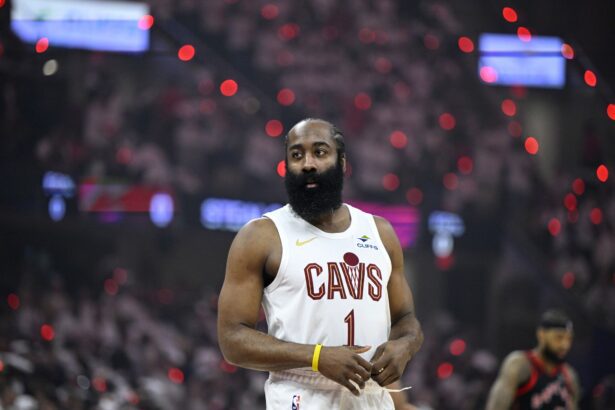
The Cavaliers have four easy locks in Donovan Mitchell, Evan Mobley, Jarrett Allen, and James Harden, then the rest of the list comes down to team control, age, and role value. Max Strus, Sam Merrill, Jaylon Tyson, and Tyrese Proctor are all under contract beyond this season, which makes them clean protection choices under the expansion-draft rules. Tyson and Proctor are especially worth keeping because they are still young enough to matter beyond the current window, not just fill minutes right now.
The biggest omission is Dennis Schroder, but at 33, he is easier to expose than a younger guard like Proctor or a developmental wing like Tyson. Craig Porter Jr. and Nae’Qwan Tomlin are also under control for next season, but neither would be tougher to lose than Strus or Merrill, who are already proven rotation pieces. Keon Ellis, Dean Wade, Larry Nance Jr., and Thomas Bryant are even simpler cuts because they are not on the 2026-27 active roster outlook.
Dallas Mavericks
Kyrie Irving
P.J. Washington
Daniel Gafford
Cooper Flagg
Max Christie
Dereck Lively II
Ryan Nembhard
Naji Marshall
This one is mostly straightforward for the Mavericks. Kyrie Irving, P.J. Washington, Daniel Gafford, Cooper Flagg, Max Christie, Dereck Lively II, and Naji Marshall are all easy protection calls because they are either core pieces or clear rotation players under team control beyond this season. Ryan Nembhard gets the final spot because he already looks more trustworthy as a real guard option, and that matters in a format where teams only get eight slots.
The main names left exposed would be Klay Thompson, Khris Middleton, who is on an expiring deal, plus Caleb Martin, AJ Johnson, Tyler Smith, and Moussa Cisse. Martin has a case, and Johnson still has upside, but the safer bet is keeping the rotation-ready guard instead of the longer-term project.
Denver Nuggets
Nikola Jokic
Jamal Murray
Aaron Gordon
Cameron Johnson
Christian Braun
Peyton Watson
DaRon Holmes II
Julian Strawther
This group makes the most sense for the Nuggets. Nikola Jokic, Jamal Murray, Aaron Gordon, Cameron Johnson, and Christian Braun are obvious keeps because they are either core starters or major long-term salary commitments. Peyton Watson also has to be protected since restricted free agents are eligible in this format, while DaRon Holmes II and Julian Strawther are easy developmental bets worth keeping over lower-ceiling veterans.
The main names left exposed would be Jonas Valanciunas, Zeke Nnaji, Jalen Pickett, Spencer Jones, Tim Hardaway Jr., Bruce Brown, and Tyus Jones. Valanciunas and Nnaji are real NBA players, but neither should bump Watson, Holmes, or Strawther. Pickett has a case, but a young wing or combo forward is simply harder to replace than a reserve guard.
Detroit Pistons
Cade Cunningham
Ausar Thompson
Jalen Duren
Ron Holland II
Isaiah Stewart
Duncan Robinson
Marcus Sasser
Bobi Klintman
This protection group keeps the core intact and uses the last spots on the best mix of present value and long-term control. Cade Cunningham, Ausar Thompson, Ron Holland II, Isaiah Stewart, Marcus Sasser, Bobi Klintman, and Duncan Robinson are all on the 2026-27 cap sheet, while Jalen Duren is eligible to be protected as a restricted free agent. That makes these eight the cleanest choices under the expansion rules. Robinson and Stewart are the proven rotation pieces, while Holland, Sasser, and Klintman are the younger bets worth keeping.
The main names left exposed would be Tobias Harris and Kevin Huerter because they are headed toward free agency, plus Caris LeVert, Paul Reed, Chaz Lanier, and Daniss Jenkins from the controllable group. LeVert and Reed can help, but the smarter play is protecting younger pieces with more runway instead of older role players.
Golden State Warriors
Stephen Curry
Jimmy Butler
Draymond Green
Moses Moody
Brandin Podziemski
Gui Santos
Will Richard
Quinten Post
This one is mostly about balancing the aging core with the younger, controllable pieces. Stephen Curry, Jimmy Butler, and Draymond Green are obvious protections, while Moses Moody and Brandin Podziemski are already part of the real rotation and still under team control.
Gui Santos and Will Richard also make sense because both are cheap wings with developmental value, and Quinten Post gets the last spot because restricted free agents are eligible in this format, and size is always worth protecting.
The main names left exposed would be Kristaps Porzingis, Al Horford, De’Anthony Melton, Gary Payton II, Pat Spencer, and Seth Curry. Porzingis and Payton II are not clean long-term keeps here, while Horford is simply too old to justify one of only eight slots. Melton and Spencer have cases, but Post’s age, size, and team control make him the better final protection bet.
Houston Rockets
Kevin Durant
Alperen Sengun
Amen Thompson
Reed Sheppard
Jabari Smith Jr.
Tari Eason
Fred VanVleet
Dorian Finney-Smith
This is one of the toughest calls in the league because the Rockets already have nine players on the 2026-27 active roster, and Tari Eason is also eligible to be protected as a restricted free agent. That means one real piece has to be left exposed.
Kevin Durant, Alperen Sengun, Amen Thompson, Reed Sheppard, and Jabari Smith Jr. are obvious keeps, while Eason has to make it because he is younger and more valuable long term than the veteran bigs. Fred VanVleet and Dorian Finney-Smith get the final two spots because both are still important two-way rotation players on real contracts beyond this season.
The main names left exposed would be Steven Adams, Clint Capela, Aaron Holiday, Josh Okogie, Jae’Sean Tate, and Jeff Green. Adams has a strong case, but with only eight spots, the smarter move is protecting more perimeter value and younger upside instead of a 33-year-old center. Capela is useful, too, but he is easier to replace than Eason.
Indiana Pacers
Tyrese Haliburton
Pascal Siakam
Ivica Zubac
Andrew Nembhard
Obi Toppin
Aaron Nesmith
Jarace Walker
Ben Sheppard
This protection list is mostly about keeping the top of the Pacers rotation intact. Tyrese Haliburton, Pascal Siakam, Ivica Zubac, Andrew Nembhard, Obi Toppin, and Aaron Nesmith are obvious keeps because they are proven core pieces under contract beyond this season.
Jarace Walker also has to be in there as a young forward with real upside, and Ben Sheppard gets the final spot because wings with size, shooting and team control are hard to give away in this format.
The main names left exposed would be T.J. McConnell, Johnny Furphy, Jay Huff, Quenton Jackson, Kam Jones, and Micah Potter. McConnell is still useful, and Furphy has a real case on upside alone, but the safer move is keeping the bigger rotation pieces and the more established young wing.
Los Angeles Clippers
Kawhi Leonard
Darius Garland
Bennedict Mathurin
Derrick Jones Jr.
Isaiah Jackson
Yanic Konan Niederhauser
Cameron Christie
Jordan Miller
The Clippers should start with Kawhi Leonard and Darius Garland, then keep the younger pieces with real medium-term value. Bennedict Mathurin is an easy call because restricted free agents can be protected in this format, while Derrick Jones Jr. and Isaiah Jackson are both on the 2026-27 books.
Yanic Konan Niederhauser, Cameron Christie, and Jordan Miller round out the list because all three give the Clippers controllable youth, which matters more here than squeezing one more year out of an older scorer.
That means names like Bogdan Bogdanovic, Bradley Beal, Brook Lopez, Nicolas Batum, Kris Dunn, and Kobe Sanders are the likely exposures. Dunn, Bogdanovic, and Beal can still help, but the smarter play is protecting younger, controllable pieces instead of older veterans who are closer to the back end of their value curve.
Los Angeles Lakers
Luka Doncic
Austin Reaves
Jarred Vanderbilt
Deandre Ayton
Marcus Smart
Dalton Knecht
Jake LaRavia
Adou Thiero
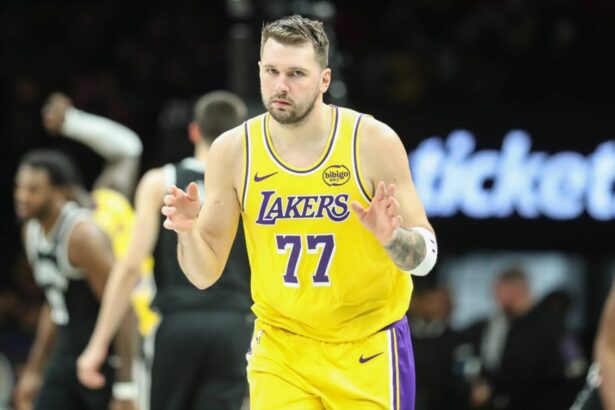
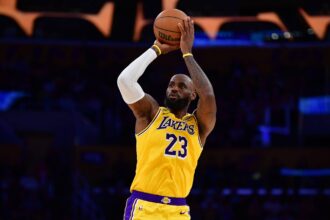
The Lakers have a pretty clean protection list once the pending free agents are removed. Luka Doncic, Austin Reaves, Jarred Vanderbilt, Deandre Ayton, Marcus Smart, and Dalton Knecht are easy calls because they are all either core pieces or real rotation players under team control beyond this season.
Jake LaRavia earns a spot because he is already in the mix on the wing, and Adou Thiero gets the final slot as the younger upside swing worth keeping.
That leaves LeBron James, Rui Hachimura, Maxi Kleber, and Luke Kennard outside the protected group because they are tracking toward free agency, while Bronny James and Kobe Bufkin simply get squeezed out by the numbers. Bronny and Bufkin have some developmental appeal, but neither would be tougher to lose than LaRavia’s current value or Thiero’s long-term upside.
Memphis Grizzlies
Ja Morant
Santi Aldama
Zach Edey
Taylor Hendricks
Cedric Coward
Walter Clayton Jr.
G.G. Jackson
Jaylen Wells
The Grizzlies should use this list to protect their best mix of star value, youth, and long-term control. Ja Morant and Santi Aldama are the obvious headliners, while Zach Edey, Taylor Hendricks, Cedric Coward, Walter Clayton Jr., G.G. Jackson, and Jaylen Wells all fit the kind of timeline a team should prioritize in an expansion draft. Hendricks and Clayton arrived in the Jaren Jackson Jr. trade, which makes them even harder to leave exposed.
That means the main names left unprotected would be Kentavious Caldwell-Pope, Ty Jerome, Brandon Clarke, Scotty Pippen Jr., Cam Spencer, Olivier-Maxence Prosper, and Taj Gibson. Caldwell-Pope, Jerome, and Clarke can still help, but this is where age and upside matter, and the Grizzlies are better off protecting younger bets. Pippen is the toughest cut, but there is only so much room once the rookie-scale players are accounted for.
Miami Heat
Bam Adebayo
Tyler Herro
Andrew Wiggins
Nikola Jovic
Kel’el Ware
Jaime Jaquez Jr.
Kasparas Jakucionis
Pelle Larsson
The Heat should use these eight spots on the clearest mix of core talent, youth, and team control. Bam Adebayo, Tyler Herro, and Andrew Wiggins are the obvious veterans to keep, while Nikola Jovic, Kel’el Ware, Jaime Jaquez Jr., Kasparas Jakucionis, and Pelle Larsson are the younger pieces who still fit the longer timeline.
That would leave Davion Mitchell, Terry Rozier, Norman Powell, Simone Fontecchio, Dru Smith, and Keshad Johnson as the main names exposed. Mitchell has a case, but the safer expansion-draft play is keeping Larsson’s wing size and Jakucionis’ upside rather than using one of only eight spots on an older small guard. Powell and Rozier are bigger names, but both are tracking toward free agency in 2026 anyway, which makes this decision easier.
Milwaukee Bucks
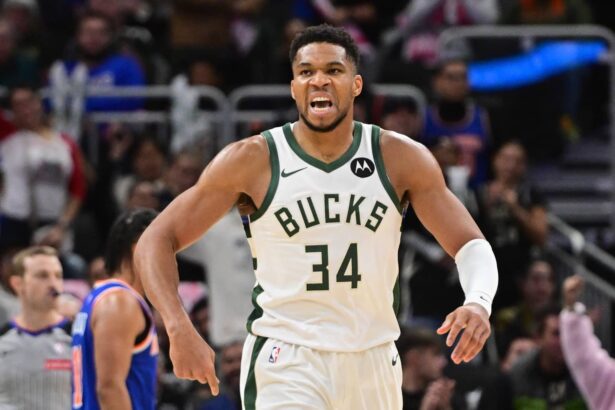
Giannis Antetokounmpo
Myles Turner
Kyle Kuzma
Bobby Portis
AJ Green
Ryan Rollins
Kevin Porter Jr.
Ousmane Dieng
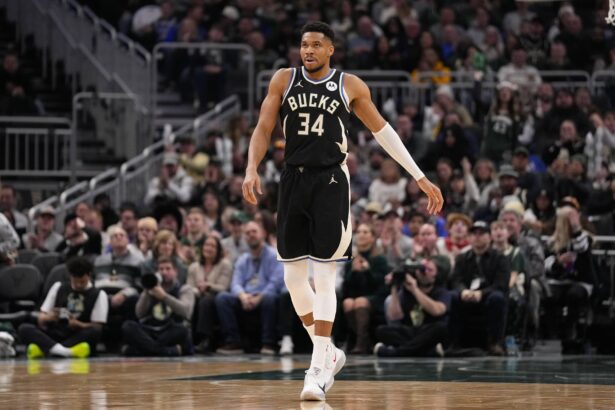
The Bucks have four obvious locks in Giannis Antetokounmpo, Myles Turner, Kyle Kuzma, and Bobby Portis, and AJ Green belongs there too after landing on the 2026-27 cap sheet as a signed long-term piece. Ryan Rollins also feels too valuable to risk after averaging 16.8 points and 5.6 assists this season, while Ousmane Dieng is exactly the kind of 23-year-old restricted free agent wing you keep in this format.
Kevin Porter Jr. gets the final spot over Andre Jackson Jr. and Gary Trent Jr. because he offers more shot creation and is already on the 2026-27 active roster. That would leave Trent Jr., Taurean Prince, Gary Harris, Jericho Sims, Jackson Jr., and Cam Thomas exposed, with Thomas an easier omission because he is an unrestricted free agent after his Nets’ buyout at the deadline.
Minnesota Timberwolves
Anthony Edwards
Rudy Gobert
Julius Randle
Jaden McDaniels
Naz Reid
Donte DiVincenzo
Joan Beringer
Terrence Shannon Jr.
The Wolves have six obvious protections in Anthony Edwards, Rudy Gobert, Julius Randle, Jaden McDaniels, Naz Reid and Donte DiVincenzo. All six are under contract beyond this season, and none is getting left exposed in this format.
Joan Beringer also feels like an easy keep because recent first-round centers on rookie-scale deals are exactly the kind of assets teams do not give away. Terrence Shannon Jr. gets the last spot because he is already part of the wing pipeline and is under team control through 2027-28.
That leaves Jaylen Clark, Julian Phillips, Ayo Dosunmu, Bones Hyland, and the veteran free agents like Mike Conley, Kyle Anderson, and Joe Ingles on the outside. Clark is the toughest omission because restricted free agents can be protected, but Shannon’s ceiling and Phillips’ size are easier bets than using one of only eight slots on another backcourt defender. Dosunmu is even simpler to leave unprotected because he is sitting on the 2026 free agency list rather than a guaranteed 2026-27 salary.
New Orleans Pelicans
Zion Williamson
Dejounte Murray
Trey Murphy III
Herb Jones
Jeremiah Fears
Jordan Hawkins
Derik Queen
Yves Missi
This is the cleanest eight-man group. Zion Williamson, Dejounte Murray, Trey Murphy III, and Herb Jones are the obvious core keeps, while Jeremiah Fears, Jordan Hawkins, Derik Queen, and Yves Missi give this roster its best mix of youth, upside, and long-term control.
The biggest name left exposed would be Jordan Poole, and that is where the protection math gets interesting. Poole is still productive and under contract, but if only eight players can be saved, it makes more sense to keep the younger core pieces and the two recent big-man investments. Kevon Looney, Saddiq Bey, Karlo Matkovic, Micah Peavy, and Bryce McGowens would also be outside the protected group, with Looney and Bey easier to risk than Hawkins or Missi.
New York Knicks
Jalen Brunson
Karl-Anthony Towns
OG Anunoby
Mikal Bridges
Josh Hart
Jose Alvarado
Miles McBride
Tyler Kolek
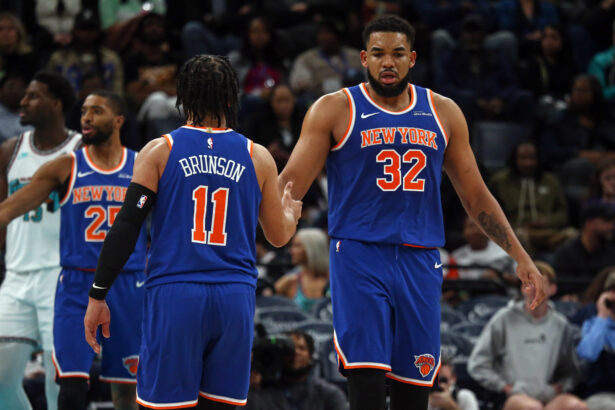
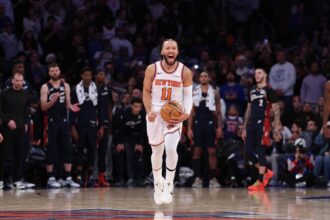
This protection group makes a lot more sense. Jalen Brunson, Karl-Anthony Towns, OG Anunoby, Mikal Bridges, and Josh Hart are the obvious locks, while Jose Alvarado and Miles McBride are easy keeps because both are already part of the backcourt rotation and remain under team control beyond this season.
Tyler Kolek should get the last spot over Ariel Hukporti because he is already signed through 2026-27, with a team option for 2027-28, while Hukporti is only sitting on a qualifying offer path as a restricted free agent in 2026.
The main names left exposed would be Ariel Hukporti, Pacome Dadiet, Mitchell Robinson, Jordan Clarkson, Jeremy Sochan, Mohamed Diawara, and Landry Shamet. Diawara has a case because he’s been electric lately, but Kolek is the better asset right now simply because the contract control is cleaner and the guard depth is more useful than another raw wing in this format.
Oklahoma City Thunder
Shai Gilgeous-Alexander
Chet Holmgren
Jalen Williams
Isaiah Hartenstein
Alex Caruso
Cason Wallace
Jared McCain
Ajay Mitchell
This protection list makes more sense because it keeps the Thunder championship core intact while using the last two spots on young guards with real long-term value. Shai Gilgeous-Alexander, Chet Holmgren, Jalen Williams, Isaiah Hartenstein, Alex Caruso, and Cason Wallace are obvious locks. Jared McCain and Ajay Mitchell then get the final two spots over some more established names because this format is not just about who is better today, but who gives you the best value moving forward.
That makes Luguentz Dort the real surprise omission, but with only eight spots, a deep team was always going to lose one good player from the pool. Isaiah Joe, Aaron Wiggins, Jaylin Williams, Kenrich Williams, Nikola Topic, and Thomas Sorber would also be left exposed, which says more about the roster’s depth than anything else.
Orlando Magic
Paolo Banchero
Franz Wagner
Desmond Bane
Jalen Suggs
Wendell Carter Jr.
Anthony Black
Tristan Da Silva
Jase Richardson
The Magic have six easy locks in Paolo Banchero, Franz Wagner, Desmond Bane, Jalen Suggs, Wendell Carter Jr., and Anthony Black. That is the core, as Tristan Da Silva and Jase Richardson get the last two spots because both are young, controllable wings on rookie deals, which is exactly the type of value you protect in an expansion draft.
That means Jonathan Isaac, Goga Bitadze, and Noah Penda are the main names left exposed from the guaranteed group. Isaac and Bitadze are useful, but the smarter play is keeping younger perimeter pieces with more long-term flexibility.
Penda has a case, but Da Silva is already further along, and Richardson’s first-round guard upside is harder to risk losing. Moritz Wagner, Jett Howard, and the veteran minimum guards are simpler omissions because they sit in the cap-hold group rather than the active 2026-27 roster.
Philadelphia 76ers
Tyrese Maxey
Joel Embiid
Paul George
VJ Edgecombe
Justin Edwards
Adem Bona
Jabari Walker
Johni Broome
The 76ers do not have a ton of difficult calls here. Tyrese Maxey, Joel Embiid, Paul George, and VJ Edgecombe are the obvious four (and I even struggled to protect George here), then the rest of the list should lean toward youth and team control. Justin Edwards, Adem Bona, Jabari Walker, and Johni Broome are all on the active roster beyond this season, which makes them cleaner protection bets than the older depth pieces.
That leaves Dominick Barlow and Trendon Watford as the main names exposed from the guaranteed group. Both are reasonable NBA rotation fliers, but neither should jump one of the younger players above. This is one of those teams where the first six or seven names come quickly, and the only real argument is about which low-cost depth piece gets the final spot. Here, Quentin Grimes, Kelly Oubre, Andre Drummond, and Kyle Lowry are all ineligible as upcoming free agents.
Phoenix Suns
Devin Booker
Jalen Green
Dillon Brooks
Khaman Maluach
Ryan Dunn
Oso Ighodaro
Rasheer Fleming
Mark Williams
This is the right call for the Suns because it protects the obvious star, the high-upside young pieces, and the restricted free agent with real value. Devin Booker, Jalen Green, and Dillon Brooks are the clear veteran keeps, while Khaman Maluach, Ryan Dunn, Oso Ighodaro, and Rasheer Fleming are exactly the kind of young, controllable players a team should not risk losing in an expansion draft. Mark Williams also has to make it because restricted free agents are eligible to be protected, and a 24-year-old center with real upside is a better bet than older role players.
That leaves Grayson Allen, Royce O’Neale, and Jamaree Bouyea exposed, which is not nothing, but it is the price of only having eight slots. Allen and O’Neale can still help, yet both are older and easier to replace than the younger group above. Haywood Highsmith, Jordan Goodwin, Amir Coffey, and Collin Gillespie being ineligible makes the math even cleaner.
Portland Trail Blazers
Shaedon Sharpe
Toumani Camara
Scoot Henderson
Damian Lillard
Deni Avdija
Donovan Clingan
Yang Hansen
Vit Krejci
This protection list keeps the Blazers’ real foundation in place. Shaedon Sharpe, Toumani Camara, Scoot Henderson, Deni Avdija, and Donovan Clingan are the easy calls because they are younger core pieces already tied to the long-term build. Yang Hansen also makes sense as a developmental big worth keeping, while Damian Lillard gets protected because even at this stage, he still carries more value to this roster than most veterans in the pool. Vit Krejci gets the final spot over some younger fringe names because he looks more ready to help in a real rotation.
That leaves Jrue Holiday, Jerami Grant, Kris Murray, Sidy Cissoko, and Rayan Rupert exposed. Holiday and Grant are still useful players, but both are older and do not fit the same timeline as the younger core. Rupert being left out is the toughest call since he is still just 21, but the safer bet here is keeping the more proven two-way depth piece.
Sacramento Kings
De’Andre Hunter
Keegan Murray
Malik Monk
Devin Carter
Nique Clifford
Killian Hayes
Maxime Raynaud
Dylan Cardwell
This is a very youth-and-control-heavy protection list with the Kings running at the last spot in the West, and it tells you a lot about the rebuild this team would be headed toward in an expansion scenario. Keegan Murray is the obvious centerpiece, while Malik Monk and De’Andre Hunter give this group two proven rotation wings worth keeping. After that, the focus shifts hard toward younger, cheaper pieces, which is why Devin Carter, Nique Clifford, Killian Hayes, Maxime Raynaud, and Dylan Cardwell all make the cut. If a team only gets eight slots, protecting cost-controlled players with room to grow can make more sense than using those spots on older, expensive veterans.
That is why the big surprise names left exposed would be Zach LaVine, Domantas Sabonis, and DeMar DeRozan, along with the rest of the older core in Russell Westbrook, who is a free agent. Sabonis is still a high-level player, but this kind of setup means the Kings would rather preserve flexibility and younger depth than lock themselves into an aging, expensive group. It is a risky approach, but it’s the one the Kings need if they won’t trade their stars to kickstart a new retool.
San Antonio Spurs
De’Aaron Fox
Devin Vassell
Keldon Johnson
Victor Wembanyama
Dylan Harper
Luke Kornet
Stephon Castle
Carter Bryant
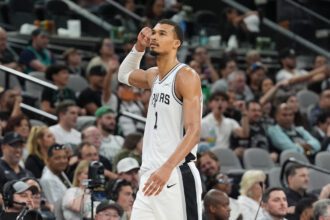
This one is very easy to defend for the Spurs. Victor Wembanyama is the franchise, De’Aaron Fox and Devin Vassell are clear backcourt building blocks, and Stephon Castle and Dylan Harper are exactly the kind of young guards no team is leaving exposed in an expansion draft.
Keldon Johnson also makes sense because he is still productive, still only 26, and on a movable contract. Luke Kornet gets in because reliable size under contract matters, while Carter Bryant is the kind of young forward you protect on upside alone.
That leaves Julian Champagnie as the toughest player exposed, but with only eight spots, somebody useful was always going to miss. He is a solid wing, just not more valuable than the names above. The veteran free agents like Harrison Barnes, Kelly Olynyk, Bismack Biyombo, Mason Plumlee, and Jordan McLaughlin being ineligible makes the math much easier, so this list mostly comes down to protecting the core, the two premium young guards, and the best long-term bets.
Toronto Raptors
Scottie Barnes
Brandon Ingram
R.J. Barrett
Gradey Dick
Collin Murray-Boyles
Ja’Kobe Walter
Trayce Jackson-Davis
Jamal Shead
This is a more realistic protection list because it keeps the top-end wing talent, then leans into younger, cheaper pieces with a longer runway. Scottie Barnes, Brandon Ingram, and R.J. Barrett are the obvious keeps, while Gradey Dick, Collin Murray-Boyles, Ja’Kobe Walter, Trayce Jackson-Davis, and Jamal Shead all make more sense than exposing recent investments for veterans with shakier long-term value.
Immanuel Quickley is the big omission, but the logic is not hard to see. His contract has been questioned publicly. Much of the discussion around him centers on whether the deal is already an overpay, and reports around the deadline said the front office had gauged his trade value. That makes him a lot easier to expose than a younger, cheaper guard.
Jakob Poeltl is the other notable name left off. He is still good, but he is 30, he was not going to hit the 65-game qualifier this season, and he missed time with a back injury before later popping up on the injury report again. In this format, that is enough to pick younger frontcourt depth instead.
Utah Jazz
Jaren Jackson Jr.
Lauri Markkanen
Ace Bailey
Keyonte George
Brice Sensabaugh
Kyle Filipowski
Isaiah Collier
Walker Kessler
This is the right eight for the Jazz because it protects the two established frontcourt anchors, the best young upside bets, and the restricted free agent with real value. Keyonte George, Jaren Jackson Jr., and Lauri Markkanen are obvious locks, while Ace Bailey, Brice Sensabaugh, Kyle Filipowski, and Isaiah Collier are all younger pieces the Jazz still need to develop. Walker Kessler also has to be protected because restricted free agents are eligible here, and a 24-year-old starting-caliber center is not something you leave exposed.
That leaves Cody Williams as the toughest omission, but he simply has not shown enough yet to bump one of the names above. John Konchar and Svi Mykhailiuk are easier to expose because they are older role players, not core pieces. Jusuf Nurkic and Kevin Love being ineligible makes the math cleaner, so this list really comes down to choosing upside and long-term control over safer veteran depth.
Washington Wizards
Anthony Davis
Trae Young
Alex Sarr
Bilal Coulibaly
Tre Johnson
Bub Carrington
Will Riley
Kyshawn George
This protection list is very easy to understand for the Wizards. Anthony Davis and Trae Young are the headline names, so there is no real debate there. After that, the front office is clearly choosing the youth timeline that can help them compete in the short term. Alex Sarr and Bilal Coulibaly are obvious pieces, while Tre Johnson, Bub Carrington, Will Riley, and Kyshawn George are the younger bets worth protecting because they still fit the age curve of the roster.
The toughest omissions are probably Cam Whitmore and Jaden Hardy, just because both are still young and have some scoring upside. Still, if only eight players can be saved, Tre Johnson, Carrington, Riley, and George simply make more sense as cleaner developmental investments.
D’Angelo Russell is an easier name to leave exposed because he is older and does not match the same timeline. Tristan Vukcevic, Justin Champagnie, and Jamir Watkins are even simpler cuts once the two stars and the six younger pieces are locked in.
This one basically comes down to a simple choice: keep the stars, then protect the youth.