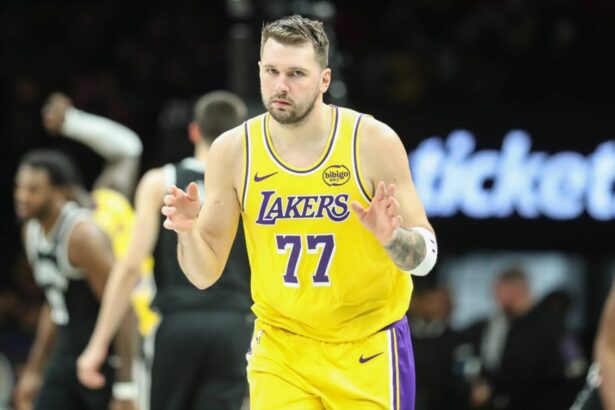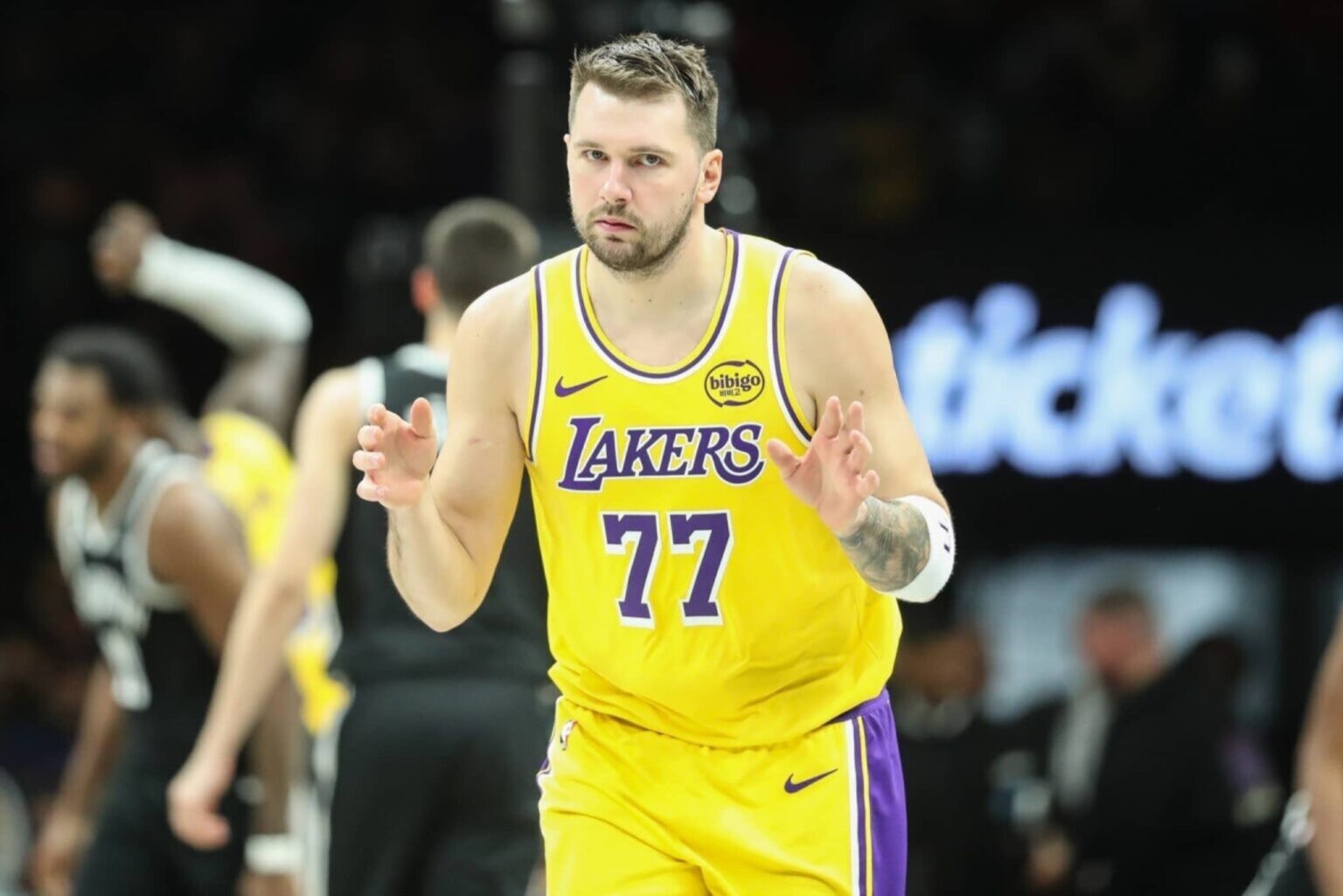
The Lakers need to be careful this offseason. They have Luka Doncic, so the basic idea of the roster is already set. Doncic is the first option, the main passer, the main scorer and the player who controls the half-court offense.
That means every trade has to start with one question: does this player make Doncic’s job easier?
The answer should be about shooting, defense, size, rim protection and fast decisions. The Lakers don’t need another player who wants the ball for 15 seconds. They don’t need another expensive guard who can be attacked on defense. They don’t need another name just because the name looks good.
Doncic led the NBA with 33.5 points per game and added 7.7 rebounds and 8.3 assists. That is already a full offensive system. The Lakers should build around that, not fight against it.
The other problem is the salary sheet. Austin Reaves can decline his $14.9 million player option and become an unrestricted free agent, as well as Deandre Ayton and Marcus Smart. LeBron James, Rui Hachimura, and Luke Kennard are also free agents, so they can’t be used as normal outgoing salary. If the Lakers include Hachimura or Kennard in a trade, it has to be through a sign-and-trade.
The Lakers should be aggressive, but they shouldn’t be desperate. These five trades would bring talent, but they would create too many problems around Doncic.
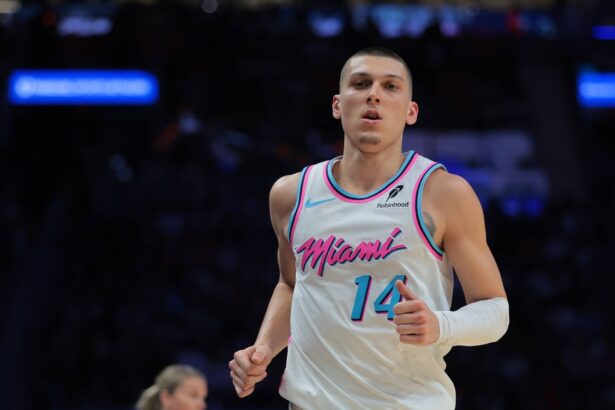
5. Julius Randle
Los Angeles Lakers Receive: Julius Randle
Minnesota Timberwolves Receive: Rui Hachimura, Jarred Vanderbilt, Dalton Knecht, 2031 first-round pick
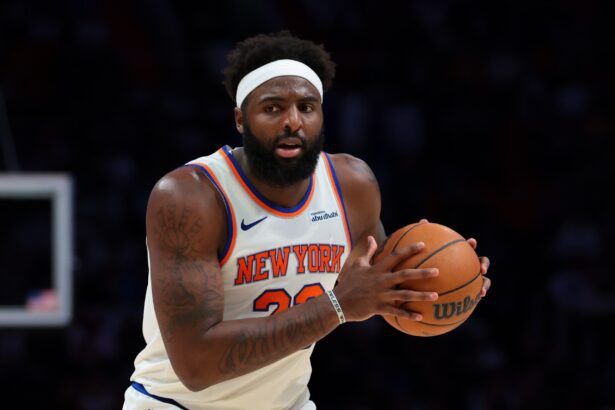
Julius Randle is still a good player. That part isn’t the issue.
Randle gave the Timberwolves 21.1 points, 6.7 rebounds and 5.0 assists in 79 games. He shot 48.1% from the field and had a 58.5% true shooting percentage. Those are strong numbers for a power forward who can score, pass, and create.
Randle needs touches. He likes to work from the middle of the floor, attack from the elbows and use his body to create space. That can be useful, but the Lakers already have Doncic for that type of control.
The playoff data is also a concern. Randle dropped to 16.0 points, 7.5 rebounds, and 2.8 assists in the postseason while shooting 39.0% from the field and 24.4% from three. His style can become harder when defenses shrink the floor and force him into tougher shots.
The three-point shooting is not enough for this roster. Randle shot 31.5% from three last season. Doncic needs shooting around him. If the Lakers also have a non-shooting center, adding another frontcourt player who isn’t a strong spacer makes the offense too heavy.
The defense doesn’t fix enough either. Randle has strength and size, but he isn’t a rim protector. He isn’t the type of wing defender who can guard the best perimeter players. If the Lakers move Vanderbilt and Hachimura in this deal, they lose forward depth and still don’t add the defensive piece they need most.
The cost also feels too high. Hachimura would need to agree to a sign-and-trade at about $17.0 million. The Timberwolves would become hard-capped at the first apron. The Lakers would also send Knecht and the 2031 first-round pick.
That is too much for a player who doesn’t solve the largest roster problems.
Randle is productive. He can help teams. But for the Lakers, this would be a trade for production more than fit. The Lakers need simpler players around Doncic. Randle would bring more usage, more salary and more frontcourt crowding.
They should avoid this one.
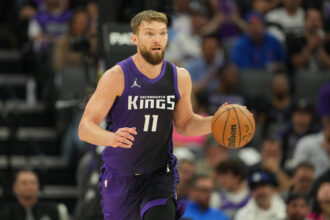
4. Zach LaVine
Los Angeles Lakers Receive: Zach LaVine
Sacramento Kings Receive: Rui Hachimura, Luke Kennard, Jarred Vanderbilt, Dalton Knecht, 2031 first-round pick
Zach LaVine would make sense only if basketball was played on one side of the floor.
LaVine can still score. He played 39 games for the Kings before season-ending right hand surgery and posted 19.2 points, 2.8 rebounds and 2.3 assists. He shot 47.9% from the field and 39.0% from three.
That shooting is useful. LaVine can hit catch-and-shoot threes, attack closeouts, and score quickly when the defense is already moving. Next to Doncic, that part would work.
The rest is the problem.
LaVine will make about $49.0 million in 2026-27 with his Player Option. That is a huge number for a guard whose best skill is scoring. He isn’t a top defender. He isn’t a lead organizer. He doesn’t fix the Lakers’ need for size, rim protection, or wing defense.
The Lakers already have enough offensive creation with Doncic. They also have LeBron’s and Reaves’ free agency to manage. Adding LaVine would make the backcourt very expensive without making it stronger on defense.
A Doncic-LaVine backcourt would put pressure on the rest of the roster every night. The Lakers would need elite defenders at both forward spots and center to cover the weak points. That is not easy, especially after trading Vanderbilt and Hachimura in the same deal.
The trade mechanics are also messy. Hachimura and Kennard would both have to be signed-and-traded. That means the Kings would receive two sign-and-trade players and become hard-capped at the first apron. The Lakers would lose Hachimura, Kennard, Vanderbilt, Knecht, and the 2031 first-round pick.
That is a big package for a player who doesn’t change the team’s defensive level.
The Kings finished 22-60, so they may want to move salary and change direction. The Lakers shouldn’t pay the price to help them do it.
LaVine would give the Lakers scoring. He would also give them a giant salary, another injury concern, and another guard who needs defensive protection.
For a Doncic roster, that is the wrong bet.
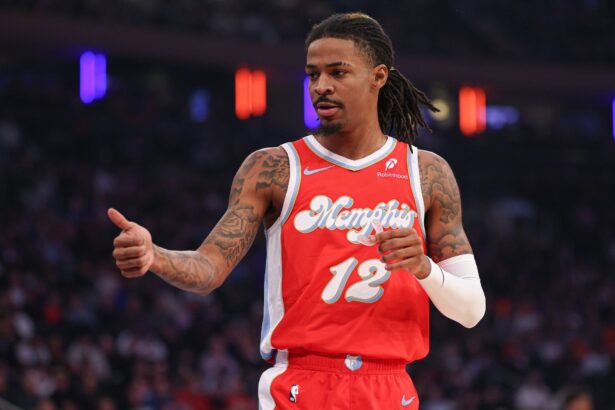
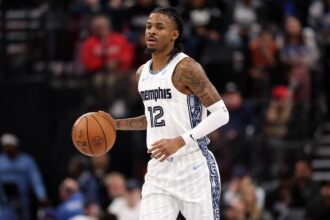
3. Ja Morant
Los Angeles Lakers Receive: Ja Morant
Memphis Grizzlies Receive: Austin Reaves, Jarred Vanderbilt, Dalton Knecht, 2031 first-round pick
Ja Morant is the most dangerous name on this list because the upside is easy to understand.
Morant is still only 26. He can get to the rim, create transition offense and pass at a high level. At his best, he puts pressure on the paint like very few guards in the league.
But the Lakers can’t trade for the old idea of Morant. They have to trade for the current version.
Morant played only 20 games last season. He finished with 19.5 points, 8.1 assists, and 3.3 rebounds while shooting 41.0% from the field and 23.5% from three. He is owed $42.2 million in 2026-27 and $44.9 million in 2027-28.
The bigger issue is the Doncic fit.
Morant is not a spot-up guard. He doesn’t bring elite shooting without the ball. He is best when he controls pick-and-roll possessions, attacks downhill and forces the defense to collapse. That is also where Doncic is best, even if they do it in different ways.
The Lakers shouldn’t take possessions away from Doncic to give them to a guard who shot 23.5% from three.
The defense would be a serious problem. Doncic needs strong defenders around him. Morant also needs strong defenders around him. Playing them together would put the Lakers in a difficult place every playoff series.
Opponents would attack both guards. The Lakers would need to hide two players instead of one. That is not a strong postseason plan.
The trade cost is also heavy. Reaves would need to agree to a sign-and-trade at around $40.0 million in first-year salary. Vanderbilt and Knecht would help complete the structure. The 2031 first-round pick would be the main draft piece.
That means the Lakers would lose their second-best creator, a forward defender, a young shooter and their best future first-round pick for a guard who doesn’t fit next to Doncic.
The Grizzlies finished 25-57 and may be open to a new direction. Morant’s value is lower than before, but that doesn’t mean the Lakers should make the move.
This is a star-name trap. Morant would add speed and rim pressure, but the Lakers would lose balance, spacing and defensive cover.
They should stay away.
2. DeMar DeRozan
Los Angeles Lakers Receive: DeMar DeRozan
Sacramento Kings Receive: Rui Hachimura, Dalton Knecht, 2033 second-round pick
DeMar DeRozan is still useful, but he is the wrong type of player for the Lakers.
DeRozan gave the Kings 18.4 points, 2.9 rebounds and 4.1 assists while shooting 49.7% from the field. He can still score in the midrange, draw fouls and create shots late in possessions.
Those skills have value. They just don’t match what the Lakers need.
DeRozan shot 32.0% from three. He doesn’t take enough threes to change spacing, and defenders can still help off him when the floor gets crowded. Next to Doncic, that is a problem.
Doncic needs players who shoot fast, cut hard and defend. DeRozan does not give enough of those things. He gives more half-court creation, but the Lakers already have that.
The offense would become too slow. Doncic likes to control pace, read the floor and punish mistakes. DeRozan also likes to work in the midrange and use time to find his shot. Together, the Lakers would have skill, but not enough speed or spacing.
DeRozan will make $25.7 million in 2026-27. That is not as large as LaVine’s deal, but it is still a major number for a 37-year-old wing who doesn’t solve the defense.
The trade package is smaller than the others. Hachimura on a sign-and-trade at about $17.0 million and Knecht would be the main salary structure. The 2033 second-round pick gives the Kings one extra asset.
The Kings may consider this because they finished 22-60 and need to move away from older salary. The Lakers shouldn’t be the team taking that contract.
Hachimura and Knecht are not perfect players, but both can play off the ball. They can shoot, run lanes and fill roles around Doncic. DeRozan is better as an individual scorer, but he would need more touches to show that value.
That is the wrong exchange.
This trade wouldn’t destroy the Lakers like some bigger deals could. It would just push them further away from the type of roster Doncic needs.
The Lakers should pass.
1. Kyrie Irving
Los Angeles Lakers Receive: Kyrie Irving
Dallas Mavericks Receive: Rui Hachimura, Luke Kennard, Jarred Vanderbilt, Dalton Knecht, 2031 first-round pick
Kyrie Irving would be the most tempting bad trade for the Lakers.
The connection with Doncic is already there. They played together with the Mavericks and built an elite offense. Irving can shoot, handle, finish with both hands and create shots in the playoffs. When healthy, he is still one of the most skilled guards in the league.
That is why this idea would get attention.
It still isn’t the right move.
Irving missed the entire 2025-26 season while recovering from a torn left ACL. He is 34 years old. His last playing season came in 2024-25, when he put up 24.7 points, 4.8 rebounds, and 4.6 assists while shooting 40.1% from three in 50 games.
That was excellent. But it was also before a major knee injury.
The Lakers can’t build their biggest offseason move around the hope that a 34-year-old guard comes back from an ACL tear at the same level. That is too much risk for a team trying to build a stable roster around Doncic.
The offensive fit is better than Morant’s because Irving can shoot and play off the ball. He can space the floor, attack closeouts, and create late-clock shots when Doncic rests. On offense, it would make sense.
The defense and cost are the problems.
A Doncic-Irving backcourt already needs major defensive help. The Lakers would still need strong wings, a strong point-of-attack defender, and a rim protector. This trade would move Vanderbilt, Hachimura, and Knecht. That removes some of the exact size and depth needed to protect that backcourt.
The trade also uses Kennard in a sign-and-trade. Hachimura would also need to be signed-and-traded. The Mavericks would receive two sign-and-trade players and become hard-capped at the first apron.
On top of that, the Lakers would send the 2031 first-round pick. That is their most valuable trade asset. Using it on an older guard coming off a torn ACL would be bad asset management.
The Mavericks finished 26-56 and now have Cooper Flagg as the center of their new build. If they move Irving, they should want future value and flexibility. The Lakers shouldn’t be the team giving it to them.
Irving is still the best basketball player on this list when healthy. That is not the full point. The Lakers need the right player, not only the most talented one.
The age, injury history, defensive structure and trade cost make this the deal they should avoid the most.
Final Thoughts
The Lakers don’t need a bigger name. They need a better roster around Doncic.
Randle brings production, but not enough spacing or defense. LaVine brings scoring, but the contract is too large. Morant brings speed, but the usage and shooting fit are bad. DeRozan brings midrange scoring, but the offense becomes slower. Irving brings elite skill, but the age and ACL recovery make the risk too high.
The Lakers should spend their assets on two-way wings, shooting, and a defensive center. These five trades would move them in the wrong direction.