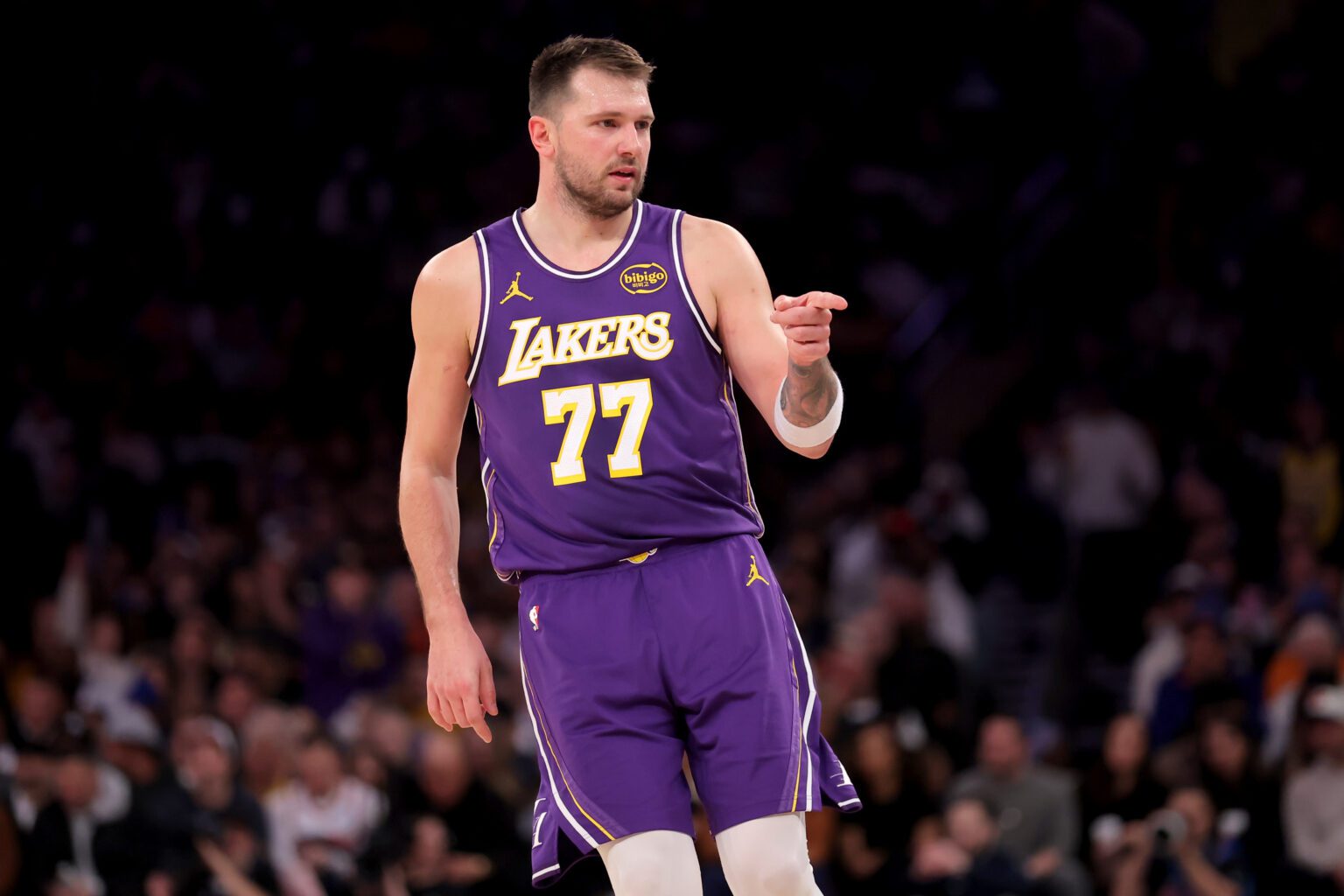
The Lakers enter the 2026 offseason with a roster that is not empty, but is far from settled. Their season ended after a Game 4 loss to the Thunder, completing a second-round sweep and sending them into a summer built around contracts, options, and difficult roster choices. The result itself was not the only issue. The larger problem is that the Lakers now have to rebuild the shape of the team around Luka Doncic while also handling the futures of LeBron James, Austin Reaves, Rui Hachimura, Marcus Smart, and Deandre Ayton.
Doncic is the center of the next phase. He missed the entire postseason because of a hamstring injury, but he still led the NBA in scoring during the regular season at 33.5 points per game. The Lakers played the final part of the year without their best offensive player, survived the first round, and then ran into a Thunder team with more speed, more depth, and more defensive answers. That ending makes the cap sheet more important. This is not only about talent. It is about building a roster that can survive if one star is unavailable and still have enough shooting, size, and defense to play through a long series.
The Lakers do have some useful contracts already on the books for 2026-27, but the list is thinner than the name value suggests. Doncic is the only guaranteed salary above $15.0 million. Jarred Vanderbilt, Jake LaRavia, Dalton Knecht, Bronny James, and Adou Thiero are the other main contracts already listed for next season, while Reaves, Smart, Ayton, and Kobe Bufkin have option decisions. That is the real story of this offseason. The Lakers have a superstar under contract, some supporting pieces, and several major choices that can change the entire financial picture.
Lakers Players Already Under Contract For 2026-27
The Lakers’ 2026-27 contract sheet starts with Doncic and then drops quickly into mid-tier and low-cost salaries. That is good for flexibility, but it also shows how incomplete the roster is. If Reaves declines his player option, LeBron leaves, Hachimura enters unrestricted free agency, and Smart or Ayton make their own choices, the Lakers will not have a finished core. They will have a financial opening and a lot of work.
1. Luka Doncic: $49.5 million
2. Jarred Vanderbilt: $12.4 million
3. Jake LaRavia: $6.0 million
4. Dalton Knecht: $4.2 million
5. Bronny James: $2.3 million
6. Adou Thiero: $2.2 million
The key option decisions are separate.
1. Austin Reaves: $14.9 million, player option
2. Deandre Ayton: $8.1 million, player option
3. Marcus Smart: $5.4 million, player option
4. Kobe Bufkin: $2.5 million, team option
LeBron James and Rui Hachimura are not under contract for 2026-27. LeBron is set to enter unrestricted free agency, and Hachimura is also listed as an unrestricted free agent with a $27.4 million cap hold. Reaves is also likely to head towards free agency with a $22.3 million cap hold if he declines his player option, which is almost certain because $14.9 million is below his market value.
Between Doncic, Vanderbilt, LaRavia, Knecht, Thiero, the guaranteed part of Bronny’s deal, and Reaves’ cap hold, the Lakers were projected at $96.7 million in guaranteed salary and Reaves’ hold before roster charges. That number gave them potential room, but only if they renounced most other free agents, including LeBron and Hachimura. That is why this offseason is not simple. The Lakers can have flexibility, but only by making hard choices.
Luka Doncic Is The Center Of The New Timeline
Luka Doncic is the only player on the roster who changes every decision. His salary is large, but that is not the problem. A $49.5 million number is normal for a player who averaged 33.5 points, 7.7 rebounds, and 8.3 assists while shooting 47.6% from the field and 36.6% from three. His offensive value is the reason the Lakers cannot treat this summer like a soft reset. They already have the player most teams spend a decade trying to find.
The issue is the type of roster around him. Doncic needs shooting, defensive range, rim protection, and another ball handler who can punish pressure. He does not need a roster filled with slow forwards, limited shooters, and single-position defenders. The Lakers scored well with him in the regular season, posting a 118.8 offensive rating in the minutes tracked with Doncic, but the defense was still at 116.2. That gap explains the roster problem. The offense can be elite because Doncic creates high-value shots. The defense still needs stronger personnel.
His injury also changes the urgency. Doncic suffered a Grade 2 hamstring strain in April and missed the final 15 games, including the entire postseason. The Lakers cannot assume the next playoff run will be stable just because Doncic is on the roster. They need a team that can protect his body during the regular season and still function when he sits. That means more creation from the second unit, more athleticism on the wing, and a frontcourt that does not force Doncic into defensive possessions he cannot control.
That is where Reaves becomes important. Reaves averaged 23.3 points, 4.7 rebounds, and 5.5 assists in 51 games, shooting 49.0% from the field, 36.0% from three, and 87.1% from the line. He was not a minor option. He was the second-leading scorer on the team, ahead of LeBron, and his ability to handle the ball gave the Lakers another source of offense when Doncic was not available.
The Lakers have to decide how much of that partnership is worth paying for. Reaves at $14.9 million would be a huge bargain, but that player option is not a realistic number for his next contract. If he declines it, the Lakers should still control the negotiation with Bird rights, but the cost may move into the $28.0 million to $30.0 million range. That is expensive, but it is also understandable. Doncic cannot be the only player who creates advantages in the half-court.
This is the part of the cap sheet that must be handled with discipline. Doncic is the fixed point. Reaves can be part of the next core. Every other decision must be judged by how it helps those two work in playoff basketball. If a contract does not bring defense, shooting, size, or creation, it has to be questioned. The Lakers no longer have room for sentimental salaries or one-dimensional fits.
LeBron James And Austin Reaves Decide The Shape Of The Offseason
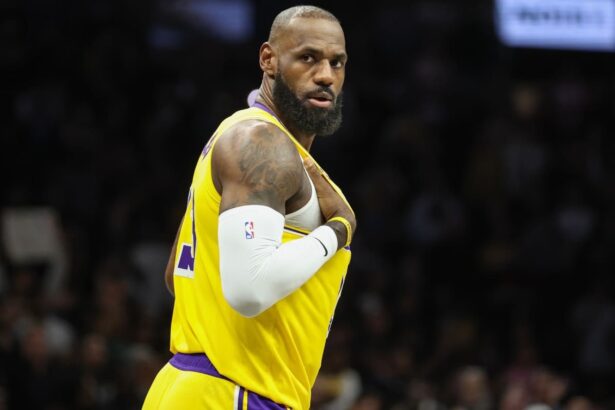
LeBron James is not under contract for 2026-27, and that makes his situation the biggest item on the roster sheet. He is entering unrestricted free agency after finishing his 23rd NBA season. He averaged 20.9 points, 6.1 rebounds, and 7.2 assists during the regular season, then averaged 23.2 points, 6.7 rebounds, and 7.3 assists in the playoffs. The production is still strong. The contract question is different.
Rob Pelinka said the Lakers want to give LeBron time and space to decide his next step. He also said both sides want to work something out with Reaves, noting that Reaves has made clear he wants to continue with the Lakers. Those two situations are connected, but they are not equal. LeBron is 41. Reaves is 27. Doncic is 27. If the Lakers are choosing the next timeline, Doncic and Reaves fit that timeline in a way LeBron no longer can at a major salary.
That does not mean the Lakers should disrespect LeBron’s value. He can still score, pass, organize possessions, and punish mismatches. His playoff production proved that. But if his next contract is anywhere near the $52.6 million he made this season, the Lakers’ flexibility disappears.
The Reaves decision is more direct. He has a $14.9 million player option and a $22.3 million cap hold. The cap hold is lower than his likely market value, which gives the Lakers a useful path if they organize the offseason correctly. They can keep hold on the books, use cap space elsewhere, and then re-sign him above the cap with Bird rights.
The danger is overpaying him because of fear. Reaves is a high-level offensive guard, but $40.0 million per year would be a bad line for the Lakers. At that number, he would need to be a clear All-Star-level creator every postseason. He is not there yet. A deal around $28.0 million to $30.0 million per year is much easier to defend. It pays him like a major starter and secondary creator without treating him like a primary franchise player.
Rui Hachimura is the next piece outside the current contract sheet. He made $18.3 million this season and is entering unrestricted free agency with a $27.4 million cap hold. Hachimura averaged 11.5 points, 3.3 rebounds, and 0.8 assists in 68 games, and his shooting is the main reason he has value. In the playoffs, his spacing became one of the few stable parts of the Lakers’ offense. He was shooting 57.1% from three during the Thunder series before Game 4, with strong numbers on wide-open looks.
Hachimura is useful, but the price matters. If the Lakers can keep him around $20.0 million per year, the deal can work. If the market climbs far above that, the front office has to consider whether that money should go to a better defender or a more complete wing. Hachimura fits next to Doncic because he can finish plays without needing many dribbles. He does not solve the defensive ceiling by himself.
Marcus Smart is smaller financially, but still relevant. He has a $5.4 million player option. Smart averaged 9.3 points, 2.8 rebounds, 3.0 assists, and 1.4 steals in 62 games for the Lakers, shooting 39.5% from the field and 33.1% from three. The defense, strength, and communication still help. The shooting and age limit the upside. If he opts in, the number is fine. If he opts out, the Lakers should not chase him into a larger long-term deal.
Deandre Ayton also has a player option at $8.1 million. His regular-season numbers were fine: 12.5 points, 8.0 rebounds, and 1.0 blocks in 72 games, with 67.1% from the field. The playoff concern is role reliability. Ayton gives size and finishing, but the Lakers need a center who can defend space, protect the rim, and hold up against elite playoff teams. At $8.1 million, he is not a bad contract. As a full answer at center, he is not enough.
The Supporting Cast Is Too Thin Right Now
Jarred Vanderbilt is the biggest guaranteed salary after Doncic. He is owed $12.4 million in 2026-27 and $13.3 million in 2027-28 before unrestricted free agency. The contract is not huge, but it is important because Vanderbilt has to be more than a theoretical defensive piece. The Lakers need him available, active, and useful in playoff lineups. If he cannot stay on the floor offensively, his contract becomes trade filler more than a core piece.
Vanderbilt’s value is still easy to understand. He gives rebounding, defensive activity, and size on the wing. He can guard bigger forwards, pressure the ball in stretches, and help the Lakers play with more force. But the shooting remains the problem. Teams will ignore him in playoff spacing if he does not cut, screen, crash, or finish quickly. Around Doncic and Reaves, every non-shooter has to bring elite defense or elite finishing. Vanderbilt’s defense can justify minutes. His offense can also shrink the floor.
Jake LaRavia is a different type of contract. He is owed $6.0 million next season, which is a fair number for a 24-year-old forward who averaged 8.2 points, 4.0 rebounds, 1.8 assists, and 1.3 steals in 82 games. He shot 45.9% from the field but only 32.1% from three. That last number is the one that decides his role. If LaRavia is a reliable corner shooter, he can be a useful low-cost wing. If not, the Lakers have another forward who does a little of everything without forcing the defense to react.
Dalton Knecht is one of the more important cheap salaries. He is owed $4.2 million next season, and the Lakers have a later club option decision on his rookie-scale deal. Knecht averaged only 4.2 points and 1.4 rebounds in 54 games this season, shooting 35.9% from three. The role dropped, but the skill still matters. Cheap shooting is valuable next to Doncic. The question is whether Knecht can defend enough to stay in serious games.
That is a major development point for the Lakers. Knecht does not have to become a star. He does have to become playable. A team paying Doncic, Reaves, and possibly Hachimura cannot fill every rotation spot through expensive veterans. It needs at least one low-cost shooter to become part of the rotation. Knecht has the shot profile for that job. He has to improve his strength, positioning, and defensive awareness.
Bronny James and Adou Thiero are low-cost contracts, but they are not rotation anchors yet. Bronny is listed at $2.3 million for 2026-27, with only part of that salary guaranteed. Thiero is listed at $2.2 million. Those salaries are useful because they do not damage the cap sheet. They are also not enough to change the roster unless one of them becomes a real rotation player.
Bronny’s situation is unique because of LeBron, but the basketball evaluation has to stay separate. If LeBron leaves, Bronny’s roster spot will be viewed differently. If LeBron returns, the family angle remains part of the story. Either way, the Lakers cannot build the bench around symbolism. They need production. Bronny has to defend, hit open shots, and prove he can handle NBA speed.
Thiero gives them a different type of bet. At 21, he has the physical profile to become a defensive wing if the development goes right. That type of player is exactly what the Lakers need. The problem is that playoff teams cannot wait forever. If Thiero is not ready, he becomes a future piece while the present roster still lacks athletic wing defense.
Kobe Bufkin is listed with a $2.5 million team option. That is not a large number, but the Lakers may decline it if they want to maximize space. This is why the supporting cast looks thin. Vanderbilt has defensive value but offensive questions. LaRavia has size but must shoot better. Knecht can shoot but has to defend. Bronny and Thiero are developmental. Smart and Ayton have options. Hachimura is a free agent. That is not a full playoff rotation. It is a starting point.
Final Thoughts: The Lakers Have A New Timeline To Build Around
The Lakers are not starting from zero. Doncic alone prevents that. A team with Doncic under contract has a real foundation, even after a sweep. He is 27, led the league in scoring, and gives the Lakers the type of offensive engine that can control an entire franchise plan. But the current contract sheet does not give them a complete contender. It gives them flexibility and questions.
The first question is LeBron. If he returns at a discount, the Lakers can still build a serious team around Doncic, Reaves, and LeBron. If he wants a salary close to his previous number, the roster becomes difficult to finish. If he leaves, the Lakers gain flexibility but lose one of the best playoff organizers in basketball history. There is no version of this decision that is small.
The second question is Reaves. He is the most important internal free-agent decision because he fits the age of the new timeline. Doncic and Reaves are both 27. That gives the Lakers a path to move from the LeBron era into something more stable. But the contract has to be controlled. Reaves at $28.0 million to $30.0 million per year can be part of the plan. Reaves at $40.0 million per year changes the plan.
The third question is how much money the Lakers want tied to useful but imperfect players. Hachimura helps the offense. Smart helps the defense. Ayton helps the size problem. Vanderbilt gives defensive activity. LaRavia, Knecht, Bronny, and Thiero give low-cost depth. None of those pieces should be treated as untouchable. The Lakers need to keep the ones who fit Doncic and be willing to move the ones who only fill salary slots.
The cap sheet gives them possible room, but not unlimited room. If Smart and Ayton both decline their options and the Lakers renounce several free agents, they could create more than $60.0 million in cap space. If those options are picked up and the Lakers keep cap holds for Reaves, Hachimura, and LeBron, that room shrinks quickly. This is why the order of operations matters. The Lakers have to know which players they are keeping before chasing outside help.
The most honest reading is simple. Doncic is the future. Reaves should be part of it at the right price. Hachimura can stay if the number is reasonable. Smart and Ayton are useful only if their contracts stay small. Vanderbilt, LaRavia, Knecht, Bronny, and Thiero give the Lakers bodies under contract, but not enough certainty.
The Lakers’ name still carries weight, but the roster cannot be built on name value. The Thunder series showed the difference between a team with a complete structure and a team trying to survive through individual scoring. The Lakers need more two-way players, more size that can move, more shooting, and more defensive stability. The 2026-27 contract sheet gives them a path to chase that. It does not give them the solution by itself.
This offseason is the first full test of the Doncic era. The Lakers have the star. Now they have to build the team correctly around him.