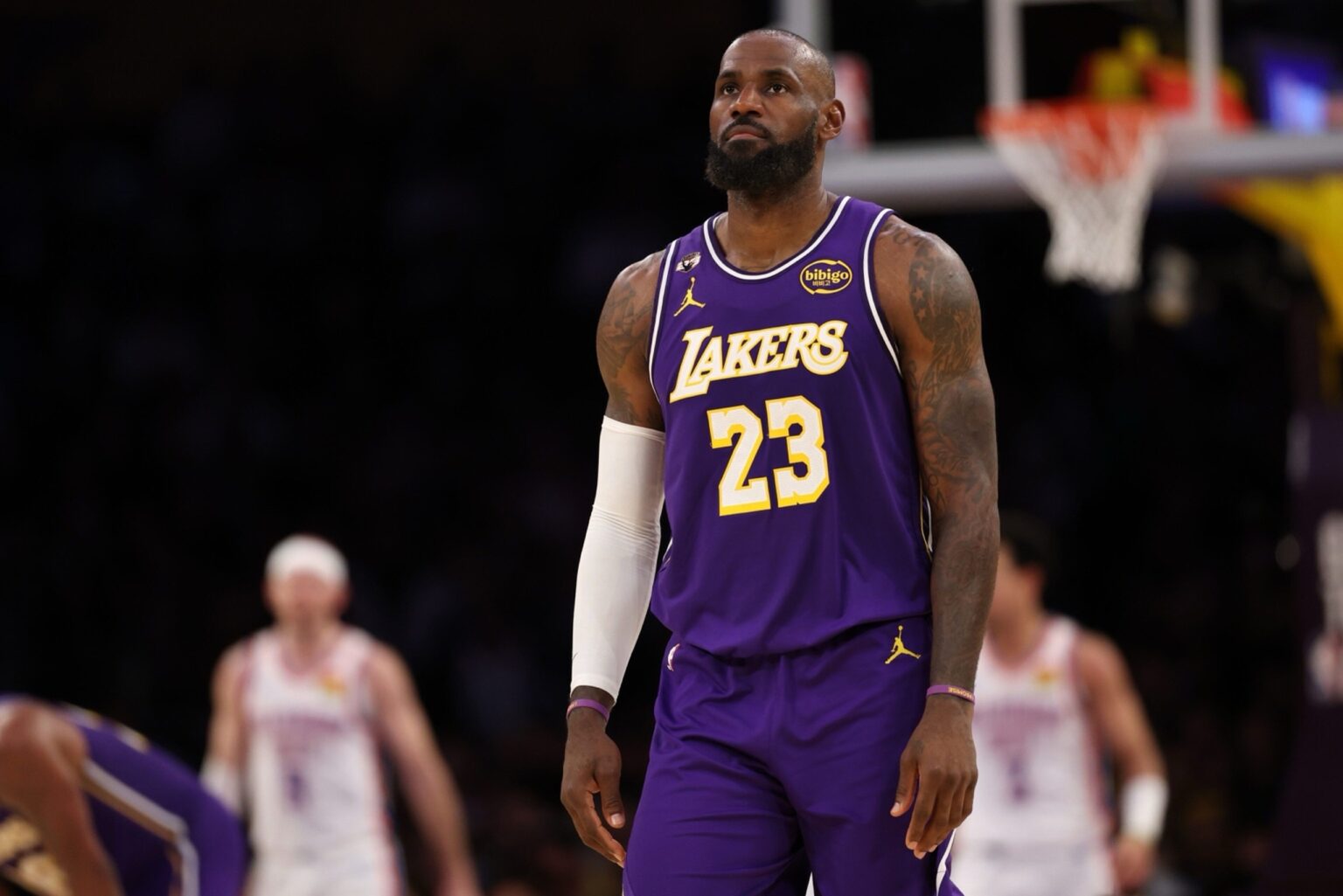
After a series of blowout losses against the Oklahoma City Thunder in the first three games, the Los Angeles Lakers came out all guns blazing in Game 4. Unfortunately, this wasn’t enough to avoid a sweep, as the Purple and Gold suffered a 115-110 defeat.
Like all of the games in this series, the Lakers came out strong in the first two quarters, keeping pace with the Thunder. Surprisingly, a strong third-quarter outing (39-31) was the difference-maker that could have seen L.A. steal a win away from OKC.
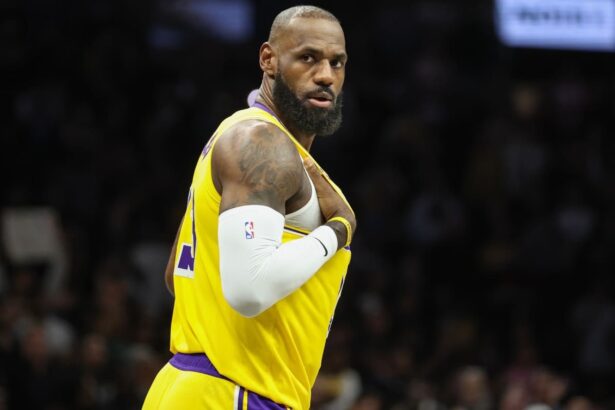
Despite some solid performances by the star duo of LeBron James and Austin Reaves, Los Angeles couldn’t hold on in the final frame. With several other factors affecting the result, we look at five reasons the Lakers couldn’t avoid being swept.
1. Shai Gilgeous-Alexander Finally Broke Loose
For the entirety of the series, the Purple and Gold had done a tremendous job of limiting Shai Gilgeous-Alexander‘s production. The Thunder superstar, who is widely regarded as one of the best scorers in the league, hadn’t scored above 25 points in the first three games, even being held to 35% shooting from the field in Game 3.
While the Lakers were blitzing Gilgeous-Alexander every time he caught the ball, the guard masterfully navigated the double teams by moving the ball around. This wasn’t the case in Game 4.
L.A.’s defensive strategy shifted slightly, giving the Thunder superstar more opportunities to get his offense going. With fewer players to beat, Gilgeous-Alexander easily got to his spots and delivered some crucial baskets to kill the Lakers’ momentum.
The Thunder superstar ended the game with 35 points and eight assists on 50% shooting from the field. Having taken over in a closeout game, Gilgeous-Alexander truly showcased his championship pedigree.
2. Deandre Ayton Could Not Assert Himself
Much of the battle against OKC was dependent on the rebounding glass. With the likes of Chet Holmgren, Isaiah Hartenstein, and Jaylin Williams anchoring Oklahoma’s frontcourt, the Lakers had their work cut out for them. Sadly, despite some solid performances in earlier games, Deandre Ayton faded in Game 4.
The Lakers’ starting big man ended the game with only six points and three rebounds, playing only 21 minutes for the night. Given that he was averaging 10.4 points and 10.3 rebounds per game in the postseason, he certainly fell short of the mark.
Due to Ayton’s shortcomings on both ends of the floor, the Lakers had to rely on Jaxson Hayes, who delivered a solid performance of 18 points and five rebounds. Despite some highlight-worthy plays and some incredible support work, he was clearly outmatched on more than one occasion.
3. The Purple and Gold Were Careless With The Ball
Los Angeles has developed a penchant for turning the ball over this series. Barring Game 3, where the team only gave up 10 turnovers, the Lakers have averaged 19.3 turnovers per game.
With 19 turnovers in Game 4, the Purple and Gold returned to familiar form. Austin Reaves (8 TO) and Marcus Smart (6 TO) were the primary culprits, combining for 14 turnovers between the two. Reaves made up for his mistakes by contributing 27 points, seven rebounds, and six assists. However, Smart’s relative inactivity for the game (5 PTS, 2 REB, 3 AST) was disheartening.
The team eventually conceded 22 points off turnovers on Monday night. Considering how minor the difference was, these errors proved critical.
4. The Lakers Relied Too Much On Their Starting Lineup
It is well known that the Purple and Gold have one of the weakest benches in the league. While the team has successfully navigated the regular season’s challenges by relying on its starting lineup, the Lakers’ shortcomings were exposed in Game 4.
The Lakers’ starting lineup played a combined 183 minutes in Game 4, with LeBron James, Austin Reaves, and Rui Hachimura logging 40+ minutes each. In comparison, only Luke Kennard and Jaxson Hayes played over 20 minutes off the bench, as both Jarred Vanderbilt and Adou Thiero logged three minutes for the night.
While this has been a trend for the Lakers, it caught up to them in the fourth quarter. After a terrific display in the third quarter, the Purple and Gold seemingly ran out of steam, allowing OKC to run rampant and outscore L.A. 35-26 in the final frame.
Still, L.A.’s bench fared well compared to OKC’s. With the Lakers’ bench being outscored by only two points (25-23), it can be argued that the Purple and Gold saw solid contributions courtesy of Jaxson Hayes.
5. Late-Game Execution Errors
The final nail in the coffin was L.A.’s late-game execution.
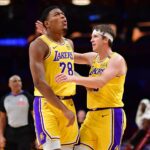
In the last two minutes of play, the Purple and Gold were facing a six-point deficit after Chet Holmgren scored a dunk (109-103). The immediate response was a missed three-pointer by LeBron James. Fortunately, Rui Hachimura (25 PTS, 5 REB, 4-8 3PT) secured an offensive rebound and drained a three-pointer to keep the Lakers’ hopes alive.
After a few baskets traded, the Lakers found themselves in a position to take the lead. However, James’ layup attempt came up short with 20.3 seconds on the clock (111-110). When the Lakers had a chance to tie the game with a three-pointer (113-110), Reaves’ shot bounced off the rim with 8.3 seconds left.
Outside of Hachimura and Smart, none of the other players managed to score in the last two minutes, shooting 2-9 from the field as a unit.
Considering that Hachimura, who was the Lakers’ best shooter on the night, wasn’t on the court in the closing seconds, L.A.’s late-game decision-making seems to have failed them.