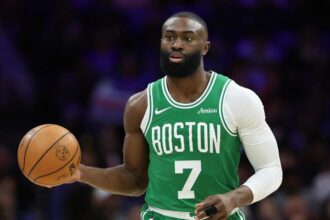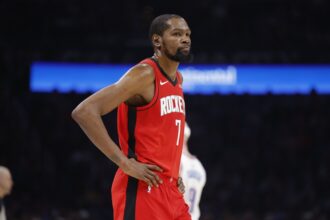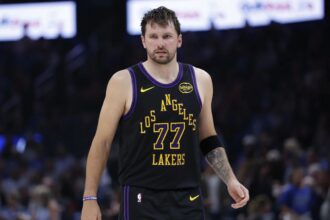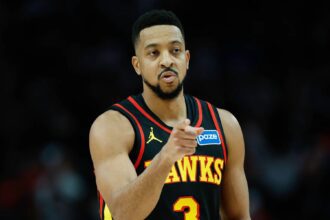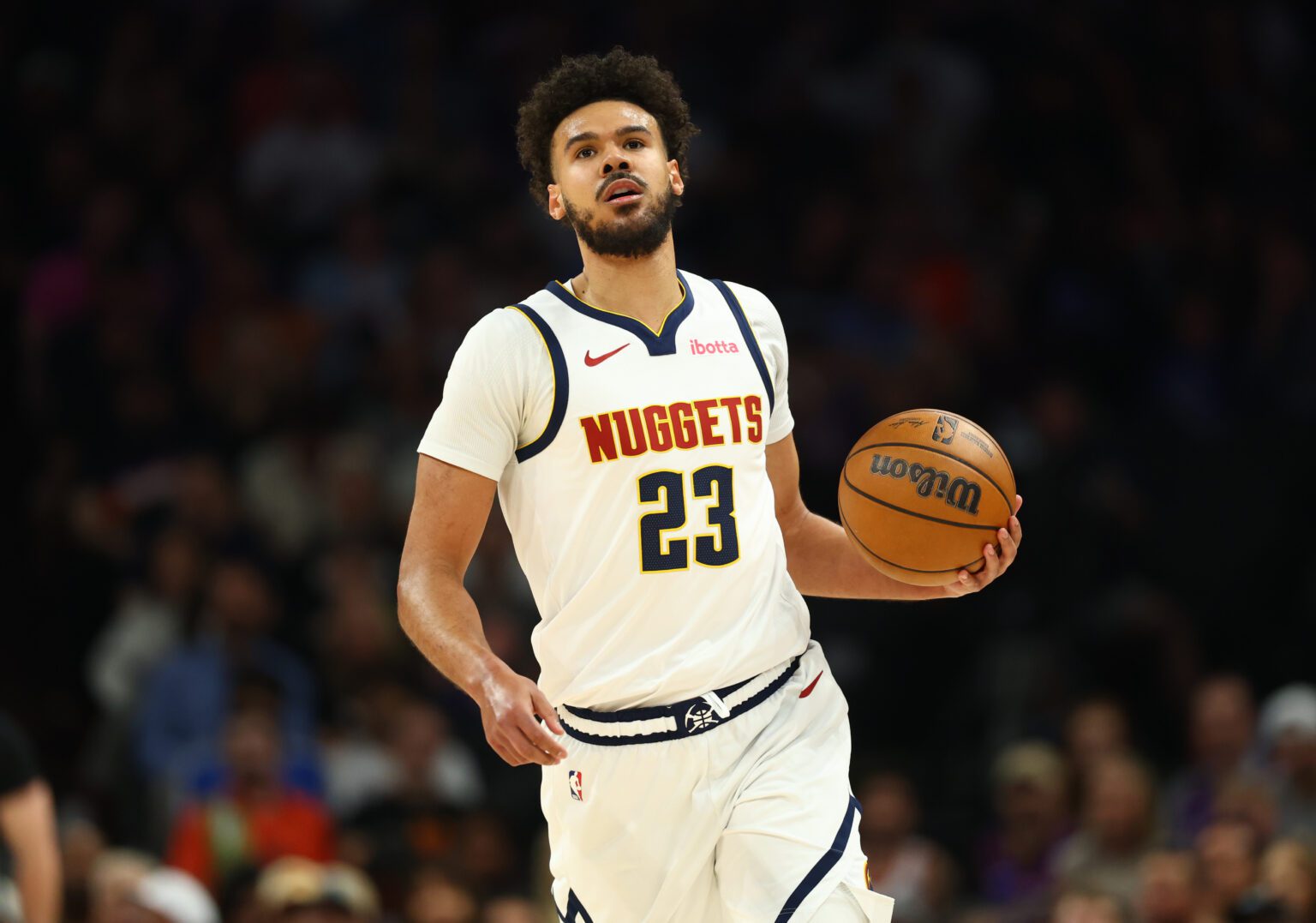
Tim Bontemps reported that the belief around the league is that the Nuggets may have to move Cam Johnson or Christian Braun to create enough room for Peyton Watson. Watson is a restricted free agent, and the Nuggets can match, but the sheet is already heavy around Nikola Jokic, Jamal Murray, Aaron Gordon, Braun, and Johnson.
We already did the Christian Braun version of this question. That one was about the Nuggets possibly moving a younger wing whose five-year, $125.0 million extension starts in 2026-27. Now the focus goes to the other name in the same problem: Cam Johnson.
Johnson is a different trade chip than Braun. He is older, easier to move, and on an expiring contract. He is owed $23.1 million in 2026-27 before becoming an unrestricted free agent in 2027. That makes him a better salary-saving piece if the Nuggets prefer to keep Braun and still make room for Watson.
The on-court value is good. Johnson averaged 12.2 points, 3.8 rebounds, and 2.4 assists while shooting 48.0% from the field and 43.0% from three. He is not a star. He is a 6-foot-8 shooter who can play off better creators, space the floor, make quick decisions, and survive in playoff games.
That gives him a real market. The key is that any deal has to help the Nuggets save money. A trade that sends Johnson out and brings back similar salary does not solve the Watson issue.
1. Los Angeles Lakers
Potential Trade Framework
Lakers Receive: Cam Johnson
Nuggets Receive: 2032 first-round pick (top-20 protected, conveys into 2032 and 2033 second-round picks if not conveyed)
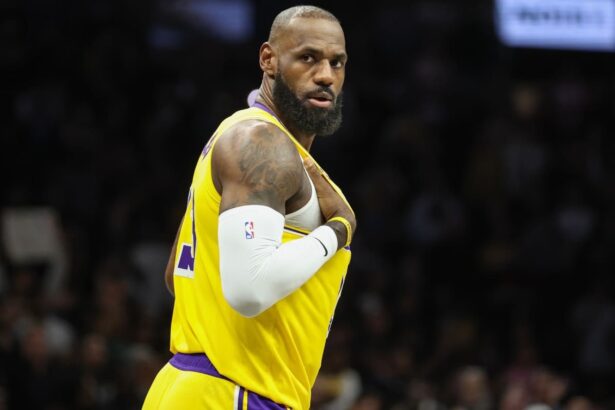
The Lakers’ path to Johnson starts with LeBron James. Not with him leaving. But James might return on a lower number if the front office shows him a real plan to use the space around Luka Doncic, Austin Reaves, and the rest of the roster.
That is where this trade makes sense. The Lakers can keep Reaves’ cap hold, preserve the ability to re-sign him later, and still work with meaningful cap room if James returns at a reduced number instead of filling a full max slot. In that kind of structure, the Lakers can get near the $48.0 million cap-space range. Johnson’s $23.1 million expiring salary fits inside that path.
For the Nuggets, that is the important part. They would not need to take back matching money. If the Lakers absorb Johnson into cap room, the Nuggets can remove his salary from the sheet and create direct flexibility before Watson’s restricted free agency. That is the whole point of this article. The return is not built around equal player value. It is built around cap relief and a future pick.
The pick structure is fair. A 2032 first-round pick with top-20 protection gives the Nuggets a future asset without asking the Lakers to send an unprotected first. If it does not convey, it turns into 2032 and 2033 second-round picks. That is still useful for a Nuggets team that has to keep adding cheap trade assets around an expensive core.
The basketball fit is also a plus. The Lakers need forward shooting around Doncic, James, and Reaves. Johnson’s 43.0% three-point shooting fits that need. The Lakers ranked 24th in three-point attempts per game at 32.9, so this is not just adding another rotation player. It fixes a volume issue.
Defensively, this would not help the Lakers’ needs. Johnson is not a primary stopper. The Lakers would still need stronger point-of-attack and wing defense. But the role is clear: shooting, size, and lineup balance on an expiring contract.
For the Nuggets, this is the best salary-saving framework. They move Johnson, take no salary back, and get a protected future first-round pick structure. That gives them the best path to keep Watson without making the cap sheet worse.
2. Portland Trail Blazers
Potential Trade Framework
Blazers Receive: Cam Johnson
Nuggets Receive: Matisse Thybulle, 2028 second-round pick (via Blazers), 2029 second-round pick (less favorable of Pacers and Wizards)
The Blazers can’t absorb Johnson into cap room. Their 2026-27 table is projected at about $66.1 million over the cap when all allocations are counted. That means this deal needs salary matching, and that makes it less simple than the Lakers framework.
Still, the Blazers make sense because their roster needs shooting badly enough to justify the call.
The Blazers played with pace and volume this season, but the efficiency did not match. They were 28th in three-point percentage at 34.3%, even though they were near the top of the league in total three-point attempts. That is a team taking the right kind of shots without enough reliable makers.
Johnson helps that. He would not take the ball away from Scoot Henderson, Shaedon Sharpe, Deni Avdija, Toumani Camara, or Donovan Clingan. He would make their possessions easier. Young creators need space. Young centers need the paint less crowded. Athletic wings need shooters around them when they drive.
The return is built around Thybulle and two seconds. Thybulle is set for free agency, and a sign-and-trade around $5.0 million would give the Nuggets an instant defender. He is not replacing Johnson’s shooting. He is adding some some needed defense while lowering the salary sheet.
The picks are the real add-ons. The Blazers have their own 2028 second-round pick and also hold a 2029 second-round pick tied to the less favorable of the Pacers and Wizards. That gives the Nuggets two future assets without forcing the Blazers to give up a first-round pick.
For the Nuggets, this is not pure salary relief. It is a compromise. They would save money compared to Johnson’s $23.1 million salary, get a defensive specialist, and add two second-round picks. That helps with Watson, but not as much as a full cap-space deal.
That is the main drawback. If the Nuggets want the biggest salary cut possible, this is not the top option. If they want a smaller salary, some defensive utility, and future picks, the Blazers framework works.
3. New Orleans Pelicans
Potential Trade Framework
Pelicans Receive: Cam Johnson
Nuggets Receive: Kevon Looney, 2026 second-round pick (No. 58 overall via Pistons), 2031 second-round pick (via Raptors)
The Pelicans are not a cap-space team either. They are projected around $61.1 million over the cap when total 2026-27 allocations are counted. That means this has to be a salary-matching deal, but the salary return can still help the Nuggets if it is much smaller than Johnson’s number.
Kevon Looney is the simple piece. He is owed $8.0 million in 2026-27. That is more than $15.0 million below Johnson’s $23.1 million salary, so the Nuggets would get meaningful savings while still adding a veteran frontcourt player.
Looney does not replace Johnson’s spacing. He is a different type of player. He gives screening, rebounding, physical defense, and playoff experience. For a Nuggets team built around Jokic and Gordon, that is more of a depth piece than a closing option. But the number is useful. The contract is the reason he fits this framework.
The pick structure also fits a salary-saving deal. The Pelicans hold the 2026 Pistons second-round pick at No. 58 overall. They also have a 2031 second-round pick via the Raptors. Those are not premium assets, but they are at least draft pieces the Nuggets can use in future trade structures.
The basketball side for the Pelicans is easy. They need more shooting around Zion Williamson. The Pelicans were 25th in three-point attempts per game at 32.1 and 24th in three-point percentage at 34.7%. That is a bad mix for a team with a paint-based star.
Williamson needs space. If defenders can load the lane early, his drives become harder and the offense gets slower. Johnson gives the Pelicans another forward-sized shooter next to Trey Murphy III, Herb Jones, Jordan Poole, and Dejounte Murray.
Johnson also fits because he does not need usage. The Pelicans already have players who need touches. Williamson needs the ball in power spots. Poole needs possessions. Murray needs touches as a guard. Murphy needs shots. Johnson can help without taking the offense away from them.
For the Nuggets, this is a practical middle path. They save real salary, get a veteran big, and add two second-round picks. It is not as strong as a full dump into Lakers cap room, but it is more useful than taking back another expensive wing.
4. Golden State Warriors
Potential Trade Framework
Warriors Receive: Cam Johnson
Nuggets Receive: Moses Moody, 2026 second-round pick (No. 54 overall via Lakers), 2032 second-round pick (conveys only if it lands 31-50; otherwise goes to Grizzlies)
The Warriors are the hardest financial fit here. Their 2026-27 total allocations are projected around $119.6 million over the cap when holds are counted, so they can’t absorb Johnson into room. They would have to send salary back.
That is why this deal is more about lowering salary, getting a younger wing, and adding draft pieces. It is not a pure salary dump.
Moses Moody is the main return. He is owed $12.5 million in 2026-27, which saves the Nuggets more than $10.0 million compared to Johnson. That helps with Watson, even if it does not remove the full $23.1 million. Moody is also younger than Johnson and under contract at a smaller number.
Moody suffered a torn left patellar tendon late in the season, and that makes his 2026-27 value drop a ton. The Nuggets would have to accept the fact that he may be out for the entire season. But if they trust the recovery, he gives them a younger wing who has already shown shooting growth and defensive size.
For the Warriors, the fit is very clear. They led the league in three-point attempts per game at 44.1, but they were only 20th in three-point percentage at 35.6%. That means the issue was not volume. It was efficiency and quality around Stephen Curry.
Johnson gives them a bigger shooter who can work without the ball. That is important with Curry, Jimmy Butler, and Draymond Green. If they are projecting the 2026-27 season with Moody sidelined, getting Johnson is actually a really smart recovery plan.
The Warriors are not in a long waiting period. Curry and Butler need help now. Johnson is not a franchise-changing player, but he gives them size and shooting in a role they understand and need with desperation with Moody’s future still uncertain.
For the Nuggets, this is the weakest pure savings package but the best younger-player return. Moody, No. 54, and a future conditional second give them more than just financial relief. The question is whether they agree to let go of Johnson for an injured player just to retain Watson.
Final Thoughts
Johnson should have a market if the Nuggets decide Braun is the wrong player to move.
Braun is younger and locked into a bigger long-term contract. Johnson is older, expiring, and easier to trade as a salary-saving piece. That makes him the more direct way to open room for Watson if the Nuggets want to keep the younger wing core intact.
The Lakers are the best structure if the priority is pure financial relief. Their cap-space path depends on James returning for less, but if that happens, they can absorb Johnson and send back only a protected future pick.
The Blazers and Pelicans require salary matching, but both have clear shooting needs and enough second-round capital to make a deal logical. The Warriors are more complicated because they are deep over the cap, but Johnson’s size and shooting fit their veteran core.
The main rule is simple. The Nuggets can’t take back a similar salary and call it a Watson move. The trade has to remove real money from the 2026-27 sheet. Johnson’s $23.1 million expiring salary gives them that chance. If keeping Watson is the priority, these four teams are the best places to start.