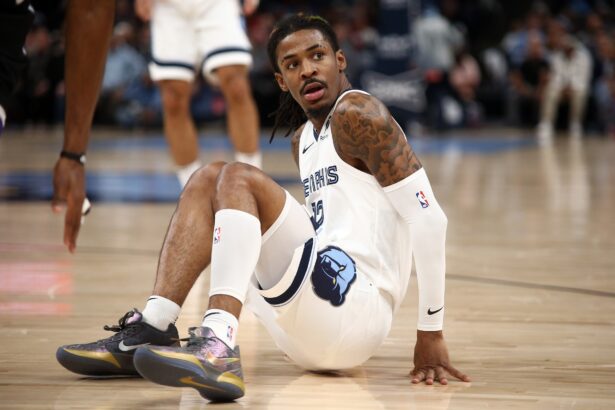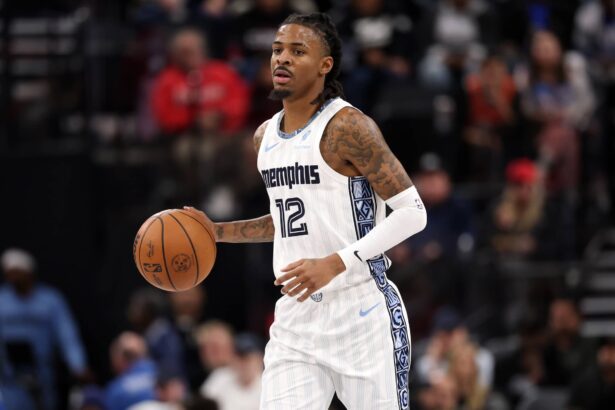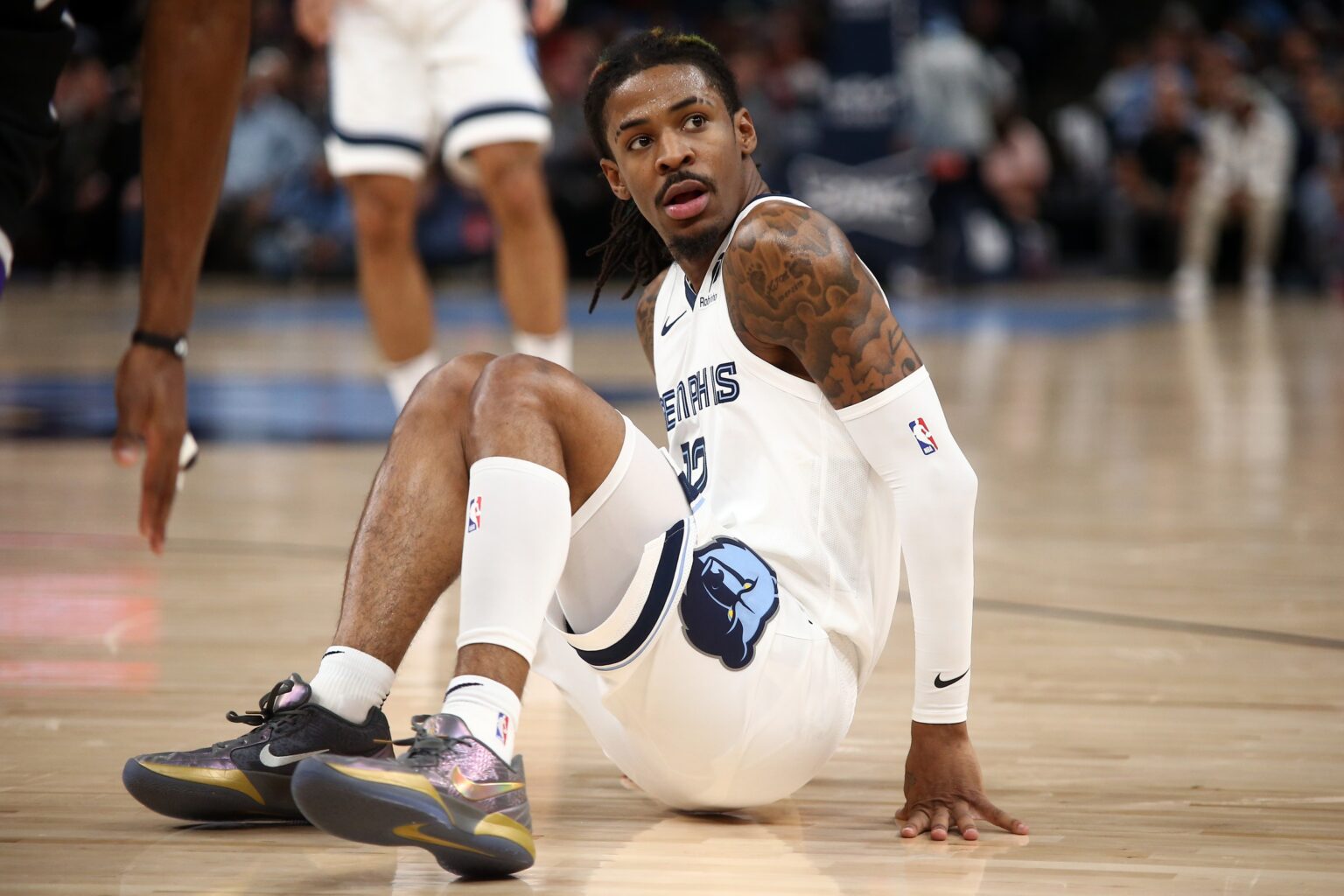
Ja Morant is one of the most difficult trade cases in the NBA right now. The name is still big, the talent is still serious, but the risk is also impossible to ignore.
Morant played only 20 games in the 2025-26 season. He posted 19.5 points, 8.1 assists, and 3.3 rebounds per game while shooting 41.0% from the field and 23.5% from three. That is far from his best version. He still created rim pressure and passed at a high level, but the efficiency, availability, and contract all changed the way teams should look at him.
He is owed $42.2 million in 2026-27 and $44.9 million in 2027-28. That means any team trading for him isn’t only betting on a bounce-back season. It is taking on almost $87.1 million over the next two years for a guard who has played 79 total regular-season games over the past three seasons.
That is why his market is strange. Morant is still only 26, still one of the fastest guards in the league, and still capable of becoming a top-25 player again if healthy. At the same time, Brian Windhorst said around the deadline that Morant had negative value in some league circles. That is a big signal. Teams weren’t lining up to pay a premium for him.
The Grizzlies finished 25-57 and should continue exploring every possible direction. They already changed their core. Morant could be the next big decision.
Some teams make sense because they need a lead guard, have defensive cover and can absorb the risk. Others would turn Morant into an expensive problem because of spacing, usage, defense or roster cost.
Here are the five best and five worst Ja Morant trade destinations this summer.
Ja Morant’s Best Destinations
1. Miami Heat
The Heat are the best destination for Morant because they need exactly what he provides.
The Heat finished 43-39, good enough to stay in the playoff race, but not enough to be a real Eastern Conference threat. The biggest problem was simple. They didn’t have enough rim pressure and high-end creation from the guard spot.
Morant would change that immediately.
He can break the first line of defense without needing a screen. He can force help at the rim, create corner threes and give Bam Adebayo easier finishes as a roll man. Adebayo would be the best center Morant has played with since Steven Adams, but with more passing, more shooting touch, and more defensive range.
The Heat also have the structure to protect him. Adebayo can cover mistakes behind the play. Erik Spoelstra can build a defense around weak points better than almost any coach in the league. The Heat usually don’t allow one bad defender to destroy the full system.
That is important because Morant isn’t a disciplined defender. He gambles, loses focus, and doesn’t have the size to survive tougher guards. On a team with no defensive base, that becomes a major problem. With the Heat, it can be managed.
The offensive fit is also strong because the Heat need speed. Their half-court offense can become slow and difficult to watch when Tyler Herro or Adebayo don’t create quick advantages. Morant would give them a different pressure point. He would make defenses collapse earlier in possessions.
The trade cost is the key part. The Heat shouldn’t empty their asset base for Morant. His last season doesn’t justify a massive offer. But if the Grizzlies are open to moving him for a package built around salary, one young player and protected draft compensation, the Heat should be aggressive.
Morant also reportedly had interest in the Heat during the season. That helps. A player with his contract and risk profile must want to be in the new situation. If he is bought in, the Heat are the best place for a career reset.
This is the best mix of need, structure and personal fit.
2. Atlanta Hawks
The Hawks may have the best pure basketball opening for Morant.
They finished 46-36 after moving Trae Young to the Wizards. That record changed the team’s direction. The Hawks proved they didn’t need to rebuild from zero, but they still need a true lead guard who can bend defenses.
Morant would walk into that role.
There is no star point guard blocking him. Dyson Daniels is a strong defender and secondary playmaker, but he isn’t a high-usage offensive engine. Jalen Johnson can create from the forward spot, but he isn’t a traditional lead guard. Jonathan Kuminga fits best as a wing scorer and defender.
That gives Morant the ball without forcing someone else out of position.
The Daniels fit is the main reason this works. Daniels can guard the best opposing perimeter player every night. That would allow Morant to take easier assignments and save more energy for offense. Few teams can offer that kind of defensive partner.
Johnson also fits with Morant in transition. Both players can run, pass and finish. The Hawks could become one of the fastest teams in the league. Morant’s speed would open early offense, while Johnson’s size would create cross-match problems.
The spacing is the concern. Daniels isn’t a high-volume shooter. Morant shot only 23.5% from three last season. If the Hawks use two non-shooting guards together, defenses will crowd the paint.
That means Risacher, Johnson, and the center position must provide enough spacing. The Hawks would need to be careful with lineup construction. Morant needs at least three credible shooters around him in playoff minutes.
The trade logic also makes sense if the price stays low. The Hawks shouldn’t move Daniels or Johnson. That would defeat the point. But if the Grizzlies want salary, a young piece and draft value, the Hawks can explore a package without breaking the core.
Morant would give the Hawks a direct replacement for the lead-guard hole created by the Young trade. He wouldn’t be the same type of player, but he would bring rim pressure and late-clock creation.
The risk is high, but the roster fit is strong enough to make the Hawks one of the best destinations.
3. Orlando Magic
The Magic already made one aggressive guard trade by acquiring Desmond Bane. Going after Morant would be even riskier, but the upside is easy to see.
The Magic finished 45-37 and pushed the Pistons to seven games in the first round. They have size, defense and several big creators. What they still lack is a guard who can consistently get into the paint and collapse a defense.
Morant would fix that.
Paolo Banchero and Franz Wagner are great forwards, but both operate best when the offense has space and movement. Too often, the Magic become a team of big wings attacking set defenses from a standstill. Morant would give them a different entry point.
A Morant-Bane-Wagner-Banchero group would be one of the most talented offensive cores in the Eastern Conference. Bane already knows how to play with Morant from their Grizzlies years. He can run off the ball, space the floor, and punish defenses that help too far.
That connection would help the transition.
The Magic also have defensive cover. Jalen Suggs, Wagner, Banchero and their frontcourt size can protect Morant better than most teams. Morant wouldn’t need to be a positive defender every night for the Magic to stay strong on that end.
Morant isn’t a reliable three-point shooter. Banchero is more comfortable inside the arc. Wagner can shoot, but his value also comes from drives and midrange creation. If the Magic add Morant without enough shooting around him, the half-court offense could still become crowded.
That is why the trade price must be controlled. The Magic shouldn’t move Bane after just acquiring him. They shouldn’t move Banchero or Wagner. They also shouldn’t gut their defensive base.
If the Grizzlies are truly selling low, the Magic should call. Morant would give them the lead guard they have needed for years. But the deal only works if the Magic can keep enough shooting and defense around him.
This is a high-ceiling fit, but the cost is likely a Jalen Suggs trade with added salary.
4. Milwaukee Bucks
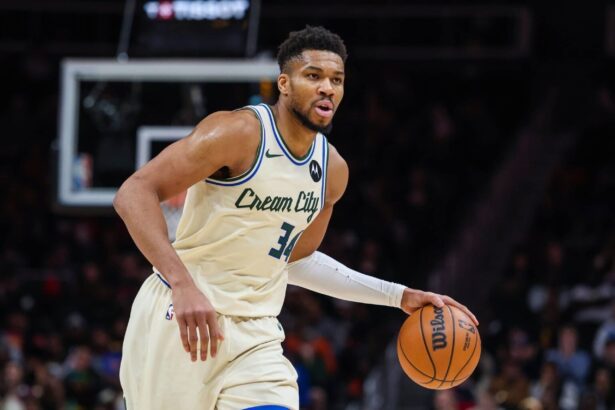
The Bucks only make sense if Giannis Antetokounmpo stays.
If Antetokounmpo asks out, trading for Morant would be a waste. The Bucks finished 32-50 and missed the playoffs. They shouldn’t add another expensive star if the franchise player is gone.
But if Antetokounmpo remains, Morant becomes interesting.
The Bucks need another creator who can pressure the rim. They were too dependent on Antetokounmpo to create force. Morant would give them a guard who can attack before the defense loads up, create passing windows, and force opponents to guard the full floor in transition.
Myles Turner also helps the fit. Turner can space the floor from the center position, which is important with Morant and Antetokounmpo both preferring paint attacks. A Morant-Antetokounmpo-Turner structure would be strange, but it would have speed, size, and rim pressure.
The defense is a concern. Morant isn’t fixing the Bucks’ perimeter issues. The Bucks would still need bigger guards and wings around him. They can’t build a small backcourt and expect Turner and Antetokounmpo to cover every mistake.
The contract is another issue. Morant at $42.2 million and $44.9 million is not a light gamble. The Bucks don’t have unlimited assets or flexibility. If they trade for him and it fails, the roster could become even harder to fix.
That is why this should be a low-cost swing, not a star-level offer. The Bucks can explore Morant if the Grizzlies value salary relief and rotation pieces. They shouldn’t give up major first-round value.
The logic is simple. Antetokounmpo needs help now. Morant’s value is lower than his talent. If the Bucks can buy low, they should think about it.
It is risky, but the Bucks are already in a risky position.
5. Brooklyn Nets
The Nets aren’t close to contention, but that may actually help Morant.
They finished 20-62 and don’t have an established franchise guard. That creates a situation where Morant could control the offense, rebuild his value, and avoid the immediate pressure of joining a title team.
That doesn’t mean the Nets should overpay. They shouldn’t.
But as a reset destination, the Nets make sense.
Morant would give the Nets a real offensive engine. Egor Demin could develop beside him as a bigger playmaker. Nic Claxton would have a guard who can create rim pressure and easy lob chances. The rest of the roster would get more open threes and transition opportunities.
The Nets also have the assets to take a swing without damaging the full rebuild. They own future picks and movable contracts. If Morant’s price is low because of health and contract concerns, the Nets can explore a deal without using their best draft capital.
The issue is timeline.
Morant is 26, and he should want to win. The Nets are not ready to win at a high level next season. That could make the situation unstable if the losses continue. A player trying to reset his career may not want to spend another year on a 20-win team.
There is also a development concern. If the Nets draft another high-usage prospect, Morant’s ball dominance could slow that player’s growth. The front office would need a clear plan.
Still, the Nets offer one thing other teams can’t: a large role with less noise around winning immediately. That could be valuable for a player who needs to prove he can stay healthy, efficient and focused again.
The Nets aren’t the easiest basketball fit, but they are one of the better career-reset destinations.
Ja Morant’s Worst Destinations
1. Los Angeles Lakers
The Lakers are the worst destination because Morant would not help the roster’s biggest needs.
Luka Doncic already controls everything. He led the NBA with 33.5 points per game while adding 7.7 rebounds, and 8.3 assists. He is the system. Any star guard joining the Lakers must either shoot at a high level, defend at a high level, or play without the ball.
Morant doesn’t fit those requirements.
He needs the ball. He is most valuable when he attacks downhill, controls pick-and-roll possessions, and forces help at the rim. That overlaps with Doncic, who already creates elite offense with the ball in his hands.
The Lakers don’t need another high-usage guard who shot 23.5% from three. They need defense, size, shooting, and vertical rim protection. Morant would add speed, but he wouldn’t solve the structural problems.
A Doncic-Morant backcourt would also be very hard to defend with. Doncic needs defensive protection. Morant needs defensive protection. Playing both together would put too much pressure on the wings and center.
The Lakers finished 53-29, but their defense ranked only 19th. Adding Morant would likely make that problem worse. A team built around Doncic can’t afford to lose defensive balance in the backcourt.
2. Sacramento Kings
The Kings were reportedly connected to Morant during the season, but the fit is one of the worst in the league.
The Kings finished 22-60. They weren’t one guard away from being competitive. They need a deeper reset, better defense, and a cleaner roster direction.
Adding Morant would create more confusion.
They already have expensive offensive pieces in Zach LaVine, DeMar DeRozan, and Domantas Sabonis. That group needs the ball, doesn’t defend well enough and already creates spacing problems. Morant would add another high-usage player who doesn’t shoot well from three.
A Morant-LaVine backcourt would be very difficult defensively. Both guards would need cover. DeRozan also needs protection on the wing. Sabonis is a strong offensive center, but he isn’t the type of rim protector who can erase constant perimeter breakdowns.
The Kings would score more in transition. That is the positive.
But the half-court offense would still be crowded. Morant and Sabonis both prefer to operate inside the arc. DeRozan is a midrange scorer. LaVine can shoot, but he also needs touches. That is too many players requiring offensive comfort without enough defensive balance.
The cost also makes little sense. The Kings shouldn’t give up valuable future assets for a player with Morant’s current profile. They need to collect picks, not spend them.
Morant also reportedly wasn’t interested in the Kings before the deadline. That should matter. A risky trade becomes even worse if the player doesn’t want the destination.
This would be the type of move a team makes to create attention, not to fix the roster.
3. Minnesota Timberwolves
The Timberwolves are a bad destination because Ja Morant would create a usage problem next to Anthony Edwards and probably force the team to remove too much defensive size.
On paper, the talent is obvious. Morant and Edwards would be one of the most explosive backcourts in the NBA. Morant could pressure the rim, Edwards could attack from the wing, and the Timberwolves would have two guards capable of creating offense late in games.
The problem is that Edwards is already the franchise player and needs the ball. He isn’t only a finisher. He is the main scorer, main shot creator and the player who decides the ceiling of the team. Adding Morant would take possessions away from Edwards without improving the most important parts around him.
The Timberwolves finished 49-33 with a top-10 defensive rating at 113.5. That identity came from size, length, and perimeter defense. Jaden McDaniels is one of the strongest wing defenders in the league, and he also shot 41.2% from three last season. Losing him in a Morant trade would damage the exact structure that helps Edwards.
If the Grizzlies asked for McDaniels, the Timberwolves should walk away. A Morant and Edwards backcourt without McDaniels would have less perimeter defense, less size on the wing, and more pressure on Rudy Gobert to erase mistakes. That isn’t how the Timberwolves became a serious Western Conference team.
If the deal is built around Julius Randle instead, the fit still isn’t perfect. Randle re-signed on a three-year, $100.0 million contract, and he remains a major salary-matching piece. Moving him for Morant would give the Timberwolves more speed, but it would also reduce frontcourt scoring and leave the offense even more dependent on guard creation.
Morant also isn’t a strong three-point shooter. Pairing him with Edwards and Gobert would make spacing more difficult, especially in playoff games when defenses load the paint and force weaker shooters to beat them.
The Timberwolves need more reliable half-court shooting and low-mistake offense around Edwards. Morant would add another star name, but he wouldn’t solve the main playoff problems. He would make the roster louder, more expensive, and more complicated.
For Morant, the role also wouldn’t be ideal. He needs a team where he can control the offense again. With the Timberwolves, Edwards would still be the No. 1 option, and Morant would need to accept a smaller role without being a strong off-ball shooter.
That makes the Timberwolves a poor destination. The upside is easy to see, but the cost, spacing and defensive trade-off make it a bad fit.
4. Toronto Raptors
The Raptors would give Morant a playoff-level roster, but the fit doesn’t make enough sense.
They finished 46-36 and were a top-five seed in the Eastern Conference. That means they shouldn’t act desperate. Their roster already has several high-usage players and enough offensive mouths to feed.
Scottie Barnes, Brandon Ingram, and Immanuel Quickley all need touches. Barnes is at his best when he can pass, attack mismatches, and create from different spots. Ingram needs midrange touches and isolation possessions. Quickley is already a guard who can shoot and run pick-and-roll.
Adding Morant would reduce Quickley’s role and add another player who needs the ball to be at his best.
The shooting fit is also weak. Barnes isn’t a pure spacer. Ingram can shoot, but he prefers midrange work. Defenses would load the paint and dare the Raptors to beat them with spot-up shooting.
The Raptors need more two-way depth and more reliable spacing. They don’t need to spend major salary and assets on a guard who creates new problems.
There is also a contract issue. Matching Morant’s $42.2 million salary would require meaningful outgoing money. The Raptors would likely need to move important rotation pieces. That would weaken the depth that helped them reach 46 wins.
Morant is more talented than several Raptors guards. That doesn’t make him a better roster fit.
The Raptors should keep building around size, defense, and shooting around Barnes. A Morant trade would push them into a more expensive and less balanced direction.
5. Chicago Bulls
The Bulls would give Morant a large role, but that is not enough.
They finished 31-51 and remain stuck between development and short-term respectability. Adding Morant would improve their talent level, but it probably wouldn’t push them beyond the play-in range.
That is the worst type of trade.
The Bulls already have young guards and ball-handlers who need development reps. Josh Giddey needs the ball to create advantages as a passer. Matas Buzelis needs more offensive responsibility. Adding Morant would take possessions away from them without making the Bulls a serious playoff team.
The roster also doesn’t have the defensive structure to protect him. Morant needs strong defenders at the guard and wing spots, plus a rim protector behind him. The Bulls don’t have enough of that.
Spacing is another issue. Giddey isn’t a high-level three-point shooter. Morant isn’t either. Playing them together would be difficult. If the Bulls moved Giddey in the deal, they would lose one of their main young connectors.
The contract is too big for the stage of the team. Paying Morant $42.2 million and $44.9 million over the next two seasons only makes sense if he helps a team chase serious playoff success. The Bulls aren’t close enough.
The Bulls need patience, draft value and player development. Trading for Morant would speed up the timeline without creating a strong enough ceiling.
That makes them one of the worst destinations.