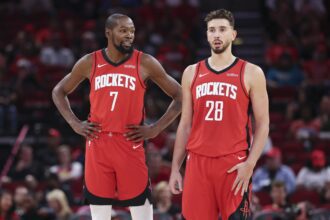
The Dallas Mavericks are shifting from “hang in” mode to “sell what you can,” and the reporting finally caught up to the reality of the standings. The Athletic’s Christian Clark reported the Mavericks “will listen to offers” for Klay Thompson as the deadline pressure ramps up.
That’s a notable turn for a team that added Thompson to stabilize spacing and late-clock shot-making, because the Mavericks are 19-30 and sitting 11th in the West. At that point, the math gets cold: you’re not buying, you’re triaging.
Thompson’s season line explains why this is even a conversation. He’s averaging 11.6 points, 2.5 rebounds, and 1.4 assists, shooting 38.7% from the field. The appeal for contenders is simpler than the raw scoring: he’s still a high-gravity shooter who can live off movement, punish help, and keep defenses honest even when the volume isn’t vintage.
If Clark is right and the Mavericks are genuinely open for business, the next step is obvious: finding the teams that can actually weaponize Thompson’s shooting in playoff possessions, not just “add a name” for February.
That’s why we’re laying out seven destinations that make basketball and market sense.
The Pistons Add Instant Off-Ball Gravity For A Real Playoff Push
Detroit Pistons Receive: Klay Thompson
Dallas Mavericks Receive: Caris LeVert, Javonte Green
This is the type of “win-now, no-drama” swing that makes sense when you’re already sitting on a top-tier record, and you’re thinking about playoff possessions, not January possessions.
The Pistons are 37-12, first in the East, and their next problem is the same one every contender eventually runs into: what happens when opponents load up on your lead creator, switch everything, and dare you to win in the margins.
Klay Thompson is basically a margin weapon. Even in a down-scoring season, he still plays a style that forces defensive rules to change, because teams don’t want to be the ones who “helped off Klay” and watched the game swing.
The box score is modest, but the archetype is still real: movement shooting, quick-trigger catch-and-shoots, and the kind of reputation that pulls a defender one step higher and one step tighter. For a Pistons offense that already creates paint pressure, that extra step matters. It means fewer nail stunts, fewer low-man tags cheating early, and more clean kickouts that don’t require the ball-handler to be perfect.
The Mavericks’ motivation is the part that has to be emphasized, because it aligns with the reporting. The front office is shopping for flexibility, and the cleanest version of flexibility is expiring money plus contracts you can re-route quickly.
This deal gives them exactly that mix. Caris LeVert is a functional secondary handler who can keep possessions alive when the first action dies, and he’s putting up 7.8 points, 1.8 rebounds, and 2.8 assists on 42.9% shooting. Javonte Green is the more “Mavs” piece: low-usage, energy wing minutes, and a contract profile that doesn’t clog the books long-term.
Thompson is at $16.7 million in 2025-26 and $17.5 million in 2026-27, with $34.1 million total remaining after this season. LeVert is at $14.1 million in 2025-26, while Green carries a $2.3 million cap hit as an expiring contract. That’s why the money is clean without needing goofy filler.
The risk for the Pistons is defensive targeting: in the playoffs, opponents will try to hunt any shooter whose lateral quickness isn’t pristine. The Mavericks’ risk is more structural: they’re selling their cleanest spacing gravity and betting that LeVert’s creation plus Green’s expiring flexibility is the better deadline outcome.
The Magic Get Much Needed Outside Shooting
Orlando Magic Receive: Klay Thompson
Dallas Mavericks Receive: Jonathan Isaac, Noah Penda, 2026 second-round pick, 2028 second-round pick
If you’re going to pick a destination where Thompson’s skill set plugs the loudest hole, it’s the Magic, and the team data makes the case without any drama. The Magic are 25-23, and they’ve been living in the danger zone offensively because their spacing math is fragile: 33.2 three-point attempts per game and 34.2% from three.
When you combine low-ish volume with below-average accuracy, defenses shrink the floor, sit in the paint, and treat your drives like they’re predictable. That’s the exact ecosystem where a gravity shooter changes your geometry even when he’s not “hot.”
That’s why Thompson fits here in a way that’s more than “add a name.” He forces tighter closeouts, he punishes help, and he gives the Magic a release valve when the half-court gets sticky. You’re not asking him to be a creator. You’re asking him to make the floor bigger, so your primary engines don’t have to score through crowds every possession.
The Mavericks side is where you have to be honest about priorities. This structure isn’t the purest “all-expiring” build, because Jonathan Isaac isn’t expiring. The sell is different: the Mavs take a bigger defensive swing, add a cheap developmental contract, and get paid in draft equity.
Isaac is the centerpiece on paper. The upside is obvious if you believe in the defensive value: a frontcourt defender who can tilt possessions and give the Mavericks a different identity lever to pull, especially in lineups that need stops without sacrificing size.
The second piece is Noah Penda, the type of low-cost rookie contract you actually want when you’re trying to keep your books light while taking swings on upside. The two second-round picks are the sweetener that makes it rational for the Mavs to move off a shooter archetype that contenders always want.
Contract-wise, the story is simple. Isaac is at $15.0 million in 2025-26 with longer-term money attached, while Penda is at $1.3 million in 2025-26. That band is why the salary matching is workable without Dallas needing to add extra contracts, and the picks do the negotiating work.
The risk for the Magic is straightforward: you’re paying real assets for a veteran shooter and betting it meaningfully changes playoff spacing.
The Mavericks’ risk is the opposite of the Pistons deal. Instead of maximizing expiring flexibility, you’re taking on a longer runway and betting Isaac’s defense plus the picks is the better portfolio, or that Isaac stays movable if you want to pivot again later.
A Luka-Friendly Shooting Swing
Los Angeles Lakers Receive: Klay Thompson, Dante Exum
Dallas Mavericks Receive: Maxi Kleber, Jake LaRavia
This is the awkward one, because the basketball logic is obvious, but the reporting says the pathway might not be there. Dan Woike flat-out said, “The roads are closed on the Mavericks making a trade with the Lakers anytime soon.” If that’s the temperature behind the scenes, you have to frame this as a pure hoops exercise, not something being actively discussed.
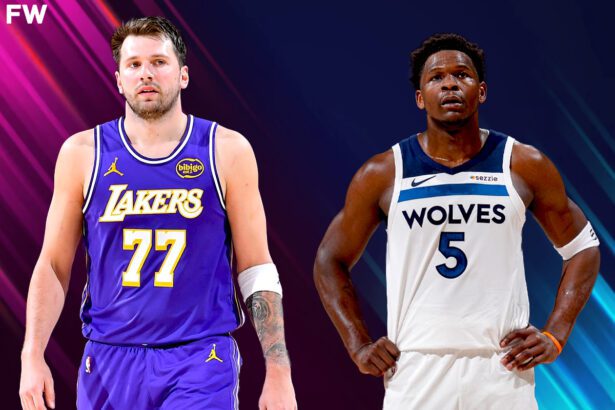
Because on the court, the Lakers have the cleanest reason to chase Thompson: at 30-19 and 5th in the Western Conference, they need more reliable shooting gravity around Luka Doncic, and the team numbers keep pointing to the same issue.
The Lakers are at 34.1 three-point attempts per game, and they’re converting 34.85% from three, which is fine on volume but not strong enough when your offense is built on creating open looks off a heliocentric creator. Thompson’s value is that he doesn’t need the ball to matter. He forces a defender to stay attached through actions, and that changes how aggressive opponents can be with help at the nail and from the low man. It’s not “add a scorer.” It’s “make the floor bigger” for the possessions that decide playoff series.
Exum is the quiet part of the Lakers’ side. He’s not here as a headliner. He’s here as a functional guard body on a tiny number, the kind of expiring-style slot you can play or waive depending on health and depth. From a roster-building perspective, it’s the low-risk add you tack onto the real prize.
The Mavs’ return is where the “what the Mavericks want” angle actually shows up. Maxi Kleber is the cleanest part: he’s on an expiring contract, and was even a part of the Doncic deal that sent him to the Lakers.
Jake LaRavia is the more interesting basketball piece. He’s giving the Lakers 9.2 points, 4.2 rebounds, and 2.0 assists on 45.4% shooting, and that profile matters because it’s a real rotation wing on a controllable number, not a minimum flyer.
Kleber is on an $11.0 million expiring deal. LaRavia is at $6.0 million this season and $6.0 million next season. Exum is at $2.3 million. The outgoing money lines up cleanly with Thompson’s contract slot, so the mechanics work without extra filler.
The Hornets Take A Low-Cost Swing On Playoff-Grade Shooting Gravity
Charlotte Hornets Receive: Klay Thompson
Dallas Mavericks Receive: Pat Connaughton, Mason Plumlee
This one is basically a bet on fit and timing. For the Hornets, the logic starts with urgency and standings. They’re 23-28, sitting 11th in the East, which is close enough to smell the play-in but not stable enough to pretend the current shot-creation and spacing mix is already “set.”
Adding Thompson is less about turning into a contender overnight and more about making the half-court easier for the core, because his off-ball gravity changes how opponents help at the nail and how aggressively they load up on the primary initiator.
The outgoing pieces are clean, functional “reset” money for the Mavericks. Pat Connaughton is giving the Hornets 2.9 points, 1.4 rebounds, and 0.6 assists, and he’s been efficient in a small role. Mason Plumlee is at 1.9 points, 2.9 rebounds, and 1.1 assists in limited minutes. Neither player is a franchise changer, but both are the exact type of expiring profile that matters when you’re trying to keep the books clean and preserve deadline optionality.
Salary-wise, Connaughton is at $9.4 million this season, and Plumlee is at $3.6 million. That’s basically the point for the Mavericks: two expirings that can be rerouted later or simply cleared, rather than holding a veteran shooter deal if the roster timeline is shifting.
The risk is obvious. The Hornets are paying real “spacing value” for a player whose nightly box score isn’t what it used to be, and opponents will still test him defensively in playoff-style matchups.
But the upside is equally clear: even a version of Thompson who’s more specialist than star can still bend a defense, and for a team living in the play-in neighborhood, that can be the difference between empty possessions and a functional late-game offense.
The 76ers Flip Expiring Depth Into One Elite Spacing Lever
Philadelphia 76ers Receive: Klay Thompson
Dallas Mavericks Receive: Kelly Oubre Jr., Andre Drummond, Eric Gordon
This is the cleaner “deadline logic” deal, because it lines up with both reporting and roster math. NBA insiders Jake Fischer and Marc Stein said Andre Drummond and Eric Gordon are drawing trade interest. If the 76ers are prioritizing consolidation, this is exactly what it looks like: turn multiple expiring-ish pieces into one specialized playoff tool.
Context matters here. The 76ers are 29-21, sixth in the East, and they’ve been riding momentum even while managing availability. That’s the profile of a team that can justify a “fit over depth” move, especially when the half-court gets tight, and the margins are decided by who can punish help rotations. Thompson’s gravity is the entire sell: you’re not trading for self-creation, you’re trading for the way defenders refuse to leave him, and how that opens pockets of space for the stars to operate.
The Mavericks’ side is about what they’ve been signaling. With their season sliding and Thompson reportedly available, the priority shifts toward flexibility and movable money rather than keeping a specialist contract through a turbulent stretch.
The incoming players for the Mavericks are also easy to sell internally because they’re functional and, crucially, movable. Kelly Oubre Jr. is producing 14.2 points, 4.6 rebounds, and 1.5 assists, giving real two-way wing minutes. Andre Drummond is at 6.8 points, 8.7 rebounds, and 0.8 assists, and he can still soak up center minutes when the roster needs it. Gordon is at 5.5 points on 57.1% from the field in a small role, basically a low-usage shooter/handler slot.
Salary-wise, Oubre is at $8.4 million, Drummond is at $5.0 million, and Gordon is at $3.6 million. That’s the “expiring stack” profile teams chase when they want to stay flexible, and it’s exactly why the Mavericks would even entertain a Thompson move.
The risk for the 76ers is depth. You’re stripping out multiple playable bodies, and if injuries hit, you can feel it fast. The risk for the Mavericks is selling too low on a spacing archetype that contenders always value, then watching Thompson’s gravity swing a playoff series somewhere else.
The Spurs Turn Spacing Into A Real Weapon Around Wembanyama
San Antonio Spurs Receive: Klay Thompson
Dallas Mavericks Receive: Kelly Olynyk, Lindy Waters III
This is the kind of clean, role-forward swing that fits what the reporting has been hinting at. The Spurs are the type of buyer that can make that conversation real, because they don’t need Thompson to be a primary option. They need a defensive magnet who turns the half-court into easier math for everyone else.
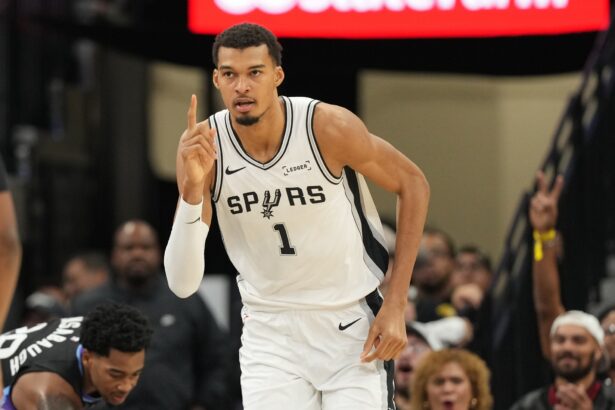
The Spurs are 33-16, second in the West, and the season has already established the identity: elite defense anchored by Victor Wembanyama and a growing offense that’s most dangerous when the floor is spread.
Thompson is basically a spacing accelerant. Even when his box score isn’t loud, he forces top-locks, tighter closeouts, and fewer “free” help rotations at the nail. That matters when Wembanyama is drawing attention as a roller, a pop threat, and a late-clock bailout. You’re not adding usage. You’re adding gravity.
The Mavericks’ return tells you what they’d be chasing here: short-term contracts and usable pieces that can be treated as tools instead of commitments. Kelly Olynyk is only playing a small role this season, but he’s still a functional connector: 3.5 points, 1.9 rebounds, 1.3 assists on 47.2% shooting. Lindy Waters is even more “role-specific,” giving 1.9 points, 0.8 rebounds, 0.4 assists on 35.2% shooting in limited minutes, basically a deep-rotation shooter slot you can scale up if injuries hit.
The cap angle is what makes this feel like a Mavericks-type move if they’re serious about clearing lanes. Olynyk is on $13.4 million, and it’s an expiring. Waters is on a small $2.3 million cap hit, and it’s also short-term money. The outgoing salaries align with Thompson’s contract slot without the Mavericks needing to add extra pieces, and the key benefit is the flexibility those expirings create.
Risk-wise, the Spurs are betting that Thompson’s playoff value still shows up in the only place that matters: possessions where defenses load up and dare role players to make shots.
The Mavericks are taking the opposite bet, that two expiries and optionality are more valuable than holding a specialist shooter deal through a season that’s already forcing hard decisions.
The Trail Blazers Buy Shooting To Make A Playoff Run
Portland Trail Blazers Receive: Klay Thompson
Dallas Mavericks Receive: Matisse Thybulle, Kris Murray
If the Mavericks are actually listening on Thompson, this is the type of framework that makes sense because it combines a real defensive piece with cheap, controllable roster value. It’s also a coherent swing for the Trail Blazers, who are 23-27 and 10th in the West, living in the messy middle where adding one bankable skill can change your weekly reality.
Thompson is a plug-in spacing lever: he doesn’t need the ball, but he changes where defenders can stand, which is exactly what young offenses need when they’re trying to convert chaos into efficient shots.
For the Mavericks, the headline is Matisse Thybulle’s defensive profile and contract timing. He’s only played four games, but he’s produced 5.0 points, 1.0 rebounds, 0.8 assists, and a massive 2.5 steals per game, and he underwent thumb surgery that sidelined him for weeks, which explains the small sample. If healthy, he’s a scheme-proof perimeter disruptor who can guard up a position and blow up actions at the point of attack. That’s a real playoff trait.
Khris Murray is the other piece that makes this feel like a “portfolio” return instead of a single-player swap. He’s averaging 6.1 points, 4.0 rebounds, and 1.2 assists on 44.6% shooting, the type of low-usage forward line that fits next to high-usage creators without demanding touches.
The money is clean, and it fits what the Mavericks have been signaling. Thybulle is on $11.6 million, and it’s the kind of expiring slot teams value because it doesn’t clog future summers. Murray is on $3.1 million and tied to a three-year deal, which is exactly the type of cheap, movable contract rebuilding or retooling teams like to keep around. Together, it matches Thompson’s slot without forcing weird filler, while giving the Mavericks flexibility and defense at the same time.