The Indiana Pacers didn’t expect the 2025-26 season to look like this. A year removed from a run to the NBA Finals, they’re sitting at 6–18, Tyrese Haliburton is rehabbing an Achilles tear, and their defense has fallen into the mid-tier of the league with a 117.0 defensive rating.
Losing Myles Turner in free agency ripped out their backline, and the patchwork trio of Jay Huff, Isaiah Jackson, and Tony Bradley hasn’t come close to replacing that presence.
Shams Charania’s latest column for ESPN made it official: the Pacers are “in active trade talks around the league to find a center of the future” after Turner’s departure.
That’s front-office code for “we don’t believe our current bigs can anchor a contender,” and it matches what we’re seeing on the floor: too many straight-line drives, too few contested shots at the rim, and way too many second-chance points.
Since that report dropped, one name has clearly moved to the front of the rumor mill: Walker Kessler. RealGM and Utah reporter Ben Anderson have both noted the Pacers’ long-standing interest in the Jazz center, and multiple outlets now frame him as a prime target.
Kessler averaged 14.4 points, 10.8 rebounds, and 1.8 blocks this season, emerging as one of the league’s most efficient young rim protectors before a torn labrum in his left shoulder ended his campaign.
Even with that injury and a looming restricted free agency, he fits almost perfectly with where the Pacers want to be two or three years from now.
But if the Pacers are serious about finding their next long-term anchor, they can’t afford to fixate on just one option, especially with the February deadline coming fast and a lottery season already in motion.
This is the moment to scan the entire league and identify which centers actually match their timeline, cap sheet, and identity. With that in mind, here are five big men the Pacers should be targeting before the trade buzzer sounds.
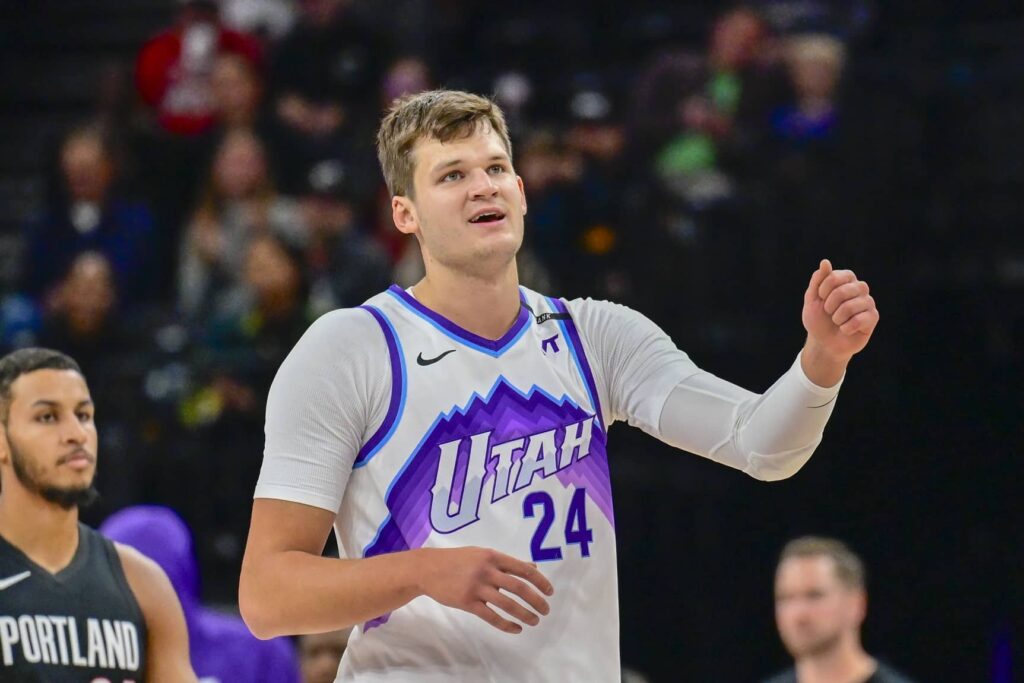
1. Walker Kessler
Potential Trade Offer: Jarace Walker, 2027 first-round pick (sign-and-trade deal)
If the Pacers want a “center of the future,” this is the cleanest swing they can take. Before the torn labrum in his left shoulder shut him down, Walker Kessler was in the middle of a breakout start to 2025-26: 14.4 points, 10.8 rebounds, 3.0 assists, 1.8 blocks, and 70.3% from the field in just five games, while ranking top 10 in the league in boards and blocks.
For a team that watches opponents live at the rim every night, that kind of volume plus efficiency jumps off the page.
This wasn’t a random hot week either. Last season, he already looked like a top-tier rim protector, putting up 11.1 points, 12.2 rebounds (4.6 offensive), and 2.4 blocks on 66.3% shooting across 58 games.
He’s an elite play-finisher, not a post-up hub: screen, dive, catch everything around the basket, and erase mistakes on the back line. Plug that into a Pacers group that loves to run, and you suddenly have a vertical spacer in every Haliburton pick-and-roll, a monster on the glass, and someone who can actually close off the paint instead of just contesting from behind.
The contract piece is where this gets complicated, and where the Pacers might smell opportunity. Utah and Kessler couldn’t agree on a rookie extension before the deadline, so he’ll hit restricted free agency this summer with the Jazz holding matching rights.
ESPN already floated a three-year, $51 million number as a reasonable extension baseline for him before the season, roughly $17 million annually. With the way he opened this year, a healthy Kessler probably pushes his market into the high-teens or low-20s per year on an offer sheet.
The shoulder surgery and his history with that labrum suddenly give the Jazz a reason to pause before handing a traditional “big man mega-deal” to a non-all-star center.
That’s exactly why the Pacers should be aggressive now. Multiple reports already link them to Kessler, noting that his value is at its lowest because of the injury and his looming restricted free agency.
A trade before the deadline consisting of young forward Jarace Walker, and a future first-rounder in 2027, gets them his Bird rights and the inside track on a four-year deal that might come in slightly below what a fully healthy breakout season would’ve demanded.
From Utah’s side, if they aren’t ready to commit long term, flipping him to the Pacers for a premium pick and a young piece, then coordinating a sign-and-trade in July instead of losing him for nothing, is the logical middle ground.
If the goal is to walk into 2026 with a healthy Haliburton and a long-term defensive anchor already under contract, Kessler is the swing that makes the most sense, even if it means paying real money and giving up real assets to get there.
2. Jarrett Allen
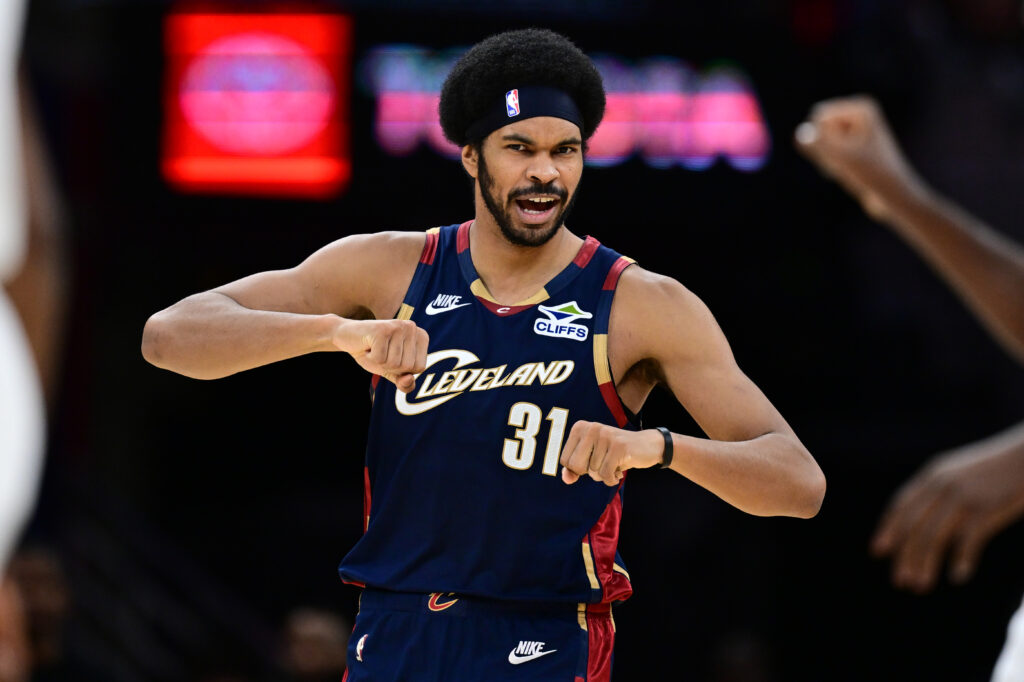
Potential Trade Offer: Jarace Walker, Obi Toppin, 2027 first-round pick, 2029 first-round pick
Jarrett Allen is the kind of guy you don’t have to trade… but you definitely listen on if you’re the Cavaliers. He’s still a walking double-double this season, living in that 14.3 points, 7.6 rebounds range on elite efficiency and giving the Cavaliers exactly what he always does: rim protection, vertical spacing, and a super reliable pick-and-roll partner for Donovan Mitchell and Darius Garland.
He doesn’t need touches, he doesn’t complain, and he quietly cleans up a ton of mistakes at the back line.
The problem for the Cavaliers isn’t Allen as a player; it’s team building. With Evan Mobley already becoming one of the best defenders in the league and coming off a Defensive Player of the Year season, the Cavaliers can legitimately ask themselves if they still need two non-shooting bigs locked into big money.
Mobley looks more and more like the long-term anchor, and stacking a heavy salary at the 5 when you still have to worry about Mitchell’s future, Garland’s deal, and the rest of the rotation isn’t exactly cap-flexible behavior.
Allen is on a very solid contract for a starting center in his prime: $20 million per year, not a crippling max, but that’s exactly why he’s a realistic trade chip. You can move his number in a star-level deal, or you can flip him for two useful pieces like Obi Toppin as a forward and Jarace Walker as a smaller center, and immediately rebalance your roster with more pace in transition.
For the Cavaliers, that probably means going after more depth up front with Toppin and Walker, extra shooting, and maybe another guard who can take some responsibility off Mitchell in the playoffs after that move, using the two first-rounders acquired. They’ve already seen what this core looks like when the game slows down: the paint gets crowded, the spacing shrinks, and they run into that same second-round ceiling over and over.
That’s where the Pacers step in. They need a proven defensive big right now, not a project. Allen walks in on Day 1 as their best rim protector since Myles Turner, slides perfectly into any pick-and-roll game with Tyrese Haliburton once he’s healthy, and doesn’t demand post touches.
Offensively, he just screens, rolls, finishes everything, and punishes the offensive glass. Defensively, pairing him with their length on the wings instantly raises their floor.
From the Cavaliers’ side, moving off Allen would hurt, but if the front office really believes Mobley is ready to live full-time at the 5, then flipping Allen for picks plus two rotation pieces might be exactly the “one step back, two steps forward” move they need.
From the Pacers’ side, you overpay a bit, lock him in as your long-term anchor, and bet that giving up assets for a 27-year-old proven playoff center is the kind of shortcut that doesn’t come around often.
3. Nic Claxton
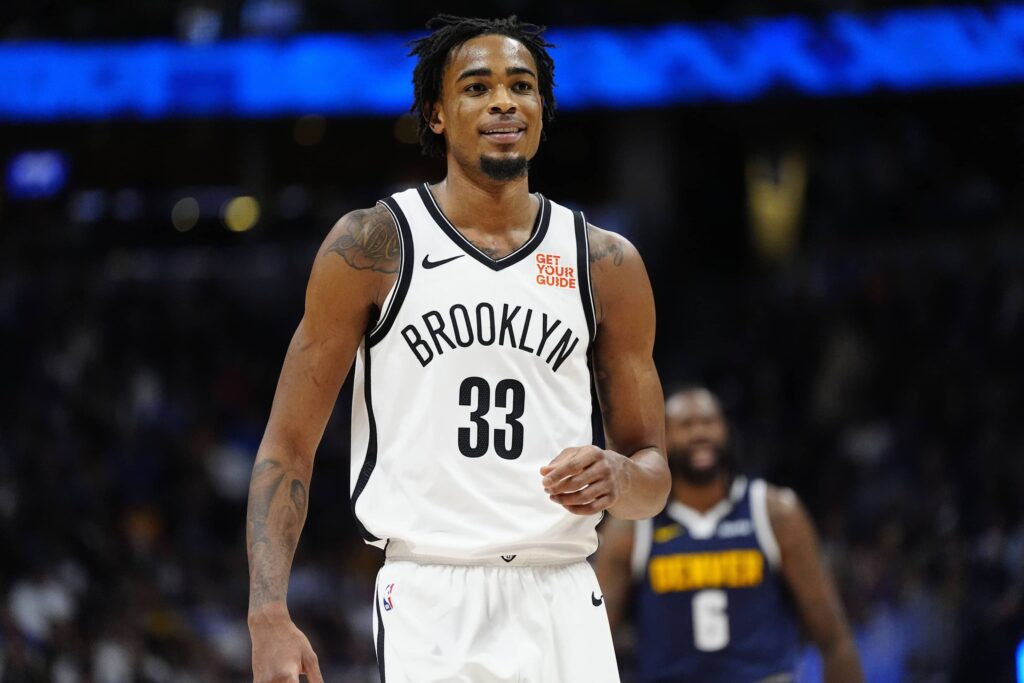
Potential Trade Offer: Obi Toppin, Isaiah Jackson, 2027 first-round pick, 2029 first-round pick
If the Pacers want a center who actually fits modern basketball, Nic Claxton is right at the top of the board. He’s quietly putting together one of the best all-around seasons of his career: 13.6 points, 7.7 rebounds, 4.5 assists, 1.4 blocks, and 55.7% from the field in 30.2 minutes per game for the Nets.
Over the last couple of weeks, he’s leveled up as a playmaker too, averaging 7.3 assists and 2.0 blocks in his last four outings, including a 14-11-10 triple-double with three blocks in a win over the Pelicans, his second triple-double of the season.
The context around him is messy. The Nets are just 6–17, sitting 13th in the East with a rough -7.6 net rating after opening the year 1–11 before stabilizing a bit with a 5–6 stretch since.
The season is already more about Michael Porter Jr.’s scoring binge, a bunch of first-round rookies, and Sean Marks using their cap space to play in every trade discussion than it is about chasing wins.
Shams Charania has already reported today that the Nets are positioned as a trade hub again, eyeing salary dumps and shopping Cam Thomas while sitting on around $15 million in cap space. That doesn’t mean Claxton is on the curb, but it does mean they’re open for business around the edges of the core.
Money-wise, he’s on the kind of deal a smart front office loves. Claxton re-signed on a four-year, $100 million contract in 2024, with a descending structure that pays him about $27.6 million in year one, $25.35 million this season, $23.15 million in 2026-27, and $20.94 million in 2027-28, with roughly $97 million guaranteed and $3 million in incentives.
In a rising cap, that number is only going to look better every year. For the Nets, it’s a clean mid-tier star contract; for the Pacers, it’s a plug-and-play defensive anchor whose cap hit shrinks as Haliburton’s prime gets more expensive.
On the floor, the fit is almost too perfect. The Pacers need a center who can defend in space, not just camp in a deep drop, and Claxton lives in those gaps, switching onto guards, sliding with wings, then still recovering to block shots from the weak side. His 1.4 blocks per night undersell how many drives he deters just by being around the rim.
Offensively, he doesn’t demand post-ups, which is exactly what you want next to Haliburton: set hard screens, sprint into the roll, dive for lobs, punish the offensive glass, and keep the ball moving from the elbows. The fact he’s up to 4.5 assists per game this season is a huge bonus; you can run dribble handoffs and short-roll actions through him and trust he’ll find shooters.
The downside? Cost. Because of that contract and his age (26), the Nets are not letting him go for a light pick package. The Pacers should move two future first-rounders (2027 and 2029), plus a depth piece in Isaiah Jackson, while letting Obi Toppin go for salary-matching purposes, an asset the Nets would definitely flip for more draft capital later.
But if the Pacers decide they want a switchable, playmaking rim protector instead of a more traditional drop big like Walker Kessler or a heavier interior presence like Jarrett Allen, Claxton is the swing with the highest “modern basketball” upside. If I’m the Pacers, he’s absolutely one of the first calls I make.
4. Daniel Gafford
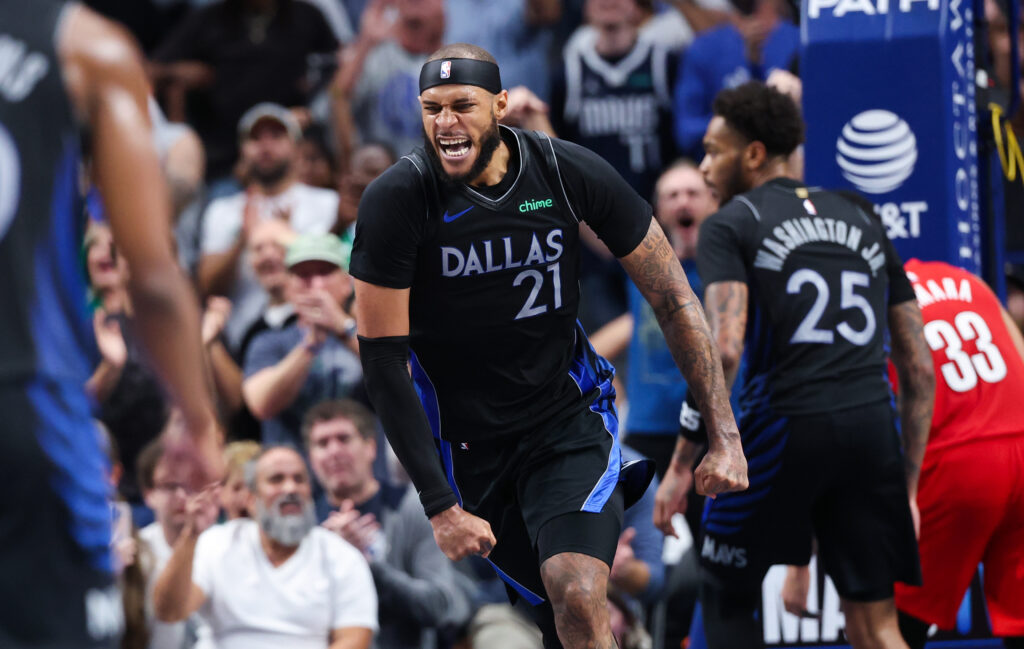
Potential Trade Offer: Obi Toppin, 2027 first-round pick, 2028 second-round pick
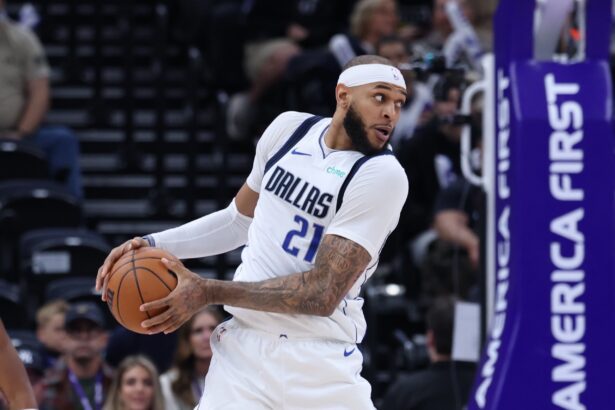
If the Pacers want a pure rim-runner who lives in the paint and doesn’t need touches drawn up for him, Daniel Gafford is exactly that guy. He’s having a quietly solid year for the Mavericks: 8.9 points, 6.4 rebounds, 1.3 assists, and 1.4 blocks in 22.9 minutes per game, while shooting 61% from the field.
When Jason Kidd actually starts him, the numbers jump to 10.7 points, 5.9 boards, and 1.7 blocks in nine starts, which is basically the profile of a low-usage, high-impact defensive big.
The team context in Dallas is chaos-adjacent. The Mavericks are 9–16 and sitting 12th in the West, with a negative rating and an interim front office trying to decide whether to push or pivot around Cooper Flagg.
Nico Harrison is gone, Michael Finley and Matt Riccardi are running things on an interim basis, and every veteran on a sizeable contract is basically under review. That’s how you get to Shams Charania’s latest note: the Mavericks are open to exploring trades for Davis, Gafford, Klay Thompson, and D’Angelo Russell ahead of the deadline.
It’s not just Shams, either. DallasHoopsJournal already quoted an anonymous executive who “expects” the Mavericks to eventually move Davis, Thompson, Russell, and Gafford as part of a larger reshuffle, and Yahoo Sports has linked Gafford to potential deadline deals since early November.
He’s basically become the league’s classic “available but not being shopped aggressively” big man, the guy contenders call about once they strike out on the stars.
The money makes him even more interesting for the Pacers. Gafford is earning about $14.4 million this season, and he just agreed to a three-year extension projected between $54 and $60 million that will run through 2028-29, putting him in that mid-teens to roughly $20 million per year range.
The Pacers would have to throw Obi Toppin’s $14.3 million deal in the trade, matching perfectly with Gafford’s. Add a future first and a second to sweeten the deal a little more, and the Mavericks could let their second-choice center walk away to Indianapolis.
That’s not cheap, but it’s a very reasonable number for a starting center in his prime who finishes everything around the rim and blocks shots at a high rate. You’re not locking yourself into a “can’t move this later” contract; you’re locking in a movable mid-tier deal for a guy who fits next to stars.
Basketball-wise, the fit with the Pacers is easy to picture. Offensively, Gafford does three things: sets mean screens, sprints to the rim, and lives on the offensive glass. That’s exactly what you want next to Tyrese Haliburton once he’s healthy: a vertical spacer who can suck in weak-side defenders and open kick-outs for shooters.
Defensively, he’s not as scheme-versatile as Nic Claxton, but he’s a legit rim protector who can play a solid drop, erase mistakes at the cup, and give the Pacers a real deterrent in the paint instead of just “contest and pray.”
The risk is that you’re paying for a guy who probably never becomes more than a really good role player. But for the Pacers, that might be fine. Gafford doesn’t need post touches, doesn’t demand the ball, and already has reps playing next to a star big in Davis, sliding into a simpler, cleaner role behind an on-ball engine like Haliburton could unlock his peak version every night.
If the ask is a first-round pick plus a non-core piece, I actually like this move a lot for the Pacers. You get a starting-caliber center on a controllable contract, the Mavericks get flexibility to reshape around Flagg, and both teams walk away closer to what they actually want to be.
5. Ivica Zubac
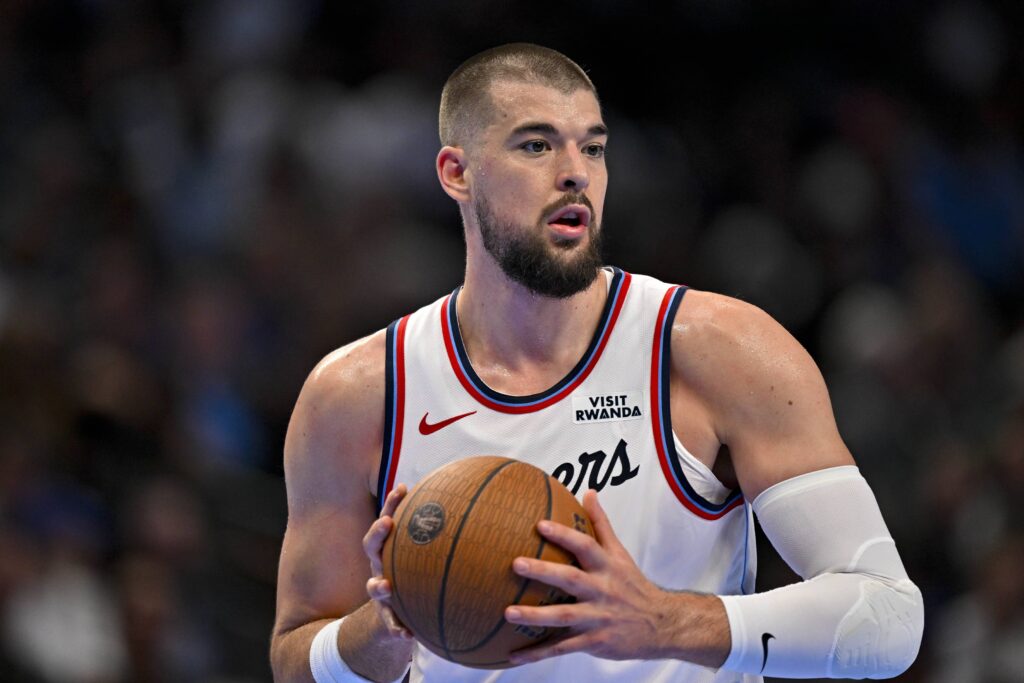
Potential Trade Offer: Obi Toppin, Jay Huff, 2027 first-round pick, 2029 first-round pick, 2028 second-round pick
If the Pacers want a center who is already playing at a near All-Star level, Ivica Zubac is the name that jumps off the board. He is in the middle of the best year of his career, averaging 15.9 points, 11.6 rebounds, and 2.6 assists while shooting just under 60% from the field for the Clippers.
He crashes the glass, finishes everything around the rim, and quietly gives them a real interior backbone on a team that is otherwise full of aging perimeter stars.
The context around him is a mess. The Clippers are 6-18, fourteenth in the West, and every story about them starts with the same sentence: oldest roster in league history, heavy minutes for Kawhi Leonard and James Harden, plus an ugly salary cap investigation cloud hanging over everything.
Cutting Chris Paul in the middle of his farewell season and sending him home on a road trip turned the whole thing into a full-on soap opera and made it obvious that this front office is ready to make painful decisions.
In that chaos, Zubac has basically become their most attractive trade chip. Multiple reports in the last week describe him as the Clippers player drawing the most calls from other teams, even more than Leonard or Harden in some cases, because he is younger, healthier, and much easier to fit into a contender’s cap sheet.
Other articles have linked him heavily to frontcourt-needy teams like the Celtics, and there are already detailed proposals built around Anfernee Simons’ expiring deal plus draft capital going to the Clippers for Zubac.
His contract is exactly why rival teams are so locked in. Zubac signed a three-year extension in 2024 worth about $58.6 million, fully guaranteed, which keeps him under team control through the 2027–28 season with cap hits that rise from roughly $18.1 to $20.9 million.
That is premium starter money but not superstar money, which makes him incredibly easy to slot into trades and still have room left to build. For the Pacers, that is the kind of deal you can live with on your books for three more seasons while Haliburton ages into his prime.
On the court, the fit is almost boring in the best possible way. Zubac is a classic paint anchor, a big body who sets wide screens, seals deep, finishes with touch, and gives you real size against the bigger centers in the league.
His rebounding numbers speak for themselves, and he has enough touch as a passer to keep possessions flowing from the elbows instead of turning into a black hole. Defensively, he is not as switchy as Nic Claxton, but he is a reliable drop defender who protects the rim, boxes out, and lets everyone else stay home on shooters. For a Pacers team that bleeds points at the basket, that profile is extremely appealing.
The price is the only scary part. Because he is playing this well, because he is just 28, and because his contract is so clean, the Clippers can easily ask for multiple first-round picks plus at least one real part of the rotation.
They also know that if they ever decide to chase a true megastar again, Zubac is the exact kind of salary and value piece that makes a Giannis-level trade even possible. In that scenario, the Pacers would have to make multiple first-rounders available, plus Obi Toppin and Jay Huff, to give the Clippers another solid center to fill Zubac’s void with his outside shooting and shot-blocking.
If the Pacers are willing to pay that premium, though, they get something they have not had this season: a dependable, every-night center who can anchor a defense, soak up ugly minutes, and let Haliburton and the guards worry about winning the perimeter battles instead of cleaning up the mess at the rim.