The Utah Jazz finished at the bottom of the Western Conference standings, finishing 22-60 for the 15th seed, in yet another disastrous campaign. While another difficult season was painful for fans, it has given Utah the No. 2 overall pick in the stacked 2026 NBA Draft.
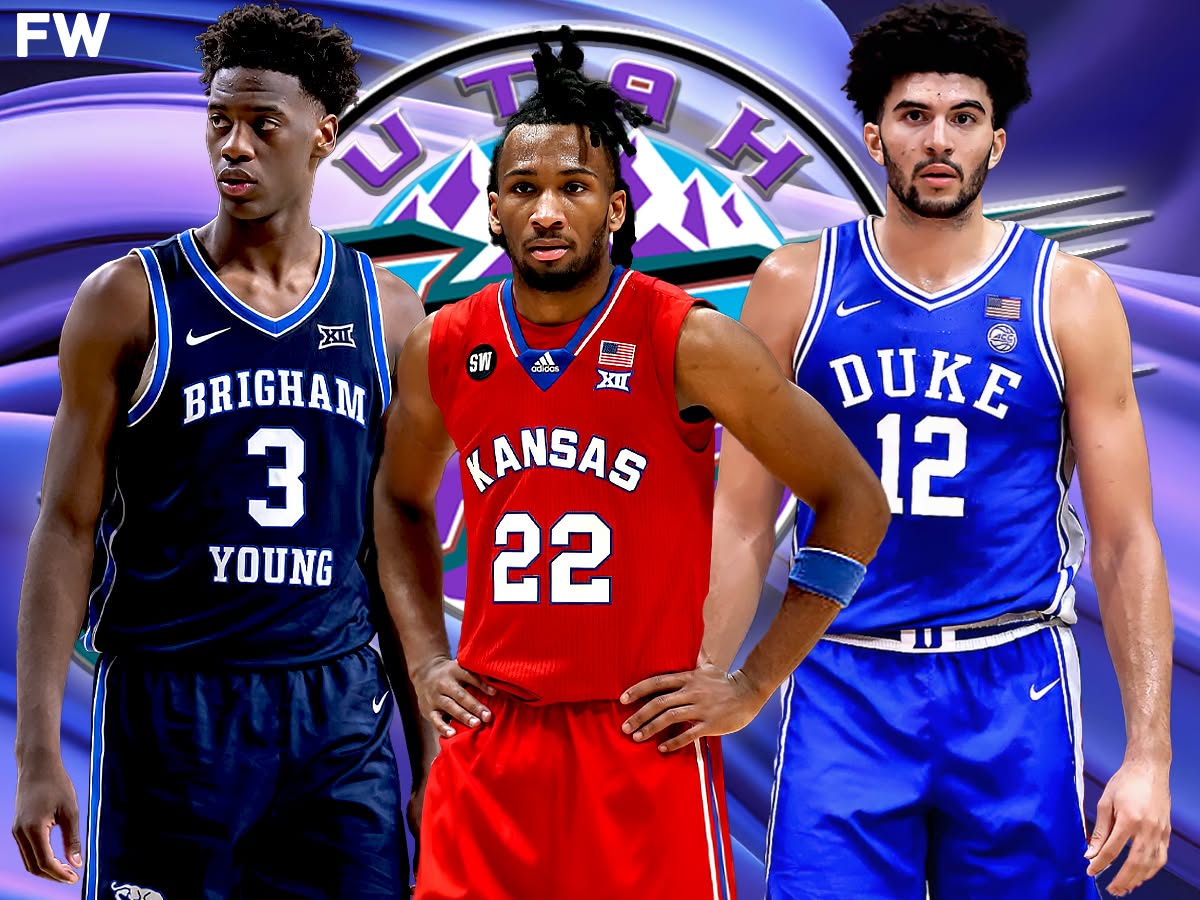
The debate has largely centered around three elite prospects: AJ Dybantsa, Darryn Peterson, and Cameron Boozer. All three possess All-Star potential. All three have been projected near the top of draft boards for years, and the Jazz need to prepare for who the Washington Wizards are mostly interested in.
The situation becomes even more interesting because Darryn Peterson appears increasingly likely to become the No. 1 overall pick.
According to ESPN’s Shams Charania and Jeremy Woo, Peterson completed a formal visit with the Washington Wizards and reportedly has no plans to meet with any other teams.
That’s a strong indication Washington has zeroed in on him, though AJ Dybantsa remains firmly in the conversation.
Meanwhile, Utah appears to be emerging as Dybantsa’s preferred destination, and the team might even consider trading up to No. 1 to safely select him. The young star has made it clear he loves Utah and has gone far enough to share his knowledge of the city.
The Jazz can offer him immediate star status, a clear developmental pathway, and an organization desperate for a franchise face.
Cameron Boozer remains an outstanding prospect, but Utah’s existing frontcourt raises legitimate questions about fit.
So who should the Jazz select if they’re on the clock at No. 2?
AJ Dybantsa Has The Highest Superstar Ceiling
If Utah is drafting purely based on ceiling, the conversation probably starts and ends with AJ Dybantsa.
The 6’9″ wing spent his freshman season dominating college basketball, averaging 25.5 points, 6.8 rebounds, 3.7 assists, 1.1 steals, and 0.3 blocks while shooting 51.0% from the field. He also looks like an immediate NBA star already and has the backing from those who know him best.
Dybantsa has elite athleticism, shot creation, and size. He can score in transition, attack off the dribble, create his own jumper, and defend multiple positions. Comparisons to Paul George, Jayson Tatum, and even Tracy McGrady have arisen due to his offensive game and build.
The “worst-case” outcome for Dybantsa is being a form of Andrew Wiggins, according to executives. That means the risk isn’t really there.
From Utah’s perspective, the fit is almost perfect.
The Jazz desperately need a primary perimeter star. Lauri Markkanen is an excellent scorer but profiles better as a secondary offensive option on a contender. Keyonte George had a career year (23.6 PPG, 6.1 APG), but Utah still lacks a true franchise centerpiece.
Dybantsa immediately fills that role.
The Jazz also have the team to maximize his development. Markkanen and George would take defensive attention away from him early in his career. Most importantly, Utah can hand him the keys without forcing him to win immediately.
Reports throughout the pre-draft process suggest Dybantsa is very interested in landing with Utah. While talent remains the priority, the Jazz will prefer the prospect who genuinely wants to be there.
The Jazz could be getting both the best player available and a player eager to become the face of the franchise.
Darryn Peterson Might Be The Safest Bet In The Draft
If Peterson somehow reaches No. 2, Utah would face a fascinating decision.
The 6’6″ guard was sensational during his lone college season, averaging 20.2 points, 4.2 rebounds, 1.6 assists, 1.4 steals, and 0.6 blocks per game while establishing himself as arguably the most polished offensive player in the draft class. He also shot 43.8% from the field, 38.2% from three, and 82.6% from the stripe.
Peterson’s biggest strength is that there are very few weaknesses in his game. He can score at all three levels, create for others, and play off the ball. Unlike many elite scoring prospects, Peterson already displays advanced decision-making and playmaking instincts.
The challenge for Utah is that they may never get the opportunity to draft him. The Wizards have made their intentions increasingly clear throughout the pre-draft process.
Peterson’s reported decision to meet exclusively with Washington feels like the strongest signal yet that both sides expect him to be selected first overall.
Still, if Washington surprises everyone and takes Dybantsa, Peterson would instantly become a serious option for Utah.
The Jazz need another primary creator, and Peterson could potentially become a 25-point-per-game scorer at the NBA level. Simply put, if he’s available, the Jazz front office will have a difficult time passing on him.
Cameron Boozer Is The Best Prospect, But Not The Best Fit
This is where things become complicated.
The 6’9″, 250-lb Cameron Boozer enjoyed a phenomenal college season, averaging 22.5 points, 10.2 rebounds, 4.1 assists, 1.4 steals, and 0.6 blocks while showcasing one of the most complete all-around skill sets in college basketball. The player himself believes he has one key trait that separates him from everyone else.
The son of former NBA All-Star Carlos Boozer, Cameron plays with an advanced understanding of the game rarely seen from teenage prospects, even if he continues having some doubters about his style of play.
He’s physical, highly skilled, an elite rebounder, a capable passer, and possesses the type of competitive edge coaches love. That is amazing for a 19-year-old.
On talent alone, Boozer belongs firmly in the discussion for the No. 2 pick.
The issue is how the roster is built.
Utah already has significant frontcourt players. Markkanen is most effective playing power forward and small-ball center minutes.
Jaren Jackson Jr. is a natural power forward who can also slide to center. Walker Kessler remains one of the league’s better rim protectors if he can get over the trade rumors that continue to surround him.
Where exactly does Boozer fit?
Drafting Boozer would create immediate positional issues. Instead of solving Utah’s biggest weakness, the lack of a franchise perimeter creator, it would strengthen an area where the roster is already deep.
That’s not necessarily a reason to pass on an elite talent.
However, when comparing similarly graded prospects, fit becomes an important tiebreaker. He simply doesn’t address Utah’s most glaring issues.
The Verdict: Utah Jazz Should Select AJ Dybantsa
If Darryn Peterson is available, the debate becomes much closer than many people realize. His all-around game makes him a legitimate candidate to go No. 1 overall.
But based on everything we know entering draft night, Peterson is likely headed to Washington.
That leaves AJ Dybantsa as the obvious choice because he fills Utah’s biggest need.
He offers arguably the highest upside in the entire draft class. He fits perfectly alongside George, Markkanen, Jaren Jackson Jr., and Kessler. He gives the Jazz the dynamic perimeter superstar they’ve been searching for since the Donovan Mitchell era ended.
Most importantly, Dybantsa has the potential to become the face of the franchise.
The Jazz need a transformational talent capable of changing the organization for the next decade. Among the players likely to be available at No. 2, AJ Dybantsa gives them the best chance to find exactly that.