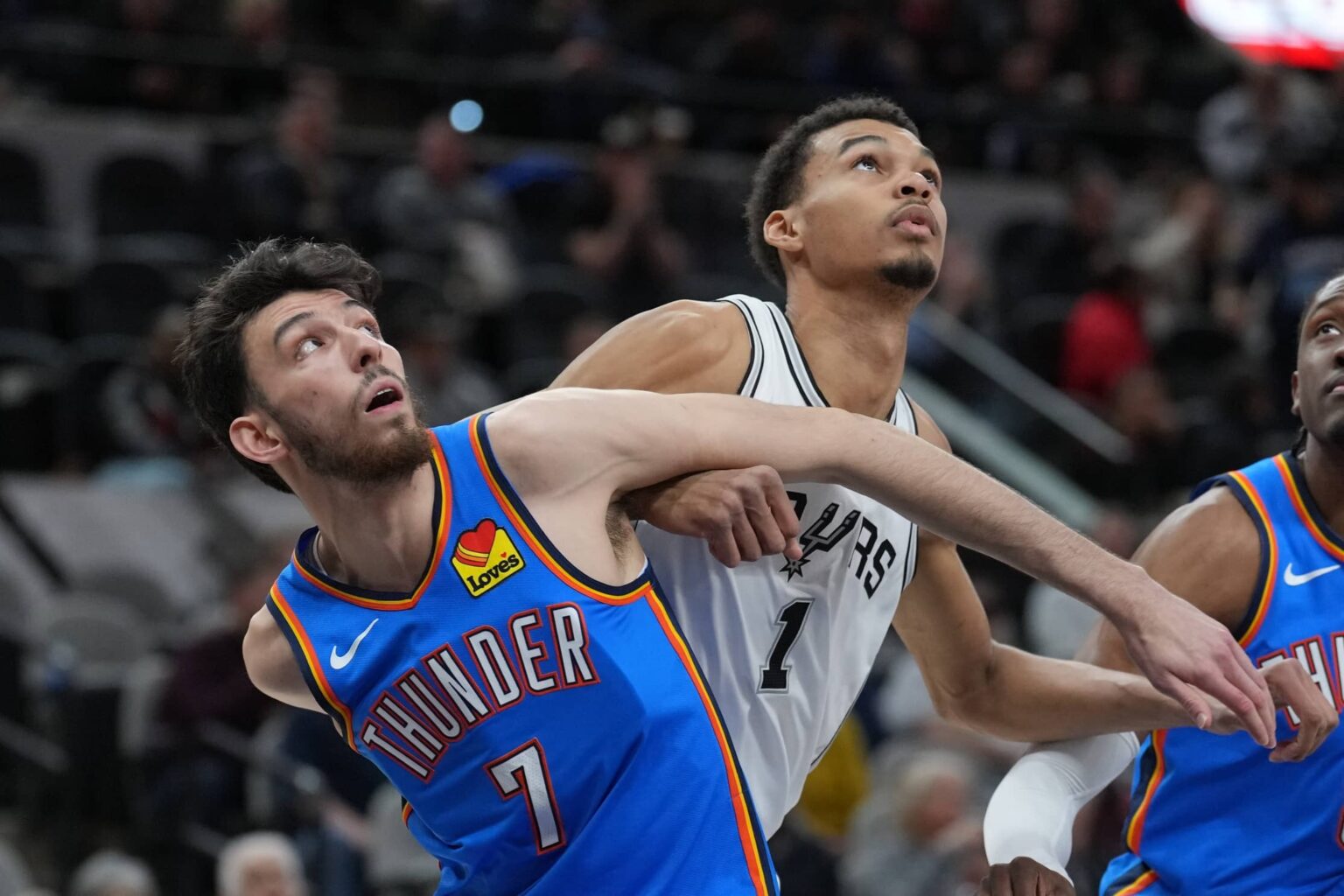
The Thunder can look like the league’s final boss against almost anybody, but the Spurs have flat-out owned this matchup. Three meetings so far, three Spurs wins, capped by that 117-102 Christmas Day punch that made the Thunder look weirdly human.
And yeah, it starts with Victor Wembanyama. When the Thunder try to play their usual “swarm, rotate, recover” defense, Wembanyama turns the paint into a no-fly zone and still punishes you as a roller, a lob threat, or a pop guy. He’s at 23.4 points, 11.8 rebounds, and 3.6 assists this season, and even in a minutes-managed role, he can tilt the entire geometry of the floor.
That’s why this isn’t just a “bad night” thing for the Thunder. They need a real counter. Not another wing defender. Not more shooting. They need a center they can actually throw at Wembanyama in a playoff-type setting, someone who can survive in space, protect the rim, and not get erased by size. And if the Thunder want revenge, the trade market might be the only way to get it.
1. The Thunder Finally Put More Size On Wembanyama
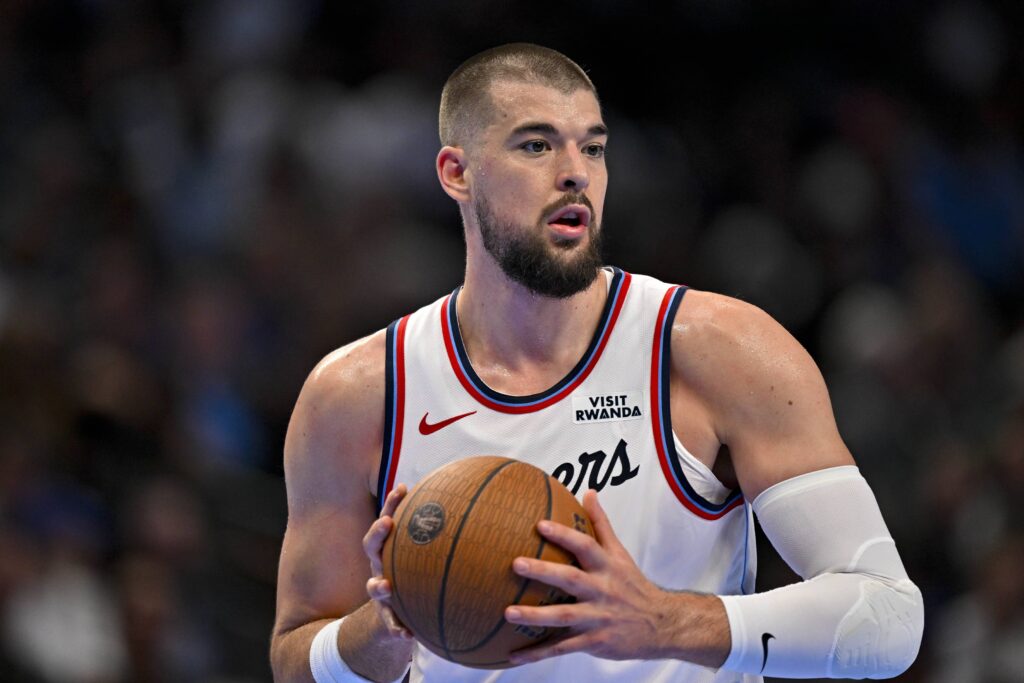
Thunder Receive: Ivica Zubac
Clippers Receive: Kenrich Williams, Ousmane Dieng, 2027 first-round pick swap rights (their own)
This is the kind of deal that looks boring until you realize what it actually does for both sides. For the Thunder, it’s a matchup fix. For the Clippers, it’s a full-on “we need control of our next reset” move.
Start with the Thunder angle. The Spurs have beaten the Thunder three times already, and Christmas was the loudest example because Wembanyama didn’t even need a monster scoring night to warp the game. He dropped 19 points and 11 rebounds off the bench, and the Spurs still turned the paint into a problem and made everything feel cramped. The Thunder don’t need another skinny big to throw at him. They need a legit, strong, drop-anchor center who can absorb contact, hold position, and stop getting dislodged on seals and duck-ins.
That’s Ivica Zubac. He’s at 15.6 points and 11.1 rebounds on 60.9% from the field this season, basically automatic on rolls, putbacks, and deep catches. Defensively, the sell is simple: he gives the Thunder a real “stand your ground” option so Wembanyama can’t just glide into the lane, catch high, and finish over smaller bodies. Zubac also lets the Thunder keep Chet Holmgren in a roaming/help role instead of asking him to bang with Wembanyama for 40 minutes. It’s not sexy, but it’s playoff math.
For the Clippers, this is about reclaiming leverage. The Thunder acquired the rights to the Clippers’ 2027 unprotected first-round pick swap back in 2023. That matters because if the Clippers ever decide to pull the plug and tank, a pick swap hanging over them kills the whole point. Getting their swap rights back is basically buying back the ability to bottom out clean, retool in the summer, and not worry about the Thunder scooping the upside. The Clippers are light on draft assets, with the Thunder holding the 2026 pick and that 2027 swap.
The player return fits the vibe too. Williams gives the Clippers a plug-and-play rotation wing at 6.3 points on 54.2% from the field, and Dieng is the young upside flyer at 4.4 points in limited minutes.
Money-wise, Zubac is at $18.1 million in 2025-26, while Kenrich ($7.163 million) and Dieng ($6.671 million) help the Clippers trim salary as they reset, and the swap rights are the real prize.
The only real concern for the Thunder is health, since Zubac recently popped up with an ankle issue. But if you’re hunting a Wembanyama answer that doesn’t cost you a star, this is the most realistic “center upgrade” trade on the board.
2. The “Stretch Five” Gamble That Forces Wembanyama Out The Paint
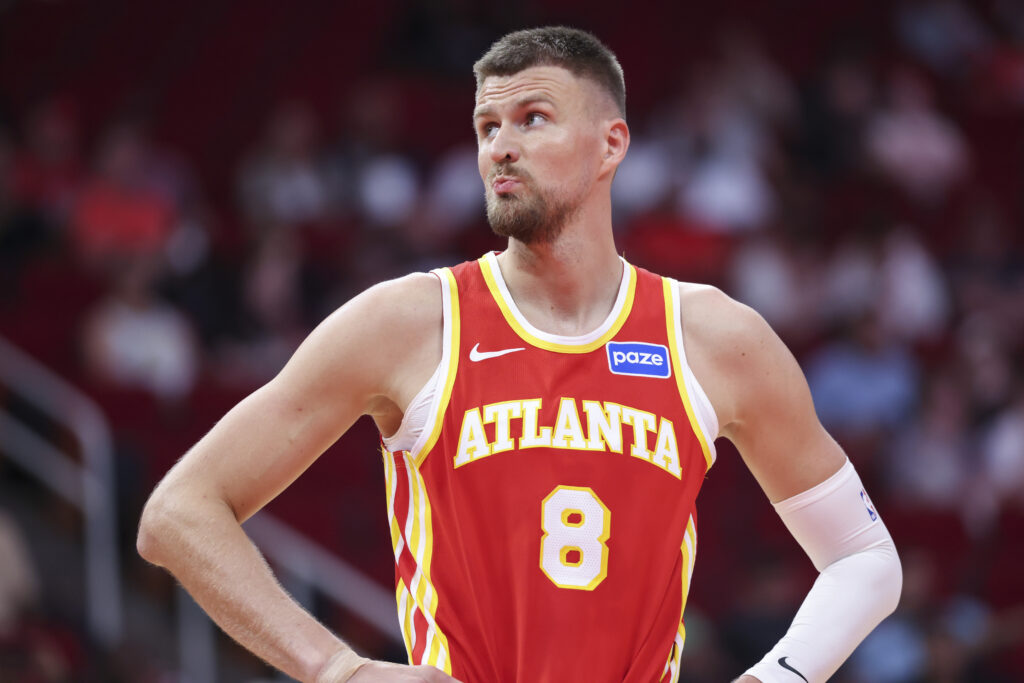
Thunder Receive: Kristaps Porzingis
Hawks Receive: Isaiah Hartenstein
If the Thunder are serious about solving the Spurs problem, the first thing they have to accept is brutal: you don’t beat Victor Wembanyama by “trying harder” at the rim. You beat him by changing the floor. You make him defend space, not just erase layups. That’s why Kristaps Porzingis is such a fascinating, slightly unhinged, but totally logical target.
Porzingis is giving you 19.2 points, 5.6 rebounds, and 3.1 assists on 49.7% from the field this season, and the entire appeal is how he scores. He can be a real pick-and-pop big who drags a shot-blocker away from the restricted area, and against the Spurs that matters more than almost anything.
If Wembanyama wants to lurk in help and turn every Shai drive into a “nah, never mind” possession, Porzingis is the kind of center who can punish that with threes and quick-hitting pops. The Thunder don’t need Porzingis to be a bruiser. They need him to be a geometry weapon.
The risk is obvious, and it’s the reason this trade even exists. Porzingis has already popped up on injury reports this season, including recent absences due to illness and rest. You’re betting that the Thunder’s depth and minute management can keep him upright when the games start to feel like playoff rock fights.
From a “is this realistic” perspective, the money lines up cleanly. Porzingis sits at $30.7 million for 2025-26. Isaiah Hartenstein sits at $28.5 million. That’s close enough that it doesn’t require goofy filler, and it also matches the idea that the Thunder are paying a little extra for ceiling, not just a swap of styles.
For the Hawks, Hartenstein is the safer, more stable basketball piece. He’s at 11.5 points, 10.7 rebounds, and 3.0 assists on 65.5% from the field, a real screen-setter, roller, rebounder, and “connective tissue” big who raises your nightly floor. If the Hawks don’t want to live on the Porzingis health rollercoaster, this is the kind of pivot that makes sense.
For the Thunder, this is the “Wembanyama counter” trade in one sentence: you stop trying to win the paint battle straight up, and you start forcing the Spurs to defend the perimeter with their center. That’s how you flip the matchup.
3. The Thunder’s Sneaky Shooting Offensive Counter
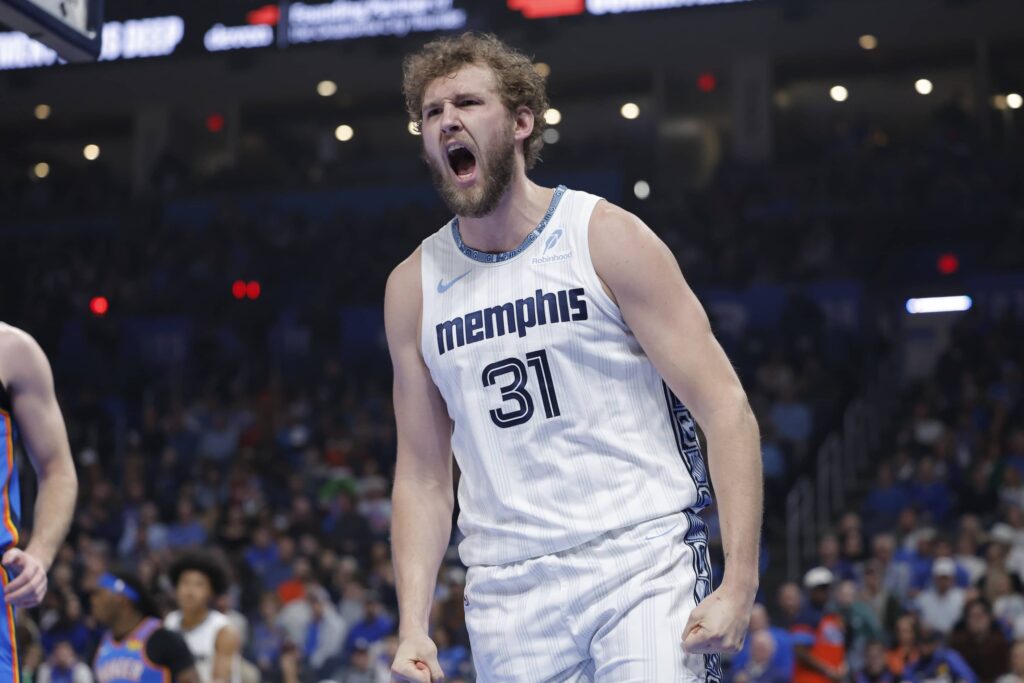
Thunder Receive: Jock Landale, Jaylen Wells
Grizzlies Receive: Ousmane Dieng, 2028 second-round pick (via Bucks), 2030 second-round pick, 2032 second-round pick
This is the “quiet” move that actually makes a ton of sense if the Thunder want a Wembanyama plan without blowing up the roster. The whole problem in the Spurs matchup is simple: Wembanyama gets to live in the paint like a horror-movie monster, and every Thunder drive starts feeling like a bad idea. The Thunder don’t necessarily need a new star center. They need a lineup option that forces Wembanyama to defend a different game.
That’s where Jock Landale becomes the sneaky answer. He’s sitting at 11.0 points and 5.9 rebounds a night, and the real hook is that he’s hitting 41.0% from three this season. If you can put a legit pick-and-pop five on the floor, Wembanyama can’t just camp at the rim waiting to erase shots.
Now he has to step up to the arc, and once he steps up, the whole floor opens. Shai gets cleaner driving lanes, the dunker spot becomes available again, and suddenly the Spurs can’t play that “we’ll just funnel everything into Wemby” defense.
The other underrated part, Landale competes defensively harder than people assume. No, he’s not some switch-everything demon, but he’s sturdy, he boxes out, he’s willing to get hit, and he can survive in drop coverage long enough for the Thunder’s perimeter length to do its job.
Against the Spurs, that matters because you’re not asking Landale to “stop” Wembanyama by himself. You’re asking him to battle, keep Wembanyama off deep seals, and make every catch a little more annoying while the Thunder load help behind the play.
And the best part for the Thunder, they can do this without touching Isaiah Hartenstein. That’s the whole appeal. Hartenstein can stay as the physical, screen-setting, rebounding anchor in the main rotation, while Landale becomes the matchup chess piece. Some nights, you barely use him. Against the Spurs, you absolutely use him, specifically to turn Wembanyama into a perimeter defender and make the Spurs pay for leaving him in the paint.
Financially, it’s basically pocket change by Thunder standards. Landale’s deal is around $2.3 million in 2025-26, and he’s also a free agent after the season. Wells comes cheap too at about $2.0 million. The Grizzlies take back Dieng at $6.7 million and grab three second-round picks as the sweetener.
For the Grizzlies, it’s logical: Landale helps them now, but he’s not a long-term lock. Turning him into a young upside forward plus three seconds is exactly the kind of value play teams make when they’re balancing the present with flexibility.
For the Thunder, it’s a clean, low-cost way to add a real “Wembanyama lineup” without forcing a headline trade.