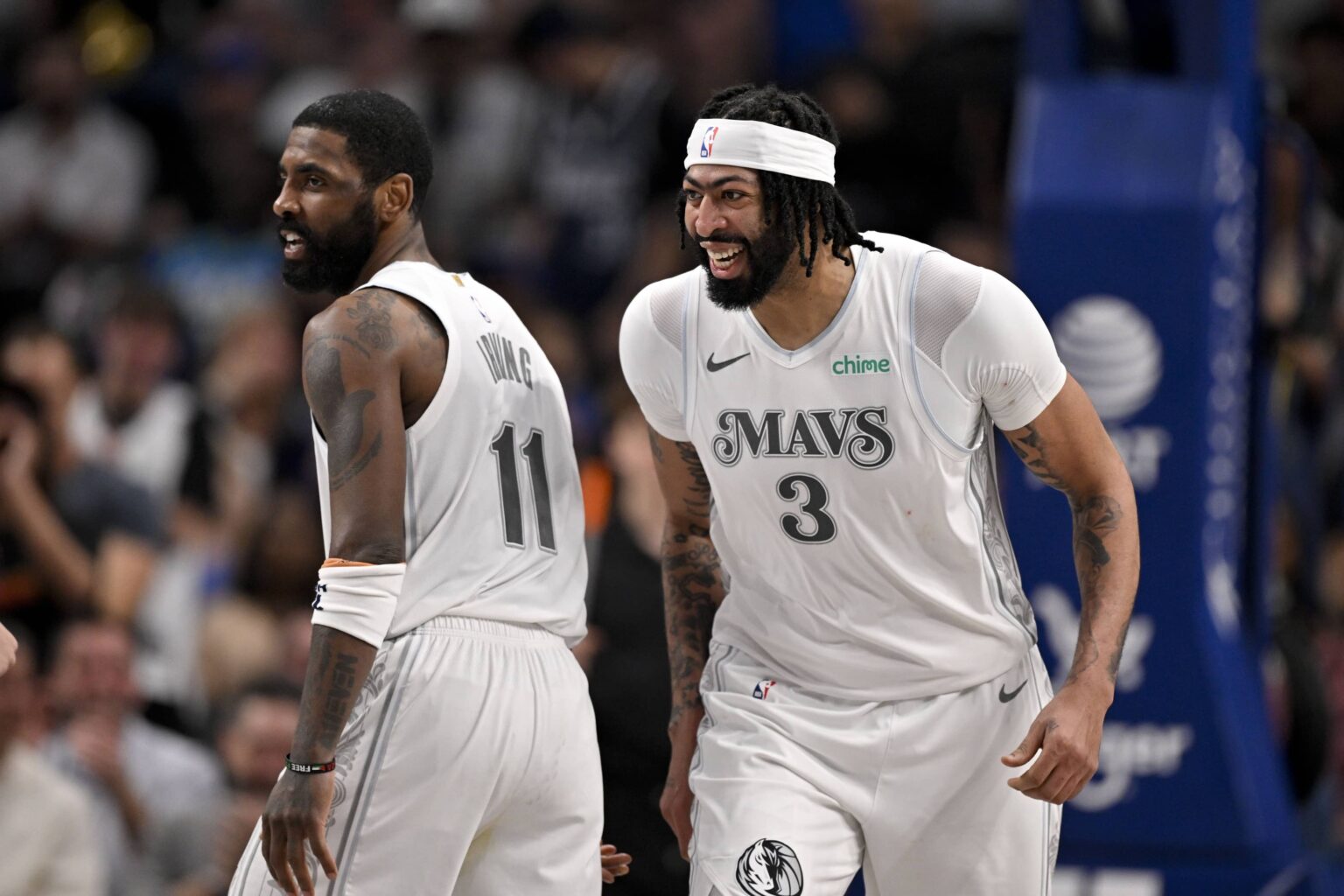
The Dallas Mavericks are flirting with the nightmare scenario: a roster that’s expensive, injury-prone, and not actually good enough to justify standing pat. They’re 12-21 heading into December 29, and even the local conversation has started shifting from “how do we stabilize” to “who still has real trade value.”
That shift got louder after a report tied to Shams Charania indicated the Mavericks are open to discussing trades involving Anthony Davis, Klay Thompson, Daniel Gafford, and D’Angelo Russell.
Once a front office lets that kind of list float into the public, the league starts calling, and suddenly, even players who weren’t “on the block” feel like they’re on the clock.
Here are the five Mavericks players most likely to be traded this season, and why.
1. Anthony Davis
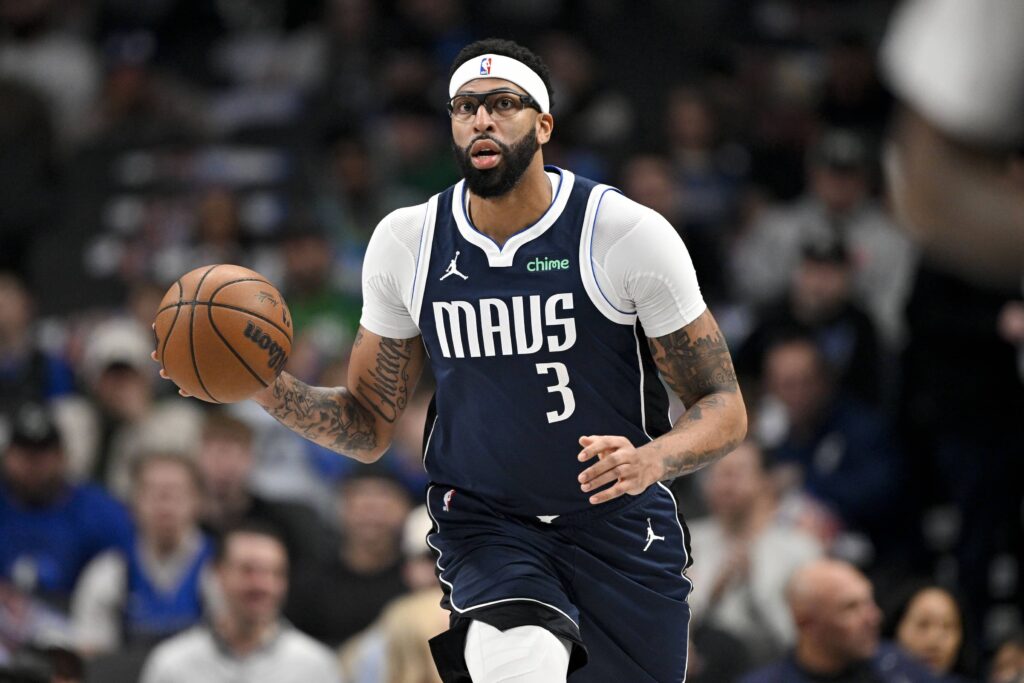
If the Mavericks actually commit to a pivot, Anthony Davis is the domino. He’s still productive when he plays, 20.5 points, 10.9 rebounds, and 2.8 assists on 52.1% from the field this season, but the entire conversation around him are durability and timeline.
The Mavericks are sitting way below where they expected to be, and when your year is going sideways like this, the “win now” veteran becomes less of a solution and more of an asset you cash in before the market shifts.
And the market is already there. There’s reporting that the Golden State Warriors and Atlanta Hawks have at least contemplated a pursuit of Davis, tied to Chris Haynes. Meanwhile, the Mavericks badly need optionality. The Davis salary is massive, $54.1 million in 2025-26, so any deal is automatically a “big swing” with real cap consequences. That’s exactly why the Mavericks would even consider it. Moving Davis is the only clean way to reset their flexibility fast without pretending a small tweak fixes everything.
The other part here is simple: the Mavericks have a rookie cornerstone that needs the runway. Cooper Flagg is already popping, and the longer the season looks like a struggle, the more the franchise will want to build a coherent timeline around him instead of juggling multiple directions at once. If Davis is missing time again, that urgency spikes, because teams don’t pay $54.1 million for “maybe he’s available in April.”
Bottom line, Davis is the most valuable trade chip on the roster, and also the one whose value can change the fastest depending on health. If the Mavericks get a legit haul, picks plus a young starter-level piece, I think they have to listen. Standing still is how you waste a year and still end up rebuilding anyway.
2. Klay Thompson
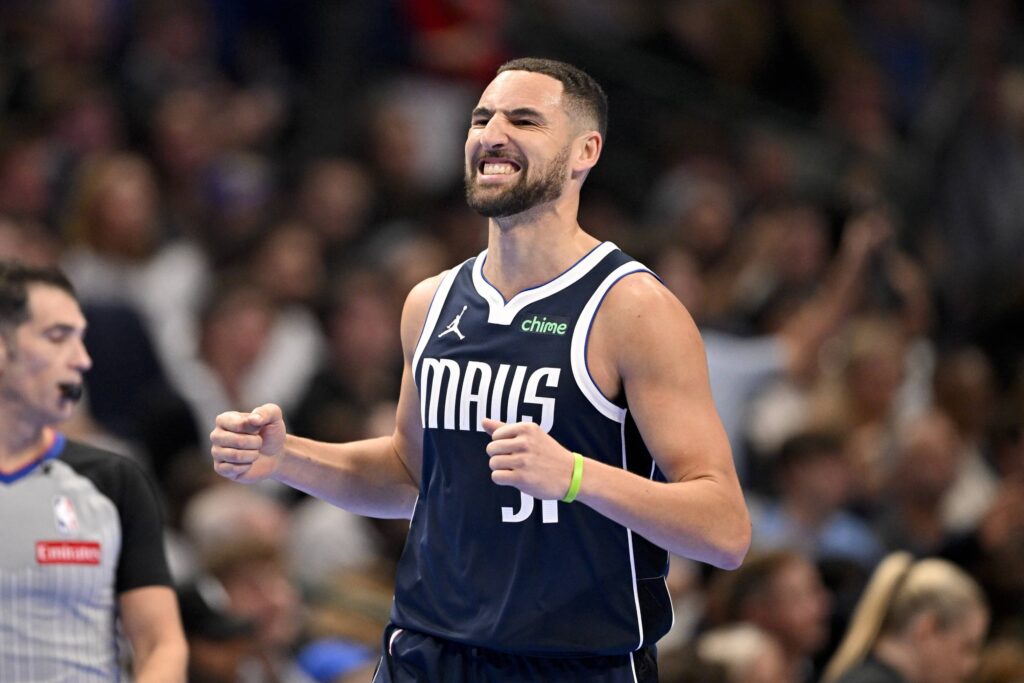
Klay Thompson being a trade candidate sounds wild until you look at the production and the context. He’s averaging 11.1 points on 37.0% from the field this season, and the “gravity” argument only goes so far when the shots aren’t falling like they used to. He’s also dealing with knee soreness again, which only adds to the sense that this is more about managing decline than waiting for a classic Klay heater to save the year.
The reason he’s on this list is simple: the Mavericks don’t have the luxury of sentimental roster spots right now. They’re 12-21, and if they aren’t turning the season around quickly, the smartest move is to prioritize players who fit the next three years, not the last three years. Shams-related reporting has also lumped Klay into the “open to exploring trades” group, which basically tells you the front office is already considering it.
Financially, he’s tradable. His salary is $16.7 million, which is a clean number to match in a lot of mid-tier deals, and it’s not so huge that only a few teams can touch it. That matters because if you’re trying to reshape a roster, you need movable contracts, not dead weights. Klay’s contract isn’t a dead weight. It’s a piece you can actually move if a contender wants one more shooter for a postseason run.
Where does he make sense? Anywhere that already has creation and wants shooting, so Klay can be a specialist instead of a savior. A team trying to win a title doesn’t need him to be 2016 Klay. They need him to hit open threes, punish help defense, and survive defensively in short bursts. That’s still plausible. But the Mavericks asking him to be a nightly stabilizer is a different story, and it’s been exposed by the standings.
My read, if the Mavericks keep sliding, Klay becomes a classic “deadline veteran” move. Not because he’s washed, but because the roster can’t afford to build around nostalgia.
3. Daniel Gafford
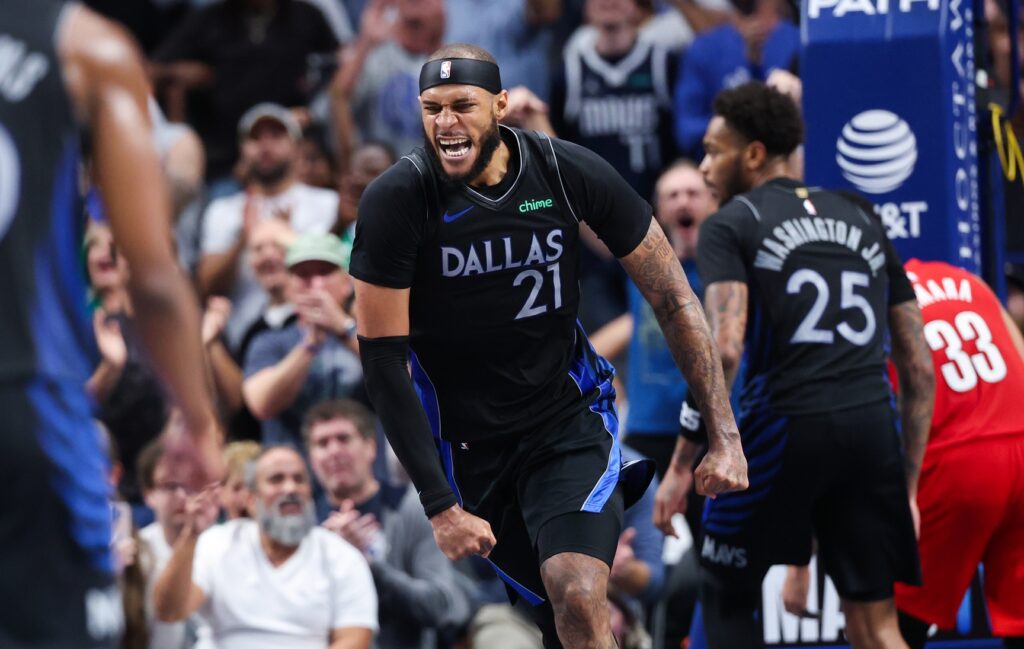
Daniel Gafford is the type of player who gets traded all the time because he’s useful, affordable, and role-defined. The problem is his season has been underwhelming relative to the reputation he built as a high-energy rim runner. He’s at 7.8 points, 5.8 rebounds, and 1.0 assists while shooting 61.9% from the field, which is efficient but not exactly “must-have.” He is still blocking shots at a solid level, 1.4 blocks per game, so the defensive utility is real.
The Mavericks’ angle is fit. If you’re building around a modern star wing and trying to maximize spacing, you start asking hard questions about how many non-shooting bigs you want in your rotation. Gafford is a dunker spot big. He needs a creator to feed him. If the Mavericks are retooling and leaning into Flagg development, they might prefer a different kind of center profile long-term, or they might want to open minutes for another internal piece.
The other angle is contract structure. Gafford is on $14.4 million this season, and that number is very movable. Teams can talk themselves into Gafford because the role is clear. He sets screens, finishes at the rim, rebounds, and blocks shots. He doesn’t need touches. He doesn’t need plays called. For playoff teams, that’s attractive.
But his trade value depends on whether a team thinks he’s a plug-in defensive piece or just another center. There’s even local talk that his declining production could cool his market. That’s why he’s likely to be moved: he’s useful enough that contenders call, but not important enough that the Mavericks refuse every offer. If the front office decides to sell, Gafford is the cleanest “help someone now, get something back” kind of deal.
I’d bet he’s one of the first names to go if the Mavericks pick a direction, because it’s easier to trade a center than a star, and the market always exists for playable size.
4. D’Angelo Russell
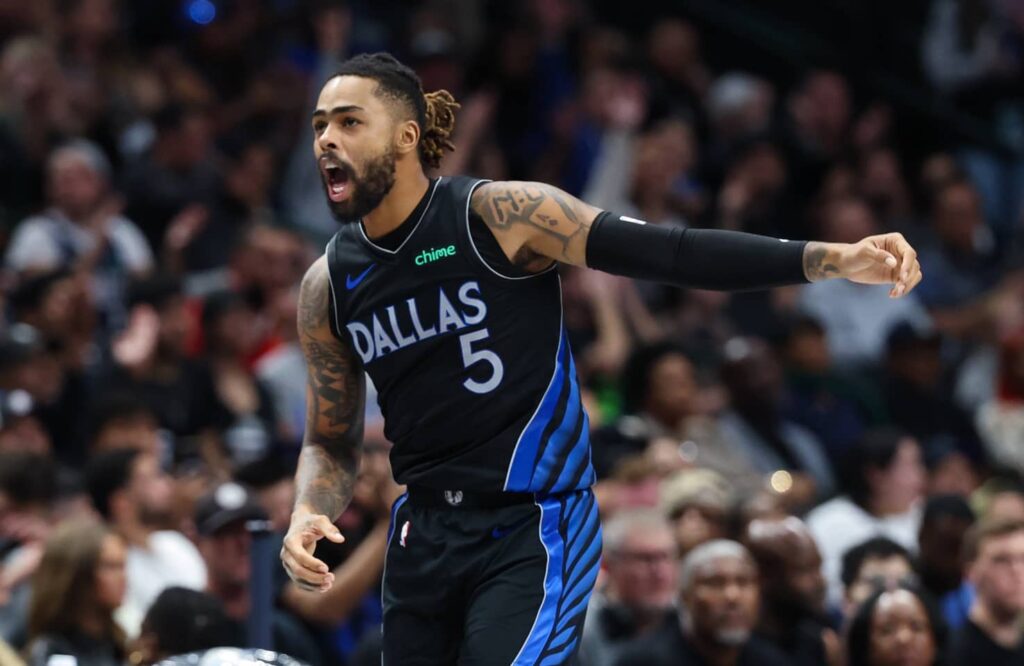
D’Angelo Russell feels like the most obvious “change of scenery” candidate on the roster because the role is unstable. He’s averaging 10.2 points and 4.0 assists on 40.5% from the field, and the efficiency plus the fit questions make it hard to justify him as a core guard piece going forward. If you’re a team trying to find identity, the last thing you want is a rotation guard who swings between hot and cold while you’re also juggling injuries and developmental minutes.
The contract is also a tell. Russell signed a two-year, $11.65 million deal with the Mavericks, basically a low-risk flier that stays tradeable. His 2025-26 salary is around $5.7 million, which makes him easy to aggregate into bigger deals or flip for a different guard profile. That’s why he’s in the Shams-related reporting group. He’s not a franchise piece, he’s a movable piece.
From a basketball perspective, the dilemma is simple: the Mavericks need structure. Russell is more of a rhythm player. If you let him run pick-and-roll and play with shooters, he can look great. If you ask him to be a low-usage connector, he can disappear. And when you combine that with the Mavericks being 12-21, it becomes very easy for a front office to decide they’d rather cycle that roster spot into something more consistent.
Potential landing spots are usually teams that need guard creation but don’t want to pay starter money, or teams that want a scoring guard as a bench weapon. The Mavericks don’t need to “win” the Russell trade. They just need it to make the rotation cleaner and the timeline clearer. If they get a second-round pick, a young flyer, or even just a different role player who fits better, it’s a win for them.
This is one of those deadline moves that happens fast once the market opens, because Russell’s salary makes him easy to fit into almost anything.
5. P.J. Washington
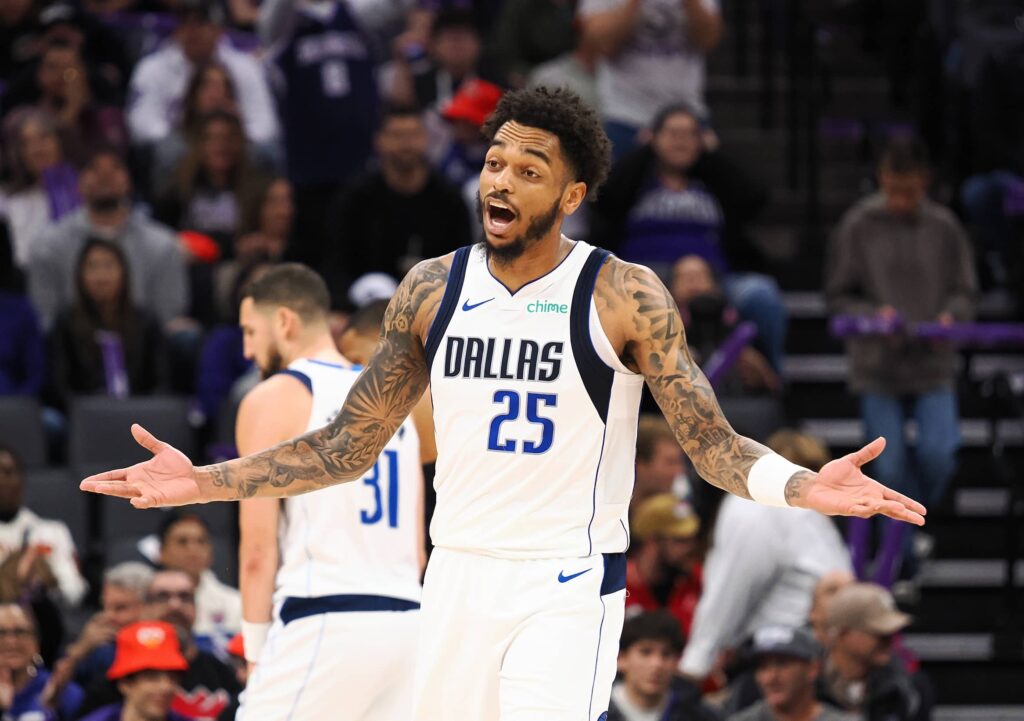
P.J. Washington isn’t on every rumor list, but he’s absolutely on the “could be moved” tier because he has real value and the contract timing is convenient. He’s averaging 15.7 points, 7.9 rebounds, and 2.0 assists on 46.2% from the field this season, which is strong production for a two-way forward who can play multiple lineup styles. If you’re a contender hunting for a forward who can rebound and score without needing the offense built around him, Washington is the kind of name that quietly becomes a deadline priority.
The key detail: Washington’s salary is $14.15 million in 2025-26, and he’s set up to hit free agency after the season. That’s exactly the type of situation where a front office either extends the player or starts listening to offers. With the Mavericks sitting at 12-21, it’s hard to justify keeping every mid-tier veteran if you’re not actually pushing toward something meaningful this year.
On the court, Washington has been one of the more reliable secondary scorers on the roster. That’s the problem. Reliable veterans are how you win games, but they’re also how you stay stuck in the middle if the top end of the roster isn’t stable. If the Mavericks decide the season is more about evaluating Flagg and resetting the roster, Washington becomes a premium “sell” candidate. Not because he’s bad, but because he’s good enough that teams will pay.
This is also the type of player who makes sense in a broader deal. If the Mavericks trade a bigger name, Washington can be the extra piece that either brings back a better pick or upgrades the young-player return. His salary fits neatly into trade math. His production is easy to explain to coaches. And his playoff utility is real.
If the Mavericks are serious about reshaping things, Washington is the kind of player they either commit to long-term or flip before the deadline. Standing still with a productive forward on an expiring timeline is how you lose leverage, and I don’t think this front office can afford more leverage losses right now.
Final Thoughts
The Mavericks don’t have the luxury of pretending this is just a “bad stretch.” When you’re sitting well under .500 this late, every decision starts to feel like a fork in the road: double down and chase short-term stability, or cash out while your assets still have clean value.
That’s why this list isn’t just five random names. It’s basically the Mavericks’ internal decision tree. If they move Anthony Davis, that’s the loudest signal possible that they’re re-centering everything around the future and trying to reload with picks, young talent, and flexibility.
If they move Klay Thompson, D’Angelo Russell, or Daniel Gafford, that’s a more “retool on the fly” approach, trimming the rotation, improving fit, and trying to stabilize the season without blowing the whole thing up. And P.J. Washington is the classic swing piece, the kind of player contenders actually pay for, which makes him a real leverage play if the Mavericks decide to sell.
The biggest thing to watch is this: do they prioritize clean basketball fit, or long-term leverage? Because the trade deadline doesn’t reward hesitation. The moment you look like you’re stuck, other teams smell it and start offering 70 cents on the dollar. If the Mavericks commit to a direction early, they can actually control the market instead of reacting to it.
Either way, one thing feels inevitable: if the standings don’t improve fast, this roster won’t look the same by the deadline.