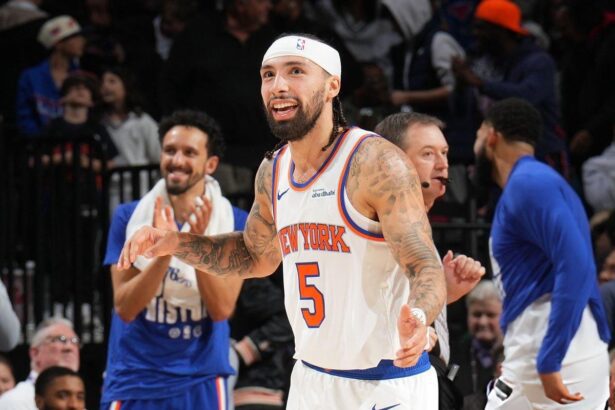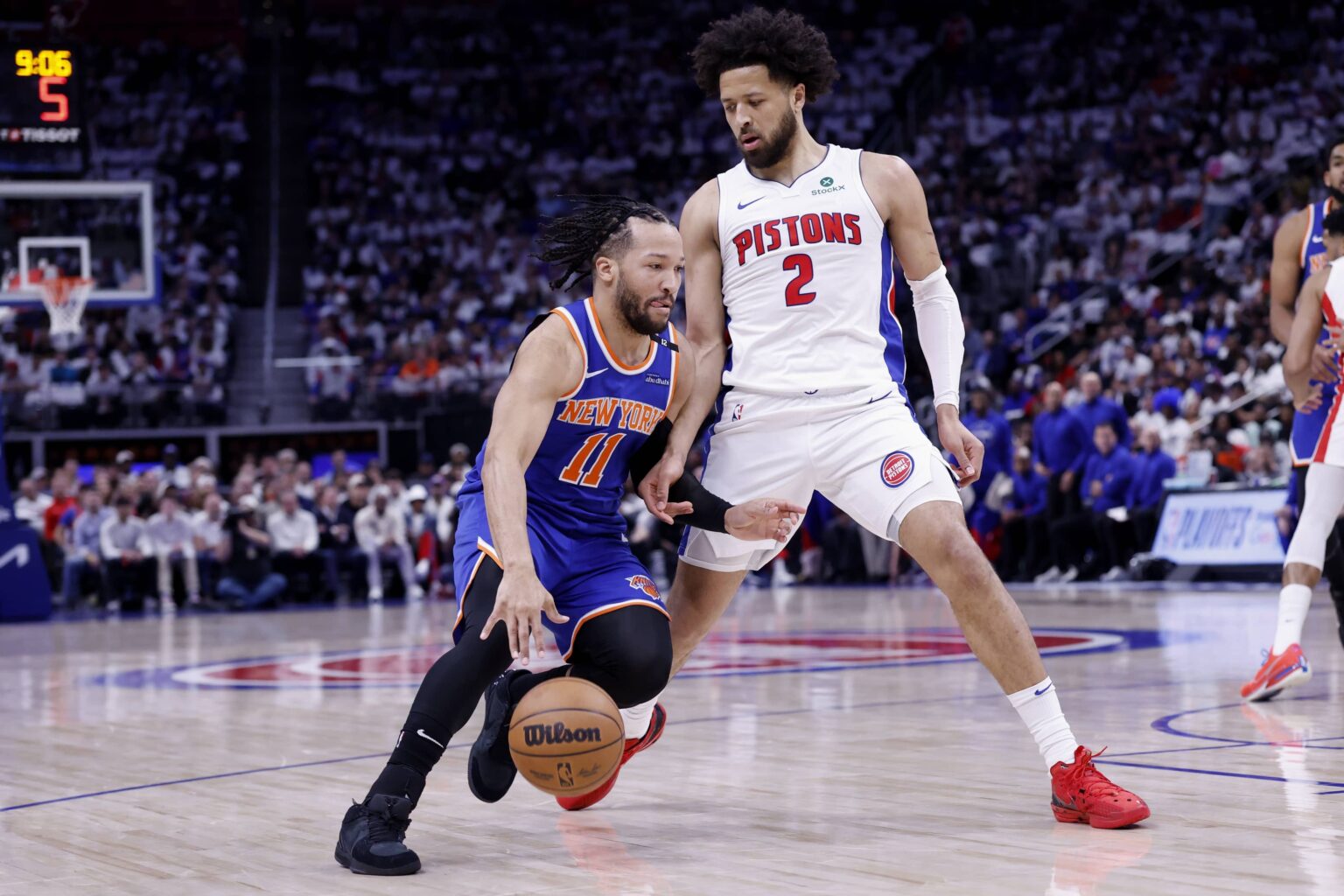
The Detroit Pistons host the New York Knicks at Little Caesars Arena on Sunday afternoon in a matchup that feels bigger than a typical January game. Tip-off is set for 4:00 PM EST, and this one carries real weight in the Eastern Conference race, with both teams sitting near the top of the standings.
The Pistons enter this game with the best record in the East at 26–9 and continue to look like one of the league’s most complete teams. The Pistons have won six of their last ten games and are coming off an impressive 114–110 win over the Cavaliers, a game that once again highlighted their defensive toughness and late-game composure.
The Knicks sit right behind them at 23–12, but comes in trending in the opposite direction. The Knicks have lost three straight games and five of their last ten, with their most recent outing being a disappointing 130–119 loss to the 76ers.
At the center of the Pistons’ rise is Cade Cunningham, who is playing at an MVP level. Cunningham is averaging 26.7 points, 6.3 rebounds, and 9.6 assists, controlling games with pace and poise.
On the other side, Jalen Brunson has been just as special for the Knicks, averaging 29.3 points and 6.5 assists while carrying one of the heaviest offensive loads in the league. Karl-Anthony Towns has also been excellent, posting 22.0 points and 11.8 rebounds per game.
Injury Report
Pistons
Jalen Duren: Out (Right ankle sprain)
Tobias Harris: Out (Left hip sprain)
Issac Jones: Out (G-League)
Bobi Klintman: Out (G-League)
Wendell Moore Jr.: Out (G-League)
Duncan Robinson: Probable (Left calf contusion)
Cade Cunningham: Probable (Right hip contusion)
Caris LeVert: Doubtful (Left knee tendinopathy)
Knicks
Josh Hart: Out (Right ankle sprain)
Landry Shamet: Out (Right shoulder sprain)
Why The Pistons Have The Advantage?
The Pistons’ biggest edge is it’s defense. The Pistons rank second in the NBA in defensive rating, ninth in offensive rating, and fifth in net rating, a rare balance that makes them difficult to exploit. They protect the rim as well as any team in the league and lead the NBA in blocked shots, which becomes even more important against a Knicks team that thrives on paint touches and kick-outs.
Home court also matters here. The Pistons are 12–3 at Little Caesars Arena and play with noticeably more energy on that floor. Even with Duren and Harris out, the Pistons have embraced a next-man-up mentality. Their rotations are sharp, they close out hard on shooters, and they consistently turn stops into transition opportunities. With Cunningham orchestrating the offense, the Pistons rarely beats itself.
Why The Knicks Have The Advantage?
The Knicks’ path to winning starts with offense and depth. The Knicks still rank fourth in offensive rating and can light up the scoreboard when their spacing and ball movement are right. Brunson’s ability to create shots late in the clock remains one of the biggest advantages in any matchup, and Towns gives them a stretch big man who can pull Pistons’ shot blockers away from the rim.
Despite their recent skid, the Knicks have the personnel to respond. They have multiple ball handlers, interchangeable wings, and enough shooting to punish defensive mistakes. If the Knicks can speed the game up, avoid getting stuck in half-court slugfests, and limit turnovers, they can put real pressure on the Pistons’ short-handed frontcourt.
X-Factors
For the Pistons, Duncan Robinson looms large if he is able to suit up. Averaging 11.6 points off the bench, Robinson’s value goes far beyond raw scoring. His shooting gravity forces defenses to stretch well beyond the arc, which is especially important against a Knicks team that likes to pack the paint and help aggressively.
Ausar Thompson is another critical piece for the Pistons. His two-way impact does not always show up in the box score, but it is felt across the game. Averaging 11.5 points, Thompson brings elite defensive versatility, allowing the Pistons to switch actions and throw different looks at Jalen Brunson and the Knicks’ wings. His length and athleticism help disrupt passing lanes, generate deflections, and ignite fast breaks.
For the Knicks, Mikal Bridges stands out as a steadying force. Averaging 16.2 points, 4.6 rebounds, and 4.4 assists, Bridges is the definition of reliability. He plays heavy minutes, takes on the toughest defensive assignments, and rarely makes mistakes. His ability to guard multiple positions while still contributing offensively makes him central to the Knicks’ game plan.
OG Anunoby remains the Knicks’ best perimeter defender and is likely to see extended time on Cade Cunningham. Anunoby’s strength, discipline, and timing allow him to absorb contact without fouling, something few defenders can consistently do against a big, physical guard like Cunningham. If Anunoby can make Cade work for every touch and avoid early foul trouble, the Knicks’ defense becomes far more sustainable.
Miles McBride has been a spark plug. Averaging 12.4 points, McBride brings energy, on-ball pressure, and timely shot-making. His minutes could be especially important if Brunson needs rest or if the Knicks want to increase defensive intensity.
Jordan Clarkson is the ultimate swing factor, as he comes in averaging 10.1 points off the bench. His scoring punch can flip momentum in minutes, but it comes with volatility. If Clarkson gets hot, the Knicks can erase deficits quickly. If not, his shot selection can stall possessions. In a game this tight, those stretches may decide everything.
Prediction
The Knicks’ road struggles have been well documented, and losing three straight games does not make this an easy spot to reset. The Pistons’ defense, home-court advantage, and current form give them a clear edge, especially if they control the tempo and keep the Knicks out of transition.
This should be competitive for long stretches, but the Pistons’ consistency on both ends should show late.
Prediction: Pistons 117, Knicks 110