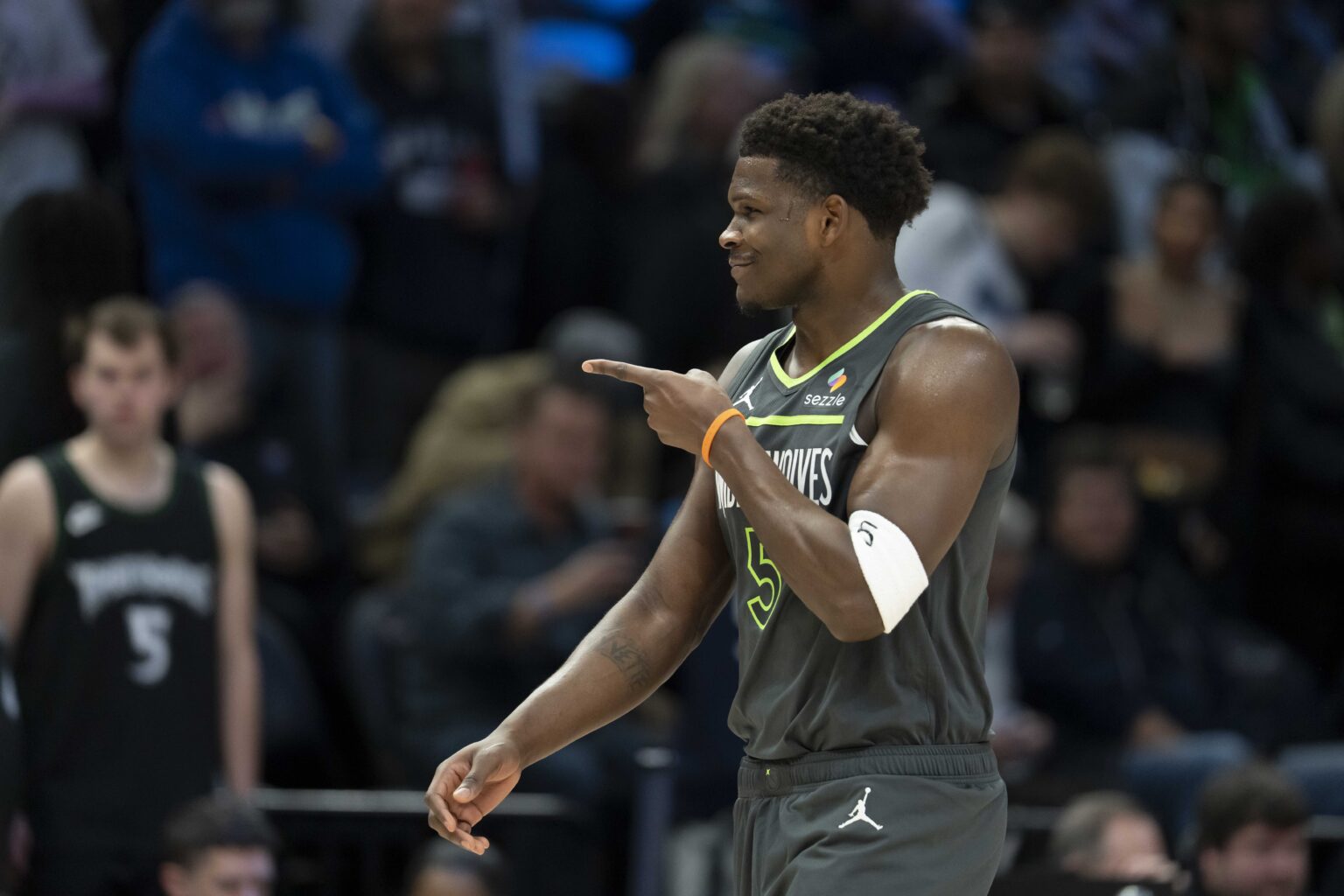
There was nothing clean about this one, and that’s exactly why it ended the way it did. Minnesota spent most of the night chasing, San Antonio spent most of it controlling pace, and yet the final possession came down to who was willing to take contact and live with the result. Anthony Edwards did. Everyone else watched.
The Timberwolves escaped with a 104-103 win that felt closer to survival than dominance. The Spurs led for nearly the entire game, built a cushion as large as 19 points, and looked comfortable dictating tempo. But late turnovers, missed free throws on Minnesota’s side, and one last breakdown at the rim flipped the script. Edwards’ final drive didn’t erase the Wolves’ issues, it just ended the discussion.
Anthony Edwards Didn’t Have His Cleanest Night, But He Took The Last Shot Anyway
Edwards finished with 23 points on 10-of-21 shooting, numbers that look solid until you peel them back. He struggled from deep (1-of-5), left points at the line (2-of-5), and didn’t control the glass or playmaking the way he sometimes does. For long stretches, he was quiet while the Spurs built their lead.
None of that mattered in the final seconds. With Minnesota down one, Edwards rejected the idea of settling. He put his head down, split the defense, absorbed contact, and finished at the rim for the game-winner. It wasn’t a highlight dunk or a step-back three – it was a direct, physical decision. Sometimes leadership looks like efficiency. Sometimes it looks like refusing to pass the ball when everyone knows what’s coming.
San Antonio Controlled The Game For Three Quarters But Let It Slip
The Spurs executed well enough to win this game. They shot 88.0% from the free-throw line, knocked down 13 threes, and turned Minnesota over 14 times. Victor Wembanyama was everywhere, posting 29 points on 8-of-18 shooting, hitting three triples, and going a perfect 10-for-10 at the line while adding seven rebounds and three steals.
But the cracks showed late. San Antonio managed just one field goal over the final stretch, struggled to generate clean looks when Minnesota switched defensively, and couldn’t get a stop when it mattered most. Despite leading for 93% of the night, the Spurs couldn’t close. The stat sheet will show solid numbers. The scoreboard will show a loss.
Minnesota Won This Game Inside, Not Outside
Neither team shot the ball well from three, Minnesota finished at 30.8%, San Antonio at 34, but the Wolves quietly dominated the areas that don’t show up in shooting splits. Minnesota outscored the Spurs 50-32 in the paint, repeatedly attacking mismatches and forcing rotations that collapsed San Antonio’s defense late.
Naz Reid was central to that effort. Off the bench, he logged 17 points and 11 rebounds in 31 minutes, finishing through contact and extending possessions with offensive rebounds. Rudy Gobert didn’t score much, just two points, but his 14 rebounds, four offensive boards, and seven blocks altered the game defensively, especially in the fourth quarter when San Antonio stopped attacking the rim altogether.
The Timberwolves’ Margin For Error Is Still Uncomfortably Thin
Even with the win, this wasn’t a performance Minnesota can feel great about. They shot just 56.0% from the free-throw line, missed 11 attempts, and were outplayed for long stretches by a younger Spurs team. Julius Randle left points at the line (7-of-12), and the Wolves’ starting group finished with negative plus-minus numbers across the board.
What saved them was defense and discipline late. Minnesota forced nine turnovers, blocked seven shots, and limited San Antonio to one field goal over the final minutes. It wasn’t pretty, but it was enough. Against better teams, nights like this can spiral quickly. Against the Spurs, they survived, barely, because their best player wanted the ball when the game demanded it.