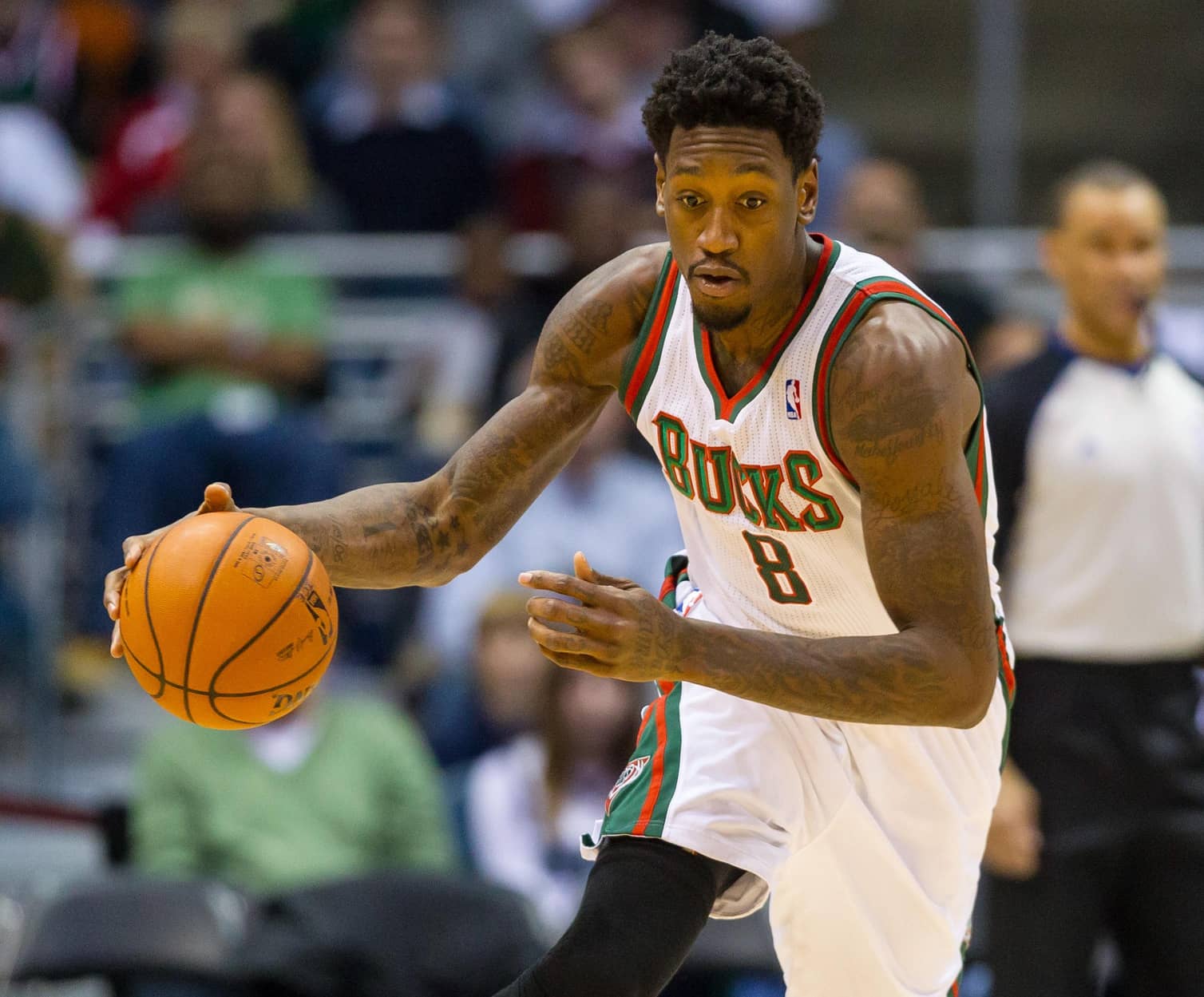
Former player Larry Sanders recently offered one of the most straightforward explanations you will hear about why marijuana use became common among NBA players during the season. Speaking on the Digital Social Hour Podcast, the former Milwaukee Bucks center did not frame it as a lifestyle choice or a party habit. He framed it as survival.
“It’s become legal. They don’t test for it anymore. I started smoking late. You know, I was like 22. And once I got into the NBA, my second year in the league, you know, pains in my body and not being able to eat, flying here, flying there, it did become an aid. You know, it helped a lot, bro. But until that point, I didn’t even use it.
I mean, it’s tough. You come in at 3 in the morning. You know, you need to put something on your stomach, but then you need to sleep as well. But with the time difference, you’re three hours behind, so in your mind you feel like it’s 11, but it really is 3 a.m. And you know, one has a sedating factor to it that, you know, puts you down.
So I think a lot of guys use it for that. It allows them to get that rest. You’re up, you’re amped up, you just played in the game, bro. You bump into Dwight Howard and Joakim Noah for 40 minutes, and now I gotta go lay down and rest. Yeah, so it helped that transition.”
There is an unavoidable irony attached to Sanders’ story. His career was partially derailed by the NBA’s old drug policy. He was suspended multiple times for marijuana use, including a five-game suspension in 2014 and a minimum ten-game suspension in 2015.
Shortly after that second suspension, the Bucks bought out his contract. Not long after, Sanders entered treatment for anxiety, depression, and mood disorders, finally shedding light on the mental health struggles running alongside his on-court career.
Today, the league’s stance looks completely different. The league no longer tests for marijuana, and its use is largely accepted across locker rooms. Sanders’ comments help explain why that shift happened. The league eventually caught up to what players had been dealing with quietly for years.
Over his six-year NBA career, Sanders averaged 6.4 points and 5.7 rebounds across 238 games, with five seasons in Milwaukee, where he was once viewed as a defensive cornerstone when he arrived in 2010 as the 15th overall pick. His rise and abrupt exit came during an era when mental health conversations were still pushed aside.
His perspective adds context to a topic that is often flattened into jokes or headlines. For many NBA players, marijuana is not an escape from responsibility. It is a response to the relentless demands of life inside the league.