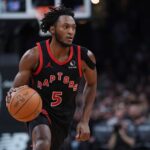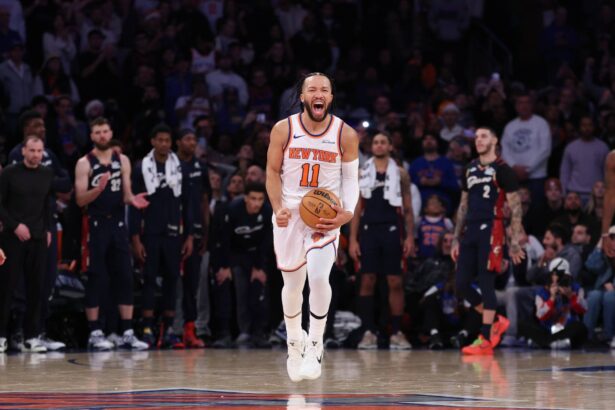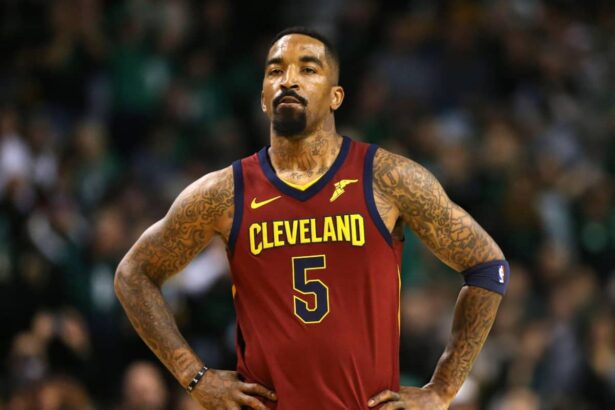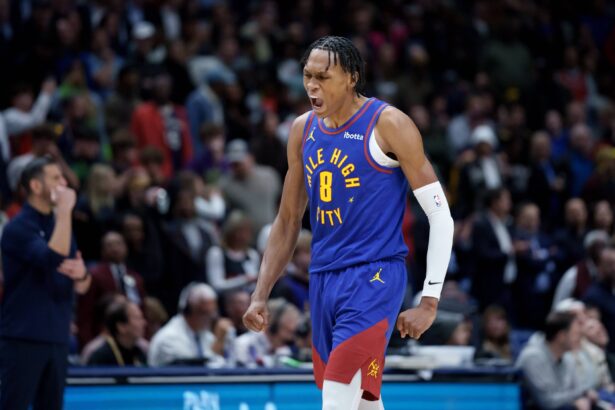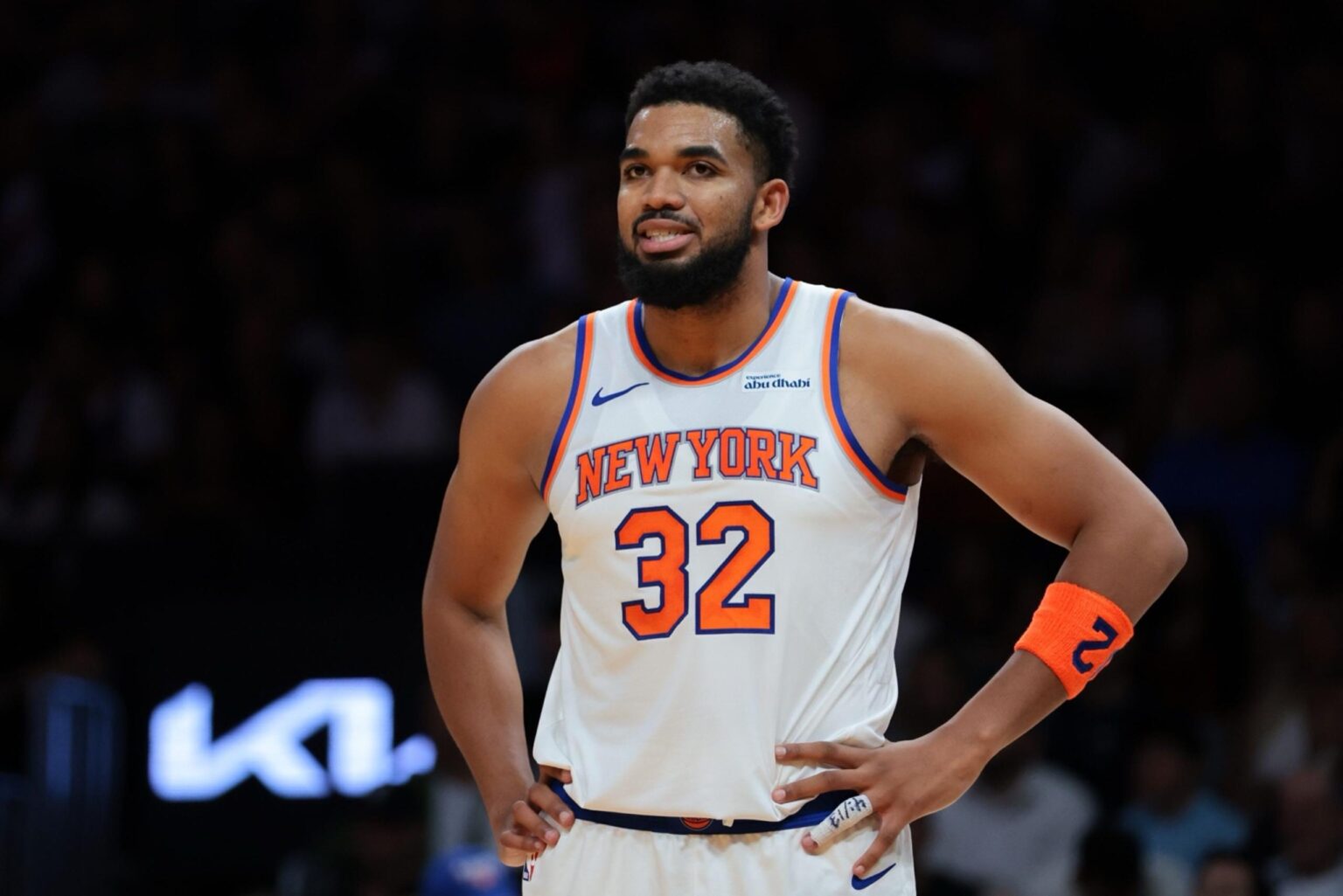
Karl-Anthony Towns rumors are officially back on the menu, and this time it’s not just fan-fiction. Steve Popper reported the Knicks have already held trade discussions involving Towns, with the Grizzlies, Magic, and Hornets all coming up in the early chatter.
That doesn’t mean a deal is guaranteed, but it does mean the Knicks are at least listening, which is a massive shift for a guy who’s supposed to be a core piece.
And the crazy part is, Towns has been productive enough that this isn’t a “sell low” situation on paper. He’s averaging 21.0 points, 11.6 rebounds, and 3.0 assists this season, still giving you a legit scoring big with spacing and size.
The tension is the money and the timeline, because his deal is gigantic, with $53.1 million this year, $57 million next year, and a $61 million player option for 2027-28. If the Knicks move him, they’re doing it because they want a different build, not because he can’t play.
That’s where the deadline gets fun, because teams that have been sniffing around other superstar big names could pivot to Towns fast.
The Raptors have been tied to conversations around Anthony Davis and Domantas Sabonis in recent reporting and rumor cycles, and Giannis has been floated as a dream-swing target in the past, too. If you’re already shopping in that aisle, Towns is the kind of option you “chop the price down” to when the truly impossible names stay impossible.
So yeah, if Popper’s report is the spark, the deadline is the gasoline. If Towns actually hits real trade talks, there are a few big, messy, headline-grabbing frameworks that make sense fast.
The Knicks Flip Towns Into Three Rotation Guys And Two Firsts
New York Knicks Receive: Miles Bridges, Collin Sexton, Grant Williams, 2027 first-round pick (via DAL), 2028 first-round pick
Charlotte Hornets Receive: Karl-Anthony Towns, Guerschon Yabusele
This is the “I’m done living on one giant contract” trade idea, and it’s honestly the cleanest way for the Knicks to talk themselves into moving Towns without looking like they’re panicking. Instead of chasing another star, they turn one max slot into depth, scoring, and two real shots in the draft.
Miles Bridges is the headliner on the incoming side, and he’s having a legit season: 19.1 points, 6.4 rebounds, 3.6 assists while playing big minutes. His salary is $25 million in 2025-26, which matters because it keeps the Knicks from being locked into one massive number in a league that punishes top-heavy rosters. Bridges gives them a wing who can create his own shot, run in transition, and soak up tough matchups. He also gives them someone who can score without Brunson spoon-feeding him every possession, that’s huge in the playoffs.
Collin Sexton is the sneaky part. He’s at 14.9 points and 4.1 assists on 48.8% shooting and 38.7% from three, basically the definition of “instant offense guard.” He makes $18.9 million and is on a four-year deal, so you’re not renting him for 40 games. If the Knicks ever go cold in those ugly half-court stretches, Sexton is the type who can rip off an 8-0 run by himself. You can also stagger him with Brunson so you don’t have those dead bench minutes.
Grant Williams is more of a role glue piece, but he still matters. He’s at 6.5 points and 3.3 rebounds in a smaller role this season, and the shooting is what the Knicks would be betting on returning in a bigger playoff rotation. He’s at $13.6 million in 2025-26, and his deal runs multiple years, so he’s a controllable rotation big/forward who can survive in switching schemes.
Does it favor the Knicks? If you believe Towns is a luxury, yes. This is depth, shot creation, and picks, the exact stuff that saves you when injuries hit or when a series turns into a trench fight.
For the Hornets, it’s the swing. They’re basically saying, “We’re done being cute, we want a real star big next to LaMelo,” and they use Bridges, Sexton, and Grant as the outgoing money. If they’re chasing relevance fast after a 16-27 season at 12th in the East, this is how they try to jump the line.
Adding A Backcourt Defensive Star From East Rival
New York Knicks Receive: Jalen Suggs, Jonathan Isaac, Jase Richardson, 2026 second-round pick, 2029 second-round pick
Orlando Magic Receive: Karl-Anthony Towns
This is the most “identity” trade of the four. The Knicks basically decide they’re not going to win by outgunning people, they’re going to win by making every game miserable. The names tell you the plan immediately.
Jalen Suggs is the centerpiece. He’s giving you 15.0 points, 3.7 rebounds, 4.7 assists, and a nasty 1.9 steals per game while shooting 47.1% from the field. That’s not a typical “defense guard who can’t score.” That’s a real two-way guard who can pressure the ball, get downhill, and still make reads. Contract-wise, he’s expensive, $35 million, so this is a long-term bet that he’s a core piece next to Brunson.
Then there’s Jonathan Isaac, who is basically a “defensive specialist” in the purest sense right now. The offense is tiny, around 3.0 points and 2.8 rebounds in limited minutes, but he still blocks shots and disrupts stuff. His salary is $15 million in 2025-26, so he’s not cheap, but he’s also the kind of piece playoff coaches love because he can flip a matchup with length and instincts. If you’re the Knicks and you think your problem is “we can’t get stops when it gets tight,” Isaac is a very specific answer.
Jase Richardson is the sweetener. As a rookie, he’s at about 6.0 points in around 12 minutes, and he’s shooting over 50% from the field with strong early three-point numbers. That’s the kind of young flyer a front office can sell internally.
Does it favor the Knicks? It depends on what you think wins in May. If you think the Knicks need more scoring punch, you probably hate it. But if you think they need perimeter defense, ball pressure, and a second guard who can actually guard the other team’s best creator, this trade has teeth.
For the Magic, it’s simple. They add a star offensive big next to Paolo Banchero, and they cash in the “defense guard plus role defenders” stack to do it. Suggs is a very high price to pay, but with Anthony Black on the rise, plus Banchero and Franz Wagner up front, this deal might skyrocket them on the standings.
Landing Ja Morant After His Name Hit The Trade Market
New York Knicks Receive: Ja Morant, Brandon Clarke
Grizzlies Receive: Karl-Anthony Towns
This is the cleanest way to explain the logic: ESPN’s Shams Charania reported the Grizzlies have been entertaining trade offers for Ja Morant ahead of the deadline, and Draymond Green publicly floated the New York Knicks as a “dark horse” suitor.
Once Morant’s name is genuinely in discussions at that level, a one-for-one “star swap” framework is exactly the kind of structure that can actually get traction.
Morant’s 2025-26 season line sits at 19.3 points, 3.3 rebounds, and 7.8 assists in 19 games, with 40.7% from the field and 1.0 steals per game, and the availability has been the headline because he’s played 19 of the team’s 41 games.
He just returned from a six-game absence with a right calf contusion and dropped 24 points and 13 assists in a win over the Magic, then told reporters he wants to stay with the Grizzlies despite the rumors.
That split, Morant publicly saying “I’m here,” while the Grizzlies still take calls, is exactly how real deadline situations look when a front office wants to understand the market without committing to a direction publicly.
Morant’s contract is massive but straightforward. He’s making about $39.4 million this season and he’s under a five-year, $197 million deal that runs through 2027-28, so whoever trades for him is taking on a real franchise-player commitment, not a rental. That’s why this only makes sense if the Knicks view him as a long-term centerpiece next to their core, not a short-term swing they can walk away from.
Brandon Clarke is the secondary piece here, and the money matters. He’s at $12.5 million and posting 4.0 points and 3.0 rebounds with his status currently marked out. In practical terms, Clarke functions as the extra salary to balance the structure while also giving the Knicks a rotation big when healthy, even if the current season production is limited.
From a team-context standpoint, the Grizzlies are 18-23. That record gap is relevant because it frames incentives: the Knicks can justify paying the premium for a star guard if they see a higher playoff ceiling, and the Grizzlies can justify shifting to a different top-end piece if Morant’s market is low and the organization wants a reset without a full teardown.
The Raptors Keep Being Aggressive And Make Another Blockbuster
New York Knicks Receive: RJ Barrett, Jakob Poeltl, Gradey Dick, 2026 first-round pick, 2028 first-round pick
Toronto Raptors Receive: Karl-Anthony Towns, Pacome Dadiet
This one looks like a rebuild package at first glance, but the Raptors are not sitting in the basement. They’re 25-19 and 4th in the East right now, which is exactly why the idea gets spicy. A team winning that much usually talks itself into patience. This framework is the opposite, it’s the Raptors deciding the “nice season” isn’t the goal and going hunting for a true ceiling-raiser at the deadline.
That urgency lines up with the noise around their own roster. ESPN’s Tim Bontemps and Brian Windhorst reported the Raptors have been on the phones gauging trade value for players, including Immanuel Quickley and RJ Barrett, which tells you they’re at least testing how the league views their core pieces. Jakob Poeltl’s name has popped too, with reporting noting his lower back strain has limited him to one brief appearance since mid-December and that the Raptors have explored his market, even if the injury complicates moving him.
If you’re sniffing around your own starters like that while sitting top-four in the East, you’re basically telling the league you want a bigger swing.
For the Knicks, this is the rare Towns concept that doesn’t feel like a pure talent dump. Barrett coming back to town gives them a seasoned wing scorer now: 19.6 points, 5.0 rebounds, 3.7 assists on 49.6% from the field. His 2025-26 salary is $27.7 million, big money, but not the kind that traps your cap sheet forever. Poeltl is the stabilizer, 9.7 points and 7.7 rebounds while shooting 69.3% from the field, basically the definition of “screen, dive, finish.” He’s at $19.5 million in 2025-26 and he’s tied to the long-term $104 million extension.
Gradey Dick is the upside swing. The season line is modest at 6.4 points, but the rookie-scale value matters, and the Knicks can sell themselves on the shooting talent long-term. Add two first-round picks and suddenly the Knicks aren’t just swapping a star, they’re refilling the asset tank while staying competitive.
Why do the Raptors do it? Because they’re already in a “good but not scary” zone, and that’s the most dangerous place to live. ESPN’s reporting about Quickley and Barrett getting their markets checked, plus Poeltl’s injury situation, creates a clear pressure point.
Consolidating multiple medium-sized pieces into one headline scorer is how you try to jump from “solid seed” to “nobody wants to see us in a series.” This is the Raptors saying they’d rather overreach once than slowly bleed their window away.