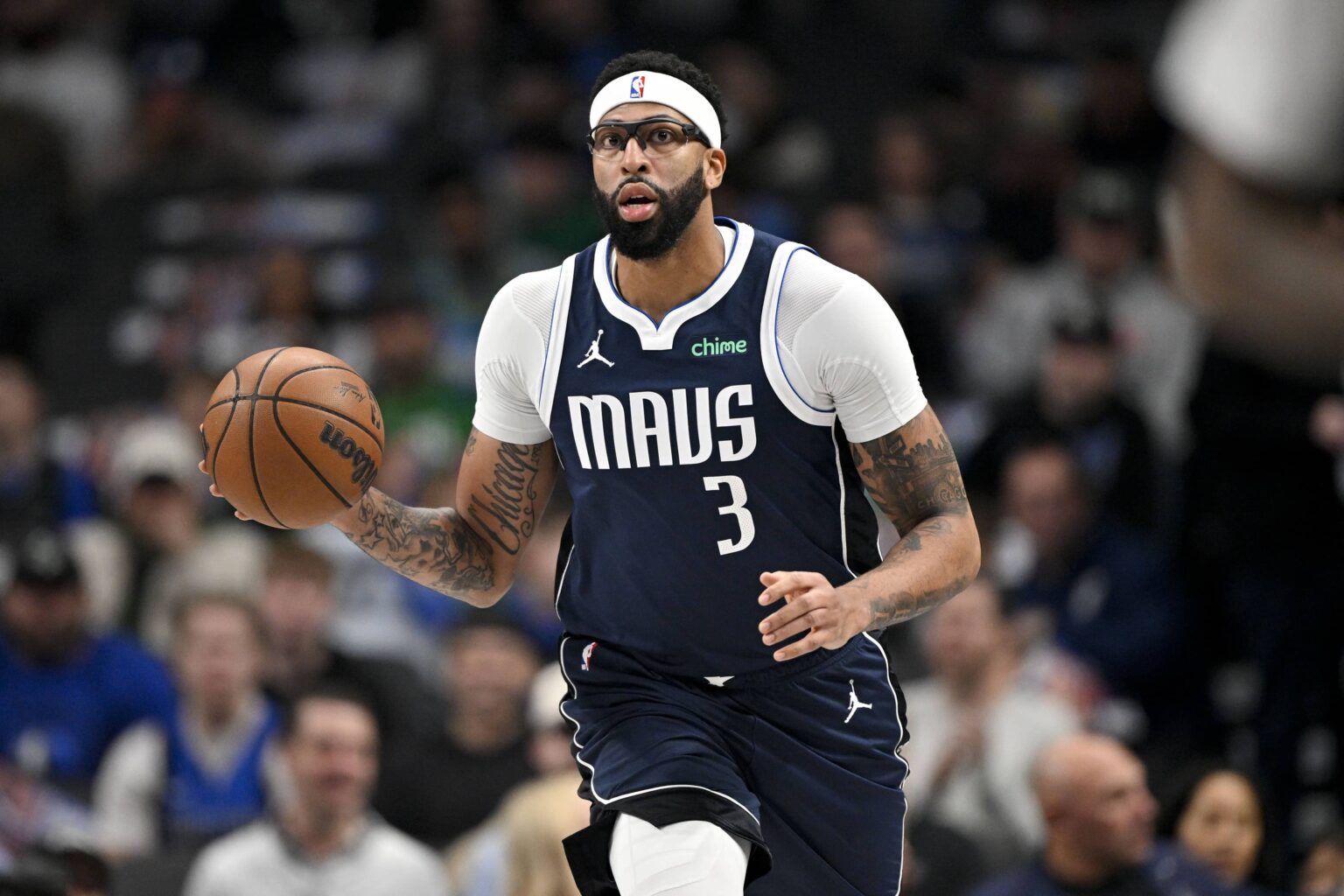
The Dallas Mavericks made one thing clear at this trade deadline. When it came to maximizing value for Anthony Davis, relationships came second.
According to ESPN’s Tim MacMahon, the Mavericks negotiated Davis’ trade to the Washington Wizards without informing him or his agent, Rich Paul, beforehand. There was no warning, no soft landing, no advance discussion about preferred destinations.
Dallas kept it quiet to avoid the risk of Davis steering the process or potentially discouraging a deal.
It was a cold business move.
Davis had been in trade rumors for weeks, but most chatter linked him to teams like the Toronto Raptors or Atlanta Hawks. Rich Paul was actively involved in exploring those pathways, especially with Davis extension eligible this summer and still owed $58.5 million next season, plus a $62.8 million player option in 2027-28.
Klutch Sports was clearly positioning him for another major payday.
But injuries complicated everything.
Davis has suffered 296 injuries across 51 unique body parts throughout his career, a staggering number that has followed him everywhere. He had already missed significant time this season and then suffered ligament damage in his left hand on Jan. 8 against the Utah Jazz.
That effectively shut down momentum on talks with Atlanta. Toronto, meanwhile, would have required Dallas to take back a heavy long-term salary, which ownership reportedly did not want.
So Dallas pivoted.
The Mavericks began exploring options immediately after Nico Harrison was fired in November, when the team sat at 3-8, and Davis was already recovering from a calf strain. With durability concerns and a massive contract attached, finding fair value was difficult.
Internally, there were concerns about how fans would react to any return package that lacked premium draft picks or foundational pieces.
Enter Washington.
The Wizards quietly emerged as a serious suitor, and Dallas negotiated the framework without Davis or Paul knowing Washington was even in the mix. The logic was simple. If Davis knew early, there was a possibility he could subtly discourage the deal or create leverage. The Mavericks wanted control of the timeline and the narrative.
The trade blindsided Davis’ camp.
Initial reports suggested Davis was unhappy about landing in Washington, but he quickly debunked that notion publicly. Still, the reality remains that he had no idea the Wizards were pushing hard until the deal was done.
Statistically, Davis has been productive when available. He is averaging 20.4 points, 11.1 rebounds, and 1.6 blocks while shooting 50.6% from the field. The problem is availability. He has played just 20 games this season.
He will earn $54.1 million this year and is expected to miss the remainder of the season, though Wizards management has left the door open for a possible late return.
For Washington, this is a long-term play. They have already reshaped their future by turning Bradley Beal and Kyle Kuzma into Trae Young, Anthony Davis, and five first-round pick swaps.
Both Young and Davis are unlikely to suit up much this season, but the organization is betting on a healthy reset next year. With young talent on the roster and a stockpile of draft capital, the Wizards believe they can build something serious.
As for Dallas, this move signals a full commitment to a new era built around Cooper Flagg. His emergence softened the blow of moving on from Davis and gave ownership confidence to prioritize future flexibility over star power.
In the end, it was ruthless but calculated. The Mavericks chose leverage over loyalty, secrecy over collaboration. Anthony Davis and Rich Paul simply found out after the fact.