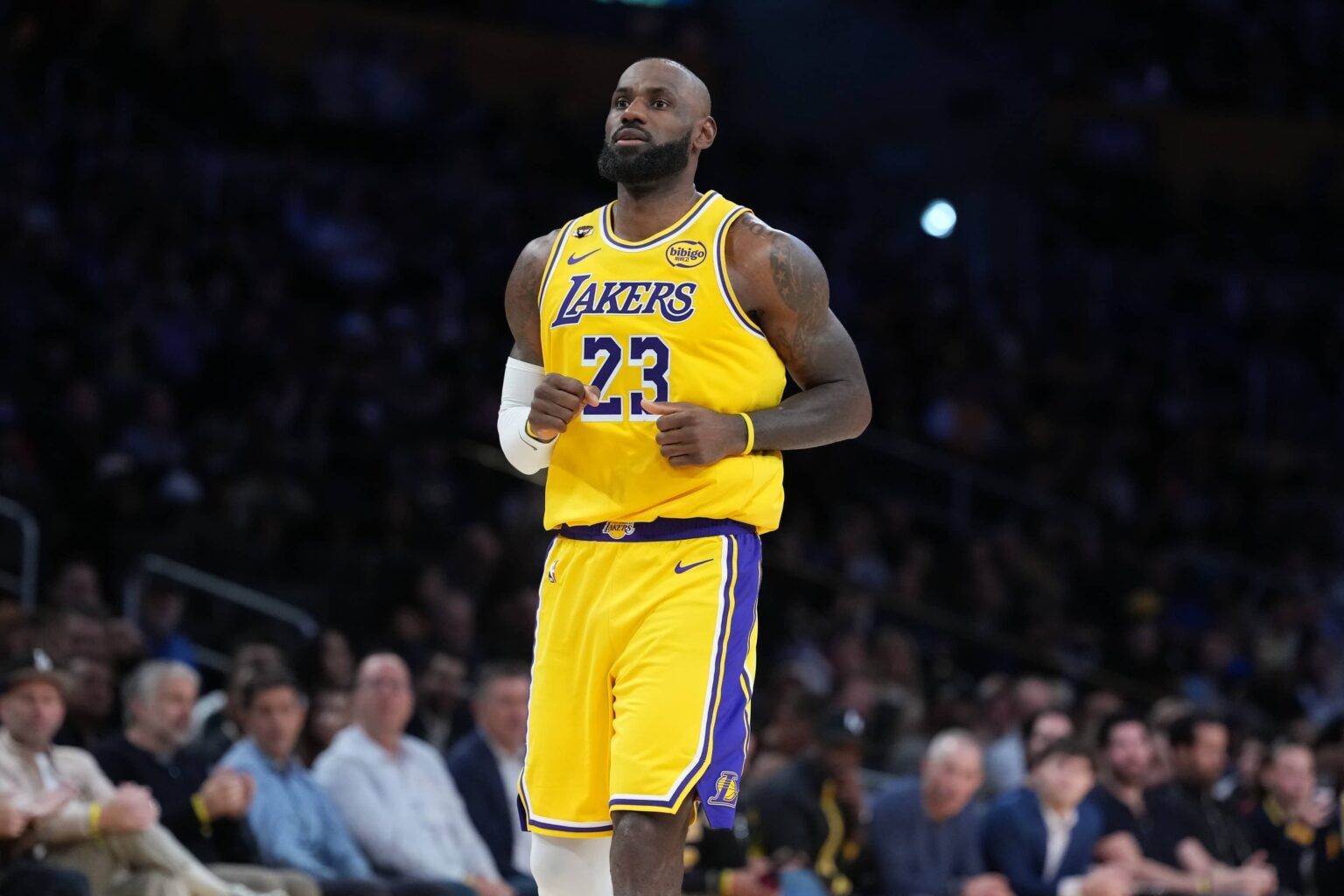
The romance of a third stint for LeBron James in Cleveland sounds powerful in theory. The math, on the other hand, is brutal.
According to longtime NBA insider Brian Windhorst on ESPN Cleveland, there is only one realistic pathway for LeBron to join the Cavaliers this offseason, and it would require a staggering financial sacrifice.
“The only way the Cavs could add him would be to get him to play at either the minimum, or maybe they could do some things to shave some salary to open up the taxpayer mid-level exception, where it’s like six or seven million dollars.”
“From the Cavs’ perspective, it’s simple. Basically, they say to LeBron, if you would like to play with us, we’d love to have you. This is what we have to offer. That’s all we can offer. We can offer you that and being Cleveland. If he’s able and willing to accept that money, I think it’s 99 percent.”
Right now, LeBron is earning $52.6 million with the Los Angeles Lakers. The projected veteran minimum for a player with over 10 years of experience next season is roughly $3.9 million. That means LeBron would need to take a $48.7 million pay cut just to sign with Cleveland at the minimum.
Even if the Cavaliers find a way to create access to the projected $6.1 million taxpayer mid-level exception, that still represents a $46.5 million pay cut.
Windhorst explained the situation from Cleveland’s side. The Cavaliers are projected to be over the first apron for the 2026 to 2027 season and have less than a million dollars in second apron space. They are financially squeezed. They have expiring contracts to manage and roster spots to fill. There is no cap room waiting for a superstar reunion.
The only pitch Cleveland can realistically make is simple: this is all we can offer, and we are offering you home.
From a basketball standpoint, Windhorst added context. LeBron at 41 remains highly productive when healthy. He is not consistently elite defensively anymore, especially on nights when his legs are not there. Yet when engaged, he can still dictate games as a scorer and playmaker. This season, he is averaging 22.0 points, 5.8 rebounds, and 7.1 assists while shooting 50.2% from the field. That production would help any contender.
The question becomes whether nostalgia outweighs nearly fifty million dollars.
Former Cavaliers general manager David Griffin recently said he would be surprised if LeBron does not return to Cleveland on some level before retiring. The drama behind it is compelling. A final run in Northeast Ohio, potentially chasing one more title with Donovan Mitchell, James Harden, and the current core, would complete the story that began in 2003.
Financially, though, it borders on unrealistic. Even if LeBron has earned over a billion dollars in career income and endorsements, this would be by far the largest voluntary pay cut in NBA history. The Lakers, by comparison, are projected to have over $50 million in cap space this summer. If they welcome him back on a reduced deal, it would not need to be nearly as dramatic.
In Cleveland, sentiment is strong, but the numbers are stronger. For this reunion to happen, LeBron would have to prioritize legacy over salary in a way he never has before. The Cavaliers can offer a jersey, a roster, and a city that still reveres him. They cannot offer anything close to what he currently makes.
That is the reality behind the dream.