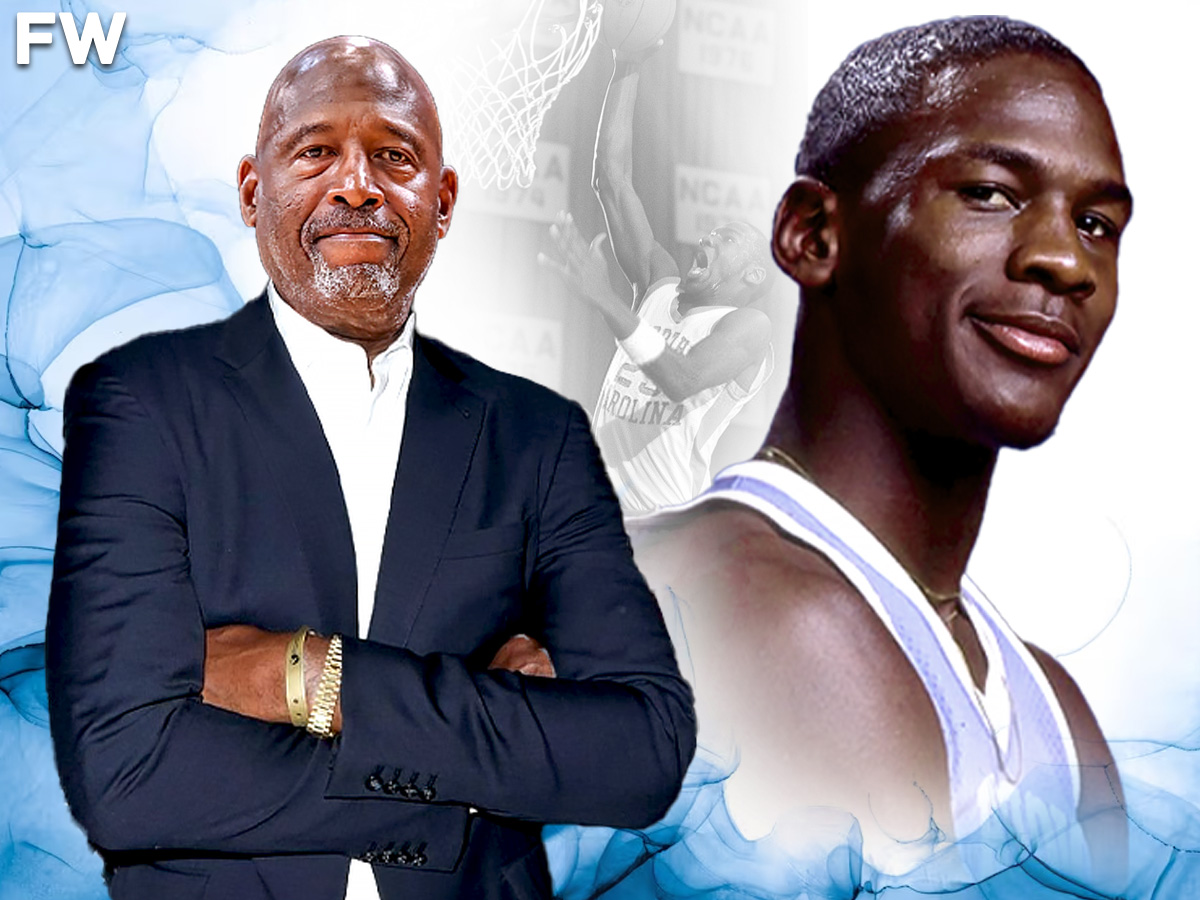
James Worthy has seen greatness up close, and when he talks about Michael Jordan, the message is clear. The talent was obvious, but the mentality set him apart from day one.
Speaking at House of Robb: Beyond the Madness in Las Vegas, Worthy described a young Jordan in simple terms.
“Michael Jordan really is an assassin. Jordan don’t like to lose at anything. I saw him lose a backgammon game one time, and it was like he lost a Game 7. He destroys tables. He hates to lose.”
“He was a freshman. We would practice two and a half hours, and I’m tired. I’m ready to go back to the dorm. I’m trying to walk off the court. Here’s Michael. ‘Where are you going?’ He’s pushing me back on the floor. He wants to play one-on-one because he wants to measure himself. So I beat him two out of three. Never played him again.”
“But I think Michael would kill. He’s like Kobe Bryant. Kobe would kill. Michael’s the kind of guy that’ll shoot you, let you lay there for a little bit, wait for everybody else to come rescue you, and then shoot everybody.”
View this post on Instagram
That mindset showed up in the smallest moments. Worthy recalled a backgammon game where Jordan lost and reacted as if it were a Game 7 defeat. That reaction was not for show. It was how he approached everything.
The same intensity carried onto the court at the University of North Carolina. Jordan arrived as a freshman, playing alongside an established star in Worthy. Practices were long and demanding, often stretching beyond two hours. For most players, that was enough, but not for Jordan.
Jordan took losses personally, learned from them, and adjusted. Worthy even joked that for about three weeks in North Carolina, he felt like he was the better player. That window did not last.
Jordan’s college career set the foundation. He averaged 17.7 points per game across three seasons, shooting 54.0% from the field. As a freshman in 1982, he hit the game-winning shot in the NCAA championship against Georgetown, delivering a national title for North Carolina.
He earned NCAA Tournament Most Outstanding Player honors and later won the Naismith College Player of the Year award in 1984 before entering the NBA.
Worthy had his own elite resume. He averaged 15.6 points in college and was the Final Four Most Outstanding Player in 1982, the same championship run where Jordan made his mark. He went on to become a Hall of Famer, winning three NBA titles and a Finals MVP with the Los Angeles Lakers.
Their paths crossed again in the NBA.
Worthy held a slight edge in head-to-head matchups, finishing 10-9 against Jordan overall, including 9-6 in the regular season. Jordan averaged 32.9 points, 7.1 rebounds, and 8.2 assists in those games, while Worthy put up 20.4 points, 4.3 rebounds, and 2.8 assists.
But the biggest stage told a different story. In the 1991 NBA Finals, Jordan led the Chicago Bulls past Worthy’s Lakers in five games.
Jordan’s competitiveness was relentless. It showed up in games, practices, and even off-court moments. Stories from players like Vince Carter and even Jordan’s own agent highlight the same trait. Whether it was gambling, workouts, or competition, the approach never changed.
He competed to win. And if he lost, he took it personally.