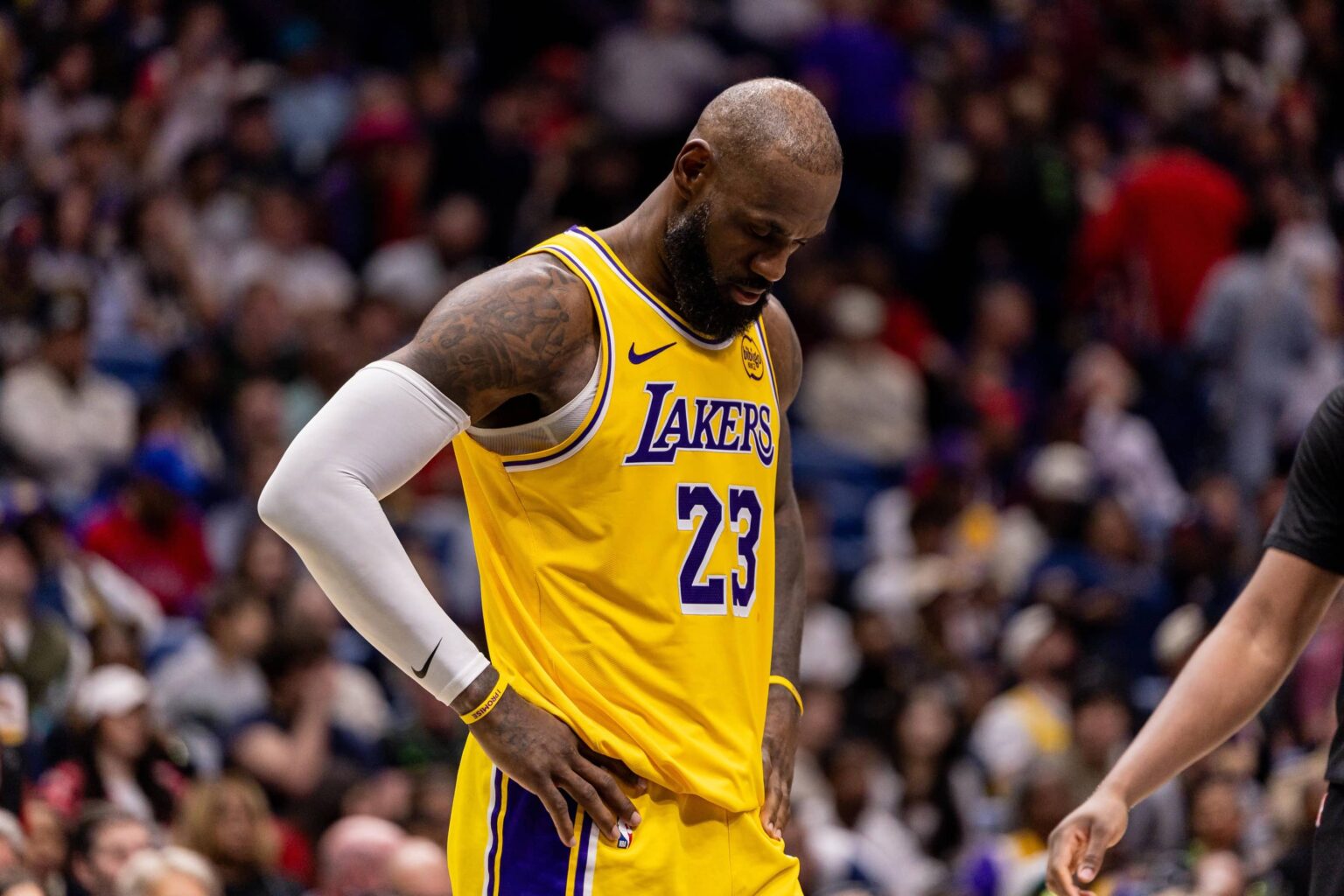
Not every NBA record is something to celebrate. Some records show greatness, but others show the worst part of a career. They can come from missed shots, turnovers, fouls, bad defense, losing seasons, or playoff failures. Nobody wants to be remembered for those numbers, even if there is usually more context behind them.
That is the strange part about these records. A player often needs a long career, many minutes, and real responsibility to reach them. A bad player does not miss that many shots because he does not get that many chances. A bad ball-handler does not commit that many turnovers because he is not trusted with the ball. Even ugly records can come from players who were important.
Still, the record stays there. Fans remember it. Media brings it back. It becomes part of the player’s name, even if the rest of his career was much better. Some of these records belong to legends. Others belong to players who had one terrible night or one brutal season. But all of them have the same problem: they are marks no player wants next to his career.
Most Turnovers In A Game
1. Mike Bantom: 16 turnovers
2. Jason Kidd: 14 turnovers
3. John Drew: 14 turnovers
This is one of the worst records a player can have, because there is no good way to hide from it. A missed shot can still be explained by a hard contest. A bad shooting night can come from taking difficult attempts. But 16 turnovers means a player kept giving the ball away, and every mistake gave the other team another chance.
Mike Bantom owns the top mark with 16 turnovers for the Pacers against the Bullets on January 2, 1982. He still had a productive box score with 24 points and 12 rebounds, but the turnovers became the main part of the night. That is the problem with this record. It can erase everything else. Bantom scored, rebounded, got to the line, and played 37 minutes, but the number that stayed was 16 giveaways.
Jason Kidd is the more famous name here. He had 14 turnovers for the Suns against the Knicks on November 17, 2000. The strange part is that he also finished with a triple-double: 18 points, 12 rebounds, and 10 assists. That sounds like a great game until the turnover column destroys the whole picture. Kidd was a great passer, but this was the other side of living with the ball in his hands for 45 minutes.
John Drew also reached 14 turnovers for the Hawks against the Nets on March 1, 1978. Individual turnovers have only been officially tracked since the 1977-78 season, so Drew’s game came right at the start of the stat being recorded.
This record is hard to break now because coaches usually pull a player before it gets this ugly. Modern offenses also spread creation more. Still, if one star has the ball all night against pressure defense, it can happen. And if it does, nobody will care about the assists or points first. The turnover number will lead the story.
Most 3s Missed In A Single Game
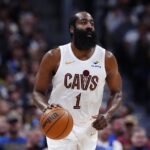
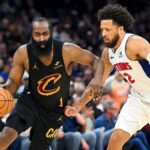
1. James Harden: 16 missed 3s
2. Damon Stoudamire: 16 missed 3s
3. Dalano Banton: 15 missed 3s
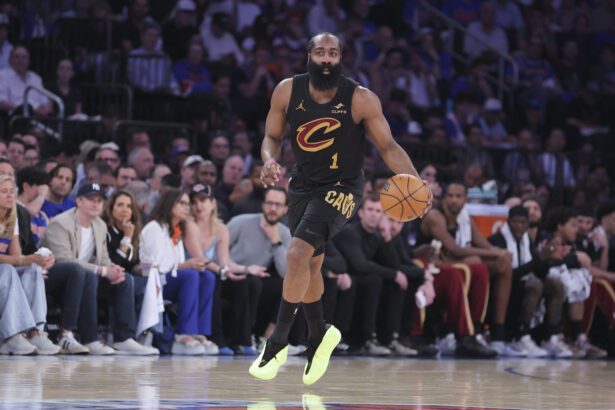
This is a brutal record because it usually means one thing: the player kept shooting, and the night never turned. James Harden and Damon Stoudamire are tied for the most missed 3-pointers in a regular-season game with 16. The complete game-level data for missed 3s goes back to the 1983-84 season, so this is the tracked modern record.
Harden is the main name here because this type of record fits the Rockets version of his game. He had full control of the offense, took pull-up 3s from deep, attacked switches, and played with extreme volume. On January 13, 2019, he went 1-for-17 from 3 against the Magic in a 116-109 loss, but still finished with 38 points. That shows the full Harden experience from that era: huge scoring, constant pressure, free throws, assists, and still one shooting number that made the night look ugly.
The other two games were different because the Rockets won both. On March 30, 2019, Harden went 7-for-23 from 3 against the Kings, but finished with 50 points, 11 rebounds, and 10 assists in a 119-108 win. That was a bad 3-point efficiency night, not a bad game. Against the Pelicans on October 26, 2019, the misses looked worse. Harden went 2-for-18 from 3 and 8-for-29 from the field, but the Rockets still won 126-123. He had 29 points, helped by 11-of-12 from the free-throw line, but that game was more about survival than dominance.
Damon Stoudamire first set the record with the Trail Blazers on April 15, 2005, when he went 5-for-21 from 3 against the Warriors. That is a strange box score because making five 3s is usually a good number. But when it comes with 16 misses, the efficiency is terrible. He kept firing, the attempts kept coming, and the misses became the story.
Dalano Banton is not tied for the overall record, but his game may look even worse. He missed 15 3s for the Trail Blazers against the Kings on April 14, 2024, and made none. It was a very different type of record because no player had ever attempted that many 3s in a game without making one.
This record is easier to reach now than it was before because the league takes more 3s. Still, 16 misses by one player is hard to defend. It means the coach allowed it, the offense needed it, and the player never stopped believing the next one was going in.
Most Career Missed Dunks
1. DeAndre Jordan: 301 missed dunks
2. Dwight Howard: 225 missed dunks
3. Shaquille O’Neal: 188 missed dunks
This record looks bad at first, but it is really a volume record. DeAndre Jordan is first with 301 missed dunks, which sounds crazy for a player who built most of his career around finishing above the rim. But that is also the reason he is here. Jordan spent years as one of the best lob threats in the league, especially with the Clippers. He lived in the restricted area, rolled hard to the basket, attacked offensive rebounds, and tried to dunk through contact instead of laying the ball in.
The strange part is that Jordan is not an inefficient finisher. He is the opposite. Jordan is the all-time leader in career field-goal percentage, with a 67.4% career mark before he signed with the Pelicans in 2025. That makes this record feel less like an insult and more like a side effect of his role. Jordan missed more dunks than anyone because he attempted more hard finishes than almost anyone.
Dwight Howard is second with 225 missed dunks, and his name makes complete sense, too. At his peak, Howard was a power finisher, not a soft-touch big. He was catching lobs, sealing deep, running in transition, and going straight through defenders. He also played 1,242 NBA games and finished his career as one of the best rebounders and rim protectors of his generation, with eight All-Star selections, eight All-NBA selections, and three Defensive Player of the Year awards.
Shaquille O’Neal is third with 188 missed dunks, but his number needs context. His first four seasons are not fully covered by detailed tracking, so the real number is almost certainly higher. That matters because those early Magic years were some of the most explosive seasons of his career. Even with that gap, Shaq still ranks third, which says enough. This is not a record for bad dunkers. It is a record for big men who lived at the rim and kept attacking even when the finish was not clean.
Longest Suspension Ever
1. Ron Artest: 86 games
2. Latrell Sprewell: 68 games
3. Gilbert Arenas: 50 games
Ron Artest has the longest game-count suspension in NBA history. The league suspended him for the rest of the 2004-05 season after the Malice at the Palace, and that became 86 total games: 73 regular-season games and 13 playoff games. This is still the longest suspension on this type of list, and it is the number everyone uses when talking about the harshest NBA punishment by games missed, as some players were banned from the league and never returned.
The incident was bigger than one player. The Pacers-Pistons brawl became one of the worst nights in league history because it crossed the line between players and fans. Artest was hit by a drink, went into the stands, and the situation turned into complete chaos. The NBA gave out more than 140 total games in suspensions, but Artest took the biggest penalty by far. Stephen Jackson got 30 games, Jermaine O’Neal originally got 25 before it was reduced, but Artest missed the entire rest of the season.
Latrell Sprewell is second with 68 games. His case was different because it happened in practice, not during a game. Sprewell attacked Warriors coach P.J. Carlesimo in 1997, and the original punishment was even bigger before arbitration reduced it. His 68-game suspension came after he challenged the NBA in court, and the suspension was lowered, costing him around $6.0 million in wages.
Gilbert Arenas is third with 50 games. His suspension came during the 2009-10 season after the locker-room gun incident with Javaris Crittenton. The NBA first suspended Arenas indefinitely, then made it a season-ending suspension. He ended up missing the final 50 regular-season games because of the NBA suspension.
This is a record nobody wants because it is never about basketball. Artest was a great defender, Sprewell was a strong scorer, and Arenas was an elite offensive guard at his peak. But once a suspension gets this long, the number becomes part of the player’s career forever.
Most Technical Fouls In A Single Season
1. Rasheed Wallace: 41 technical fouls
2. Rasheed Wallace: 38 technical fouls
3. Charles Barkley/Dennis Rodman: 32 technical fouls
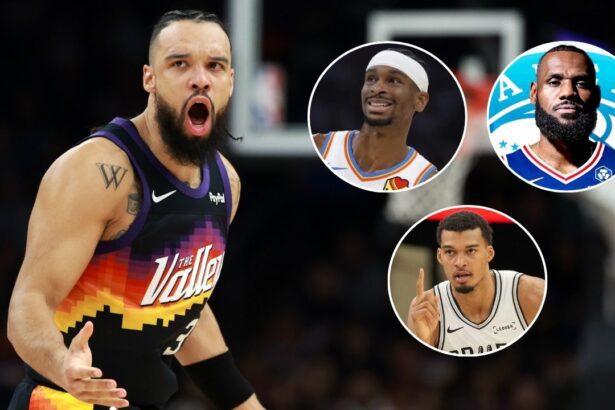
Rasheed Wallace owns this record, and it is not close. In 2000-01, Wallace had 41 technical fouls with the Trail Blazers. One season before that, he had 38, which is also second all-time. So the two worst seasons ever in this category belong to the same player, with the same team, in back-to-back years. That is hard to even imagine now because the NBA rules are much stricter. A player is automatically suspended for one game after his 16th technical foul in the regular season, and then gets another one-game suspension for every two technicals after that.
Wallace was a very good player, and that part should not be ignored. In 2000-01, he averaged 19.2 points, 7.8 rebounds, and 2.8 assists while shooting 50.1% from the field. He was not just a player losing control for no reason. He was one of the main players on a strong Trail Blazers team, defending, scoring inside, shooting from mid-range, and playing with a lot of emotion. But the techs became too much. He was arguing with officials all season, and the record became part of his name.
Charles Barkley and Dennis Rodman are tied for third with 32 technical fouls. Barkley did it twice with the Suns, first in 1992-93 and again in 1994-95. Rodman did it with the Spurs in 1993-94. Those names also make sense. Barkley was physical, loud, and always ready to talk. Rodman played with chaos every night, defended stars, fought for rebounds, and brought tension to every game.
This record is almost impossible to break today. It is not only about personality. The rules make it too expensive. A player would lose games, money, and probably the trust of his team long before reaching 41. Wallace’s record comes from a different NBA, when a player could keep stacking techs without the same automatic punishment. That is why this one will probably stay untouched.
Most Career Field Goals Missed
1. LeBron James: 15,541 missed field goals
2. Kobe Bryant: 14,481 missed field goals
3. John Havlicek: 13,417 missed field goals
This is probably the best “bad” record in NBA history, because it says almost nothing bad about the players on top. LeBron James has missed the most field goals ever, with 15,541, but he is also the all-time leading scorer and one of the most efficient high-volume stars the league has seen. He’s at 50.7% from the field for his career, which is a strong number for a player who has carried offense for more than two decades.
LeBron passed Kobe Bryant during the Lakers’ 2024-25 season opener. He entered that game with 14,476 missed field goals, only five behind Kobe’s old record of 14,481, and then moved into first place that night. That record will keep growing because LeBron is still active, but it already shows the real point: missed shots are part of being trusted to take shots for 20-plus years.
Kobe is second with 14,481 missed field goals, and this one became a major talking point near the end of his career. It fit the public view of him as a player who never stopped shooting. But that is also why he finished with 33,643 points, five championships, two Finals MVPs, one MVP, and 18 All-Star selections. Kobe took impossible shots, late-clock shots, double-team shots, and end-of-quarter shots. A lot missed. A lot also became part of his legend.
John Havlicek is third with 13,417 missed field goals. His name is important because it shows this record is not only about modern usage. Havlicek played 16 seasons with the Celtics, won eight championships, and was one of the first great high-minute wing engines in NBA history. He played fast, ran constantly, and carried huge offensive volume for his era.
This record is unwanted, but it is not embarrassing. It belongs to players who had the ball, had the green light, and stayed great long enough for the misses to pile up. Bad players do not get enough shots to reach this list.