Shai Gilgeous-Alexander just won his second MVP, and that puts him in a much smaller NBA group.
Winning one MVP already means a player had one of the best regular seasons in the league. Winning two means something different. It means the level was repeated. It means the player was not just great for one year, but strong enough to stay at the top of the MVP race again.
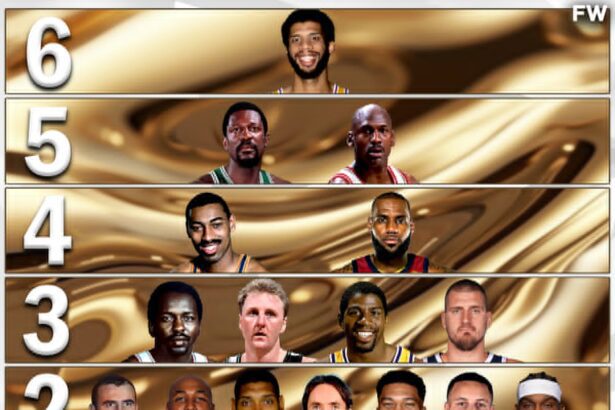
This list ranks every NBA player with multiple MVPs into tiers. The order is based on MVP count, peak numbers, team results, and how much each player controlled the regular season in his era.
Some players won through scoring. Some won through defense and rebounding. Some won through passing, efficiency, and team record. The award has changed over time, but the standard is still heavy.
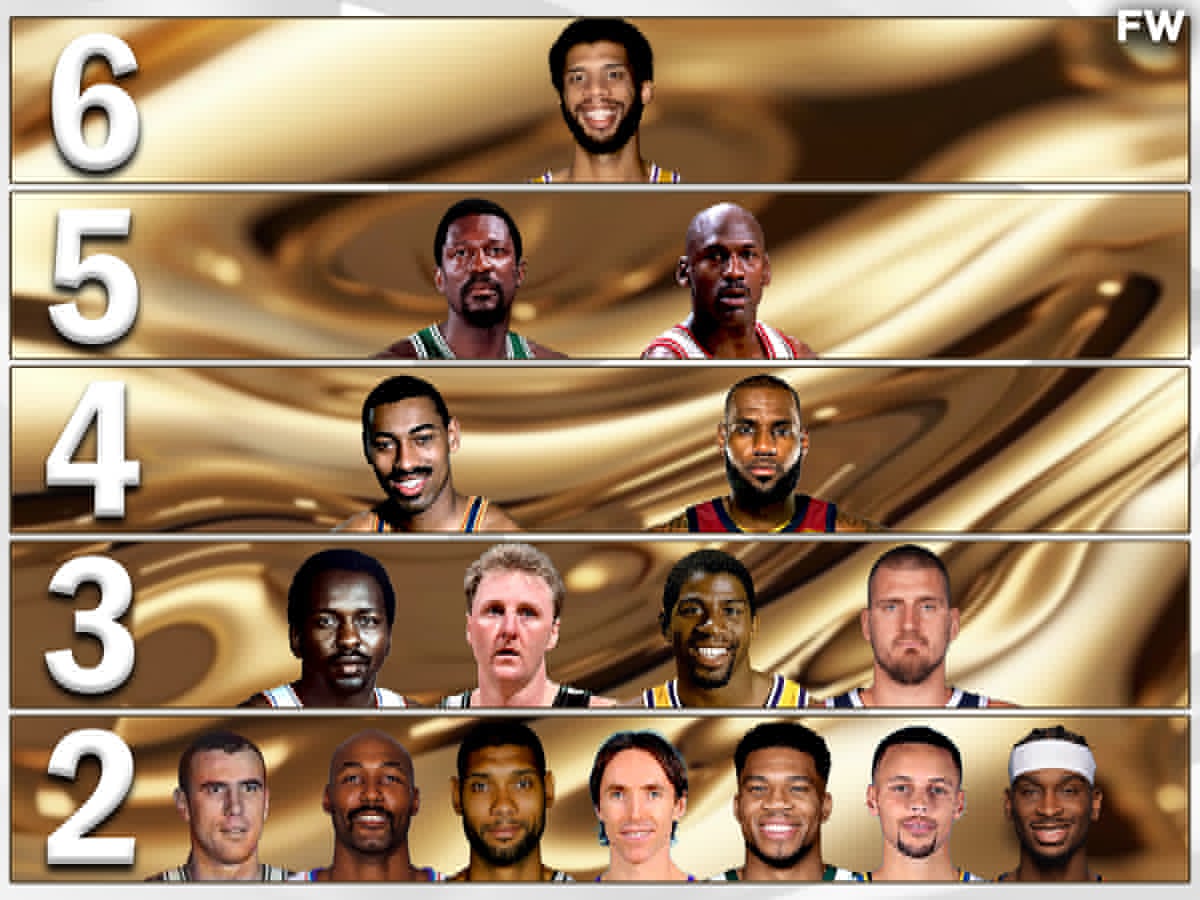
Here is the full tier ranking of every NBA player with multiple MVPs, starting with the two highest levels in league history.
6 MVP Awards
– Kareem Abdul-Jabbar (1971, 1972, 1974, 1976, 1977, 1980)
Kareem Abdul-Jabbar is alone because six MVPs is still the NBA record. He won in 1971, 1972, 1974, 1976, 1977, and 1980. That span is the most important part. Kareem did not just have one peak. He won MVPs across two franchises, two decades, and different roster situations. The league changed around him, but his value stayed at the top.
His 1971 season was the first full proof. Kareem averaged 31.7 points, 16.0 rebounds, and 3.3 assists while shooting 57.7% from the field. The Bucks went 66-16 and won the championship. That was not only big production. That was production tied to the best team in the league and a title.
The next year was just as strong. In 1971-72, he averaged 34.8 points, 16.6 rebounds, and 4.6 assists. That is one of the highest-scoring MVP seasons ever for a center. He was not only finishing plays. He was the offense. The skyhook made him almost impossible to guard one-on-one, and the Bucks could build every half-court possession around him.
His later MVPs showed a different kind of value. In 1975-76, Kareem won MVP even though the Lakers missed the playoffs. That is rare and still tells the story of how strong his individual case was. He averaged 27.7 points, 16.9 rebounds, 5.0 assists, 1.5 steals, and 4.1 blocks. The team result was not strong, but the stat line was too heavy to ignore.
His final MVP came in 1979-80, when he averaged 24.8 points, 10.8 rebounds, 4.5 assists, and 3.4 blocks while shooting 60.4% from the field. He was no longer the same young volume machine, but he was still the best regular-season big in basketball. The Lakers also won the championship that year.
That is why Kareem gets his own tier. Six MVPs. Elite scoring. Elite efficiency. Elite durability. Real team success. A peak that lasted long enough to cover more than one era. Nobody else has matched that regular-season resume.
5 MVP Awards
– Bill Russell (1958, 1961, 1962, 1963, 1965)
– Michael Jordan (1988, 1991, 1992, 1996, 1998)
Bill Russell won five MVPs: 1958, 1961, 1962, 1963, and 1965. His case is not based on scoring. His best MVP value came from defense, rebounding, passing, and team record. Blocks and steals were not tracked in his era, so the full defensive box score does not exist. That hurts the numbers, but the team results explain a lot.
Russell averaged at least 22.7 rebounds in all five MVP seasons. In 1960-61, he averaged 16.9 points, 23.9 rebounds, and 3.4 assists while the Celtics went 57-22. In 1961-62, he averaged 18.9 points, 23.6 rebounds, and 4.5 assists while the Celtics went 60-20. That same season, Wilt Chamberlain averaged 50.4 points, and Oscar Robertson averaged a triple-double, but Russell still won MVP because the Celtics were the best team and his defense controlled their identity.
His 1964-65 MVP season is a good example of his playing style. He averaged only 14.1 points, but he also had 24.1 rebounds and 5.3 assists. The Celtics went 62-18. That is Russell’s case in one line: the scoring was not huge, but the rebounding, passing, defense, and winning were elite.
Russell was the best defensive player, the best rebounder in big games, and the center of the Celtics’ dynasty. His MVP resume is built on team control more than box-score volume.
Michael Jordan also won five MVPs: 1988, 1991, 1992, 1996, and 1998. His case is easier to measure than Russell’s because the modern box score shows more. Jordan won through scoring, efficiency, defense, team record, and playoff-level pressure during the regular season.
His 1987-88 MVP season was the strongest pure stat year. Jordan averaged 35.0 points, 5.5 rebounds, 5.9 assists, 3.2 steals, and 1.6 blocks while shooting 53.5% from the field. He also won Defensive Player of the Year. That is one of the best two-way regular seasons ever. The Bulls went 50-32, so the team record was not historic, but the individual case was too strong.
The 1991 and 1992 MVPs had better team context. In 1990-91, Jordan averaged 31.5 points, 6.0 rebounds, 5.5 assists, and 2.7 steals on 53.9% shooting. The Bulls went 61-21 and won the championship. In 1991-92, he averaged 30.1 points, 6.4 rebounds, 6.1 assists, and 2.3 steals. The Bulls went 67-15 and won again.
His last two MVPs came during the second Bulls run. In 1995-96, Jordan averaged 30.4 points, 6.6 rebounds, 4.3 assists, and 2.2 steals. The Bulls went 72-10, which was the best regular-season record ever at the time. In 1997-98, he averaged 28.7 points, 5.8 rebounds, 3.5 assists, and 1.7 steals for a 62-win team.
4 MVP Awards
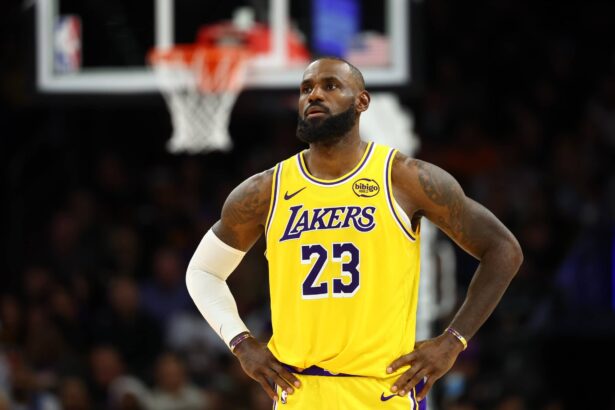
– LeBron James (2009, 2010, 2012, 2013)
– Wilt Chamberlain (1960, 1966, 1967, 1968)
Four MVPs is the line where the list becomes very small. LeBron James won in 2009, 2010, 2012, and 2013. The first two came with the Cavaliers. The next two came with the Heat. That split is important because he won in two different team structures and still kept almost the same level.
His Cavaliers MVP seasons were built on huge usage and huge team records. In 2008-09, LeBron averaged 28.4 points, 7.6 rebounds, 7.2 assists, 1.7 steals, and 1.1 blocks on 48.9% from the field. The Cavaliers went 66-16. In 2009-10, he averaged 29.7 points, 7.3 rebounds, 8.6 assists, 1.6 steals, and 1.0 blocks on 50.3% from the field. The Cavaliers went 61-21.
The Heat years were more efficient. In 2011-12, LeBron averaged 27.1 points, 7.9 rebounds, 6.2 assists, and 1.9 steals on 53.1% from the field. The Heat went 46-20 in the shortened season and won the title. In 2012-13, he averaged 26.8 points, 8.0 rebounds, 7.3 assists, and 1.7 steals on 56.5% from the field and 40.6% from three. The Heat went 66-16 and won the title again.
That is why LeBron is in this tier. He had volume, efficiency, passing, defense, and team record. He won MVPs as the main engine of the Cavaliers and then as the best all-around player on a championship Heat team. His four MVPs cover two versions of his prime.
On the other hand, numbers are the first problem with Wilt Chamberlain. They are almost too big to compare. He won four MVPs: 1960, 1966, 1967, and 1968. He also had seasons where he put up MVP-level stats and still did not win, which says a lot about the era and voter standards.
His first MVP came as a rookie in 1959-60. Wilt averaged 37.6 points, 27.0 rebounds, and 2.3 assists. That is a ridiculous starting point. He entered the league and was already the most dominant box-score player in basketball.
The 1965-66 season was another volume year. Wilt averaged 33.5 points, 24.6 rebounds, and 5.2 assists while shooting 54.0% from the field. The next season was different and maybe more important. In 1966-67, he averaged 24.1 points, 24.2 rebounds, and 7.8 assists while shooting 68.3% from the field. The 76ers went 68-13 and won the championship. That was the best version of Wilt for team balance.
In 1967-68, he won again after averaging 24.3 points, 23.8 rebounds, and 8.6 assists. The scoring was lower than his early years, but the passing and team role were stronger. Wilt was not only a scorer anymore. He was still the best rebounder in the league, still an elite finisher, and now a bigger part of the offense as a passer.
3 MVP Awards
– Moses Malone (1979, 1982, 1983)
– Larry Bird (1984, 1985, 1986)
– Magic Johnson (1987, 1989, 1990)
– Nikola Jokic (2021, 2022, 2024)
This tier is for the three-time MVPs. The number is the same, but the cases are very different. Larry Bird won with shooting, passing, rebounding, and elite team records. Magic Johnson won with pace, size, and playmaking. Moses Malone won with scoring inside, offensive rebounding, and physical pressure. Nikola Jokic won with efficiency, passing, rebounding, and complete control of the Nuggets’ offense.
Bird has the strongest three-year run in this group because he won three straight MVPs in 1984, 1985, and 1986. In 1983-84, he averaged 24.2 points, 10.1 rebounds, 6.6 assists, and 1.8 steals while the Celtics went 62-20 and won the championship. One year later, he raised the scoring to 28.7 points with 10.5 rebounds and 6.6 assists on 52.2% from the field and 42.7% from three. In 1985-86, he averaged 25.8 points, 9.8 rebounds, 6.8 assists, and 2.0 steals while the Celtics went 67-15 and won another title. That is the case: three MVPs in a row, two championships in that stretch, elite shooting, and almost seven assists per game from a forward.
Jokic is the most modern version of that control. He won in 2021, 2022, and 2024. His first MVP season was 26.4 points, 10.8 rebounds, and 8.3 assists on 56.6% from the field and 38.8% from three. In 2021-22, he averaged 27.1 points, 13.8 rebounds, and 7.9 assists while the Nuggets won 48 games without Jamal Murray all season and with Michael Porter Jr. sidelined for almost the entire year. His 2024 MVP season was 26.4 points, 12.4 rebounds, and 9.0 assists on 58.3% from the field for a 57-win Nuggets team. Bird had the stronger three-year team run. Jokic has the most efficient profile ever and the best playmaking mix in this tier.
Magic’s MVP seasons were not built on scoring titles. They were built on floor control. In 1986-87, he averaged 23.9 points, 6.3 rebounds, 12.2 assists, and 1.7 steals while the Lakers went 65-17 and won the championship. That was his best MVP season because the scoring was high enough to match the passing. In 1988-89, he averaged 22.5 points, 7.9 rebounds, and 12.8 assists. In 1989-90, he averaged 22.3 points, 6.6 rebounds, and 11.5 assists for a 63-win Lakers team. Magic did not need huge scoring volume to win MVP. He controlled the game with passing, transition, post-ups, and tempo. The Lakers’ offense was built around his decisions every night.
Moses is the most physical player in this tier. His first MVP came in 1978-79, when he averaged 24.8 points, 17.6 rebounds, and 1.5 blocks for the Rockets. In 1981-82, he averaged 31.1 points, 14.7 rebounds, and 1.5 blocks. That is the loudest scoring season from anyone in this tier outside Bird’s 1985 year. Then came 1982-83 with the 76ers, his best team season. Moses averaged 24.5 points, 15.3 rebounds, 1.1 steals, and 2.0 blocks while the 76ers went 65-17 and won the championship. His value was not complicated. He scored inside, drew contact, destroyed teams on the offensive glass, and gave his teams extra possessions.
All four belong together because three MVPs is still a historic line. Many Hall of Famers never won one. Many all-time players only won one or two. Bird, Magic, Moses, and Jokic each reached the top of the regular season three times, but they did it in four different ways. It is four different versions of regular-season dominance.
2 MVP Awards
– Bob Pettit (1956, 1959)
– Karl Malone (1997, 1999)
– Tim Duncan (2002, 2003)
– Steve Nash (2005, 2006)
– Stephen Curry (2015, 2016)
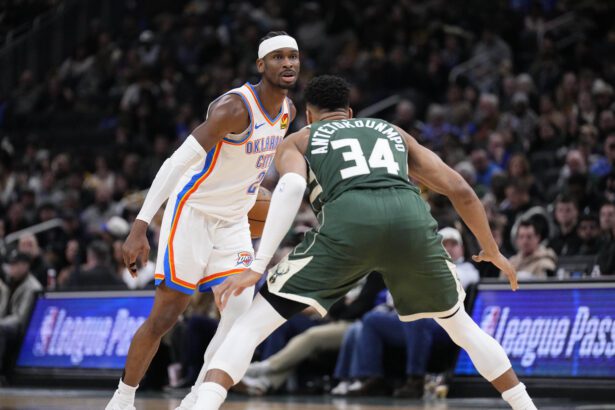
– Giannis Antetokounmpo (2019, 2020)
– Shai Gilgeous-Alexander (2025, 2026)
This tier has the two-time MVPs. It is the biggest tier, but it is not weak. Winning two MVPs still means a player had more regular-season control than almost everyone who ever played. The group is also very different. Bob Pettit and Karl Malone were power forwards who lived on scoring and rebounding. Tim Duncan and Giannis Antetokounmpo won with two-way value. Steve Nash and Stephen Curry won with guard offense and efficiency. Shai Gilgeous-Alexander is now here after going back-to-back in 2025 and 2026.
Duncan and Giannis have the best defensive case in this tier. Duncan won in 2002 and 2003. In 2001-02, he averaged 25.5 points, 12.7 rebounds, 3.7 assists, and 2.5 blocks. In 2002-03, he averaged 23.3 points, 12.9 rebounds, 3.9 assists, and 2.9 blocks. The Spurs won the title in 2003, and Duncan was the whole system: post scorer, rebounder, passer, and defensive anchor. Giannis won in 2019 and 2020 with a louder physical profile. In 2018-19, he averaged 27.7 points, 12.5 rebounds, and 5.9 assists. In 2019-20, he averaged 29.5 points, 13.6 rebounds, and 5.6 assists in only 30.4 minutes per game. He also won Defensive Player of the Year in 2020. That gives him one of the strongest two-way MVP seasons in this tier.
Curry and Nash are the guard-offense part of the group, but Curry’s case is heavier. Nash won in 2005 and 2006 with the Suns. His numbers were not huge by modern standards, but the offense was elite. In 2004-05, he averaged 15.5 points and 11.5 assists while shooting 50.2% from the field, 43.1% from three, and 88.7% from the line. In 2005-06, he averaged 18.8 points and 10.5 assists on 51.2% from the field, 43.9% from three, and 92.1% from the line. Curry won in 2015 and 2016. The second one is the stronger season: 30.1 points, 5.4 rebounds, 6.7 assists, 2.1 steals, 50.4% from the field, 45.4% from three, 90.8% from the line, and a 73-9 Warriors record. He was also the first unanimous MVP. That is why Curry is near the top of this tier.
Malone and Pettit are the older power-forward cases. Malone won in 1997 and 1999. In 1996-97, he averaged 27.4 points, 9.9 rebounds, and 4.5 assists while the Jazz won 64 games. In 1998-99, he averaged 23.8 points, 9.4 rebounds, and 4.1 assists in the lockout season. He was not a flashy MVP, but the production lasted forever. He scored, rebounded, ran the floor, and gave the Jazz the same high-level regular-season base every year. Pettit won in 1956 and 1959. His 1958-59 season was the better statistical case: 29.2 points, 16.4 rebounds, and 3.1 assists. The era was different, but the numbers were huge. Pettit was one of the first great scoring forwards in NBA history.
Shai is the newest player here, and his case is still being written. He won in 2025 and 2026, joining the back-to-back MVP group. His 2025 season was the first jump into this level: 32.7 points, 5.0 rebounds, 6.4 assists, 1.7 steals, 1.0 blocks, 51.9% from the field, and 37.5% from three. In 2025-26, he averaged 31.1 points, 6.6 assists, and 4.3 rebounds while the Thunder went 64-18 and had the best record in the NBA. He does not have the long career resume of the older names yet, but back-to-back MVPs already put his regular-season peak in this tier.