Winning MVP is not only about having the best numbers. The award also depends on team record, seed, voter mood, past awards, and who else is having a historic year at the same time. That is why some seasons stay in a strange place. They were good enough to win MVP in most years, but they landed in the wrong race.
This ranking is based on regular-season value only. No playoff bonus. No career reputation. No “he deserved it because he was better in June.” The focus is production, efficiency, advanced metrics, team record, voting finish, and how much of the team’s offense or defensive structure ran through that player.
Some players here missed on the MVP because the team record was too low. Some lost because another player had a bigger story. Some lost because voters didn’t want to give the same player another MVP. But every season on this list has a real case. These were not just great stat lines. These were full MVP-level seasons that didn’t end with the trophy.
10. 2016-17 James Harden
The point guard move changed the whole season for James Harden. He went from elite scorer to full offensive system, finishing with 29.1 points, 8.1 rebounds, 11.2 assists, 1.5 steals, and 0.5 blocks in 36.4 minutes per game. He played 81 games, led the NBA in assists, finished second in MVP voting, and received 22 first-place votes. The Rockets went 55-27 and had the No. 2 scoring offense at 115.3 points per game. That is a real MVP base, not just a statistical argument.
The volume was huge. Harden finished with 2,356 points, 907 assists, 659 rebounds, 262 made threes, and 746 made free throws. He had 22 triple-doubles and 56 double-doubles. His shooting splits were 44.0% from the field, 34.7% from three, and 84.7% from the line. The efficiency was strong for that usage, with a 61.3% true shooting mark.
The MVP went to Russell Westbrook because of the triple-double. Westbrook posted 31.6 points, 10.7 rebounds, and 10.4 assists in 2016-17. That was historic, and the voting logic was obvious. But the Thunder won 47 games after Kevin Durant left for the Warriors. Harden had an eight-win edge and a much cleaner team offense. The Rockets were not just carried into the playoffs. They were a powerhouse team built around Harden’s shot creation, spread pick-and-rolls, drives, kickouts, and foul pressure.
The reason Harden is No. 10 and not higher is defense and turnover volume. He had 464 turnovers, the most in the league. That has to count. Still, 29.1/8.1/11.2 with a league assist title, a 55-win record, and 15.0 Win Shares is an MVP season in many years. It just ran into the loudest box-score story in modern NBA history.
9. 2002-03 Tracy McGrady
The 2002-03 scoring title undersells how difficult Tracy McGrady’s job was. He gave the Magic 32.1 points, 6.5 rebounds, 5.5 assists, 1.7 steals, and 0.8 blocks in 39.4 minutes per game. He shot 45.7% from the field, 38.6% from three, and 79.3% from the line. In that era, with worse spacing and slower pace, that level of perimeter scoring was not normal.
The advanced numbers are the main reason this season is here. McGrady had a 30.3 PER, 16.1 Win Shares, 35.2% usage rate, 10.5 BPM, 9.3 VORP, and 56.4% true shooting. He led the league in scoring and also sat at the top of major advanced metrics. That is not just “good player on bad team” production. That is elite individual value with a massive shot diet.
The Magic went 42-40, and that killed his MVP case. Tim Duncan won the award after putting up 23.3 points, 12.9 rebounds, 3.9 assists, and 2.9 blocks for a 60-win Spurs team. That is why McGrady finished fourth. The record gap was too big. But as a pure regular-season player, McGrady was closer to the top than the voting finish shows.
The shot profile is what makes it age well. He attempted 24.2 field goals, 6.0 threes, and 9.7 free throws per game. He made 2.3 threes per game at 38.6%. For a 6-foot-8 wing taking that many self-created shots, that was elite. He was not just scoring off easy offense. He was carrying late-clock possessions, pull-up threes, isolations, post touches, and transition attacks.
The team record keeps him below the top tier. The individual scoring package keeps him in the top 10.
8. 2007-08 Chris Paul
The best number from this season is not only 11.6 assists. It is 56 wins. Chris Paul was 22 years old, played 80 games, and led the Hornets to a 56-26 record while giving them 21.1 points, 4.0 rebounds, 11.6 assists, and 2.7 steals in 37.6 minutes. He shot 48.8% from the field, 36.9% from three, and 85.1% from the line. He led the NBA in assists and steals, then finished second in MVP voting.
The advanced case was even stronger than the basic line. Paul led the league with 17.8 Win Shares. He also had a 28.3 PER, elite for a point guard, and his box-score impact was stronger than most MVP winners at the position. The Hornets also had a top-five defense by points allowed per game at 95.6, and Paul’s 2.7 steals per game were the top league mark. He controlled ball pressure and transition chances.
The direct comparison is Kobe Bryant. Bryant won MVP with 28.3 points, 6.3 rebounds, 5.4 assists, and 1.8 steals. The Lakers went 57-25, only one win better than the Hornets. Bryant had the scoring edge and a stronger late-career award story. Paul had the playmaking edge, the efficiency edge, the steals title, the assists title, and the Win Shares lead.
Paul’s value was total control. He did not need 25 shots to dominate a game. He controlled tempo, got Tyson Chandler easy points, found Peja Stojakovic and David West in their spots, and still scored efficiently. The Hornets were ninth in points per game and fifth in points allowed. That two-way team balance came with Paul as the main organizer.
Bryant winning was not a robbery. But Paul’s season was absolutely MVP-level. A 21.1/11.6/2.7 steals season on a 56-win team is too strong to push lower for that time and pace of the league.
7. 2023-24 Luka Doncic
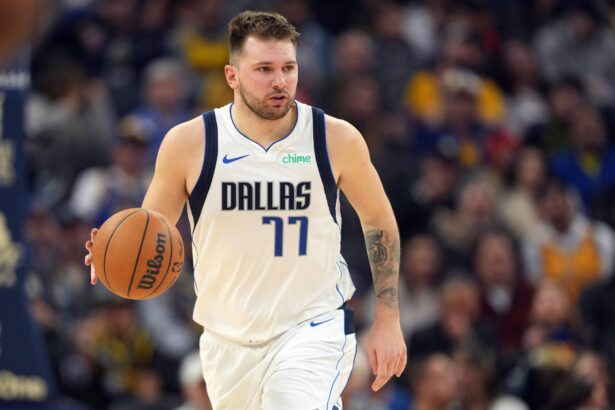
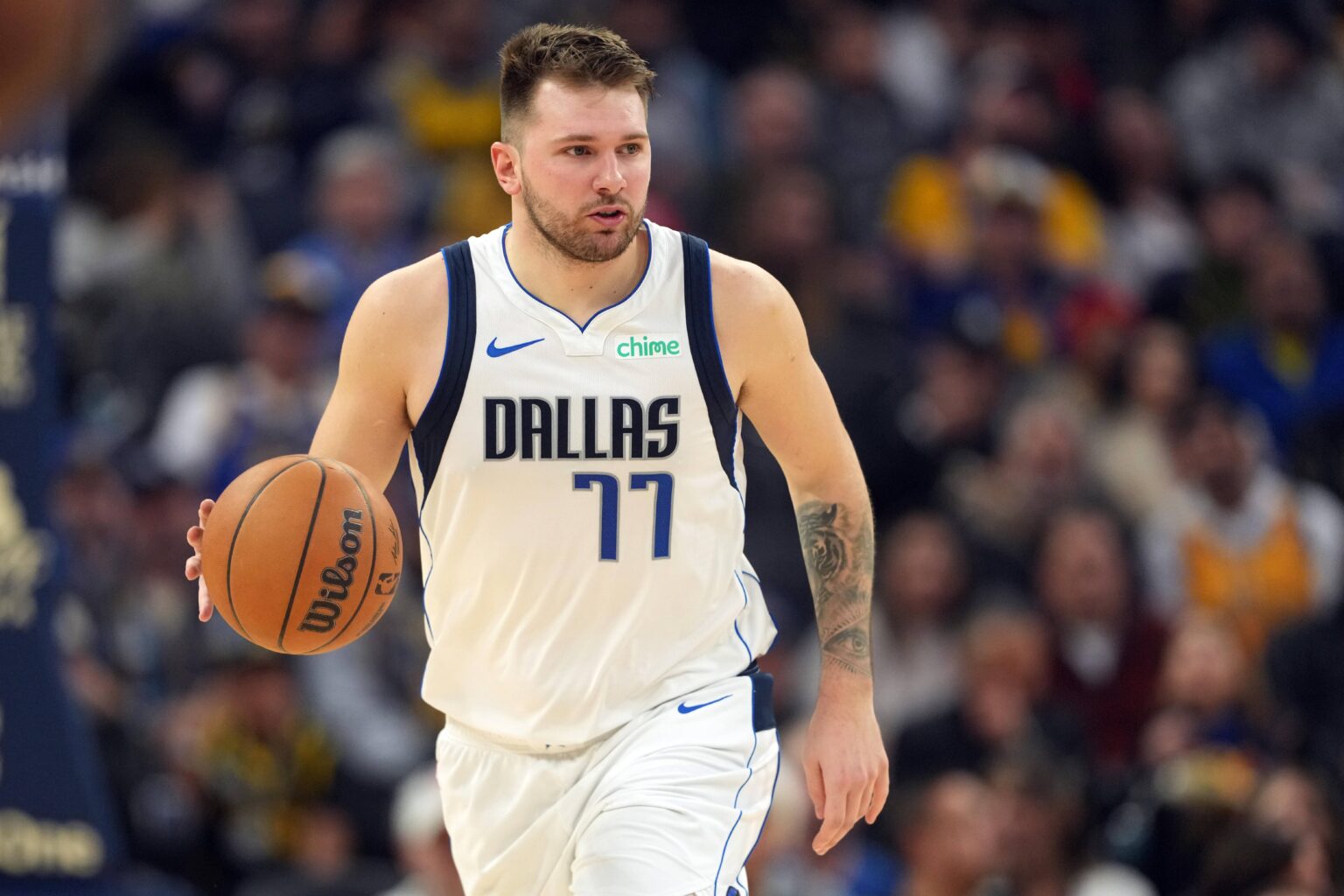
Start with the workload: 33.9 points, 9.2 rebounds, 9.8 assists, 1.4 steals, and 37.5 minutes per game. Luka Doncic played 70 games, won the scoring title, shot 48.7% from the field, 38.2% from three, and 78.6% from the line. He also made 4.1 threes per game. That is not just high usage. That is one player carrying scoring volume, rebounding volume, and passing volume at the same time.
The Mavericks went 50-32 and finished fifth in the West. That is the part that held him back. Nikola Jokic had the Nuggets at 57 wins. Shai Gilgeous-Alexander had the Thunder at 57 wins. Doncic had the bigger counting stats, but he didn’t have the seed. He finished third in MVP voting with 566 voting points and four first-place votes.
The efficiency is what keeps this season high. Doncic had a 61.7% true shooting mark while taking 23.6 field-goal attempts and 10.6 threes per game. His usage rate was 35.9%. He was not just scoring on volume. He was scoring efficiently enough to make the entire offensive structure work. He finished the season with 2,370 points, 686 assists, and 647 rebounds.
The comparison with the MVP winner is simple. Jokic posted 26.4 points, 12.4 rebounds, and 9.0 assists on 58.3% from the field and won because his team record and efficiency profile were better. Doncic had the scoring title, more raw points, more threes, and almost the same assist volume. Jokic had the stronger seed and better scoring efficiency.
Doncic’s defensive limitations are the only basketball issue. But offensively, this was a historic season. A 33.9/9.2/9.8 line with 4.1 made threes per game and a 50-win team should always be in this conversation.
6. 2008-09 Dwyane Wade
The guard defense is why this season is different. Dwyane Wade did not just win the scoring title. He gave the Heat 30.2 points, 5.0 rebounds, 7.5 assists, 2.2 steals, and 1.3 blocks in 38.6 minutes per game. He shot 49.1% from the field and finished third in MVP voting behind LeBron James and Kobe Bryant. For a 6-foot-4 guard, the blocks and steals are the swing point.
The raw totals are even better: 2,386 points, 589 assists, 173 steals, and 106 blocks. Wade was the only guard in the league giving that kind of scoring volume with that level of defensive event creation. He was not a low-usage defender saving energy. He was the offense and still one of the best shot-blocking guards ever.
The Heat went 43-39. That is why the MVP case stopped at third. LeBron won with 28.4 points, 7.6 rebounds, and 7.2 assists for a 66-win team. Bryant had the Lakers at 65 wins. Wade’s box score belonged in the race, but the team record was not close enough.
The advanced metrics back up the eye test. Wade had a 30.4 PER and 14.7 Win Shares. He was also high in offensive load without falling apart efficiency-wise. His three-point shooting was not a major weapon at 31.7%, but he made up for it with rim pressure, free throws, transition scoring, and mid-range work.
This was Wade at his athletic peak. The first step was still elite, the strength was there, and the defensive timing was ridiculous. He was first in scoring, near the top in steals, and over one block per game. Team record keeps him out of the top five. The two-way production keeps him above most guard seasons since 2000.
5. 2000-01 Shaquille O’Neal
No player on this list bent defenses in a more dominant way than Shaquille O’Neal. He finished 2000-01 with 28.7 points, 12.7 rebounds, 3.7 assists, and 2.8 blocks in 39.5 minutes per game. He shot 57.2% from the field and led the NBA with 14.9 Win Shares. The Lakers went 56-26, the same record as the 76ers team that produced MVP winner Allen Iverson.
The scoring efficiency gap was massive. Iverson won MVP with 31.1 points, 3.8 rebounds, 4.6 assists, and 2.5 steals, but he shot 42.0% from the field. O’Neal was almost automatic near the rim. His free throws were bad at 51.3%, but opponents still had no good answer. Let him catch deep, and it was two points or a foul. Double early, and the Lakers got open looks.
The Lakers also had Kobe Bryant producing 28.5 points, 5.9 rebounds, and 5.0 assists. That helped them win, but it probably hurt O’Neal in voting. Iverson had the clearer solo-carry story. O’Neal had the more dominant physical profile and better efficiency.
The shot volume was heavy for a center. O’Neal took 19.2 field-goal attempts and 13.1 free-throw attempts per game. He was drawing fouls, forcing rotations, creating offensive rebounds, and making every opponent manage frontcourt foul trouble. He also protected the paint with 2.8 blocks per game.
This was not quite his 1999-00 MVP season, but it was still a monster. Third in MVP voting feels low when the player gave you 28.7/12.7/2.8 blocks, led the league in Win Shares, and played for a 56-win team.
4. 2022-23 Nikola Jokic
The most unbelievable stat from Nikola Jokic’s 2022-23 season is 70.1% true shooting. A center can score efficiently around the rim, but this was different. Jokic averaged 24.5 points, 11.8 rebounds, 9.8 assists, and 1.3 steals while shooting 63.2% from the field, 38.3% from three, and 82.2% from the line. The Nuggets went 53-29 and finished first in the West.
This was almost a triple-double with historic efficiency. Jokic didn’t need 25 shots. He took 14.8 field-goal attempts per game and still gave the Nuggets 24.5 points. His two-point shooting was absurd, his touch from three forced centers away from the rim, and his passing turned cutters and spot-up shooters into constant pressure points.
The advanced case was elite again. He led the league in Win Shares at 14.9 and finished with a 31.5 PER. His offensive BPM was at the top level of modern center play. This was not just “great passing for a big.” It was an offense being run by a center who also rebounded like a traditional big and scored like an elite finisher.
Joel Embiid won MVP with 33.1 points, 10.2 rebounds, 4.2 assists, and 1.7 blocks. Embiid had the scoring title and stronger defensive reputation. That was the case. Jokic had the No. 1 seed, better efficiency, and much more passing value.
The voting shifted late because Embiid’s scoring was louder and Jokic had already won two straight MVPs. But the numbers are hard to argue against. A first-seed player giving 24.5/11.8/9.8 on 70.1% true shooting is an MVP season in almost any normal year.
3. 2018-19 James Harden
The 36.1 points per game are still the main fact. James Harden gave the Rockets 36.1 points, 6.6 rebounds, 7.5 assists, and 2.0 steals in 36.8 minutes per game during the 2018-19 season. He shot 44.2% from the field, 36.8% from three, and 87.9% from the line. He played 78 games, finished second in MVP voting, and received 23 first-place votes.
The scoring volume was absurd. Harden took 24.5 shots, 13.2 threes, and 11.0 free throws per game. He still finished with 61.6% true shooting. That is the part that keeps the season near the top. This was not low-efficiency chucking. It was extreme volume with strong efficiency, constant foul pressure, and enough playmaking to keep the Rockets’ offense alive every night.
The Rockets went 53-29 and finished fourth in the West. That record was good, but not enough to beat Giannis Antetokounmpo’s 60-win case. Giannis won MVP with 27.7 points, 12.5 rebounds, 5.9 assists, 1.3 steals, and 1.5 blocks. The difference was team record plus defense. Harden had the scoring explosion. Giannis had the two-way profile and the better team.
Harden also had one of the best scoring streaks ever: 32 straight games with at least 30 points. That streak matters for the ranking because it was not one hot month. It carried a long part of the season. The Rockets had injuries and lineup changes, and Harden’s scoring kept them from falling down the standings.
The criticism is fair. His defense was not close to Giannis. His isolation-heavy offense could get heavy. But 36.1 PPG, 7.5 APG, 2.0 SPG, 61.6% true shooting, and 53 wins is a historic offensive season. It is one of the strongest losing MVP cases ever.
2. 2005-06 Kobe Bryant
The scoring burden is the whole story with Kobe Bryant. He averaged 35.4 points in 41.0 minutes per game, played 80 games, and finished with 2,832 total points. He added 5.3 rebounds, 4.5 assists, and 1.8 steals while shooting 45.0% from the field, 34.7% from three, and 85.0% from the line. The Lakers went 45-37, and that team record pushed him down to fourth in MVP voting.
The scoring details are ridiculous. Bryant had 27 games with at least 40 points. He scored 81 against the Raptors. He averaged 43.4 points in January. He became the first player since 1964 to score at least 45 points in four straight games. He also won the scoring title and set the Lakers’ single-season franchise record for points.
The advanced profile was not empty either. Bryant had a 38.7% usage rate, 28.0 PER, 15.3 Win Shares, and 55.9% true shooting. In 2005-06, with less spacing and more mid-range shot creation, that efficiency was strong. He was taking hard shots because the Lakers needed hard shots to survive possessions.
Steve Nash won MVP with 18.8 points, 4.2 rebounds, and 10.5 assists for a 54-win Suns team. The voting logic was record and offensive system. Nash lifted an elite offense. Bryant carried a limited roster into the playoffs with one of the largest scoring loads ever. For many over the years, this should’ve been Kobe’s first MVP award.
This season is not No. 1 because the Lakers won only 45 games and Bryant’s playmaking value was not at the level of the player above him. But as a scoring carry job, this is still the gold standard since 2000. The numbers are too loud to rank lower.
1. 2024-25 Nikola Jokic
There is no need to dress this up: 29.6 points, 12.7 rebounds, 10.2 assists, and 1.8 steals on 66.3% true shooting is the best non-MVP season since 2000. Nikola Jokic played 70 games this year, shot 57.6% from the field, 41.7% from three, and 80.0% from the line. He finished second in MVP voting with 29 first-place votes. Shai Gilgeous-Alexander won his second award after leading the Thunder to 68-14.
Jokic was not only a triple-double center. He finished top three in points, rebounds, and assists per game. That is stupid production. He was scoring like a first option, rebounding like an elite big, and passing like a point guard. The Nuggets went 50-32 and finished fourth in the West, which gave voters the team-record reason to choose Gilgeous-Alexander.
The advanced numbers are also huge. Jokic had a 32.0 PER, 66.3% true shooting, and elite win-value metrics across the board. His three-point jump changed the whole defensive equation. At 41.7% from three, teams could not just live with him spacing. If the big dropped, he shot. If teams switched, he punished size mismatches. If they doubled, he picked the pass.
Gilgeous-Alexander’s MVP case was strong since the season started. He had 32.7 points, 5.0 rebounds, 6.4 assists, 1.7 steals, and 1.0 blocks while leading the best team in the league. But Jokic’s individual season was more complete. He had more rebounds, more assists, better true shooting, and a rarer statistical profile.
The only reason he lost was team record. On production alone, this was the best season on the board. A 29.6/12.7/10.2 season with 41.7% from three and 66.3% true shooting should be treated like one of the best regular seasons ever.