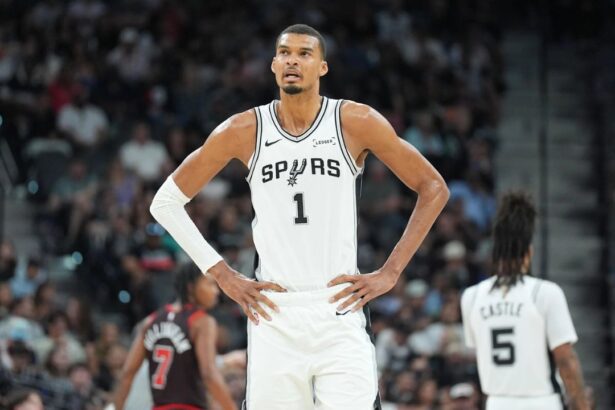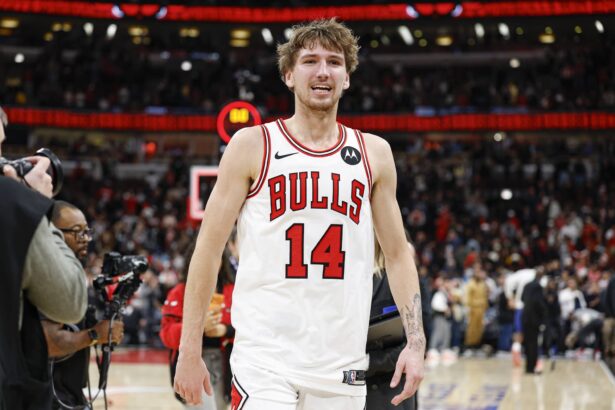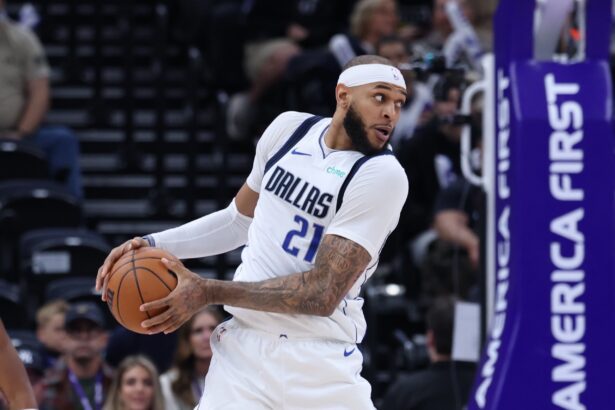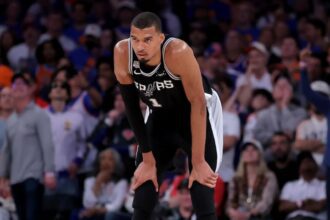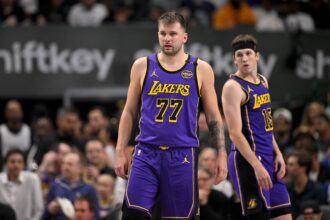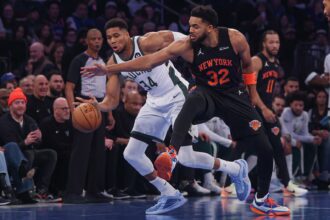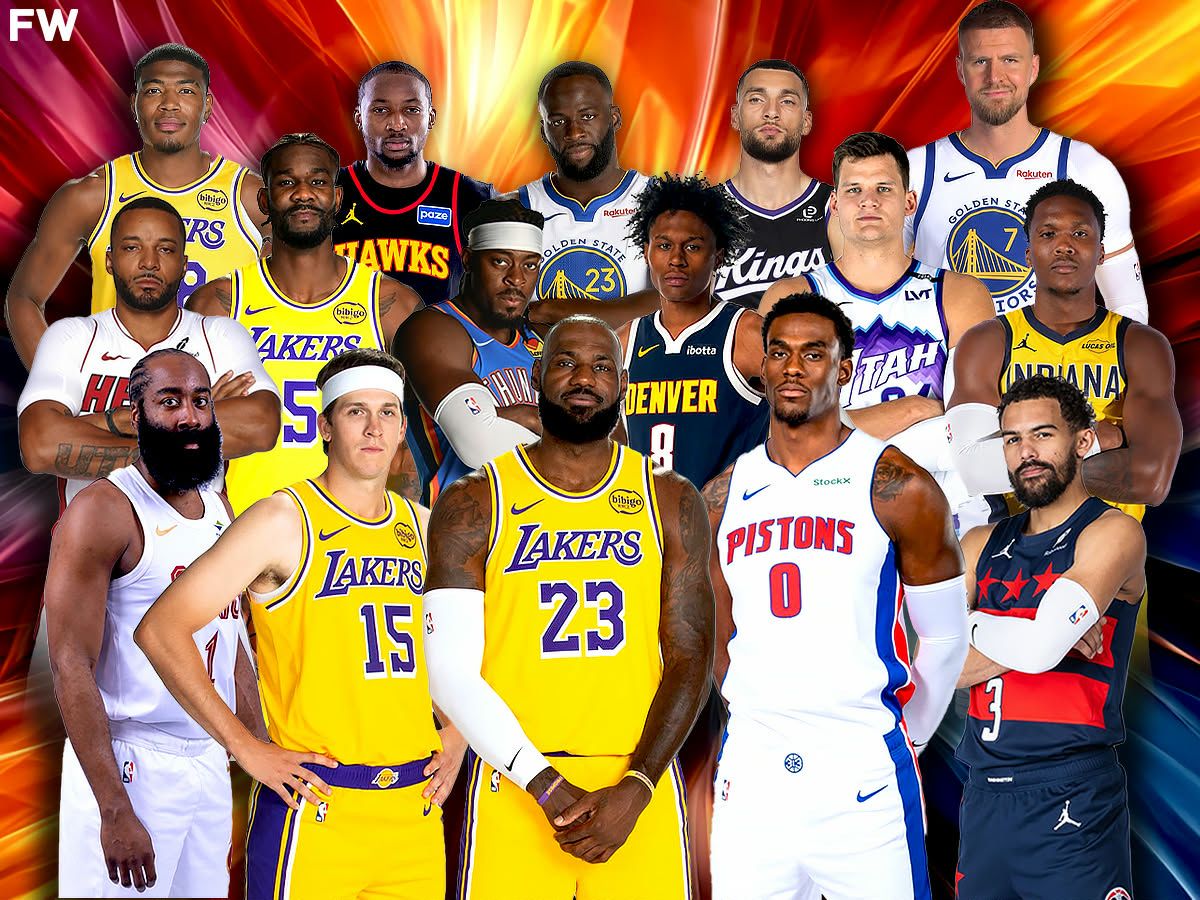
The 2026 free-agent class has the kind of depth teams wait for. It isn’t only about the biggest names at the top. There are stars, starters, sixth men, defensive specialists, shooters, young restricted free agents, and older veterans who can still fix one rotation hole.
That is what makes this market difficult. Some players will get paid for production. Some will get paid for upside. Some will get paid because there just aren’t many wings, centers, or guards with their specific skill set available. A team can miss on the first tier and still find a real starter later. A contender can also overpay fast if it gets desperate.
This list ranks the 50 best free agents going into the 2026 offseason. It includes unrestricted free agents, player options, team options, and qualifying offers, because not every name here is guaranteed to hit the market. Some will stay. Some will get extended. Some will use their option as leverage.
The order is based on production, age, health, role, playoff value, contract risk, and how many teams should realistically want that player. The best free agents aren’t always the biggest scorers. They are the players who can help a team win and still make sense at the next price.
50. Jeremy Sochan
Contract Status: Unrestricted Free Agent
This is more of a tools bet than a production bet. Jeremy Sochan had a rough 2025-26 season, being cut by the Spurs and picked up by the Knicks, as he put up 3.6 points, 2.4 rebounds, and 0.9 assists in 10.7 minutes, while shooting 49.6% from the field and 24.4% from three. That is not strong enough for a big role, and the shooting still makes lineup building harder. Still, he is 22, has a real forward body, and can defend different types of players when the energy is right.
The issue is that Sochan isn’t a plug-and-play rotation player right now. He needs a team that can give him structure, not a team that expects him to fix a bench unit right away. The Jazz, Bulls, Lakers, and Nets make some sense as teams that could take a low-cost swing on size and defense. His market should be closer to a short prove-it deal, maybe two years and $10.0 million, around $5.0 million per season, with a team option or partial guarantee in year two. That is fair for a player who still has tools, but didn’t prove enough this season.
49. Tyus Jones
Contract Status: Unrestricted Free Agent
A few years ago, Tyus Jones would have been much higher than 49th. The problem is that his 2025-26 season didn’t give teams much reason to pay for the old version. He averaged 3.0 points, 1.1 rebounds, and 2.4 assists in 14.6 minutes, while shooting 34.9% from the field and 29.2% from three. He started with the Magic, got traded to the Mavericks, and ended up as a backup guard with the Nuggets after being waived in Dallas.
Jones can still run offense and help a second unit avoid bad mistakes. That skill has value, but the role is smaller now. He isn’t a starting point guard option, and he probably isn’t the first guard off the bench for a good team either. The Nuggets could keep him if the price is low, while the Suns, Clippers, or Spurs could look at him as backup depth. His next deal feels like one year in the veteran minimum to $4 million range, maybe with incentives if he plays a real rotation role. This is no longer a big market case. It is a trust-and-depth signing.
48. Day’Ron Sharpe
Contract Status: $6.3 Million Team Option
Day’Ron Sharpe is one of the better players in this range, but his market depends on the Nets. At $6.3 million, his team option is cheap for what he gave them. He averaged 8.7 points, 6.7 rebounds, 2.3 assists, and 1.1 steals in only 18.7 minutes, shooting 60.1% from the field. That is strong bench-center production, especially because he can pass a little and create second chances.
Sharpe isn’t a stretch big, and the 23.1% from three says that clearly. But not every backup center needs to shoot. He screens, rebounds, finishes, and plays with force. That should keep him valuable for rebuilding teams and playoff teams that need a physical second-unit center. The Nets should just pick up the option, but if they decline it, the Hornets, Wizards, Pelicans, or Bulls should call. A real open-market deal could land around two years and $14.0 million, or $7.0 million per season. For a 24-year-old big with production, that wouldn’t be a crazy number.
47. Bogdan Bogdanovic
Contract Status: $16.0 Million Team Option
The Clippers have to decide if they are paying for Bogdan Bogdanovic now or for what he used to be. His 2025-26 season was not good enough for a $16.0 million option. He averaged 7.4 points, 2.6 rebounds, and 2.2 assists in 19.7 minutes, shooting 38.8% from the field and 34.7% from three. For a veteran guard whose value comes from shooting and secondary creation, those numbers are light.
There is still a market for him if the option gets declined. Teams always need movement shooting, bench offense, and guards who can make fast reads. The problem is price. Bogdanovic would make more sense for the Nuggets, Bucks, Heat, or Suns if the number drops into a bench range. A one-year deal around $7.0 million feels more realistic than the option. If he wants more security, two years and $14.0 million with a team option in the second season would be a fair structure. He can still help, but he shouldn’t be paid like a locked top-eight player anymore.
46. GG Jackson
Contract Status: $2.4 Million Team Option
There isn’t much debate here. The Grizzlies should pick up GG Jackson’s option fast. He averaged 12.5 points, 4.3 rebounds, and 1.5 assists in 21.4 minutes, shooting 49.6% from the field and 33.2% from three. That is real production for a 21-year-old forward on a $2.4 million salary.
Jackson still has rough edges. The defense isn’t fully reliable, and his shot selection can get loose when he tries to create too much. But that is normal for a young scorer. The bigger point is that he already has NBA size, confidence, and enough scoring touch to punish second units. Those players don’t hit the market often at this number.
The Grizzlies won’t let him go. If something strange happened and he reached free agency, teams like the Jazz, Wizards, Nets, and Pistons would be all over him. His market would be much higher than the option, maybe two years and $20.0 million, around $10.0 million per season. That is why this option is automatic.
45. Brook Lopez
Contract Status: $9.2 Million Team Option
At 38, Brook Lopez is no longer a full-series answer for every matchup. But he still does two things teams pay for: protect the rim and shoot threes as a center. He averaged 8.5 points, 3.6 rebounds, 1.3 assists, and 1.2 blocks in 21.8 minutes for the Clippers, shooting 42.8% from the field and 36.0% from three. That is not a huge stat line, but the skill mix is still rare.
The question is how much the Clippers want to invest in another older frontcourt piece. Lopez can help in drop coverage, space the floor for bench units, and give a team size without killing the offense. But he can be attacked in space, and his minutes need to be managed. That puts a ceiling on the deal.
The Lakers, Pacers, Nuggets, and Heat would all make some sense depending on price. His market is probably one year around $8.0 million if the option is declined. The $9.2 million option is fair, but not automatic if the Clippers want to get younger.
44. Fred VanVleet
Contract Status: $25.0 million Player Option
Fred VanVleet is only this low because of health. He didn’t play in 2025-26, and that changes his market completely. The last usable full-season reference is still 2024-25, when he averaged 14.1 points, 3.7 rebounds, and 5.6 assists for the Rockets, but shot only 37.8% from the field and 34.5% from three. VanVleet should pick up the $25.0 million option unless there is a longer deal already waiting.
At 32, coming off a lost season, he won’t beat that number in free agency. The Rockets may still value his leadership and ball control, but the role can’t be priced like a top starter anymore. If he somehow reaches the market, teams like the Clippers, Suns, or Magic could look at him as a short-term guard fix. A realistic new deal would be closer to two years and $30.0 million, around $15.0 million per season. The option is the better business move.
43. Bruce Brown
Contract Status: Unrestricted Free Agent
The best version of Bruce Brown is still easy to understand. He defends, rebounds from the guard spot, cuts, screens, passes enough, and doesn’t need a high-usage role. His 2025-26 season with the Nuggets was decent, not special: 7.9 points, 3.9 rebounds, 2.1 assists, and 1.0 steals on 47.5% shooting from the field and 38.5% from three. That shooting number helped because Brown isn’t valuable if defenders can fully ignore him.
His market should be smaller compared to his peak, but not dead. The Nuggets can keep him if the number stays low, and the Bucks, Heat, or Lakers could use his mix of guard defense and connective offense. He feels like a two-year, $12.0 million player now, maybe with the second year non-guaranteed. Brown won’t save a bench unit, but he can be the eighth or ninth man on a good team if the shot holds.
42. Jose Alvarado
Contract Status: $4.5 million Player Option
Jose Alvarado gives the Knicks a very specific type of guard. He is small, but he pressures the ball, changes the pace, and brings energy without needing plays called for him. In 2025-26, he averaged 7.4 points, 2.5 rebounds, 3.4 assists, and 1.0 steals in 19.9 minutes, shooting 41.6% from the field and 35.2% from three. After the Knicks got him from the Pelicans, he became a useful regular-season piece, even if his playoff role stayed tiny.
The $4.5 million player option is low enough that he could decline it if he wants security. The Knicks should want him back, but the Suns, Nuggets, and 76ers also make sense as teams that need backup guard pressure. His next deal could land around three years and $18.0 million, or $6.0 million per season. That is not a star number, but for a defense-first backup guard who can survive in playoff minutes, it is fair.
41. Kentavious Caldwell-Pope
Contract Status: $21.6 million Player Option
This one is more about the option than the open market. Kentavious Caldwell-Pope averaged 8.4 points, 2.5 rebounds, and 2.7 assists in 21.3 minutes for the Grizzlies, shooting 41.0% from the field and only 31.6% from three. That is not enough for a $21.6 million salary, especially when he missed a big chunk of the season after finger surgery. Michael Scotto also reported that he is expected to exercise the option, which is the obvious move.
Caldwell-Pope still has value because teams know the playoff version from past years. He can defend guards, space the floor, and avoid mistakes. But that value now looks more like mid-level or below, not $20.0 million-plus. If he were a real free agent, the Lakers, Nuggets, and Warriors would all make some sense at the right price. A new deal would probably sit around two years and $18.0 million, or $9.0 million per season. Instead, he should take the big option and reset later.
40. Gary Trent Jr.
Contract Status: $3.9 million Player Option
Gary Trent Jr. still has one bankable skill, but the rest of the profile slipped. He averaged 8.1 points, 1.0 rebounds, 1.2 assists, and 0.5 steals in 21.2 minutes for the Bucks, shooting 38.7% from the field and 36.0% from three. That is a hard drop from the player who once looked like a mid-tier starting guard. The shot is still playable, but the defense, rebounding, and secondary creation didn’t give much extra value.
The player option is small enough that Trent could decline it if he thinks the market will pay for shooting. He is still 27, and that helps. The Bucks may keep him, but the Magic, 76ers, or Hornets could also use another movement shooter. A realistic market feels like two years and $12.0 million, around $6.0 million per season. He shouldn’t get paid off his old reputation, but a guard who can still make threes at volume will always get calls.
39. Kevin Porter Jr.
Contract Status: $5.4 million Player Option
Kevin Porter Jr. had the type of season that usually gets someone paid, even with the risk attached. At 17.4 points, 5.2 rebounds, 7.4 assists, and 2.2 steals for the Bucks, he shot 46.5% from the field and 32.2% from three. The passing and steals are the reason he is this high. He wasn’t only scoring. He was creating shots and making plays on defense.
The knee surgery, after 39 games, hurts his market, as he missed the rest of the season. That probably keeps him from a huge deal. Still, if he declines the option, the Bucks, Suns, Hornets, or Bulls could see him as a cheap starting guard swing. A fair deal feels like two years and $22.0 million, with team protection in the second year. The talent is above this ranking, but the risk is real.
38. De’Anthony Melton
Contract Status: $3.5 million Player Option
This is a health ranking more than a talent ranking. De’Anthony Melton averaged 12.3 points, 3.2 rebounds, and 2.6 assists for the Warriors, shooting 40.7% from the field. He still gave them defense, steals, and enough shooting to play off better scorers. That is a useful guard if his body holds up.
The issue is that teams can’t just pay for the idea of Melton anymore. Injuries have followed him for too long. He is still young enough to rebuild value, and his player option is small, so he may decline it if he wants a longer contract. The Warriors could bring him back, but the Nuggets, 76ers, and Bucks should also be in the range if the price stays fair. His market could be around $9.0 million per season. If teams get scared by the health file, it may be closer to one year and $7.0 million.
37. Luke Kennard
Contract Status: Unrestricted Free Agent
Shooting keeps Luke Kennard this high. He only posted 9.0 points, 2.6 rebounds, and 2.4 assists after being traded to the Lakers, but the efficiency was elite: 52.7% from the field, 44.8% from three, 91.2% from the line, and 66.1% true shooting. That is not normal bench production. That is a specialist doing his job at a very high level.
Kennard is limited on defense, so his playoff fit depends on the matchup. But every contender needs shooting, and he does not need the ball. The Lakers should want him back if the price is reasonable. The Magic, Nuggets, and Pistons also make sense because they need spacing around stars. A fair number could be two years and $24.0 million or over $12.0 million per season. That may sound high for a bench shooter, but 44.8% from three changes spacing right away.
36. Collin Sexton
Contract Status: Unrestricted Free Agent
Collin Sexton can still score. That part isn’t in doubt. He averaged 15.4 points, 2.3 rebounds, 3.3 assists, and 1.1 steals in 23.7 minutes, while shooting 48.5% from the field and 40.1% from three. For a guard who plays with speed and gets downhill, that is good offensive value.
The problem is the role. Sexton is good enough to help a team, but he can be hard to fit if he wants big usage. He is best as a bench scorer or a third guard who can attack weak defenders. The Bulls could keep him, but the Lakers, Heat, and Magic would also make sense if they need more rim pressure. His next contract should be around three years and $45.0 million, close to $15.0 million per season. He may ask for more, but teams will be careful because smaller scoring guards can lose value fast in the playoffs.
35. Tim Hardaway Jr.
Contract Status: Unrestricted Free Agent
Tim Hardaway Jr. had a strong veteran year for the Nuggets. He played 80 games, averaged 13.5 points, 2.6 rebounds, and 1.4 assists, and shot 44.7% from the field and 40.7% from three. He also had a +200 plus-minus, which fits how simple his job was: space the floor, take open threes, and give bench scoring.
He is 34, so nobody should treat this like a long-term signing. But as a short-term shooter, he still has real value. The Nuggets should try to keep him, and the Lakers, Raptors, and Suns could all use the same type of player. A realistic deal is two years and $22.0 million, around $11.0 million per season, maybe with a team option in the second year.
34. Deandre Ayton
Contract Status: $8.1 Million Player Option
Deandre Ayton rebuilt some value with the Lakers, even if the season was still uneven. The season line was 12.5 points, 8.0 rebounds, and 1.0 blocks in 27.2 minutes, shooting 67.1% from the field. His playoff numbers were lower at 10.0 points and 9.6 rebounds, but he still gave the Lakers size in a matchup where they needed it.
The $8.1 million player option is a good benchmark for his production and lack of effort at times, but Ayton could still decline it if some lower teams are willing to offer more. The Lakers should want him back, but the Pelicans, Hornets, and Mavericks could also look at him if they need a true center. His next deal could land around three years and $42.0 million, or $14.0 million per season. That is fair for a big man who produces, but still has motor and matchup questions.
33. Kevin Huerter
Contract Status: Unrestricted Free Agent
The reputation is bigger than the shooting right now. Kevin Huerter put up 10.0 points, 3.5 rebounds, and 2.6 assists in 22.4 minutes, but he hit only 30.8% from three. That is the problem. He is in the league because he can space the floor, move without the ball, and make fast passes off movement. When the three-point shot falls under 32.0%, the whole case gets weaker.
Still, Huerter is 6-foot-6, can play either wing spot, and isn’t useless as a passer. The Pistons could keep him if the price drops, while the Magic, Hawks, and Bucks make sense if they want a shooter who can also move the ball. His market probably sits around two years and $20.0 million, or $10.0 million per season. He may want more, but teams won’t pay him like a premium shooter after this season.
32. Marcus Smart
Contract Status: $5.4 Million Player Option
Marcus Smart’s regular season wasn’t that explosive, but the playoffs helped him a lot. His regular-season averages were 9.3 points, 2.8 rebounds, 3.0 assists, and 1.4 steals for the Lakers, shooting 39.5% from the field and 33.1% from three. Those numbers aren’t huge, and the efficiency was still rough. But in the playoffs, he jumped to 12.9 points, 5.1 assists, 2.4 steals, and 1.0 blocks in 34.5 minutes. That is why he is still this high.
Smart can’t carry an offense, but he can guard, talk, organize, and make a playoff team tougher. The Lakers should try to keep him, though the Heat, Cavaliers, and Suns could be natural fits if he wants a new room. If he declines $5.4 million, a two-year deal around $20.0 million, or $10.0 million per season, feels possible. The shooting risk is real, but the playoff defense still gets paid.
31. Anfernee Simons
Contract Status: Unrestricted Free Agent
Anfernee Simons is hard to rank because the talent is better than the season. He scored 14.3 points with 2.5 rebounds and 2.4 assists in 24.9 minutes, shooting 44.0% from the field and 38.5% from three. That is good shooting, but the full offensive load was smaller than in past years. He also doesn’t give much defense, so if he isn’t scoring at a high level, his value falls fast.
The good part is age and shooting. Simons is still only 26, and guards who can make 2.7 threes per game at 38.5% don’t sit long in free agency. The Bulls could bring him back, but the Magic, Nets, and Raptors could also use his shooting. A realistic deal may be around $18.0 million per season for three years, which comes to $54.0 million. That is lower than his old salary, but still strong for a scoring guard with defensive questions.
30. Julian Champagnie
Contract Status: $3.0 Million Team Option
Julian Champagnie is ranked here because the price is almost too good. He gave the Spurs 11.1 points, 5.8 rebounds, and 1.5 assists, shooting 43.7% from the field and 38.1% from three. He also became a real playoff starter, not just a regular-season filler. In Game 1 against the Thunder, he played 44 minutes, scored 11 points, grabbed nine rebounds, and helped the Spurs throw different bodies at Shai Gilgeous-Alexander.
The Spurs should pick up the $3.0 million option fast. There is no reason to let a 24-year-old wing shooter with size reach the market at that number. If they somehow declined it, teams like the Lakers, Heat, 76ers, and Mavericks should call right away. His open-market value could be around three years and $36.0 million, or $12.0 million per season. The option makes him one of the best cheap contracts in this whole group.
29. Neemias Queta
Contract Status: $2.7 Million Team Option
Neemias Queta posted 10.2 points, 8.4 rebounds, and 1.7 assists for the Celtics while shooting 65.3% from the field. That is good center production, and it came on a tiny salary. He also finished top 20 in rebounds per game and top 30 in field-goal percentage, so this wasn’t just empty bench work.
The Celtics should pick up the option unless they have a bigger plan. Queta gives them size, screens, rim finishing, and regular-season rebounding without needing touches. He isn’t a shooter, and he can be matchup-based in the playoffs, but $2.7 million for this production is too low to decline.
28. Nikola Vucevic
Contract Status: Unrestricted Free Agent
The scoring is down from his best Bulls years, but Nikola Vucevic still gave real production. He put up 15.1 points, 8.4 rebounds, and 3.3 assists in 64 games, shooting 49.3% from the field and 36.9% from three. That is still useful for a center who can pass, space, and punish smaller bigs. He isn’t a rim protector, but he gives a team offense at the five.
His market depends on what teams want. If a contender needs defense, he won’t be the first call. If a team needs second-unit scoring, post touches, and pick-and-pop shooting, he still fits. The Celtics could try to keep him at a lower number, but the Suns, Warriors, Pelicans, and Grizzlies should also look if they need veteran center offense. I’d put his next deal around $10.0 million to $12.0 million per year. Something like two years and $22.0 million feels fair. He is still good, just not a top-salary center anymore.
27. Mitchell Robinson
Contract Status: Unrestricted Free Agent
Mitchell Robinson is easy to understand and hard to price. He gave the Knicks 5.7 points, 8.8 rebounds, 0.9 steals, and 1.2 blocks in only 19.6 minutes, while shooting 72.3% from the field. That is elite rebounding and finishing. He doesn’t need plays, doesn’t take bad shots, and can change the game with offensive boards.
The problem is the other side of the same profile. He doesn’t shoot, doesn’t pass much, and his free throws became a real playoff problem. The Cavaliers used the Hack-a-Mitch idea in the first two Eastern Conference Finals games, and Robinson was only 13-for-41 at the line in the postseason at that point. That hurts his closing value.
Still, rim-running centers get paid when they defend and rebound like this. The Knicks can keep him, but the Lakers, Mavericks, Pelicans, and Rockets could all use this type of big. His market should be around $12.0 million to $14.0 million per year, probably three years, and $39.0 million if the medicals are fine.
26. Keon Ellis
Contract Status: Unrestricted Free Agent
Keon Ellis was one of the most coveted assets at the trade deadline as an expiring contract. His production was modest: 6.7 points, 1.9 rebounds, 1.0 assists, 1.2 steals, and 0.6 blocks in 20.5 minutes, with 44.0% shooting from the field and 36.3% from three. The box score doesn’t fully sell him, but the defensive activity does.
Ellis is a role player, not a creator. He guards, hits enough threes, runs the floor, and doesn’t need the ball. That type of wing/guard can help playoff teams if the shot holds. The concern is the role. He went from a good Kings story to a smaller Cavaliers role, and even faded out of the playoff rotation. That should hold the price down. A deal near $7.0 million per year makes more sense than a big mid-level bet. Two years and $14.0 million would be fair. The Cavaliers, Lakers, Clippers, and Timberwolves all fit the profile if they want cheap perimeter defense.
25. Jonathan Kuminga
Contract Status: $24.3 Million Team Option
Jonathan Kuminga is the hardest player in this group because his upside is bigger than his current role. He averaged 12.2 points, 5.6 rebounds, and 2.3 assists in 2025-26, shooting 46.3% from the field. After getting to the Hawks, he had real flashes, including 19 points in Game 2 against the Knicks and 21 points in Game 3. In the playoffs, he averaged 13.7 points and 3.3 rebounds on 48.3% shooting from the field, but only 20.8% from three.
The Hawks have to decide if $24.3 million is too high for one year. I think the better path is to decline the option only if a longer deal is already ready. Something around $20.0 million to $22.0 million per year, maybe three years and $64.0 million, would be easier to carry than one season at $24.3 million. The Nets, Bulls, Lakers, and Raptors would make sense if he somehow reached the market. But the Hawks should try to keep the athleticism, size, and downhill pressure. The shot is still the swing skill.
24. Tobias Harris
Contract Status: Unrestricted Free Agent
Tobias Harris helped the Pistons all year, then had his best stretch in the playoffs. His regular-season line was 13.3 points, 5.1 rebounds, and 2.5 assists in 27.7 minutes, with 46.9% shooting from the field and 36.8% from three. That is solid veteran forward production. In the second round against the Cavaliers, he gave the Pistons 20 points and eight rebounds in Game 1, then 21 points, seven rebounds, two steals, and two blocks in Game 2. He ended at 18.1 points and 7.2 rebounds for the playoffs.
At 33, Harris isn’t getting another big deal. But he can still help a team that needs size, scoring from the forward spot, and some playoff calm. The Pistons can keep him if the price drops. The Lakers, Raptors, and Magic could also make sense if they need a veteran four. His market should be around $17.0 million to $20.0 million per year at best. That is fair for a starter-level forward, not a top option.
23. CJ McCollum
Contract Status: Unrestricted Free Agent
CJ McCollum still scores like a solid NBA guard. He put up 18.7 points, 3.1 rebounds, and 4.1 assists for the Hawks after the Trae Young deal, shooting 45.6% from the field and 35.7% from three. The playoffs were also useful: 19.2 points per game, including 26 points in Game 1 and 32 points in Game 2 against the Knicks. He is older, but the shot-making hasn’t disappeared.
The problem is age and defense. McCollum is 34, so teams won’t pay him like a long-term building piece. He is now more of a short-term scoring guard for a team that needs half-court offense. The Hawks could keep him if they want stability. The Rockets, Raptors, and Blazers could all use a guard who can score without needing the offense around him. A deal near $16.0 million per year feels right, likely two years and $32.0 million with some protection in the second year.
22. Rui Hachimura
Contract Status: Unrestricted Free Agent
The Lakers got the best version of Rui Hachimura this season. He finished with 11.5 points and 3.3 rebounds in 28.3 minutes, shooting 51.4% from the field and 44.3% from three. That three-point number is the real story. Rui used to be more of a mid-range forward, but with the Lakers, his spot-up game became a real weapon. In the playoffs, he went even higher, shooting 56.9% from three over 10 games.
That makes his market simple. He is a big forward who can shoot, finish, and survive next to stars. He won’t create much for others, and the rebounding is light for his size, but teams pay for strong forwards who hit open threes. The Lakers should try to keep him, but the Pacers, Magic, and Warriors could use the same skill set. His next salary could sit around $17.0 million to $21.0 million per year. A three-year, $54.0 million deal feels like a normal range.
21. John Collins
Contract Status: Unrestricted Free Agent
John Collins had a strange year, but the production stayed useful. The Jazz sent him to the Clippers in July, and he gave them 13.6 points, 5.3 rebounds, 1.0 assists, 0.9 steals, and 0.7 blocks in 27.1 minutes. The efficiency was strong: 55.2% from the field, 40.6% from three, and 64.3% true shooting. That is a real play-finisher profile.
He isn’t the same above-the-rim force from his Hawks peak, but he can still run, finish, pop, and play some center in smaller lineups. The Clippers can bring him back if the number lands near the mid-level range. The Hornets, Pistons, Bulls, and Pelicans would also fit if they want frontcourt offense without paying star money. I’d put his market value around $15.0 million per season. Three years and $45.0 million is probably the high side. Two years and $30.0 million may be safer.
20. Coby White
Contract Status: Unrestricted Free Agent
Coby White is lower than his name value because the season was good, not great. After leaving the Bulls, he gave the Hornets 15.6 points, 3.0 rebounds, and 3.0 assists in 19.3 minutes, with 46.1% shooting from the field and 39.1% from three. That is strong guard production, but not enough to put him with the top guards in this class. Still, he showed up in the Play-In, scoring 19 points with five threes in the Hornets’ overtime win over the Heat.
White can score, shoot off the catch, and handle enough to run bench units. The issue is whether teams see him as a starting guard or a high-end sixth man. That difference changes the money. The Hornets should want him back, but the Nets, Jazz, Raptors, and Rockets could look if they need a polished guard scorer. His price could land around $18.0 million per year. A three-year, $54.0 million deal sounds fair, but I wouldn’t go much higher.
19. Ayo Dosunmu
Contract Status: Unrestricted Free Agent
Ayo Dosunmu played himself into a real market. His 2025-26 line sat at 14.8 points, 3.4 rebounds, and 3.6 assists, with 51.7% shooting from the field. That is strong guard production, and it came with better control than earlier in his career. He also gave the Timberwolves a 43-point explosion against the Nuggets without Anthony Edwards, so the ceiling is incredibly high.
The appeal is easy. Dosunmu is 26, can defend both guard spots, push pace, cut, and play without needing 20 touches. He isn’t a pure point guard, but he can be a strong third guard on a playoff team or a lower-end starter if the spacing is good around him.
The Timberwolves should want him back after trading for him, but the Spurs, Magic, Nets, and Jazz could all use that type of guard. His market could start near $15.0 million per year, with a deal at around three years and $45.0 million. If a team loves the defense and efficiency, it may go closer to $50.0 million.
18. Kelly Oubre Jr.
Contract Status: Unrestricted Free Agent
Kelly Oubre Jr. shouldn’t be buried near the end of this class. He had 14.1 points, 5.0 rebounds, and 1.6 assists in 50 games for the 76ers, and that is useful wing production. He still plays with edge, gets downhill, attacks the glass, and gives a team size on the perimeter. He isn’t a perfect shooter, but he has more than one skill.
The 76ers used him as a key rotation wing, and those players always have a market. Oubre can be wild with shot selection, but he also brings pressure. He can score 20 on a good night, defend bigger guards, and run in transition. That has value for teams that need wing juice without paying a star price.
The 76ers can keep him if the number stays fair. The Hornets, Hawks, Warriors, and Cavaliers would also make sense if they need a tough wing. His next deal feels like $12.0 million to $14.0 million per year. Two years and $26.0 million would be a strong middle point.
17. Isaiah Hartenstein
Contract Status: $28.5 Million Team Option
Isaiah Hartenstein gives the Thunder exactly what they need when the matchup gets bigger. His regular-season line was 9.2 points, 9.4 rebounds, and 3.5 assists in 24.2 minutes, with 62.2% from the field. Then came the Spurs series. In Game 2, he had 10 points, 13 rebounds, and eight offensive boards in 27 minutes after playing only 12 minutes in Game 1.
That game showed his real value. He can screen, rebound, pass, hit the glass, and put a body on Victor Wembanyama. He isn’t worth $28.5 million as a normal yearly number, but he is very useful for the Thunder.
The best move is a decline-and-renegotiate path if both sides already agree. Something around $18.0 million to $20.0 million per year, maybe three years, and $57.0 million, helps Hartenstein get security and helps the Thunder stay flexible. If he ever hit the market, the Lakers, Pelicans, Clippers, and Raptors would call fast. But the Thunder shouldn’t let him walk for nothing.
16. Draymond Green
Contract Status: $27.7 Million Player Option
Draymond Green is not ranked this high for scoring. He finished the season at 8.4 points, 5.5 rebounds, and 5.5 assists in 27.5 minutes, with 41.8% shooting from the field and 32.6% from three. The offense is limited now, but the defensive brain is still there. He still talks through coverages, protects weaker defenders, and keeps the Warriors organized.
The issue is the option. At $27.7 million, Green should probably opt in. He won’t beat that number on the open market at 36. If he wanted a new deal, the Warriors could try to stretch the money over more years, but that only works if he helps them with the yearly number.
15. Luguentz Dort
Contract Status: $18.2 Million Team Option
Defense puts Luguentz Dort this high. His regular-season numbers were basic: 8.3 points, 3.6 rebounds, and 1.2 assists in 69 games. The shot also wasn’t elite, but that isn’t why teams value him. Dort is paid to defend stars, take physical matchups, fight over screens, and stay ready in a low-usage role.
The Thunder already know what he is. He was part of their 2025 title team, and even when his playoff offense gets ugly, the defensive role stays useful. That is rare. A lot of players want touches. Dort accepts the hard job and doesn’t need the ball. On a team with Shai Gilgeous-Alexander, Jalen Williams, and Chet Holmgren, that fit has real value.
The Thunder should pick up the $18.2 million option unless they already have a longer deal ready. If he reached free agency, the Lakers, Magic, 76ers, and Nuggets would all make sense. His market could sit around $16.0 million to $18.0 million per year, so the option is fair.
14. Andrew Wiggins
Contract Status: $30.2 Million Player Option
Andrew Wiggins is still good enough to start, but the $30.2 million option changes the whole discussion. His season with the Heat ended at 15.4 points, 4.8 rebounds, and 2.7 assists, with 47.5% shooting from the field. He also had 27 points, seven rebounds, and three assists in the Play-In loss to the Hornets, which was at least a strong finish after an uneven Heat year.
If he opts out, it would be for years, not a higher yearly number. The Heat could still keep him, but the Warriors, Hawks, Lakers, and Pistons should all understand the fit. Big wings who can defend, hit open threes, and give 15 points without being the first option still get paid.
His market feels closer to $18.0 million to $21.0 million per year. A three-year deal around $60.0 million would make sense if he wants security. Staying on the option is safer, but a longer deal may age better.
13. Tari Eason
Contract Status: Restricted Free Agent ($8.0 Million Qualifying Offer)
Tari Eason is a restricted free agent whom the Rockets can’t treat like any bench forward. The box score was 10.5 points, 6.3 rebounds, 1.5 assists, 1.2 steals, and 0.5 blocks in 25.8 minutes. The shot was not perfect at 41.6% from the field, but the defensive activity, rebounding, and size are the selling points.
He also showed up when the games got real. In Game 4 against the Lakers, Eason posted 20 points, eight rebounds, five steals, two assists, and one block. That is the exact reason teams like him: he can swing possessions without needing touches.
The Rockets have matching rights if they extend the $8.0 million qualifying offer, so stealing him won’t be easy. The Trail Blazers, Lakers, Pistons, and Hornets could still test the number. I’d expect something near $17.0 million per year, maybe four years, and $68.0 million. That is a lot, but defensive forwards with real motor aren’t cheap.
12. Bennedict Mathurin
Contract Status: Restricted Free Agent ($12.3 Million Qualifying Offer)
The Clippers gave up real value to get Bennedict Mathurin, so this free agency won’t fly under the radar. He came over from the Pacers in the Ivica Zubac deal, and the Clippers can make him restricted by extending the qualifying offer. Spotrac lists that the 2026-27 qualifying offer is at $12.3 million.
His season had real scoring weight: 17.6 points, 5.4 rebounds, and 2.4 assists, at 43.0% from the field. Just the Clippers sample was close to that too, with 17.4 points, 5.5 rebounds, and 2.5 assists in 26 games. The three-point shot is still the concern, especially after hitting only 20.7% with the Clippers.
The Pistons, Nets, Hornets, and Wizards would make sense if they want to pressure the Clippers with an offer sheet. His market could get to $18.0 million or $20.0 million per year. I’d be careful above that, but his scoring and age will get him paid.
11. Quentin Grimes
Contract Status: Unrestricted Free Agent
Quentin Grimes didn’t fully build on his wild 76ers finish from 2024-25, but he still has a real market. He closed 2025-26 with 13.4 points, 3.6 rebounds, and 3.3 assists in 29.4 minutes, shooting 45.0% from the field and 33.4% from three. The shooting dip hurt, but the size and two-way guard profile still help him.
The season also had a strange arc. He started hot as a sixth man, then lost some rhythm, but still had 18 points on 4-of-7 shooting from three in Game 5 against the Celtics as his main highlight. It wasn’t enough to erase the quieter playoff run, but teams know he can defend, move the ball, and make shots when the role is right.
The 76ers may keep him, but the Magic, Lakers, Raptors, and Pacers should also be in the mix. His price probably sits around $15.0 million to $17.0 million per year. Three years and $48.0 million feels fair.
10. Norman Powell
Contract Status: Unrestricted Free Agent
Norman Powell just had the best season of his career as an All-Star. He put up 21.7 points, 3.5 rebounds, and 2.5 assists for the Heat, shooting 47.0% from the field. That is not role-player output. That is real top-three scorer production, and he did it on a team that needed shot creation badly.
The free-agency question is age. Powell will be 33, so teams won’t want a long-term deal unless the number is controlled. Still, he can shoot, attack closeouts, get to his spots, and score without needing a team to rebuild the whole offense around him. That is valuable for contenders.
The Heat have Bird rights, and he’s coming off a $20.5 million salary. The Lakers, Bucks, Nuggets, and 76ers would also fit if he leaves. Powell could land around $22.0 million per season on a shorter contract. Two years and $44.0 million, maybe with a team option in year two, feels like the right lane.
9. Kristaps Porzingis
Contract Status: Unrestricted Free Agent
Health is the whole file with Kristaps Porzingis. When he played, the value was obvious: 16.7 points, 5.2 rebounds, 2.5 assists, and strong spacing from the frontcourt. The problem is that he played only 32 games, and his season ended with just 11 points and one rebound in 15 minutes during the Warriors’ Play-In loss to the Suns. That is why he is below younger names with less star talent.
The Warriors still have reason to keep him. A tall shooter next to Stephen Curry and Jimmy Butler makes sense, and the Warriors reportedly view him as a priority if the price and health outlook work. But if Porzingis looks around, the Spurs, Pelicans, or Magic could use a stretch big who also protects the rim. His next deal may land around $22.0 million to $25.0 million per year. Something like two years and $48.0 million feels safer than a long contract.
8. Peyton Watson
Contract Status: Restricted Free Agent ($6.5 Million Qualifying Offer)
Peyton Watson made the leap at the right time. He posted 14.6 points, 4.9 rebounds, and 2.1 assists while shooting 49.1% from the field, and the starter sample was even better: 17.3 points, 5.3 rebounds, and 2.2 assists in 40 starts. That is why he jumped into the top 10. He is 23, long, athletic, and already useful on both ends.
The Nuggets can keep matching rights, but this can get expensive fast. Their cap sheet is heavy, and other teams know it. The Lakers have already been discussed as a threat, while the Nets, Jazz, Pistons, and Hornets could all throw a big offer sheet at him. ESPN’s Bobby Marks projected four years and $90.0 million, and that sounds like the real range now: around $22.5 million per season. The Nuggets should match, but this won’t be cheap.
7. Zach LaVine
Contract Status: $49.0 Million Player Option
Zach LaVine can still score at a high level. He had a 35-point game in late January before being shut down for the season, and he remains one of the best pure shot-makers in this class. The issue is not talent. It is salary, defense, and health. His $49.0 million player option is massive, and that number is hard for most teams to build around unless he is playing like an All-NBA guard.
LaVine should probably opt in. If he wanted to hit the market, the new deal would almost certainly come with a lower yearly number but more years. The Blazers, 76ers, Nets, and Heat could talk themselves into the scoring if the price drops, but nobody should chase the $49.0 million version. A fresh contract might sit around $30.0 million to $34.0 million per year, maybe three years, and $96.0 million if a team is desperate for offense.
6. Trae Young
Contract Status: $49.0 Million Player Option
The talent is higher than this ranking. Trae Young is still one of the few guards who can bend a whole defense with pull-up range and passing. But 2025-26 was messy. The Wizards traded for him during the season, then he later dealt with quadriceps and back issues and wasn’t expected to play again before the season ended. That injury finish has to be part of the ranking.
His option is also a big part of the story. It is hard to see him beating that annual number if he tests free agency now, since the Hawks decided not to extend him last summer. The Wizards will keep building around him, but if he became available, the Nets, Magic, Bulls, and Rockets would all at least study the fit. The new-money range could be around $35.0 million to $40.0 million per year, depending on health and trade leverage.
Young is still a star-level offensive player. He just isn’t the easiest contract bet.
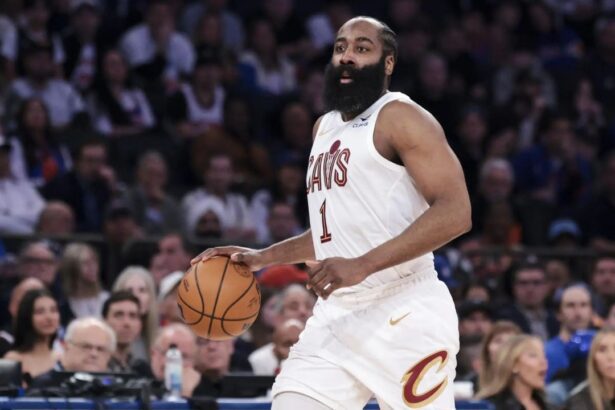
5. James Harden
Contract Status: $42.3 Million Player Option
James Harden still ran an elite offense at 36. He finished the regular season with 23.6 points, 4.8 rebounds, and 8.0 assists, ranking fourth in the league in total assists. That is why he is still in the top five. Even if the defense gets attacked and the playoff moments get loud, not many players in this class can create that much offense every night.
The Cavaliers got him in a midseason trade for Darius Garland, then went 23-9 after the move and reached the Eastern Conference Finals. The postseason has been uneven, and the Knicks targeted him in Game 1, but the whole Cavaliers offense changed because Harden can still organize a game.
His $42.3 million player option is the cleanest path. If he declines, it would be to get more years, not more yearly money. A realistic deal could be around $30.0 million per season, maybe two years, and $60.0 million. The Cavaliers should want him back, but the Clippers, Rockets, and Heat would call if he reached the market.
4. Walker Kessler
Contract Status: Restricted Free Agent ($7.1 Million Qualifying Offer)
Walker Kessler only played five games, but those five games were loud. His line was 14.4 points, 10.8 rebounds, 3.0 assists, 1.4 steals, and 1.8 blocks in 30.8 minutes, with 70.3% from the field. Then the shoulder injury ended his season, and that is the only reason his price might go down in the market.
The Jazz still control this with restricted free agency. If they extend the $7.1 million qualifying offer, they can match any sheet. And on talent, they should. A 7-foot-2 center who finishes, rebounds, blocks shots, and has shown passing growth is too valuable to let go.
The hard part is the roster. The Jazz already have Lauri Markkanen on a major deal, added Jaren Jackson Jr. to the frontcourt, and still have to think about a future Keyonte George extension. That is where Kessler becomes the uncomfortable cap decision. He may be worth $25.0 million per year on the open market, maybe four years and $100.0 million, but paying that much to a center coming off a five-game season could push the Jazz into a tight apron situation fast. If another team gets aggressive, it wouldn’t be crazy if the Lakers, Magic, or Raptors extended an offer sheet.
3. Jalen Duren
Contract Status: Restricted Free Agent ($9.0 Million Qualifying Offer)
Jalen Duren had the best full season among the young bigs in this class. He gave the Pistons 19.5 points, 10.5 rebounds, 2.0 assists, and 0.8 blocks in 70 games, shooting 65.0% from the field. That is not just “good young center” production. That is near-star center production if the defense keeps moving forward.
The playoff run exposed some problems, but maybe not enough to change the contract. Duren still has size, touch, vertical finishing, and rebounding force. He is 22, and his regular-season jump was a main reason the Pistons got the No. 1 seed. The Pistons should match almost anything, because replacing this profile is harder than paying it.
A team like the Hornets, Jazz, Trail Blazers, or Lakers could test the Pistons with a big offer sheet. The likely range starts around $42.0 million per season. A five-year, $239.0 million deal sounds aggressive, but that’s the maximum deal he’ll expect to sign. If the Pistons want control, they may have to pay as if he already arrived.
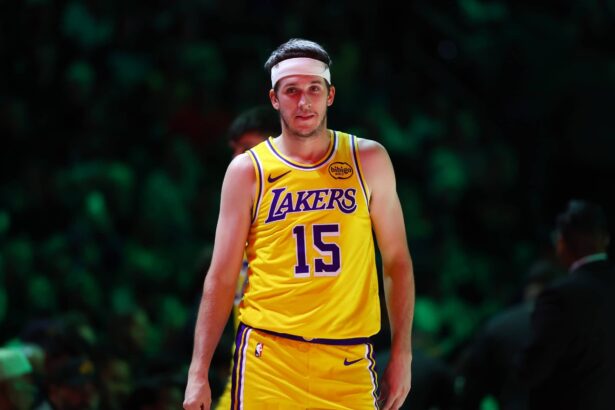
2. Austin Reaves
Contract Status: $14.9 Million Player Option
Austin Reaves is going to decline that option unless something strange happens. He is coming off a career year: 23.3 points, 4.7 rebounds, and 5.5 assists in 34.5 minutes, with 49.0% from the field and 36.0% from three. That is high-end guard production, not role-player production anymore.
The Lakers also have no easy way to replace him. Reaves became a real creator next to Luka Doncic and LeBron James. He can run pick-and-roll, attack closeouts, shoot off movement, and get to the line. The defense is not elite, but the offense is too valuable to let him walk.
This market could get uncomfortable for the Lakers. The Nets, Pistons, Magic, and Jazz all have reasons to chase a guard with this kind of scoring and playmaking. Reaves could push toward $35.0 million per season, maybe four years and $140.0 million. The Lakers will have to pay. At this point, he is not a nice bonus piece. He is a core player.
1. LeBron James
Contract Status: Unrestricted Free Agent
LeBron James is still No. 1 because the level is still ridiculous for his age. At 41, he put up 20.9 points, 6.1 rebounds, and 7.2 assists, while shooting 51.5% from the field. He ranked 12th in assists, which says a lot about how much the offense still runs through him.
This is not a normal free agency, though. LeBron isn’t picking a team only for money or touches. He said he is focused on winning, doesn’t want to start over, and is unlikely to take a minimum deal. That puts the Lakers, Cavaliers, Warriors, and maybe Spurs in the real conversation, depending on cap math and sign-and-trade paths.
The Lakers can pay him the most because of Bird rights. A short deal around one year and $48.0 million is the realistic ceiling if he wants full money. If he wants a better title path, the number may drop. Either way, he is still the biggest name and the biggest swing in this class.