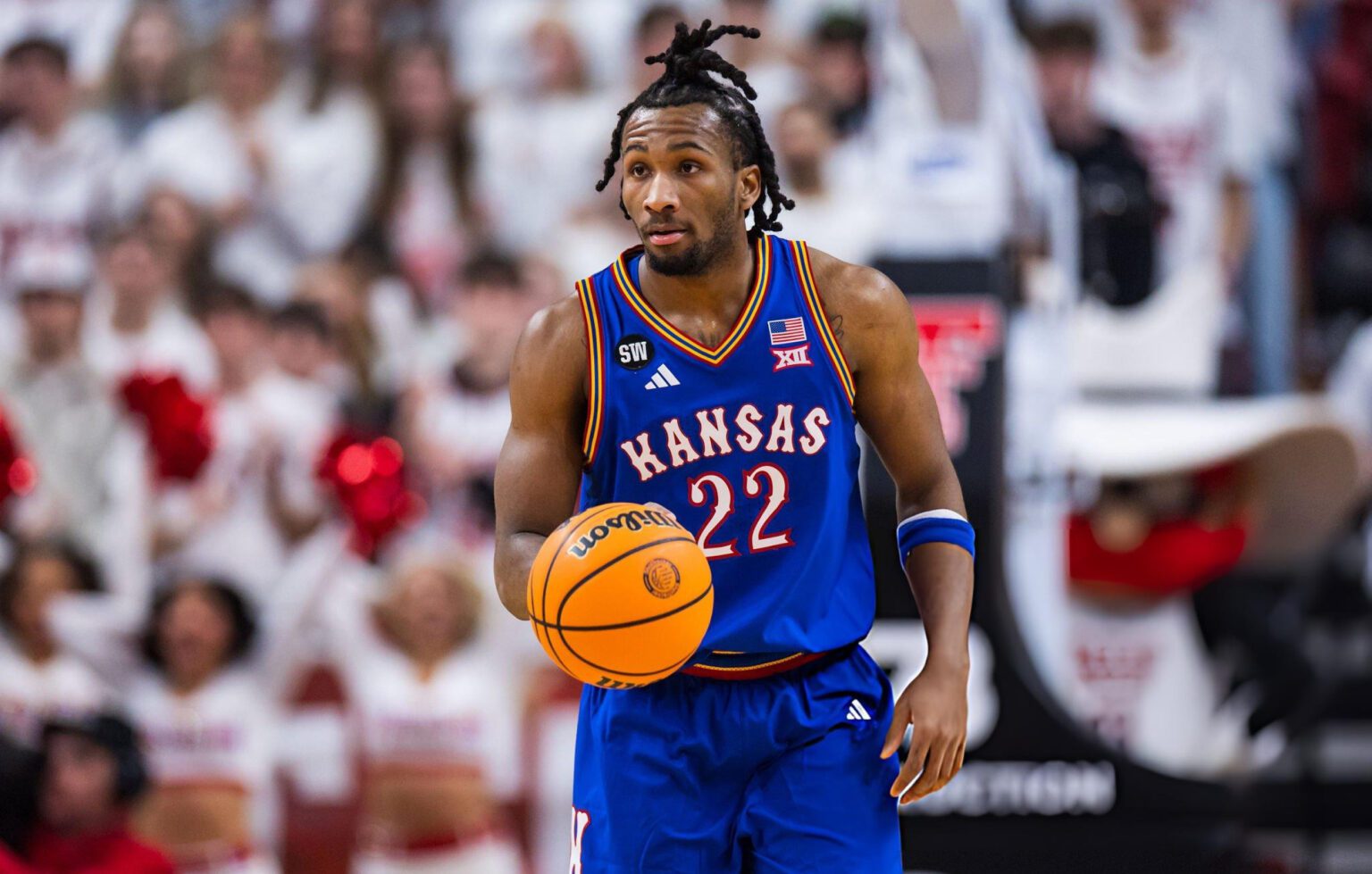
Darryn Peterson entered this season as the consensus No. 1 pick in the 2026 NBA Draft, the kind of prospect evaluators penciled in at the top before conference play even began, but as the lottery approaches, the tone around his stock has shifted in a noticeable way. What once felt inevitable now feels uncertain, and according to Marc Stein, at least one top talent evaluator whose team will be in the mix for the No. 1 selection flatly stated:
“I wouldn’t take Peterson with the first pick. Too many question marks.”
The talent or the production has never been the issue. All the questions are about everything else.
In 18 games for Kansas this season, Peterson is averaging 19.7 points, 3.8 rebounds, and 1.5 assists while shooting 46.5% from the field and 40.3% from three-point range, numbers that would normally solidify a guard’s standing at the top of a draft class. The efficiency, shot-making, and scoring versatility are real. At 6-foot-6 with a strong frame and fluid handle, he profiles as a modern scoring combo guard who can operate on or off the ball, create space in isolation, and stretch defenses beyond the arc.
The problem is availability, consistency, and perception.
Peterson has missed 11 games this season and has taken himself out of others, citing cramps, hamstring tightness, ankle issues, and even flu-like symptoms in high-profile matchups. ESPN’s Sean Farnham called the situation ‘baffling,’ not because of Peterson’s ability, but because of the uncertainty surrounding his willingness or durability to stay on the floor.
In an era where front offices obsess over reliability, that matters. When teams are projecting a player from a 30-game college season into an 82-game NBA schedule plus postseason, durability concerns are amplified.
Executives are not just evaluating stat lines. They are studying trends, communication patterns, and in-game body language. They are asking whether the interruptions are circumstantial or symptomatic of something deeper. That distinction matters when a franchise is preparing to invest the most valuable asset it controls.
Peterson, for his part, has downplayed the noise. After criticism intensified, he described himself as ‘an anti-social loner’ who blocks out outside commentary and insists basketball is his life. Stephen A. Smith pushed back publicly, arguing that actions speak louder than words, especially when lottery franchises are evaluating franchise cornerstones.
That tension between talent and trust defines his draft narrative right now.
The timing of these doubts is significant because several teams at the top of the lottery board have critical decisions looming. The Sacramento Kings, Indiana Pacers, and Brooklyn Nets currently hold the best odds at No. 1, with the Washington Wizards, Utah Jazz, New Orleans Pelicans, Dallas Mavericks, and Memphis Grizzlies close behind. For rebuilding organizations, the top pick is not just about upside; it is about dependability, culture setting, and long-term leadership.
There is also the context of this draft class. While Peterson was initially viewed as a clear tier above the field, prospects like AJ Dybantsa and Cameron Boozer continue to strengthen their cases, giving front offices alternative pathways at the top. When the gap between prospects narrows even slightly, off-court or availability concerns carry more weight.
Peterson still possesses the skill set of a top-tier selection. The shooting efficiency is legitimate, scoring creativity translates, and physical profile fits today’s league. What has shifted is the sense of inevitability. The No. 1 pick is not just about who can be great. It is about who can be counted on.