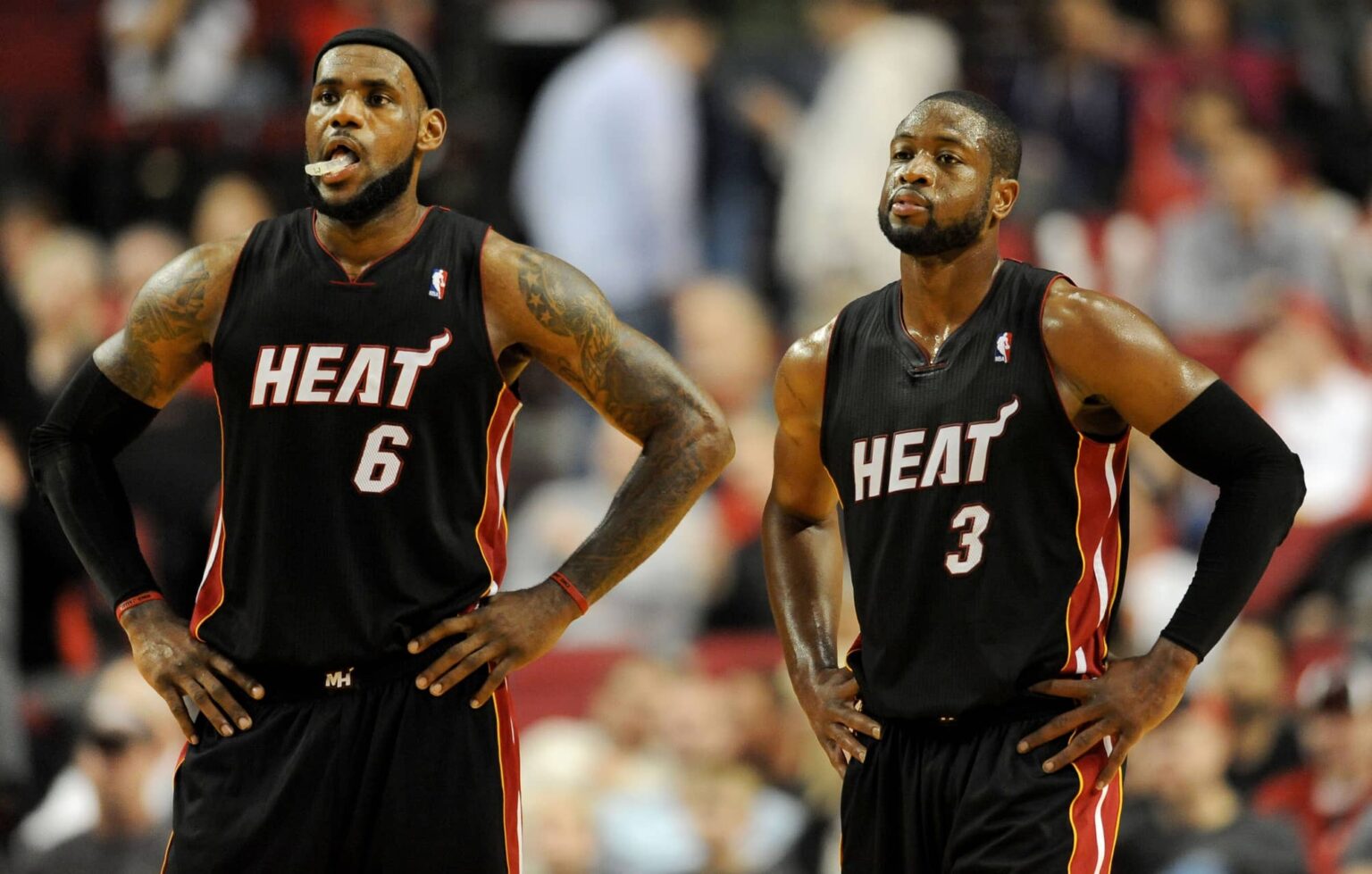
When LeBron James left the Miami Heat in the summer of 2014, it felt shocking on the surface. Four straight Finals trips with two championships. A run that looked like a modern dynasty. From the outside, it seemed like something you ride until it collapses.
Inside the building, it already was.
According to longtime Heat reporter Ethan J. Skolnick, the biggest source of tension was not roster depth or strategy. It was the growing uncertainty around Dwyane Wade and whether his body could still be trusted.
“It consistently pissed him off.”
The frustration makes sense when you look at the timeline. During their four seasons together, Wade missed six games in 2010–11. Then 17 in the lockout-shortened 2011–12 season. Then 13 more in 2012–13. By 2013–14, it ballooned to 28 games. Wade was 32 by then, managing chronic knee problems and rarely able to string together long stretches without setbacks.
The decline was not just about games missed. It showed up in production, too. In LeBron’s first season in the Heat, Wade was still Wade, averaging 25.5 points, 6.4 rebounds, and 4.6 assists. By LeBron’s final year, that dipped to 19.0 points, 4.5 rebounds, and 4.7 assists.
The playoffs told an even clearer story. Wade was dominant in the 2011 Finals run. By 2013, he was down to 15.9 points per game. In 2014, he averaged 17.8 points, 3.9 rebounds, and 3.9 assists, often struggling to impact games the way a co-star needs to.
For LeBron, this was not about blame. It was about reliability. He was deep in his prime and thinking in championships, not memories. The Heat was managing Wade carefully, sitting him on back-to-backs, adjusting rotations constantly, and hoping his knees would hold up when it mattered most. Over time, that uncertainty wore on LeBron.
If he had stayed, there is no question the Heat would have tried to retool. Pat Riley always finds ways to reshape a roster. But LeBron saw a clearer path somewhere else.
With the Cleveland Cavaliers, he had youth, health, and upside. Kyrie Irving was ascending into superstardom. Kevin Love was ready to join. Just as important, Cleveland offered something that they never could. A championship dream tied to home.
LeBron’s exit was never about disrespecting Wade. Their bond has always been real and enduring. But by 2014, reality had caught up. Wade’s body could no longer carry the weight required to sustain a dynasty, and LeBron chose certainty over nostalgia.
It was not betrayal. It was math.