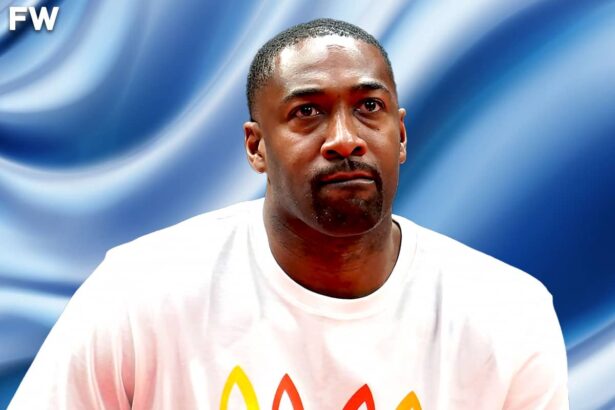
Gilbert Arenas has never been the kind of person who shies about expressing his thoughts, and when Matt Barnes‘ extortion story was brought up on his show, the former All-NBA player reacted as everyone expected. The moment Arenas heard that Barnes had allegedly paid over 60,000 to an AI-generated scam run by a woman he barely knew, he let the jokes fly.
“That man just got finessed out of sixty-one thousand dollars? By an AI snow bunny? Nah, y’all playing. Nah, I don’t believe it.”
“I’m telling you right now, if I’m paying sixty thousand, I’m getting whatever you’re selling. It ain’t gonna be no ‘hey, pay me to shush.’”
Gilbert arenas reacts to Matt barnes getting extorted for 60k by a Ai fake ig model pic.twitter.com/elzIgKjoVx
— joebuddenclips/fanpage (@chatnigga101) December 1, 2025
According to Barnes, he fell victim to an extortion scheme run by a woman he identified only as Zany or Jesse in posts. Barnes said that the woman allegedly used AI tools to create realistic audio, text messages, and deepfake videos that made it look like he was cheating on his partner, Anansa Sims.
Barnes claimed that he then panicked and paid the woman over $60,000 to keep the content from leaking out.
But the demands reportedly didn’t stop there. And things only got messier when blogger Tasha K picked up the story and spread the allegations. Barnes then accused Tasha K of feeding misinformation, and that was the breaking point. Barnes announced he’s now suing Tasha K for defamation and preparing for a full legal battle.
View this post on Instagram
The story has ignited a massive conversation online about AI scams and deepfake extortion schemes. What used to be a future fear is now a modern reality. Anyone with cheap software can clone a voice, stitch together fake messages, and ruin someone’s life if they want to. Barnes says he’s bringing the issue into the public eye because people need to understand how dangerous this technology can be in the wrong hands.
Arenas, meanwhile, approached the story from the angle only he can, calling out the absurdity of the scam and clowning Barnes for falling into the trap. But even in his jokes, he echoed the same underlying point: this is the new era, and anyone with a platform or a name is at risk.
Social media has been divided. Some fans sympathize with Barnes for being targeted by someone using AI maliciously. But almost everyone agrees on one thing: this case could be one of the first major legal battles involving AI extortion in the celebrity space. And if Barnes wins, it might set a new digital standard for accountability.
For now, Arenas will keep joking, Barnes will keep lawyering up, and the rest of the internet will keep watching, stunned that a fake AI voice and a few deepfakes cost someone sixty grand.