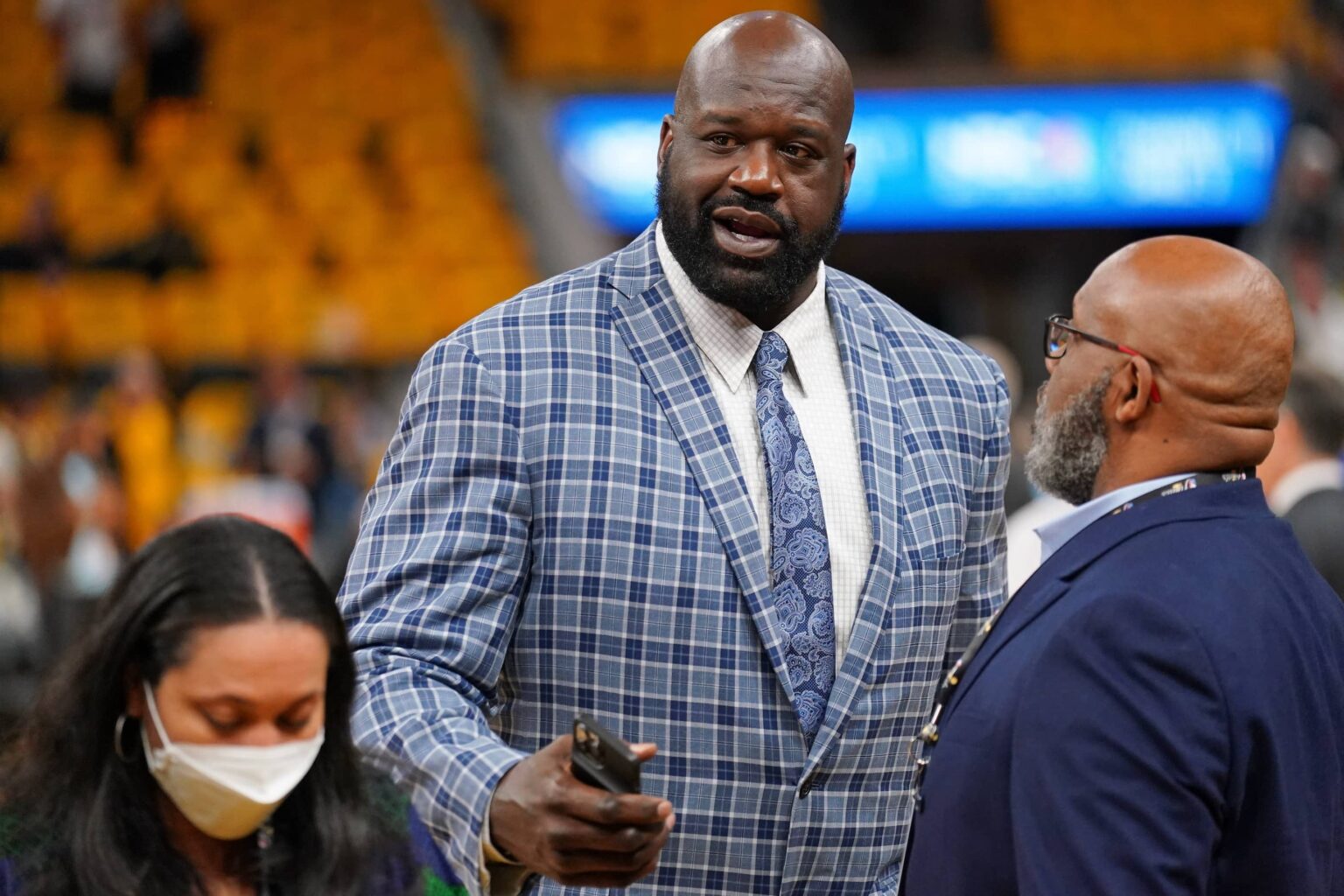
When Shaquille O’Neal signed with the Los Angeles Lakers in 1996, it was supposed to feel like the ultimate payoff. Fresh off a dominant run in Orlando, Shaq inked a seven-year, $120 million contract that instantly became one of the richest deals the NBA had ever seen. On paper, it was life-changing money. In reality, his first season in Los Angeles delivered a financial shock that still sticks with him nearly three decades later.
In an interview with FOX26 Houston, Shaq revealed:
“Three words. One, listen. Two, annuities. And three, save. I heard Odell Beckham say the other day it’s easy to spend a hundred million. He’s correct. If you understand business, EBITDA, and all those business terms, a hundred million isn’t a hundred million net. You have to pay taxes.”
“A lot of people don’t know that as athletes, we have to pay an entertainment tax in every city we perform in. So we’re paying a lot of taxes, supporting families, and we like our jewelry and cars. That money disappears fast. You have to teach yourself about business, investing, and saving.”
“Each state is different, but I remember every year signing my tax forms. My first year with the Lakers, I made $20 million and thought I was netting $20 million. When I got the check, it was $10.9 million because of California taxes. Half of it was gone. Then I had to pay an entertainment tax that was another four million. So I probably only netted about seven or eight million out of the twenty.”
For a 24-year-old superstar who had just arrived in Hollywood, it was a harsh wake-up call. Shaq has described the moment as humbling, not because he was suddenly struggling, but because it shattered the illusion that big contracts automatically equal big wealth. Playing in California came with a price, and he learned that lesson immediately.
The numbers explain why. California’s top income tax rate sits at 13.3 percent, one of the highest in the United States. Add federal taxes, agent fees, jock taxes from road games, and league-related deductions, and elite NBA players can lose more than half their salary before it ever touches their accounts. For Shaq, that reality hit all at once.
Rather than resenting it, the experience changed him. He has often said that losing that money early forced him to take business seriously. Instead of treating his NBA salary as spending money, he began seeing it as seed capital. He started learning about investing, franchising, and ownership. He asked questions. He listened. He made mistakes, but he learned from them.
That shift helped transform Shaq from a superstar athlete into a long-term businessman. Long after his playing career ended, those lessons paid off. His portfolio grew through endorsements, restaurant franchises, tech investments, and strategic partnerships. The same player who once lost $13 million to taxes became one of the most financially savvy former athletes in sports.
Shaq has since used his story as a warning for younger players. He regularly reminds them that contracts are gross numbers, not net reality. The money disappears quickly if you are not paying attention. Understanding taxes, saving early, and investing wisely matter just as much as scoring points or winning rings.
The irony is that his most painful financial lesson came during one of the happiest basketball moments of his life. Joining the Lakers launched a dynasty, delivered three championships, and turned Shaq into a global icon, who makes more than $95 million a year just through endorsements.
That helped him build a massive net worth of $400 million today.
But behind the scenes, that first season also taught him that wealth is fragile without knowledge. Even today, Shaq still remembers that $13 million lesson clearly. Not with bitterness, but with gratitude. It forced him to grow up financially, and in the long run, it may have been worth far more than the money he lost.