Role players decide seasons because they decide lineups. When a team can win the non-star minutes, it stops chasing matchups and starts dictating them. That is why the 2025-26 season has featured a clear class of rotation pieces who have gone beyond their job description. These are not breakout stars in the traditional sense.
A player projected for bench minutes who becomes a lineup stabilizer changes everything: the starting unit gets less strain, the bench holds leads, and coaching staffs can simplify their substitution patterns. The impact is not just volume. It is consistency and the ability to survive targeted game plans.
This list focuses on players whose value has been obvious on tape and supported by production: efficient scoring without high usage, reliable defense in multiple coverages, and the kind of connectivity that makes lineups function.
1. Daniss Jenkins
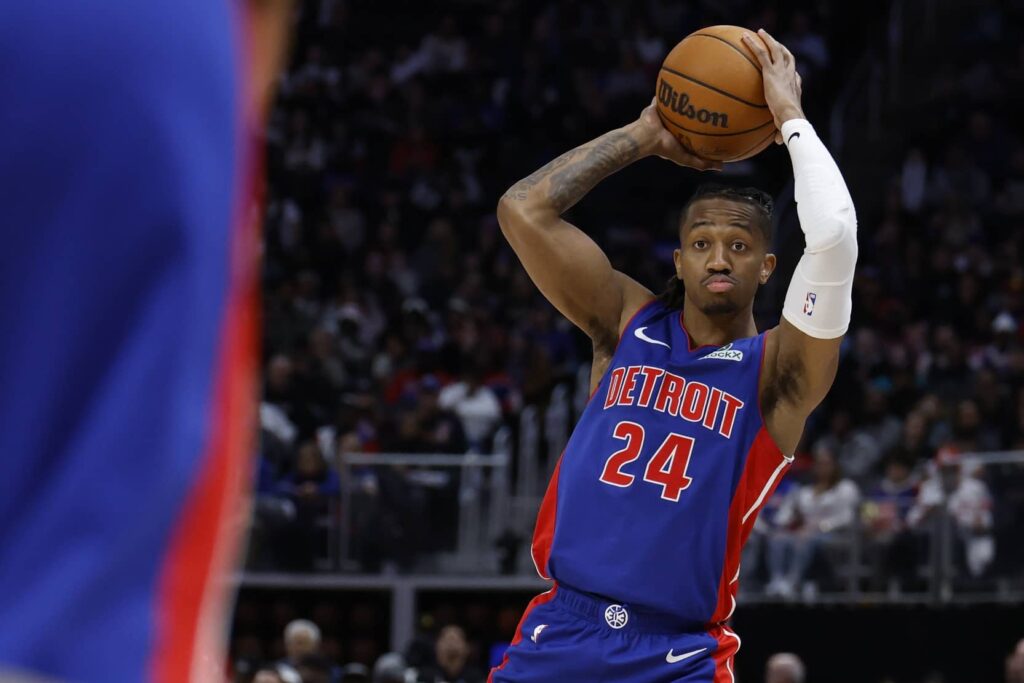
Daniss Jenkins did not enter 2025-26 with a guaranteed role. He was on a two-way deal, living on the edge of the rotation, and the Pistons had no obligation to treat him like anything more than emergency depth.
By December, that premise was gone. Injuries and availability swings with Cade Cunningham created a real minutes vacuum, and Jenkins filled it with actual point-guard functionality: he could initiate offense, keep the ball moving, and survive defensively without getting targeted every trip.
The production backed up the eye test. Jenkins is averaging 8.1 points, 1.9 rebounds, and 3.2 assists in 16.9 minutes, while shooting 42.5% from the field, 38.1% from three, and 79.5% at the line. Those are not “nice for a two-way” numbers. They are credible rotation guard numbers, especially when paired with low-maintenance usage and a willingness to play either guard spot.
His best case has always been simple: be a stabilizer when the stars sit, and be playable when the stakes rise. The Pistons trusted him enough to start him in spot situations when Cunningham was unavailable, and the splits in those opportunities show why. In his starts this season, Jenkins has produced like a real table-setter, averaging 15.0 points and 7.2 assists across 31.5 minutes.
That is the context behind the contract decision. On February 8, ESPN’s Shams Charania reported that the Pistons converted Jenkins from a two-way into a standard two-year deal that includes a team option for 2026-27. The move was not sentimental. It was roster math meeting real performance. Jenkins went from anonymous depth to a guard the Pistons can trust with structure, tempo, and possessions that matter.
2. Ryan Rollins
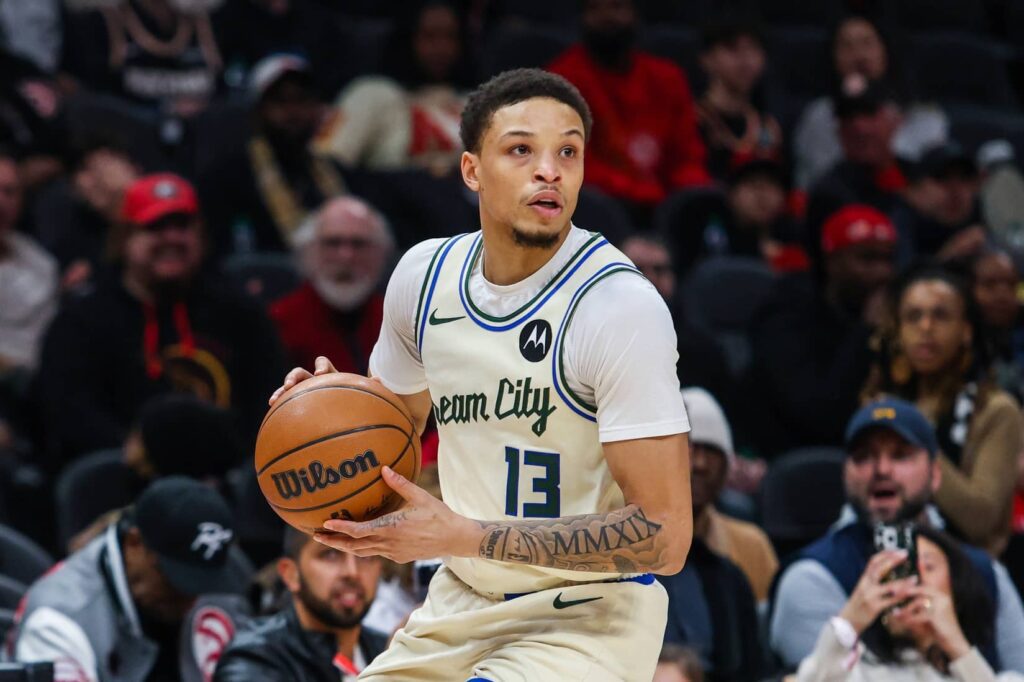
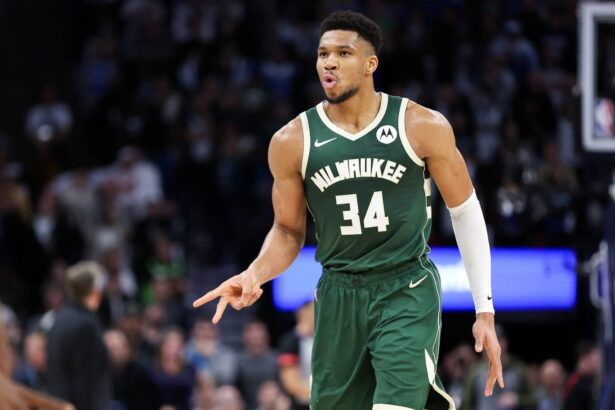
Ryan Rollins has been the clearest example of the Bucks finding value where they did not expect it. The Bucks have spent most of 2025-26 fighting uphill, sitting at 23-30 and outside the top half of the East, with a negative point differential profile that matches the record. In that context, it is telling that one of the few consistent positives has come from a guard who entered the season as a depth bet and has played his way into real responsibility.
Rollins is averaging 16.9 points, 4.6 rebounds, and 5.5 assists, and he has done it on respectable efficiency for a high-touch creator (46.3% from the field). The broader value is not just the box score. He has been able to carry possessions late in clocks, get the Bucks into sets without wasting time, and create paint pressure that the roster has often struggled to manufacture when the offense bogs down. That type of functional shot creation from a non-star is exactly how a team survives nights when the margin is thin.
The league has noticed in the only way that matters for a “role player exceeds expectations” argument: his name is showing up in the Most Improved Player market. He is not near the top tier of the odds board, but being listed at all is a real indicator of how far he has climbed relative to preseason assumptions.
Even the trade noise tells the same story. Reporting around the Bucks’ exploratory talks for Ja Morant consistently included Rollins as a key point of contention, with Michael Scotto’s reporting framed as the Grizzlies valuing Rollins and future first-round draft capital in those discussions. The important takeaway is not whether a deal was realistic. It is that Rollins moved from “salary filler” territory into “piece you hesitate to touch,” which is the exact definition of exceeding expectations on a team that has not had many clean wins this season.
3. Caleb Love
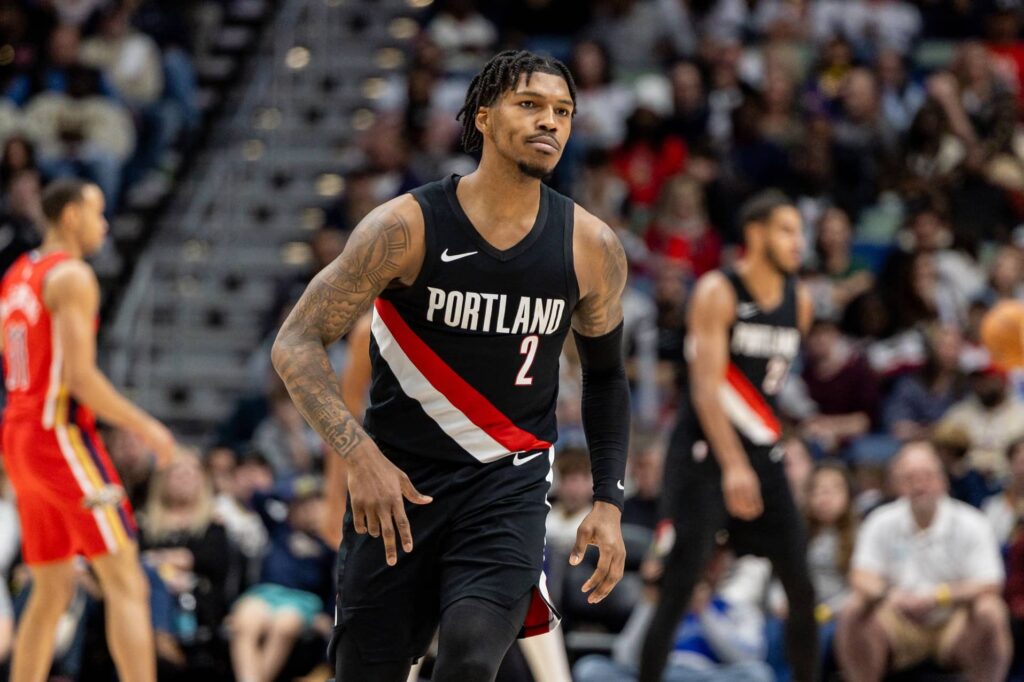
Caleb Love has outperformed the typical two-way-player curve because his production has translated into real, repeatable NBA offense, not just hot stretches. He is averaging 11.3 points, 2.5 rebounds, and 2.7 assists in 22.2 minutes, with a 39.0% field-goal mark, 32.1% from three, and 73.5% at the line.
The efficiency is not pristine, but the volume and responsibility are. The Blazers have asked him to handle on-ball reps, take tough pull-ups, and keep pressure on the rim, and he has remained productive enough to hold a rotation spot on a team that has been fighting for the play-in all year.
That matters because this is not a roster built to hide low-end guards. The Blazers are 27-29 and hovering around the middle of the West, which has forced them to prioritize minutes that help them win now, not just “developmental” minutes. Love has become one of the few steady sources of perimeter shot creation on nights when the halfcourt stalls, and his recent scoring consistency has been notable, including a 14-game streak of double-digit points during a turbulent stretch of the season in December.
The contract context is the other reason this season qualifies as a surprise. Love entered the league on a two-way deal, not a standard roster slot, and that status always comes with a hard organizational decision point. The Blazers officially announced the two-way signing last summer, and as the season has progressed, reporting around two-way deadlines has included Love as one of the Blazers players nearing the practical limits that force either a conversion or a roster move.
That is the real takeaway. Love has gone from “camp flyer” to a player whose minutes are tied to the Blazers staying afloat in the West. On a team living game-to-game, that is a meaningful jump in expectations, and it is why his season belongs in this tier.
4. Jaylon Tyson
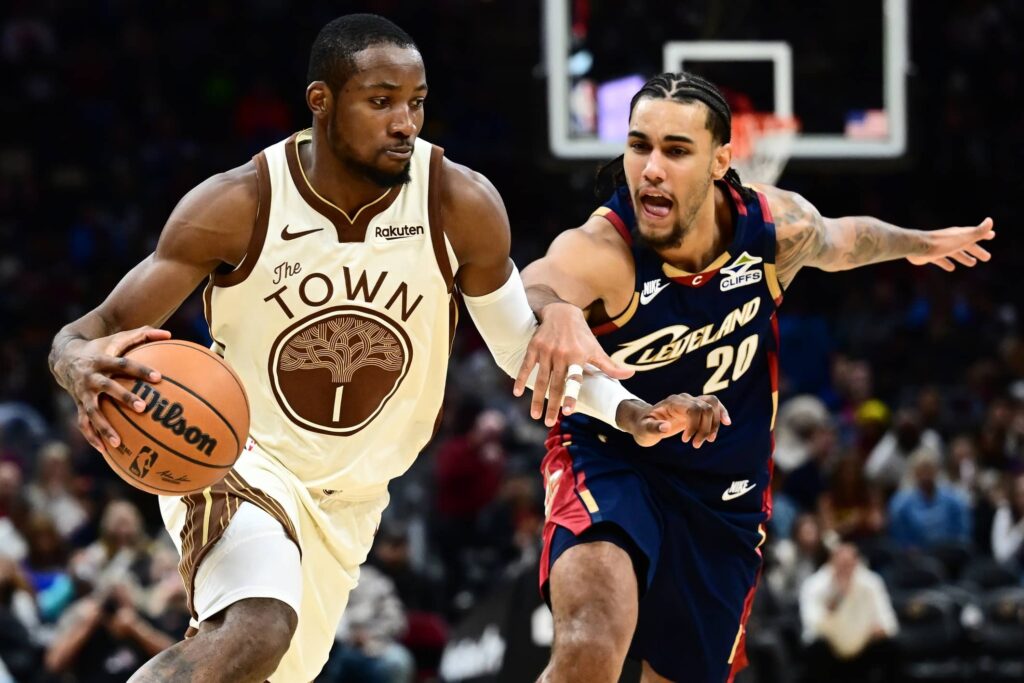
Jaylon Tyson has become one of the most valuable “role player” wins in the league because his impact is scaling with team goals, not just personal usage. He was a first-round pick in 2024 (No. 20), but the leap from rookie contributor to nightly two-way piece is not automatic, especially on a contender-level team.
This season, Tyson has made it look simple: 13.8 points, 5.4 rebounds, and 2.3 assists while shooting 51.1% from the field. The cleanest signal is the shooting gravity. Tyson is at 47.1% from three, a number that puts him near the top of the league and changes how opponents can help off the wing.
The Cavaliers have been awesome lately, sitting at 35-21 and fourth in the East, but the last month has pushed them into a different tier. They are 4-0 since acquiring James Harden and 11-1 over their last 12 games, which has turned their offense into a consistent advantage rather than a nightly fight.
Tyson fits that version of the team perfectly: he does not need touches to matter, he can space the floor at an elite level, and he is big enough to take real wing defensive assignments without compromising the scheme.
That is also why his emergence lined up with a major roster decision. At the start of February, the Cavaliers traded De’Andre Hunter to the Kings in a three-team deal, bringing in Dennis Schroder and Keon Ellis, while the Bulls took in Dario Saric and two future second-round picks.
The reporting on the transaction is the fact. The logical basketball read is that Tyson’s breakout made it easier for the Cavaliers to move a veteran, expensive wing, and re-balance the roster toward guard depth, because they already had a cheaper wing providing shot-making and defense in a playoff-relevant role.
Tyson’s season is not surprising because the points are high. It is surprising because the skill mix is clean, efficient, and immediately usable in the kinds of games the Cavaliers are now trying to win.
5. Collin Gillespie
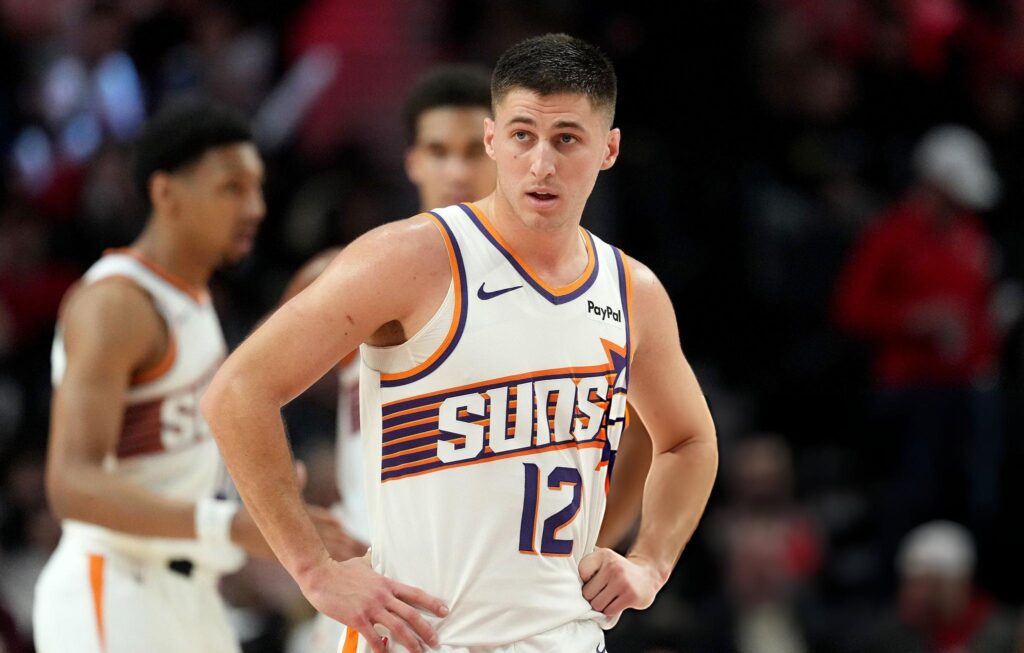
Collin Gillespie is one of the cleanest “role player exceeds expectations” cases this season because the jump is not subtle. It is a full-scale change in workload, shot diet, and on-court responsibility, and the Suns have treated it as real, not temporary.
Last season, Gillespie was a limited-minutes guard who mostly lived on spot duty. He finished 2024-25 at 5.9 points in 14.0 minutes, with 2.4 rebounds and 2.4 assists, shooting 43.3% from three on low volume.
This season, he has been a different player in both opportunity and impact: 13.2 points, 4.1 rebounds, and 4.7 assists in 28.3 minutes, while maintaining strong perimeter efficiency (42.0% from three) and a 59.4% true shooting mark. That is not a “nice bench bump.” That is starter-level creation and spacing.
The Suns are 32-24, sitting in the crowded middle of the West, and their margin games have been defined by whether they can keep the offense organized beyond the primary creators. Gillespie has given them structure. He plays with pace, gets into actions early, and does not waste possessions hunting shots. His assist volume is the giveaway. A guard does not accidentally average 4.7 assists in a high-minute role on a team trying to win games.
The other piece is how quickly the league adjusted. Early-season scouting treated him like a temporary fill-in. As the season has moved along, defenses have started to treat him as a real spacing and decision-making problem, which is usually the point where “surprise player” stories collapse. The Suns have stayed with him anyway, because the skill set scales. A guard who can hit spot threes, run movement actions, and keep the ball alive with low turnover habits is valuable on any roster, but it becomes essential on a contender-adjacent team where every lineup needs two-way functionality.
That is why the contract conversation has shifted from “nice story” to “real market,” with the idea that his play has pushed him into legitimate free-agent territory next summer. The surprise is not that he can score. It is that he has become a dependable organizer on a winning team while keeping the shooting efficiency that got him noticed in the first place.
6. Anthony Black
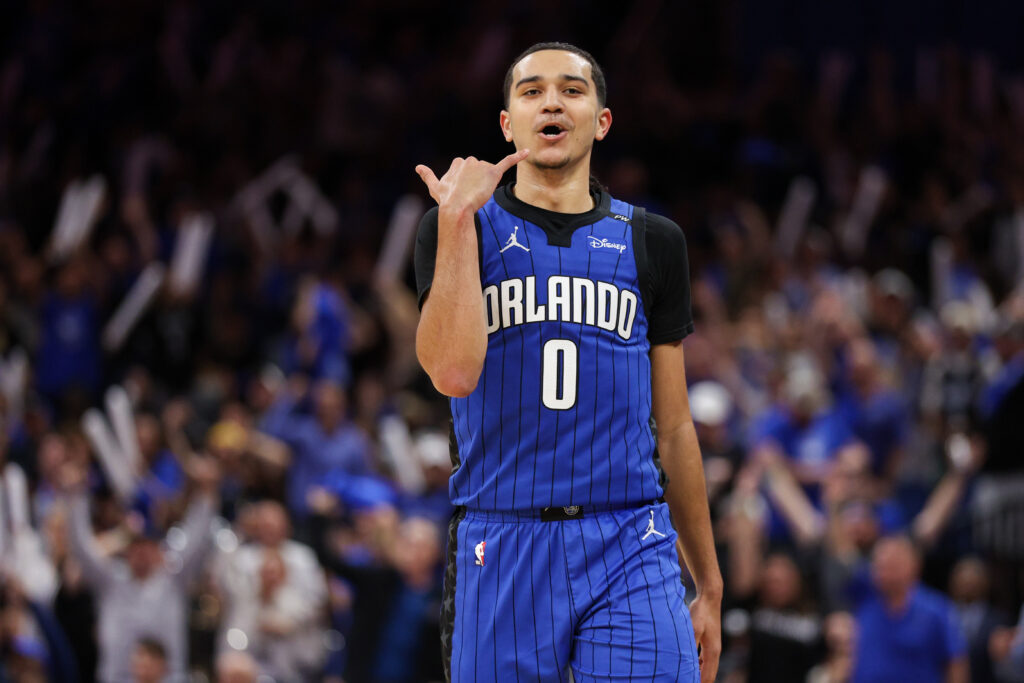
Anthony Black has made the leap that teams hope for from young guards, but rarely get on schedule. The difference from last season to this one is clear in every indicator that matters: minutes, usage, production, and the ability to play a larger role without the offense breaking.
In 2024-25, Black was a rotation guard, not a focal point. He averaged 9.4 points, 2.9 rebounds, and 3.1 assists in 24.2 minutes, with a 31.8% three-point mark and a 52.1% true shooting rate.
This season, he has moved into a featured, high-minutes role and produced like it: 16.1 points, 4.0 rebounds, and 4.0 assists in 31.1 minutes, while improving his efficiency back to 56.6% true shooting. The statistical jump is big, but the functional jump is bigger. Black is creating more of the offense, carrying more defensive responsibility, and doing it nightly.
The Magic have needed it. They are 29-25 and living in the East’s play-in tier, which means their rotations have been shaped by availability and game-to-game urgency, not long development windows. Jalen Suggs’ right knee Grade 1 MCL contusion created a stretch where the backcourt workload had to be redistributed, and Black became a primary solution rather than a backup plan. Black is not simply “better.” He has become essential to keeping lineups functional when a key guard is limited or out.
The defense is what makes the leap credible. The Magic can trust him at the point of attack, and they can keep size on the floor without sacrificing ball-handling. That is why the minutes climbed, and why the offense has not cratered under the added on-ball responsibility.
This is what exceeding expectations looks like when it is real. Black went from a young guard who needed the game simplified to a guard who can run it, defend it, and absorb injuries around him without forcing the team into emergency lineups. The numbers show a breakout. The usage and responsibility show a promotion.