The Cavaliers didn’t just lose. They got swept, and there is no soft way to say it. For a team that had big expectations in the East, reaching the Conference Finals was a great result, but going out in four games against the Knicks was just embarrassing.
It wasn’t one bad shooting night. It wasn’t only one player. The Cavaliers looked out of rhythm, weak in key moments, and unable to answer when the series got hard. The Knicks were tougher, sharper, and more ready for playoff basketball.
Now the Cavaliers have to look at why it happened. Here are the four biggest reasons behind the sweep, and what each one says about the team going forward.
4. The Cavaliers Never Recovered From The Game 1 Collapse
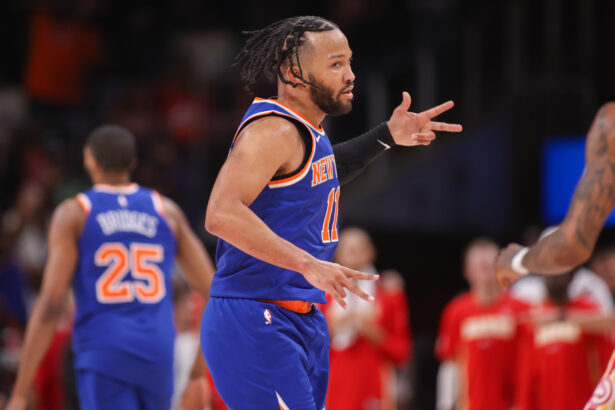
This has to be on the list. The Cavaliers had Game 1. They were up 22 points in the fourth quarter, then lost 115-104 in overtime. That changed the whole series. It gave the Knicks belief, gave Jalen Brunson control of the matchup, and put the Cavaliers in chase mode right away.
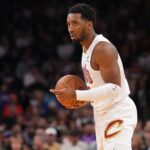
The bad part was not only blowing the lead. It was how they blew it. The Cavaliers slowed the game too early, stopped attacking, and let the Knicks turn the final minutes into an offensive clinic with zero resistance. The Knicks closed regulation and overtime on a 44-11 run, and Mitchell went scoreless in that stretch. That is brutal for a team with Donovan Mitchell and James Harden as its main stars.
From an outside view, that was the first sign the Cavaliers were not ready to take control of the series. They had the talent to win the game. They had the lead. They had the road crowd quiet. Then they played not to lose. Against a team with Brunson, Karl-Anthony Towns, OG Anunoby, Mikal Bridges, and Josh Hart, that is dangerous.
After that loss, the series never felt the same. The Cavaliers were still good enough to fight, but the Knicks had the emotional edge. Game 1 made the Cavaliers look afraid. The Knicks looked free after that.
3. James Harden Had A Disaster Of A Series
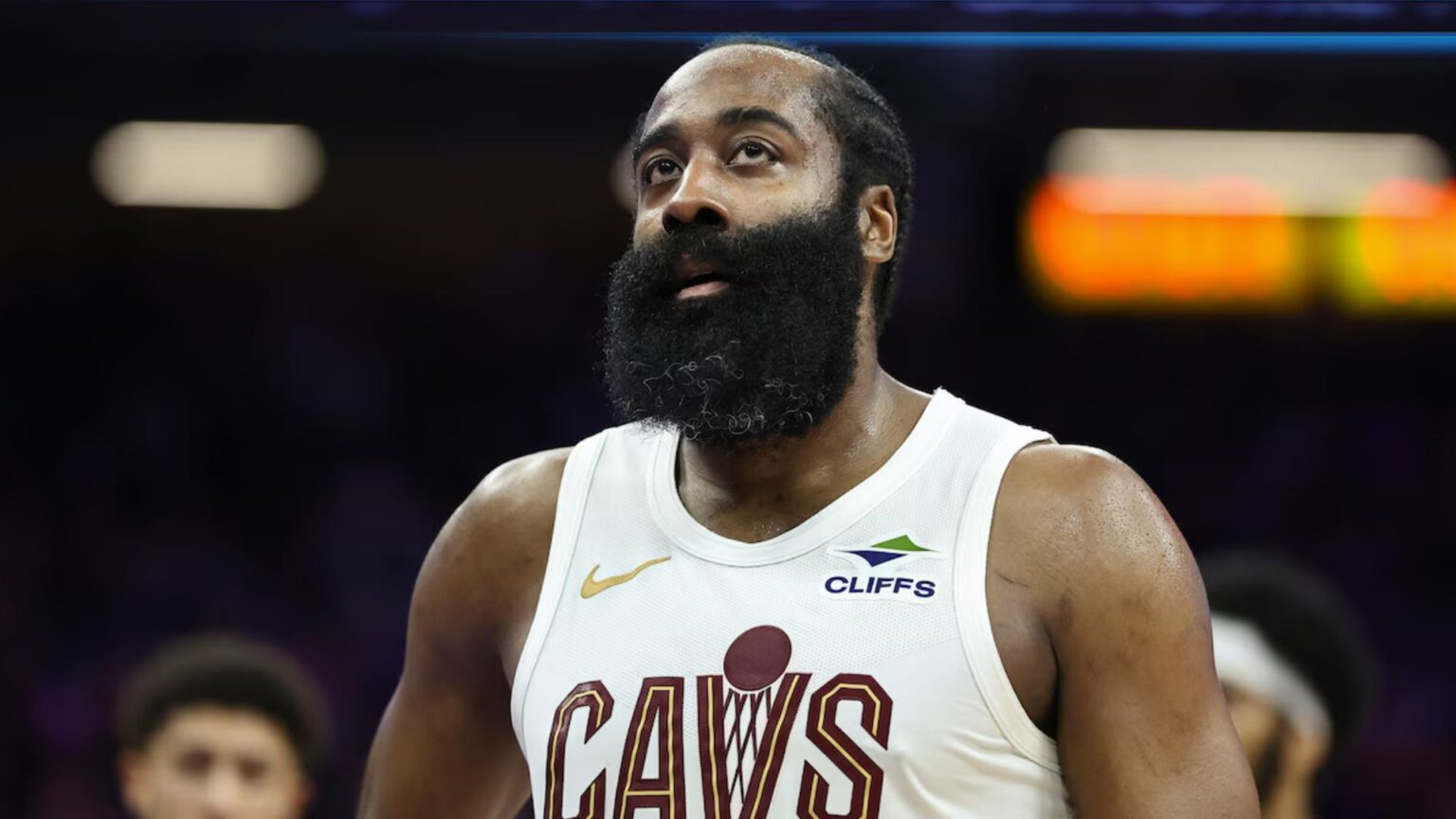
This is a big one because the Cavaliers traded for Harden to improve their playoff offense. He was supposed to give them an elite scoring valve next to Mitchell. He was supposed to organize the half-court, punish traps, and make the frontcourt easier to use.
That just didn’t happen. Harden finished the playoffs with 19.2 points, 5.5 assists, and 5.1 rebounds on 41.0% from the field and 29.9% from three. That is not terrible if he was a secondary piece, but it is not enough for a player with a $42.3 million player option and huge offensive expectations.
Game 4 made it worse. Harden had 12 points on 2-for-8 shooting with five turnovers, and the Knicks were plus-55 against him in the series. Mikal Bridges and the Knicks’ wing size bothered him. They forced him into slow possessions, took away clean rhythm threes, and made him work on both ends
Harden, in the Conference Finals, averaged 16.0 points, 4.8 rebounds, and 3.0 assists in 4 games, shooting a dismal 38.9% from the field and barely 17.9% from deep. He had more turnovers (4.3 per game) than assists, and ended as a -13.8 in plus/minus.
The Cavaliers needed Harden to be an elite playoff engine. Instead, too many possessions still became Mitchell-or-nothing. That is not the only reason they lost, but it was the usual Harden problem. It happened with the 76ers against the Celtics in 2023, and his playoff struggles have been well-documented over the years.
2. The Knicks Beat Them Up In The Physical Parts Of The Game
This is probably one of the most surprising feats of the series. The Cavaliers have Evan Mobley and Jarrett Allen. They should not get destroyed on the glass and in second-chance points like that.
Game 4 was the worst example. The Knicks won the rebounding battle 60-33. They also beat the Cavaliers 33-9 in fast-break points and 32-5 in second-chance points. The Knicks had 20 offensive rebounds in that game.
That is the part that makes coaches angry. Missed shots happen. Bad shooting nights happen. But when a team loses the glass by 27 and gives up that many extra chances, it means the opponent is playing harder and stronger.
Towns hurt them. Hart hurt them with a career game. Anunoby hurt them. Mitchell Robinson made them work on the glass. The Knicks had bodies everywhere. The Cavaliers had two starting bigs, but they didn’t control the paint in the way they needed.
The Cavaliers’ offensive rebounding rate dropped to 26.5% in the series after being at 35.6% through the first two rounds. The Knicks took away one of the Cavaliers’ best playoff weapons with a higher motor, slow half-court sets, and a lot of work on the glass.
For me, this is the most damaging roster question. If Mobley and Allen are both on big salaries, they have to win the physical series. If they don’t, the two-big build becomes easier to question.
1. The Cavaliers’ Offense Had No Real Plan B
The Knicks held the Cavaliers to 100.3 points per 100 possessions in the series. That was 18.0 points per 100 possessions lower than their regular-season offense and 13.3 lower than their first two playoff rounds. This series quickly became their offensive stretch of the season.
That is the main story. The Cavaliers didn’t just lose because the Knicks were hot. They lost because their offense stopped looking like it had been during the regular-season stretch. They had struggles in the previous rounds, as they averaged 9.1 fewer points against the Pistons than in the Raptors series. But against the Knicks, the Cavaliers went from 108.9 points to 99.5 in the four games played.
The Knicks pressured the guards, stayed physical on drives, helped without overcommitting, and trusted their wings. Brunson picked matchups on offense, but the Knicks’ defense was just as important. They made Mitchell work. They made Harden uncomfortable. They shrank the floor around Mobley and Allen. They forced role players to hit shots under pressure.
The Cavaliers also didn’t get to the line enough. Their free-throw rate dropped to 24.0 attempts after being at 29.0 through the first two rounds. They also shot only 24-for-75 on wide-open threes, which is 32.0%. Some of that is variance, but it also showed pressure. The ball didn’t move with the same confidence.
The most honest answer is this: the Cavaliers looked like a very good regular-season team and really struggled during the playoffs with two consecutive 7-game series. The Knicks then looked like a championship-contending squad with better roles, more effort, higher chemistry, and more trust in their identity once the lights got brighter.