The Knicks didn’t win the 2026 championship just because everything went right for two weeks. Their whole season told the same story.
They finished 53-29, third in offensive rating, seventh in defensive rating, and fifth in net rating. And then they got even better once the playoffs started. The Knicks went 16-3, scored 115.8 points per game, allowed only 100.9, and outscored opponents by 14.9 points per game on average. That was the best playoff point differential in NBA history.
They also won 13 straight games after going down 2-1 in the first round. Their three losses in the whole postseason came by one, one, and four points. Nobody beat them by more than one possession until basically the final seconds.
Some of that probably won’t happen again exactly the same way. Opponents shot only 34.6% on wide-open threes against them, which is unusually low. They also avoided the Celtics and Thunder, two teams that gave them real problems during the regular season.
But this wasn’t just luck. The Knicks have a real superstar closer, one of the most complete starting groups in the whole league, multiple high-level wing defenders, and a roster that can come back almost fully intact.
Here are four reasons why the Knicks could win it all again next season.
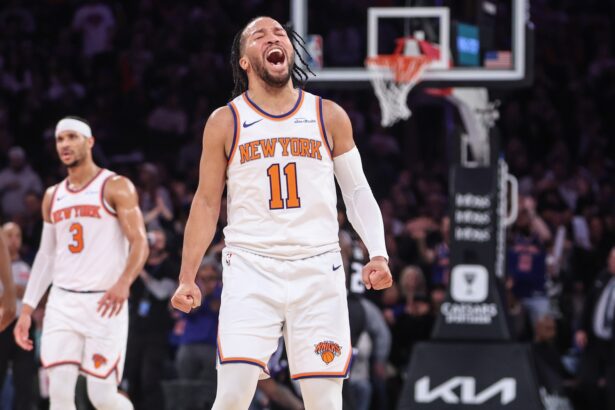
1. Jalen Brunson Solves The Hardest Problem In Playoff Basketball
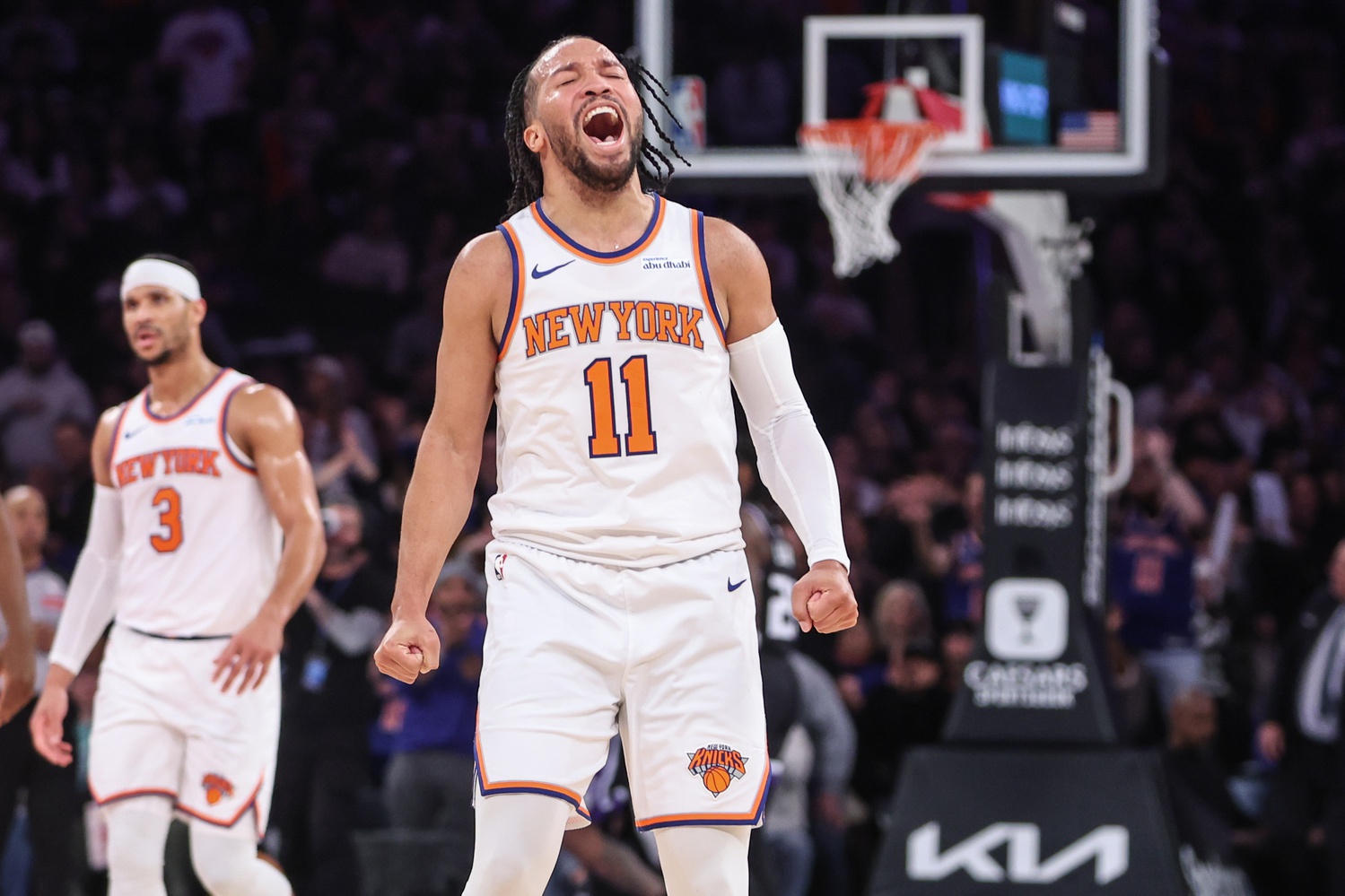
Every playoff offense eventually gets broken down. Teams switch more, help earlier, send double teams at stars, and force possessions into the last seconds of the shot clock. The Knicks don’t panic in those moments because they have Jalen Brunson.
Brunson averaged 26.0 points, 3.3 rebounds, and 6.8 assists in the regular season. He shot 46.7% from the field, 36.9% from three, and 84.1% from the line.
But his real value showed up in the playoffs. He led all playoff players with 539 total points and averaged 32.6 points in the Finals. In Game 5, he scored 45 points, including 15 in the fourth quarter alone, to close the series out.
Brunson is not the fastest guard, and he doesn’t play above the rim. His whole game is footwork, balance, strength, and changing pace. He gets defenders going the wrong direction and can score from almost anywhere inside the arc.
The late clock numbers show exactly why this matters so much. The Knicks scored 345 field goal points during the final six seconds of the shot clock in the playoffs. Their opponents scored only 166. Brunson, by himself, led the entire postseason with 100 made baskets in those situations.
That is a massive advantage in playoff basketball. Normal offensive systems start breaking down when a team sees them four or five times in one series. At that point, you need someone who can just create a bucket after the first option is gone. The Knicks have that guy.
And it is not only Brunson, either. Among players with at least 300 attempts in the final six seconds of the shot clock over the last two seasons, Brunson ranked second in effective field goal percentage at 51.6%. Mikal Bridges ranked third, OG Anunoby fourth, Karl-Anthony Towns fifth, and Josh Hart ninth.
The whole starting group can survive late possessions. That is honestly kind of crazy. It also explains why the Knicks were so hard to put away. They went 6-2 in playoff games where they were down by double digits. They came back from 29 points down in Game 4 of the Finals and 15 points down in Game 5.
You can’t plan to do that every year. But the ability to score when the offense breaks down is something that actually repeats. As long as Brunson stays healthy, the Knicks will enter almost every close playoff game with one of the best late-game players on the floor.
2. Their Starting Five Has Almost No Weak Points
The Knicks don’t just run everything through Brunson and hope for the best. Towns averaged 20.1 points, 11.9 rebounds, and 3.0 assists while shooting 50.1% from the field, 36.8% from three, and 85.8% from the line. He gives the Knicks a center who can score inside, step out behind the arc, and punish teams that try to switch everything.
His playoff scoring dropped to 15.9 points per game, but he actually became more complete as a player. Towns averaged 10.6 rebounds, 4.9 assists, 1.3 steals, and 1.3 blocks while shooting 55.1% from the field and 45.6% from three in the postseason.
But the most insane number was his plus-minus. The Knicks outscored opponents by 258 points during Towns’ 578 playoff minutes. That is the best plus-minus for a single player in one postseason in 30 years of available data. Thirty years.
Towns makes the Brunson pick-and-roll almost impossible to guard. If the center drops back, Brunson gets into the mid-range. If the center steps up, Towns can pop for three. If the defense switches, both guys can attack whoever is in front of them.
Anunoby gives them another scoring option that doesn’t need plays designed for him. He averaged 16.7 points, 5.2 rebounds, and 2.2 assists during the season while shooting 48.4% from the field and 38.6% from three.
And then his shooting in the playoffs was just ridiculous. Anunoby posted a 67.2% effective field goal percentage, the best mark in NBA playoff history among players with at least 150 shot attempts. He made 44 of 90 threes, which is 48.9% from outside.
That exact level probably won’t happen again. Nobody should expect a wing to shoot almost 49% from three every single postseason. But Anunoby doesn’t need to do that to still be very useful. He is already a legitimate threat from the corners, can attack smaller defenders, finish off cuts, and punish teams that send too much help toward Brunson or Towns.
Bridges also played the best offensive basketball of his career in these playoffs. He averaged 13.5 points on 55.9% from the field, 36.5% from three, and a 64.3% true shooting mark. He turned it over only 0.9 times per game.
Josh Hart fills every space the others leave open. He averaged 12.0 points, 7.4 rebounds, and 4.8 assists during the regular season while shooting 50.8% from the field and 41.3% from three.
The Knicks can score through Brunson. They can use Towns as a screener, passer, or post scorer. They can attack mismatches through Anunoby or Bridges. They can let Hart push in transition off rebounds.
They don’t have to run the same thing every single time. That gives them multiple answers across a seven-game series. A defense can take away one action without actually stopping the whole offense.
3. The Playoff Defense Was Way Better Than Anyone Expected
The biggest concern about the Knicks going into the playoffs was defense. Brunson is small. Towns has never really been considered an elite defensive center. A lineup with both of them can be attacked in pick-and-roll situations pretty easily on paper.
The Knicks still finished seventh in regular-season defensive rating. Against the top ten offenses, they ranked sixth by allowing 114.9 points per 100 possessions.
And then the defense just went to a completely different level in the playoffs. The Knicks allowed only 100.9 points per game and posted a defensive rating of 104.9. Both numbers ranked first among all playoff teams.
Their wing group gave them a different defender for almost every situation. Anunoby can guard big forwards, guards, and some centers. Bridges can chase smaller scorers and also switch onto wings. Hart can guard bigger than his listed height because of his strength and how physical he plays.
Those three players let the Knicks hide Brunson on lower usage options. They also reduce how often Towns has to defend in open space, which is when he looks most vulnerable.
Bridges averaged 1.3 steals and 0.8 blocks during the regular season. Anunoby averaged 1.6 steals and 0.7 blocks. Hart added 1.1 steals and grabbed 7.4 rebounds per game from the guard position. In the playoffs, Hart went even further with 1.7 steals and 8.9 rebounds per game. Towns also contributed 1.3 steals and 1.3 blocks.
The rebounding is part of the defense, too. A stop isn’t actually a stop until someone gets the ball back. Towns, Hart, and Anunoby give the Knicks three serious rebounders surrounding the perimeter.
The Knicks also showed they can change their defensive style depending on the opponent. They can play their normal starting group with Towns at center. They can bring in Mitchell Robinson for more rim protection and offensive boards.
They can play Anunoby at power forward and switch more actions. They can add Jose Alvarado or Miles McBride when they need more ball pressure.
That flexibility matters a lot because the East has very different types of teams to deal with. The Pistons attack with Cade Cunningham and size. The Celtics use shooting and wing creation. The Cavaliers have All-Star guards and two punishers inside. The Magic are physical and make it really hard to score.
The Knicks don’t have one perfect defensive lineup for every single opponent. They have enough different defenders to actually adjust the coverage.
Their playoff defense also proved it could hold up under real pressure. Every Finals game was within five points in the final five minutes. The Knicks won four of them.
Some opponents’ misses helped. That always happens in a championship run. But the Knicks also forced difficult decisions, changed matchups, and stayed physical without losing the rebounding battle.
That kind of defense can absolutely carry over into another postseason.
4. The Championship Core Can Come Back Together
The Knicks don’t need to rebuild anything after winning the title. Brunson, Towns, Anunoby, Bridges, and Hart are all under contract for 2026-27. McBride, Tyler Kolek, and Pacome Dadiet are also under contract. Jose Alvarado has a $4.5 million player option.
That gives the Knicks a real chance to bring back almost the exact same group. Towns is owed $57.1 million next season. Anunoby is at $42.5 million, Brunson at $37.7 million, Bridges at $33.5 million, and Hart at $20.9 million.
The roster is expensive, but the ownership group has already shown it will pay whatever it takes to keep a contender on the floor. The Knicks have roughly $209.0 million committed when Alvarado’s option and the draft pick are included. They would have around $13.0 million below the projected second apron before filling out the rest of the roster.
The hard decisions will come with the bench.
Mitchell Robinson is an unrestricted free agent after earning $13.0 million this season. Landry Shamet and Jordan Clarkson can also become free agents. Keeping the full championship group could push the Knicks above the second apron, which creates a much larger tax bill and limits flexibility.
But the top five are already secured. That is the hardest part, and they already have it.
The starting group now has two full seasons together and one championship run as a foundation. Mike Brown also just completed his first season as head coach. He can add more offensive actions, clean up the bad regular-season stretches, and build better bench combinations over the summer.
The Knicks didn’t play their best basketball for the full regular season either. They still won 53 games and finished with a plus-6.5 net rating.
Their playoff ceiling was a completely different story. They posted a plus-15.4 net rating and tied the NBA record with 12 double-digit playoff wins.
The age curve is not perfect. Brunson will be 30, Towns 31, Bridges 30, Hart 31, and Anunoby 29 next season. This is not a young team with a six or seven-year window ahead of it.
But none of the main players should be meaningfully past their prime next season either.
That makes 2026-27 another serious title run. The Knicks don’t need to wait for anyone to develop. They already know this exact lineup can win four rounds.
Final Verdict
Repeating is always hard. Nobody in the NBA has done it since the Warriors in 2018. Injuries, bad matchups, shooting luck, and the second apron rules can all change a season really fast.
The Knicks also had some things go their way in 2026. Opponents missed too many wide-open threes. They avoided the Celtics and Thunder in the bracket. Anunoby shot at a level that realistically is not sustainable for another full playoff run.
But the main reasons they won a championship are not going anywhere.
Brunson is still one of the best late-game scorers in the whole league. Towns gives the offense a second star and one of the best shooting centers in basketball. Anunoby, Bridges, and Hart give the team defense, size, shooting, rebounding, and the kind of low-turnover play that actually holds up in the playoffs.
The main five can all come back. The coach gets to build on a championship system instead of starting from scratch. The Knicks already proved they can win slow games, high-scoring games, comeback games, and close games.
They finished 16-3 in the postseason and posted the best average point differential in playoff history. That doesn’t guarantee another title, but it does prove the first one wasn’t random.
The Knicks should enter next season as one of the clear favorites to win the East. If the starting group stays healthy and the front office keeps enough bench defense around it, a second straight championship is genuinely realistic.