The Knicks are already in the NBA Finals. The question is not about their form. The numbers say they come into it in elite shape. They swept the Cavaliers in the Eastern Conference Finals, won Game 4 by 37 points, and reached the Finals for the first time since 1999. They have also won 11 straight playoff games. Over 14 playoff games, the Knicks have outscored teams by 19.4 points per game, which would be the best playoff point differential ever by a huge margin.
The other side is still open. The Thunder lead the Spurs 3-2 in the Western Conference Finals, with Game 6 at the Spurs’ home turf. The Thunder are the defending champions, the No. 1 seed, and had the best regular-season net rating in the league. The Spurs are the No. 2 seed, have Victor Wembanyama, and already beat the Thunder twice in this series.
At first sight, the Knicks should rather face the Spurs. Not because the Spurs are weak. They won 62 games and have the best defensive player in the league. But the Thunder are the worse matchup because they can attack the Knicks in the exact areas that have carried this playoff run.
Shai Gilgeous-Alexander forces help without turning the ball over, Chet Holmgren and Isaiah Hartenstein can fight Towns and Hart on the glass, and the Thunder’s second unit has already crushed the Spurs’ bench 257-127 in the Western Conference Finals.
The Knicks’ Style Is Strong Enough For Either Matchup
The Knicks are not arriving as an underdog East champion. Their playoff profile is extreme. They rank first among playoff teams in offensive rating at 123.3, first in defensive rating at 103.5, and first in net rating at +19.8. They are also first in effective field-goal percentage at 59.2%. That is the base of the argument. They don’t need the weaker opponent to have a chance. They can beat either team if the shooting holds and the defense keeps the same level.
That playoff run is not random either. The Knicks were already a top-five regular-season team by broader profile. They went 53-29, finished third in the East, scored 116.5 points per game, allowed 110.1 points per game, and had a +6.4 net rating.
Their regular-season offensive rating was 118.7, fourth in the NBA, and their defensive rating was 112.3, seventh. They were not a weak regular-season team that got hot for a month. They were already good, then jumped a level in the playoffs.
The playoff offense has been the big change. The Knicks have a 59.2% eFG, a 34.0% offensive rebound rate, and a 19.2 assist ratio. They are not only making shots. They are also creating extra possessions and punishing missed rotations. That is why their offense has not fallen when Jalen Brunson gets trapped.
Karl-Anthony Towns has become a real passing hub, as he is showing off his playmaking at 5.9 assists per game in these playoffs, more than in any regular season or postseason of his career.
Brunson is still the first problem for every opponent. He won the Larry Bird Trophy after the Cavs sweep and posted 25.5 points on 48.7% shooting from the field in the Eastern Conference Finals. Over the whole postseason, he has been the Knicks’ scoring engine, while Towns has added 16.9 points, 10.6 rebounds, and 5.9 assists in this run on 57.2% from the field, 48.9% from three, and 71.3% true shooting. That frontcourt passing changes how the Finals defense has to load up.
The defense is just as important. The Knicks held the Cavaliers to 100.3 points per 100 possessions in the Eastern Conference Finals. That was 18.0 points per 100 below the Cavaliers’ regular-season level. They also cut the Cavaliers’ offensive rebounding rate from 35.6% through the first two rounds to 26.5%. That matters against both West teams because both rely on second chances, rim pressure, and free throws.
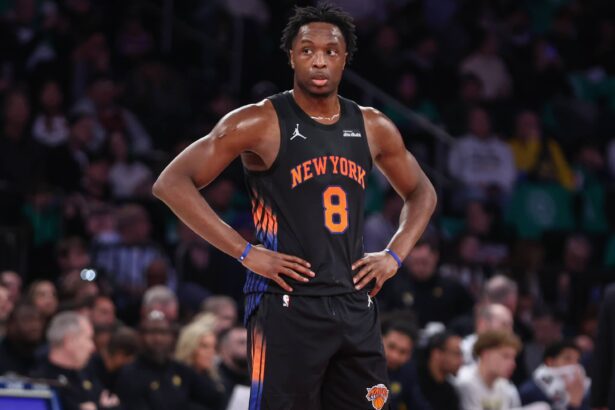
The Knicks are not only a Brunson team now. They have Mikal Bridges, OG Anunoby, Josh Hart, Towns, a surprising threat in Landry Shamet, and enough size to change coverages. That is why this choice is close. The Thunder are better than the Spurs in several areas, but the Knicks have the guns to compete with both.
Why The Thunder Are The Nightmare Matchup
The Thunder are the more dangerous opponent because they have fewer weak points. They went 64-18, finished first in the West, had the No. 1 defensive rating in the regular season at 106.5, and had the best net rating in the NBA at +11.1. That is not only a good team. That is a clear-cut championship favorite before the playoffs even started.
The playoff numbers still hold up. The Thunder are second in playoff offensive rating at 120.1, sixth in defensive rating at 109.4, and second in net rating at +10.7. They are also second among remaining teams in eFG at 55.8%, sixth in offensive rebound rate at 32.7%, fifth in turnover percentage at 13.1%, and tied for first in assist-to-turnover ratio at 2.0. That is a bad matchup for the Knicks because the Knicks’ defense has been built on forcing bad possessions. The Thunder don’t give many away.
Shai Gilgeous-Alexander is the main reason. In Game 5 against the Spurs, he had 32 points and 9 assists, creating 55 total points in a 127-114 Thunder win. He also leads the Thunder in the Western Conference Finals at 26.2 points and 9.8 assists per game. That is a different kind of pressure than Wembanyama. Wembanyama changes the rim. Gilgeous-Alexander changes every possession at the point of attack.
The Knicks have defenders for him. Bridges, Anunoby, and Hart can all take stretches. But Gilgeous-Alexander is not a player who needs to beat one defender. He gets to the elbow, forces help, gets to the line, and turns small defensive mistakes into free throws or open shots for teammates. The Knicks just held Mitchell, Harden, and the Cavaliers to a bad series, but Gilgeous-Alexander is more stable than that version of the Cavaliers’ guards. He also has better spacing and a deeper bench around him.
The regular-season meetings are another warning. The Thunder beat the Knicks 103-100 on March 4, with Chet Holmgren scoring 28 points and Gilgeous-Alexander scoring 26. They also beat the Knicks 111-100 on March 29, with Gilgeous-Alexander putting up 30. Two games don’t decide a Finals matchup, but the Thunder already showed they can drag the Knicks into lower-scoring games and win late.
The Thunder also have more defensive tools against Brunson than the Spurs do. Luguentz Dort can absorb contact. Alex Caruso can pressure the ball and make Brunson work before the action starts. Cason Wallace gives them another guard defender. Chet Holmgren and Isaiah Hartenstein give them length behind the first line. Even with Jalen Williams out with a left hamstring strain, the Thunder still have enough bodies to change matchups.
Bench scoring is another problem. The Thunder have outscored the Spurs 257-127 in bench points through five games of the Western Conference Finals. That is not a small edge. It means the Knicks would have to win Brunson minutes and also survive the non-Brunson stretches against a team that can keep pressure with Caruso, Wallace, Jared McCain, Isaiah Joe, and other role players.
The Thunder are not perfect. Jalen Williams being out changes their half-court ceiling. Ajay Mitchell is also out with a right calf strain, and that removes some creation and depth. But the Thunder still have the best player left in the West, elite defensive habits, enough shooting, and home court. If the Knicks face them, the series becomes a guard-defense test every night.
Why The Spurs Are The Better Matchup For The Knicks
The Spurs are still dangerous. They won 62 games, finished second in the West, had an 118.7 offensive rating, a 110.4 defensive rating, and a +8.4 net rating in the regular season. That was the second-best net rating in the league behind the Thunder. They are not a lucky team. They are a real Finals-level roster.
But the Knicks should still prefer them because their pressure points are easier to define. The Spurs play faster than the Thunder. Their playoff pace is 99.4, second among playoff teams, while the Knicks are at 96.5. The Spurs also have a higher turnover issue. Their playoff turnover percentage is at 11th on 15.4%, while the Thunder are fifth at 13.1% and the Knicks are seventh at 14.0%. Against the Knicks’ wings, that is a real concern.
Wembanyama is the whole problem. He leads the Spurs in the playoffs with 22.9 points, 11.1 rebounds, and 3.7 blocks per game. He also leads them in the Western Conference Finals at 28.2 points, 11.8 rebounds, and 3.0 blocks. Those numbers are huge. He can erase drives, shoot over the top, punish small lineups, and control the defensive glass. There is no normal answer for him.
The difference is that the Knicks can at least build a plan around him. Towns can pull him away from the rim. Brunson can force him into screen decisions. Anunoby and Bridges can cut behind overhelp. Hart can crash the glass when Wembanyama steps up. The Knicks don’t need to beat Wembanyama one-on-one. They need to make him cover space, not only the rim.
The regular-season matchups help this argument. The Spurs beat the Knicks 134-132 on December 31, but the Knicks beat them 114-89 on March 1. In that March game, Bridges had 25 points, and Brunson had 24 as the Knicks ended the Spurs’ 11-game winning streak. The Knicks also beat the Spurs 124-113 in the NBA Cup final, with Anunoby scoring 28 and Brunson adding 25. The Knicks have already shown a better scoring path against the Spurs than against the Thunder.
The Spurs’ guard group is good, but less scary than the Thunder’s. Stephon Castle is averaging 19.5 points and 6.6 assists in the playoffs. De’Aaron Fox is at 17.4 points and 5.9 assists. Devin Vassell is at 13.2 points. Dylan Harper has 12.8 points off the bench and became only the third Spurs rookie with 200-plus playoff points, joining David Robinson and Manu Ginobili. That is strong production, but it is also young and more unstable.
Fox is the player who can change the matchup. If he is healthy and getting downhill, the Spurs can attack the Knicks before the defense is set. But he has not owned the Western Conference Finals. In Game 5, he had 8 assists, but the Spurs still lost by 13. In the series, Castle is their assist leader at 7.6 per game, not Fox. That tells part of the story. The Spurs are depending on a second-year guard and a rookie for major playoff creation.
The Knicks would rather test that than test Gilgeous-Alexander. Wembanyama can be the best player in a game and still need enough guard control around him. Gilgeous-Alexander can control the game himself. That is the difference in a Finals setting.
The Spurs also have the fatigue problem. They are trying to beat the Thunder in a long, physical Western Conference Finals. The Knicks are waiting with extra rest after the sweep. That rest edge would mean more against the Spurs because their offense asks Wembanyama, Castle, Fox, and Vassell to carry hard minutes. Wembanyama played 38 minutes in Game 5, scored 20 points, and shot 4-for-15 from the field. He still went 12-for-12 at the line and had 3 blocks, but the legs did not look the same.
That is not a reason to dismiss the Spurs. It is a reason to prefer them. The Thunder have injuries, but they still have the better playoff guard and the better bench. The Spurs present the bigger single matchup problem, but more ways for the Knicks to target the whole structure.
The Tactical Approach Favors The Knicks More Against The Spurs
Against the Thunder, the Knicks’ biggest issue would be ball pressure. Brunson would see Dort, Caruso, Wallace, and different help angles behind them. The Thunder can press him early, send a second defender late, and still recover to shooters. That is where Brunson has to work the hardest. If the Thunder make Brunson spend 18 seconds to get into the action, the Knicks’ offense becomes more Towns-dependent.
That is not a bad option because Towns has been excellent. His playoff line is 16.9 points, 10.6 rebounds, 5.9 assists, 1.2 steals, and 1.4 blocks. He is also shooting 57.2% from the field and 48.9% from three. But against the Thunder, Towns also has to defend Holmgren or Hartenstein, rebound through size, and avoid foul trouble. If he is pulled into too much rim coverage against Gilgeous-Alexander, the Knicks lose some of their defensive rebounding.
Against the Spurs, Towns’ offense becomes more valuable. If Wembanyama guards him, Towns can take him to the perimeter and open the paint. If Wembanyama guards a non-shooter or stays near the rim, Towns can work as a high-post passer. Towns changed the Knicks’ offense by becoming a hub, especially with Brunson using off-ball screens and cuts around him. That action is harder for Wembanyama to control if he is away from the basket or leaving the Knicks’ wings open to cover the rim.
Those wings also match better with the Spurs than with the Thunder. Bridges and Anunoby can guard Vassell, Castle, Fox, Harper, and Champagnie without being undersized. Hart can rebound down. The Knicks can switch more possessions. Against the Thunder, the problem is not size. The problem is Gilgeous-Alexander’s ability to punish every switch with angles, pump fakes, and free throws.
The glass is another point. The Knicks have a 34.0% offensive rebound rate in the playoffs, third among playoff teams. The Spurs are a very big team, but they also play lineups where Wembanyama has to contest above the floor. If the Knicks can pull him out, Hart, Anunoby, Bridges, and Towns can attack the second shot. Against the Thunder, Hartenstein and Holmgren make those second chances harder, and the Thunder are sixth in playoff offensive rebound rate themselves at 32.7%.
Transition is also different. The Spurs play at a faster pace and can look scary when Castle, Fox, and Harper run. But faster games also help the Knicks’ wing athletes. The Knicks destroyed the Cavaliers in Game 4 by winning transition points 33-9 and second-chance points 32-5. That is exactly the kind of math that can hurt the Spurs if their shot selection gets loose.
The Thunder are more controlled. Their playoff assist-to-turnover ratio is 2.0, tied for first among playoff teams. Their turnover percentage is 13.1%, fifth. That means fewer runouts for the Knicks. It also means the Knicks must score more in the half-court against set defenders. That is a worse route.
The Spurs give the Knicks more obvious pressure points: young guards, fatigue, turnover risk, Wembanyama’s defensive positioning, and possible shot variance from their role players. The Thunder give the Knicks fewer pressure points: elite guard creation, better regular-season defense, lower turnover rate, better bench production, and recent success against the Knicks.
Final Verdict: The Knicks Should Want The Spurs
The Knicks should prefer the Spurs in the NBA Finals.
The Thunder are the stronger team on paper and the worse matchup. They went 64-18, had the league’s best regular-season net rating, and had the No. 1 regular-season defense. In the playoffs, they are second in offensive rating, second in net rating, and first in the ball-security stats that hurt a defense like the Knicks. They also beat the Knicks twice this season, including one low-scoring game where Holmgren and Gilgeous-Alexander carried the offense.
The Spurs have the scariest player physically. Wembanyama can win a Finals game by himself if he gives them 35 points, 15 rebounds, and 5 blocks. He already had 41 points and 24 rebounds in Game 1 of the Western Conference Finals. But the Spurs are more dependent on a young core, and their series against the Thunder has already shown signs of strain.
The Knicks’ biggest strengths fit better against the Spurs. Towns can pull Wembanyama into space. Brunson can attack young guards. Bridges and Anunoby can handle the wing assignments. Hart can crash weak-side boards. The Knicks can also use their offensive rebounding and transition pressure against a faster Spurs team.
Against the Thunder, every part is harder. Brunson has more defenders in front of him. Gilgeous-Alexander puts more pressure on the Knicks’ help defense. Hartenstein and Holmgren make the glass harder. The bench gap is harder to control. The Thunder also have the title experience that the Spurs don’t have yet.
The Knicks can beat either team. Their playoff sample is too strong to say otherwise. A team this dominant in the playoffs is not just waiting to be exposed. It is a real title team. But if the question is who the Knicks would rather see, the answer is the Spurs.
The Thunder are the more complete opponent. The Spurs are dangerous because of Wembanyama. The Thunder are dangerous because of everything around Gilgeous-Alexander. In a seven-game Finals, that difference is enough.