The Los Angeles Lakers enter the 2026 NBA Playoffs facing one of the most difficult situations of any contender. On paper, a 53–29 record and the fourth seed in the Western Conference signal a strong season.
In reality, the timing of injuries has completely reshaped their outlook. Both Luka Doncic and Austin Reaves went down in the same game late in the season, and both are expected to miss at least the first round. That shifts everything onto LeBron James, who at 41 now returns to a role he had slowly moved away from during the regular season.
Starters
Luke Kennard, Marcus Smart, LeBron James, Rui Hachimura, Deandre Ayton
Luke Kennard steps into a much larger role after arriving midseason and quietly becoming one of the most efficient shooters on the roster. He averaged 9.0 points, 2.6 rebounds, and 2.4 assists while shooting 52.7% from the field and 44.8% from three-point range. His role is clear. Space the floor, move without the ball, and punish defensive collapses created by LeBron. Without elite shot creators next to him, his shooting becomes even more important.
Marcus Smart brings a completely different dimension. He averaged 9.3 points, 2.8 rebounds, 3.0 assists, and 1.4 steals while shooting 39.5% from the field and 33.1% from three. His offensive numbers do not stand out, but his defensive presence does. Smart sets the tone on that end, takes the toughest perimeter assignment, and provides secondary playmaking. In a playoff setting where possessions slow down, his ability to disrupt opposing guards becomes critical.
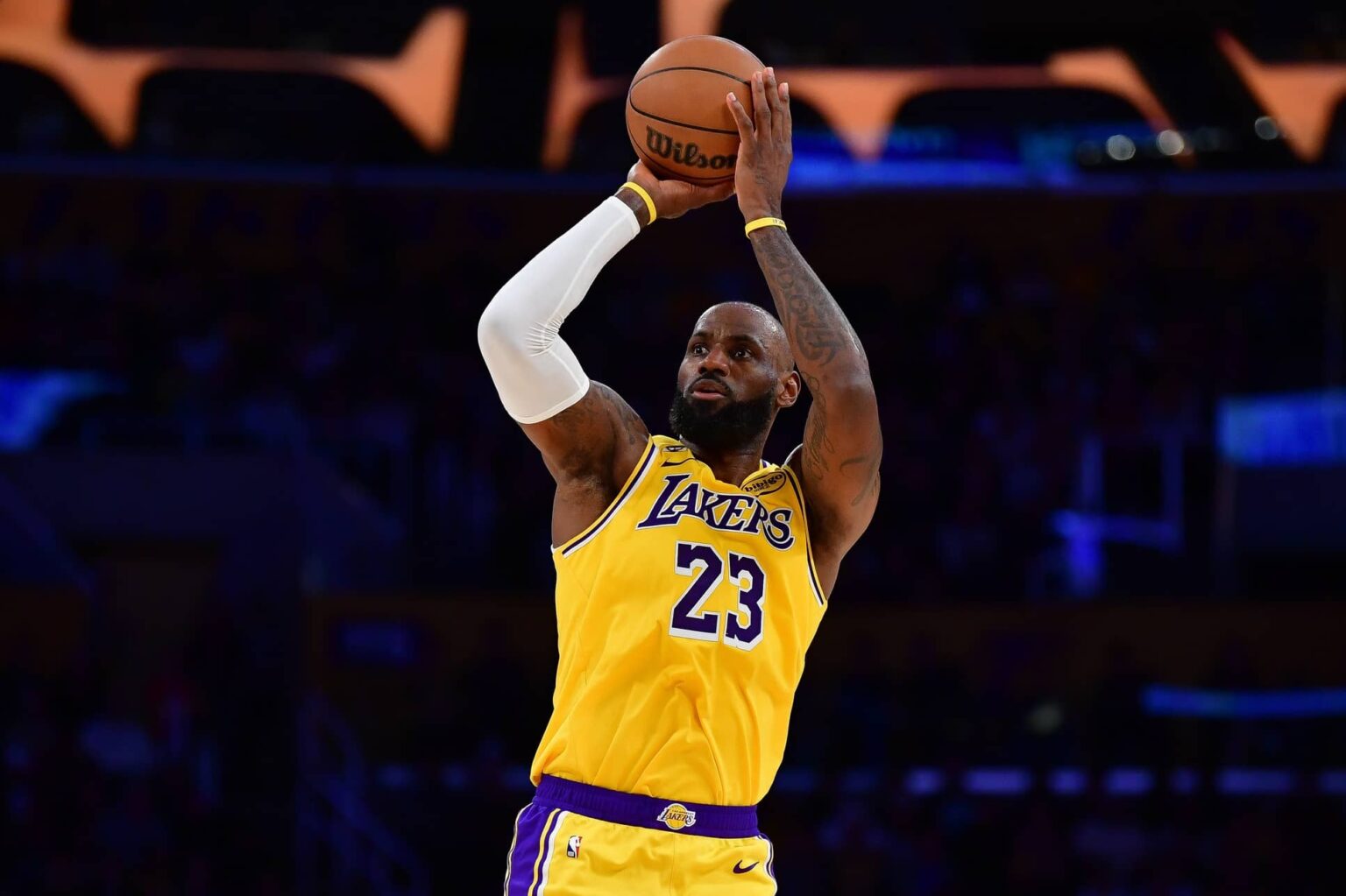
Everything revolves around LeBron now. He averaged 20.9 points, 6.1 rebounds, and 7.2 assists this season while shooting 51.5% from the field and 31.7% from three. Those numbers reflect a reduced role during the year, as he operated behind Doncic and Reaves. That version no longer exists. Over the last stretch without them, his production has surged, and the Lakers now depend entirely on his ability to control tempo, create offense, and close games.
Rui Hachimura returns to the starting lineup after spending time as a bench scorer earlier in the season. He averaged 11.5 points, 3.3 rebounds, and 0.8 assists while shooting 51.4% from the field and 44.3% from three. His role is straightforward. Attack mismatches, finish efficiently, and provide scoring relief next to LeBron. His ability to hit open threes will dictate how defenses space the floor.
Deandre Ayton anchors the interior. He averaged 12.5 points and 8.0 rebounds while shooting 67.1% from the field, the most efficient season of his career. His game has simplified. Run the floor, set strong screens, roll hard, and finish at the rim. In the absence of perimeter creators, Ayton’s rim pressure becomes a key offensive tool.
Bench
Bronny James, Nick Smith, Dalton Knecht, Jake LaRavia, Adou Thiero, Chris Manon, Jarred Vanderbilt, Maxi Kleber, Jaxson Hayes, Drew Timme
The bench is where the Lakers face their biggest concern. There is depth, but not enough proven playoff shot creation. Jake LaRavia has been a steady contributor, averaging 8.2 points and around 4 rebounds, providing energy and versatility.
Jaxson Hayes adds athleticism and vertical spacing with 7.5 points and 4.1 rebounds, often thriving in pick-and-roll situations. Jarred Vanderbilt brings defense, averaging 4.4 points and 4.5 rebounds, and will likely be used in specific matchups, especially against elite wings.
Beyond that, the rotation becomes more uncertain. Bronny James has shown improvement late in the season and could see limited minutes as a secondary guard option. Nick Smith Jr., recently signed to a standard deal, offers scoring bursts and perimeter shooting. Dalton Knecht, Drew Timme, Maxi Kleber, and Adou Thiero round out the rotation, each likely playing small roles depending on matchups.
The absence of Doncic and Reaves cannot be overstated. Doncic averaged 33.5 points, 7.7 rebounds, and 8.3 assists while shooting 47.6% from the field and 36.6% from three. He was the offensive engine and an MVP-level presence. Reaves added 23.3 points, 4.7 rebounds, and 5.5 assists on 49.0% shooting and 36.0% from three, emerging as a legitimate second star.
Losing both removes over 56 points per game and the majority of the team’s playmaking.
Closing Lineup
Luke Kennard, Marcus Smart, LeBron James, Rui Hachimura, Deandre Ayton
The closing lineup will likely mirror the starters, but there is an important layer to how that group functions in high-pressure moments. The combination of LeBron James, Marcus Smart, Luke Kennard, Rui Hachimura, and Deandre Ayton offers solid spacing and defensive flexibility, but it also comes with a clear limitation. There is only one true high-level creator on the floor.
LeBron becomes the entire system in closing situations. Every possession will run through him, whether it is initiating pick and roll with Ayton, kicking out to shooters like Kennard and Hachimura, or controlling tempo late in games. That level of responsibility is not new for him historically, but at 41, sustaining that across a full playoff series presents a different kind of challenge.
Road To The NBA Finals
The road ahead is unforgiving. The Lakers face the Houston Rockets in the first round. During the regular season, they had success in this matchup, winning the season series 2-1, but that came with a healthy roster. Without Doncic and Reaves, the dynamic shifts completely. The Rockets bring youth, athleticism, and scoring depth, which could overwhelm a short-handed Lakers rotation.
If the Lakers somehow advance, they will likely face the defending champion Oklahoma City Thunder. That matchup heavily favors Oklahoma City, a team that has already dominated the Lakers this season, sweeping them 3-0 in the season series. The only scenario where the Lakers become competitive is if Doncic and Reaves return during that series.
Beyond that, a potential Western Conference Finals matchup against the San Antonio Spurs, who lost the season series 3-1, or the Denver Nuggets, against whom they won the season series 2-1, awaits. Both teams have size, depth, and continuity, areas where the Lakers are currently vulnerable.
Everything comes down to survival. If LeBron can carry the load long enough and extend the series, there is a chance reinforcements arrive. If not, the Lakers’ season may end quickly despite all the promise they showed during the regular year.