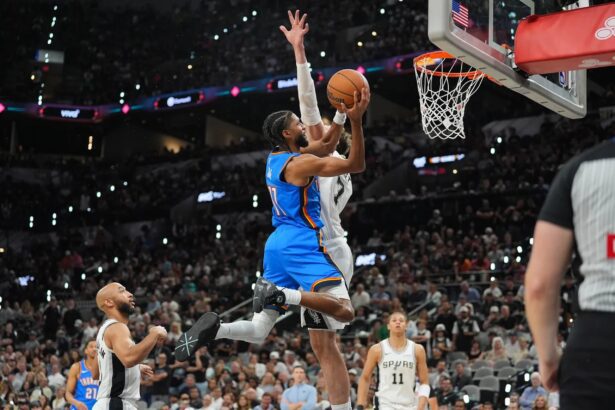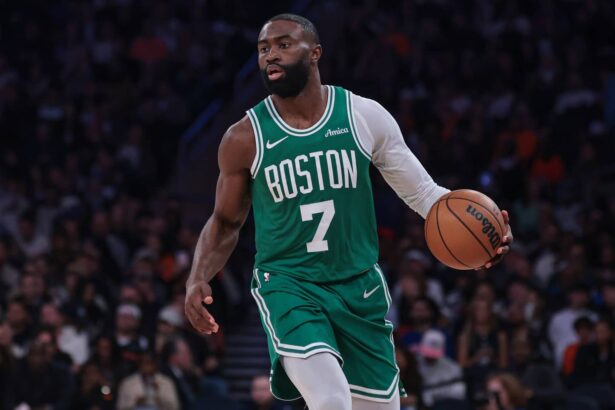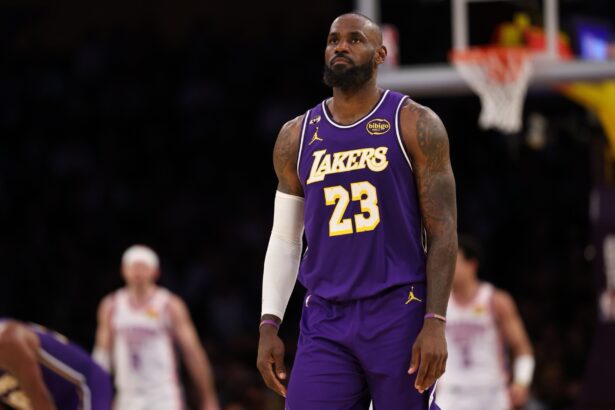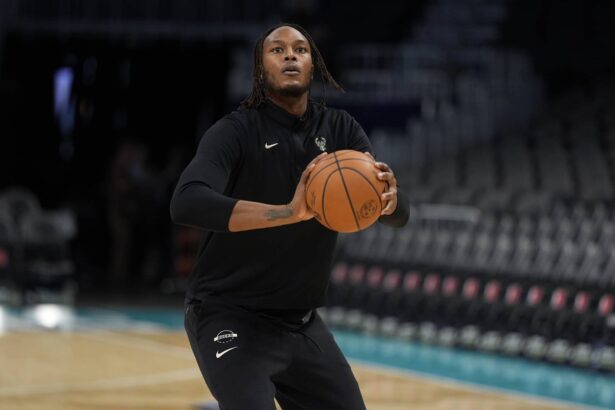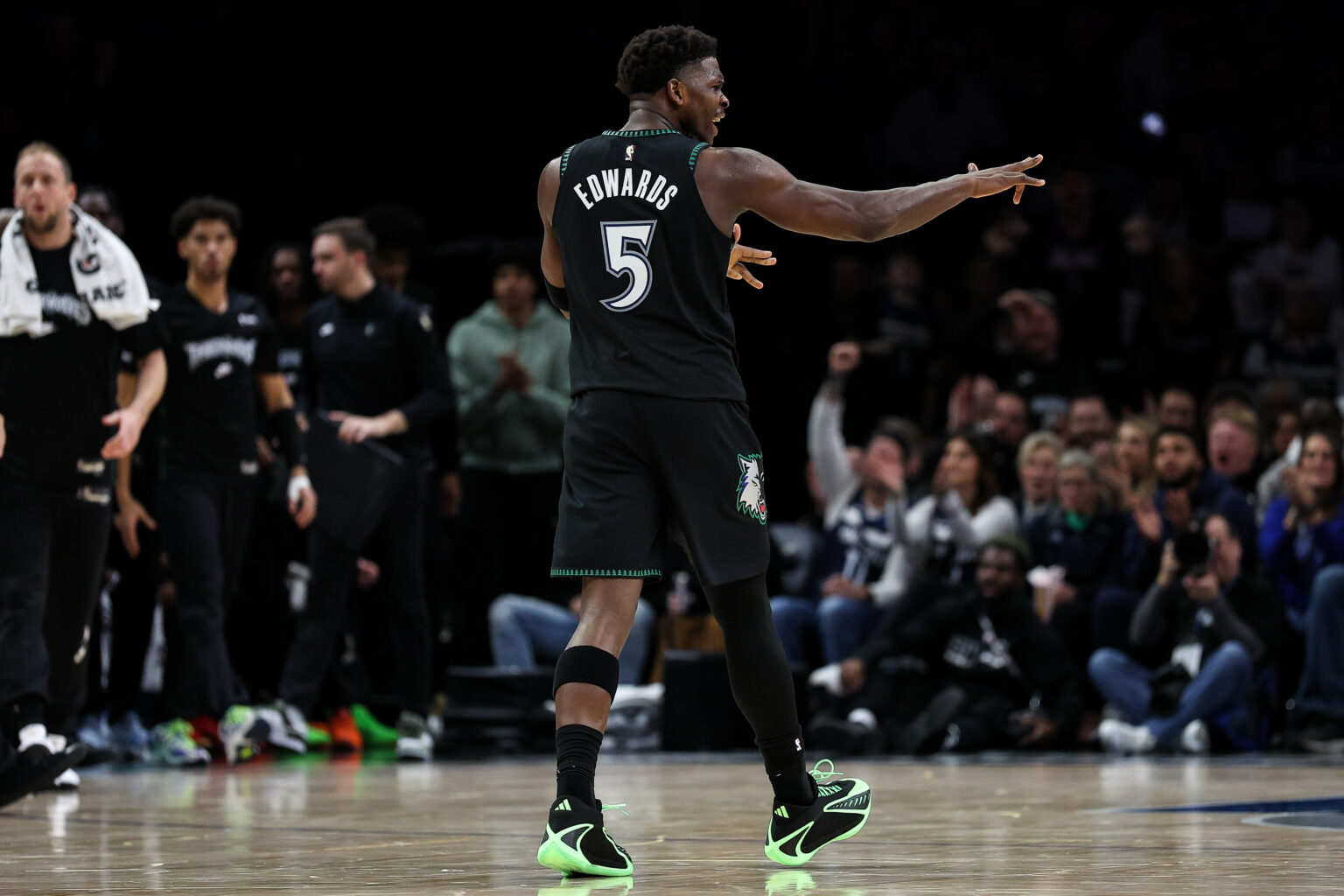
The Timberwolves experienced a great opportunity to capitalize on Anthony Edwards‘ record-breaking performance as he scored 32 points on 13-of-18 shooting while also registering his 102nd 30-point game to become the franchise’s all-time leading scorer for 30-plus point games. Julius Randle provided tremendous support with a double-double (22 points, 12 assists, 6 rebounds) and by helping Minnesota finish strong in a dominant fourth quarter after being down by four points at the end of three quarters.
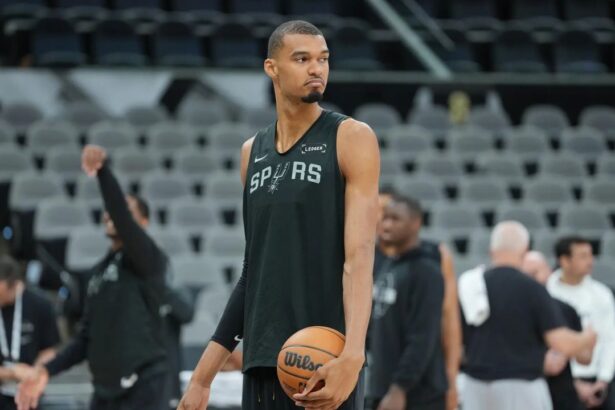
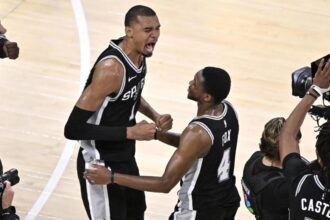
The Timberwolves dominated the fourth quarter, outscoring the Spurs 36 to 19, with Donte DiVincenzo and Naz Reid combining for back-to-back three-point scores early in the quarter to trigger the scoring burst. Although the Spurs were missing Victor Wembanyama due to a left calf strain, they relied on De’Aaron Fox’s 25 points as well as a combined total of 44 points from Devin Vassell and Keldon Johnson as their main offensive contributors.
Unfortunately, the Spurs’ offense struggled to score late in the game while Minnesota’s offense began to click on all cylinders, as evidenced by its balanced scoring with six Wolves players scoring double-digit points, thereby leading to Minnesota securing the second win of its two-game homestand. Minnesota’s hot shooting (56 percent overall and 17 of 37 from beyond the arc) made it too difficult for the Spurs to overcome after finishing its four-game road trip. Let’s dive into the four major takeaways of this game.
1. Edwards’ 32 Point Game Creates Franchise Record
Edwards’ 32-point game provided the Timberwolves with the win they so greatly needed and will change the history of the Timberwolves franchise. He shot 13/18 from the field, demonstrating complete control of the Timberwolves’ offense. Edwards also shot 4/6 from downtown, helping the Timberwolves regain control of the game when they lost the momentum to the San Antonio Spurs late in the game.
His performance was even more impressive given the fact that, despite a poor start and six turnovers in the first half (five in the first quarter), Edwards finished the first half with 16 points, shooting 7/9 from the field. Edwards knocked down eight of the Timberwolves’ final 24 points, and all eight were scored in the fourth quarter. When the fourth quarter began, Edwards was in a rhythm that San Antonio could not disrupt.
With Edward’s 30-point performance this season, he surpassed Karl-Anthony Towns as the franchise leader in career games with 30 points scored or more in a career. Edward’s performance included six assists and three rebounds; he also finished the game with a +1 plus/minus rating, indicating the Timberwolves performed very well when Edwards was on the court.
2. Julius Randle Orchestrated Minnesota’s Offense
Randle was not the player of the game, but he did a lot for the Wolves’ win. He helped set up multiple scoring opportunities for Minnesota by getting assists (12 total) while also scoring (22 pts on 9-15 shooting). When San Antonio focused their defense on Edwards, Randle became Minnesota’s primary option and used his passing to take advantage of their defensive rotations on a consistent basis. Minnesota’s 35 assists as a team were more than double that of San Antonio’s 17 assists. On a night where Julius Randle had his best all-around offensive performance of the season, his eight rebounds helped to round out what was one of the most balanced games he has had this year.
The fourth quarter was where Julius Randle made the biggest impact during the final stretch of Minnesota’s knockout run. Several times throughout the quarter, Randle passed the ball out to DiVincenzo and Naz Reid, which helped to get Minnesota going with back-to-back 3-point shots to begin the quarter. Randle led all players with a +30 plus/minus rating, demonstrating how much of an impact he had on the game when he was in the game. Randle had a quietly impressive evening while the evening was focused on Edwards’ milestone.
3. Minnesota’s 3-Point Barrage Was The Difference
Minnesota Timberwolves not only won the game, but they also dominated the 3-point shot and completely defeated San Antonio from the 3-point line. The Timberwolves went 17 for 37 from 3-point land (46% from 3) and outscored San Antonio by 27 points from 3-point range. In the first few minutes of the fourth period, quick offensive sequences by Minnesota helped set the tone of the game: Donte DiVincenzo (2 back-to-back 3 pointers) and Naz Reid (2 back-to-back 3 pointers) both hit 3 pointers to give Minnesota a double-digit lead that changed the momentum of the game. Donte finished with 18 points (4-9 from deep) and Naz finished with 15 points (3-7 from deep).
On the other hand, San Antonio struggled from 3-point territory (8-33, 24%) but was able to score a lot of points inside (58 points came in the paint). The deficit became virtually insurmountable when Minnesota exploded offensively from three as both Mike Conley (3-7) and Johnny Juzang (2-2) created important spacing for the Minnesota bench. In a league today where the 3-point battle generally is the difference maker, the Timberwolves won that battle convincingly.
4. De’Aaron Fox Kept the Spurs Afloat, But Supporting Cast Was Outmatched
Darren Fox was the Spurs’ main scorer with 19 first-half points and scored 25 points total after establishing his success getting down the floor quickly off his initial attack in transition. Minnesota’s defense got in the way of many of these opportunities during the 4th quarter, but Fox continued to create offense for his teammates until the final quarter, when Minnesota began locking down their perimeter defense, and San Antonio lost their secondary offense.
As a result, along with Minnesota going on a 3-point shooting run, San Antonio struggled to come back in the 4th quarter. In addition to Darren Fox’s performance, the Spurs received solid contributions offensively from both Keldon Johnson and Devin Vassell, with 22 points, although neither player shot well from beyond the arc, both combining for only 2 made 3’s out of 15 attempts.
The Spurs finished the game with only 17 assists compared to 35 assists for Minnesota, which reflects how stagnant the Spurs’ offense became during the final stretch of the game. San Antonio could not create enough of a response to Minnesota’s outside shooting due to Victor Wembanyama not being available for the game, and they sorely missed him.