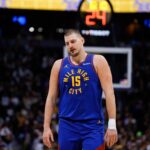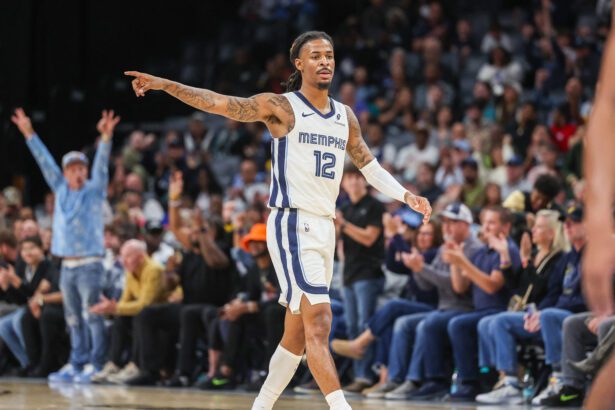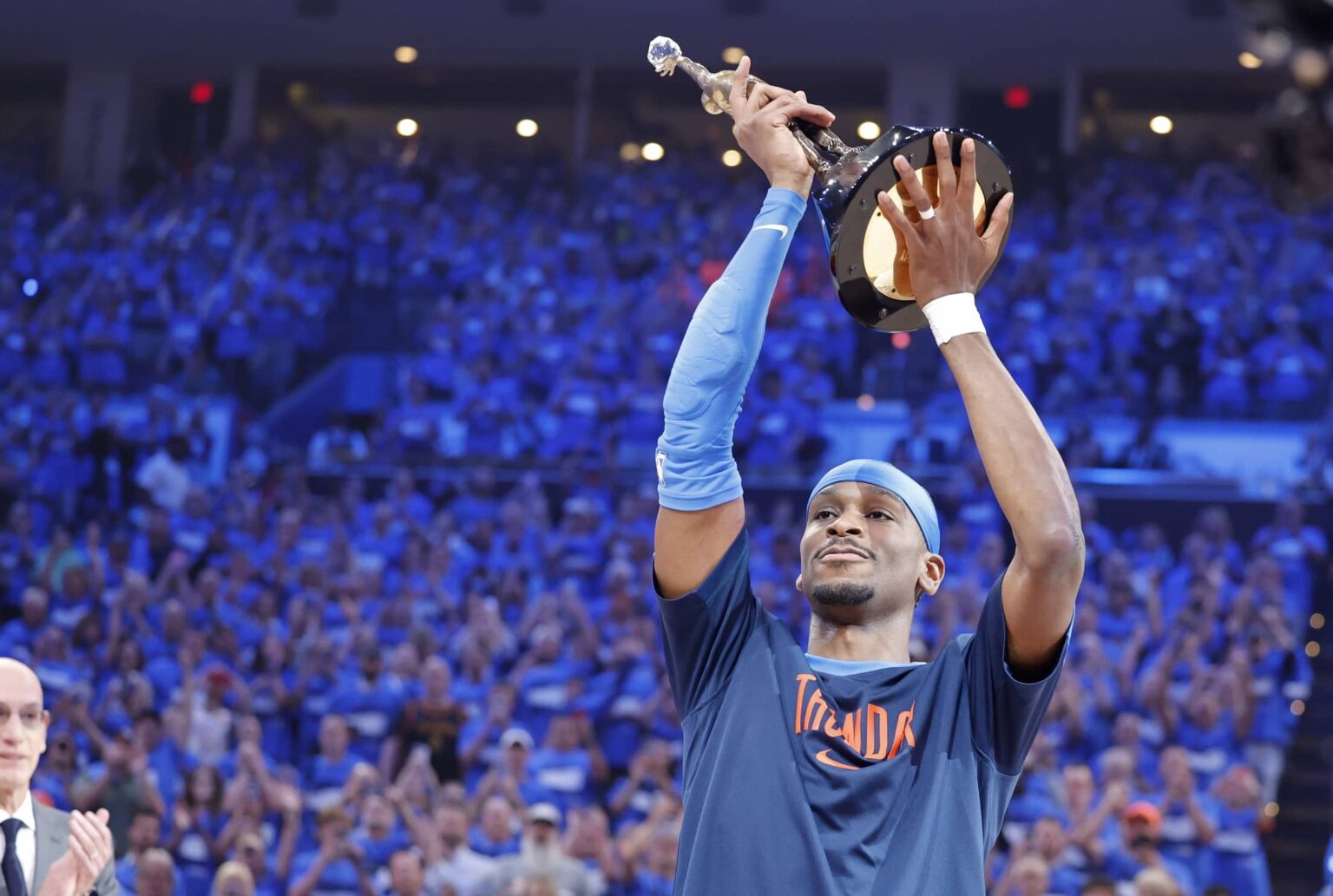
Shai Gilgeous-Alexander is chasing something that has become rare even in an era defined by superstar control. Over the last 30 years, only a small group of players have won the NBA MVP award in back-to-back seasons. That amount shows how high the bar really is. Winning one MVP puts a player in elite company. Winning two in a row places him in a much smaller historical tier.
Gilgeous-Alexander already cleared the first step by winning the 2024-25 MVP, and he has put himself in position to make a serious run at another one. NBA.com’s latest MVP Ladder has him back at No. 1, which means this is no longer just a hypothetical.
It is a real late-season debate with historical weight behind it. If he finishes the job, Gilgeous-Alexander would become the first player since Nikola Jokic to win back-to-back MVPs and the first guard since Stephen Curry to do it.
Here are the NBA players who actually pulled it off over the last 30 years.
Tim Duncan: 2001-02, 2002-03.
Steve Nash: 2004-05, 2005-06.
LeBron James: 2008-09, 2009-10.
LeBron James: 2011-12, 2012-13.
Stephen Curry: 2014-15, 2015-16.
Giannis Antetokounmpo: 2018-19, 2019-20.
Nikola Jokic: 2020-21, 2021-22.
1. Tim Duncan (2001-02, 2002-03)
Tim Duncan’s back-to-back MVP run did not need hype. It was built on control, defense, and the kind of consistency that used to define the Spurs. In 2001-02, Duncan averaged 25.5 points, 12.7 rebounds, 3.7 assists, and 2.5 blocks in 82 games and won his first MVP.
The Spurs finished 58-24, the same record they posted the year before, which says a lot about what his value looked like at that stage. He was not lifting a surprise team. He was keeping a contender at the top and doing it as the league’s most stable two-way force in the frontcourt.
The numbers from that first MVP season still look like a franchise cornerstone at full strength. Duncan scored efficiently, protected the rim, and cleaned the glass without dominating the ball in the way perimeter stars usually do. That is what made his case different. It was not built around volume alone. It was built around the fact that he could anchor almost every part of a winning structure.
Offensively, he gave the Spurs a reliable half-court foundation. Defensively, he remained the piece that held everything together. The stat line was excellent. The larger point was that his game traveled every night and against every style.
Then came 2002-03, which remains the stronger of the two seasons because it added the cleanest possible finish. Duncan averaged 23.3 points, 12.9 rebounds, 3.9 assists, and 2.9 blocks, won MVP again, and pushed the Spurs to a 60-21 record. The raw scoring dipped a little, but the rebounding, playmaking, and rim protection all stayed elite. He was still the axis of the team, only now the regular season ended with the full championship validation that voters and history both recognize.
That title run is a major part of why Duncan’s back-to-back MVP stretch still holds weight. The Spurs won the 2003 championship, Duncan took Finals MVP, and the season also closed the David Robinson era with one more title. That gave the entire run a sense of completion. It was not just a case of a great regular-season player stacking awards. It was the best player on a contender proving that the regular season dominance was real all the way through June.
2. Steve Nash (2004-05, 2005-06)
Steve Nash’s back-to-back MVPs still feel unusual because they force a simple question. How valuable does a player have to be if he is not leading the race with scoring, yet everything around him changes the moment he arrives?
In 2004-05, he averaged 15.5 points, 11.5 assists, and 3.3 rebounds while shooting 50.2% from the field, 43.1% from three, and 88.7% from the line. More importantly, the Suns jumped from 29-53 the year before to 62-20 with Nash running the offense. That kind of swing is impossible to ignore.
That season was really about transformation. The Suns scored 110.4 points per game and finished first in the Western Conference. Nash did not win because his box-score line looked overwhelming next to every other superstar. He won because he was the organizer of the league’s fastest, smartest, and most dangerous offense. His value showed up in pace, spacing, shot quality, and the way the entire team played with him on the floor. There are MVP seasons built on accumulation. Nash’s first one was built on effect.
The second MVP is the one that makes the case stronger. In 2005-06, Nash raised his scoring to 18.8 points per game, still averaged 10.5 assists, and shot 51.2% from the field, 43.9% from three, and 92.1% from the line. The Suns finished 54-28 and returned to the Western Conference finals. On the surface, the record was worse than the year before. The context is what changed the discussion. Amar’e Stoudemire was lost to microfracture knee surgery before the season, and the team still stayed near the top of the West with Nash carrying even more offensive creation.
That is why the 2006 award remains easier to defend than many people think. Without Stoudemire for almost the entire season, Nash still guided a 54-win team that scored 108.9 points per game and finished second in the conference. His own numbers improved, but the stronger point is that the style held. The ball still moved, the floor still opened up, and the offense still looked like the most modern thing in the league. It was not just that Nash played well. It was that the Suns still looked unmistakably like the Suns because he was there.
No player on this list changed how to read a game in quite the same way. Over those two MVP seasons, he averaged 17.2 points and 11.0 assists combined, but the larger story was the offense he engineered and the immediate team lift that came with him.
3. LeBron James (2008-09, 2009-10)
By the time LeBron James won his first MVP, the real debate was no longer about talent. It was about authority. The league already knew he could overwhelm games. What changed in 2008-09 was that the regular season started to belong to him in a way it had not before. James averaged 28.4 points, 7.6 rebounds, 7.2 assists, 1.7 steals, and 1.1 blocks, and the Cavaliers finished 66-16 with the best record in the NBA. It was the best season in franchise history to that point, and it turned James into the first player in Cavaliers history to win the award.
What made that season so strong was how complete it looked. James was not just a scorer carrying a heavy load. He was doing everything. He rebounded like a forward, passed like a guard, defended at a high level, and pushed the Cavaliers from a 45-37 team the year before to 66-16. He was no longer just the most gifted player in the league. He was driving elite success at a level that matched the production.
The second MVP season was even sharper statistically. In 2009-10, James averaged 29.7 points, 7.3 rebounds, and 8.6 assists, and the Cavaliers finished 61-21, which was still the best record in the league. The previous year had already established the standard. The next season confirmed it was not a one-year spike.
There is also a useful difference between the two years. The first MVP felt like an arrival. The second felt like control. In 2008-09, James announced himself as the best regular-season player in the league. In 2009-10, he backed it up with even more scoring and playmaking while keeping the Cavaliers at the top of the standings. That is what separates a back-to-back MVP from a single great year. The standard rises, the pressure rises, and the player still produces a season that looks undeniable next to the rest of the field.
James would win back-to-back again in 2011-12 and 2012-13 with the Heat, making him the only player in the last 30 years to produce two separate back-to-back MVP runs. That context makes the Cavaliers’ stretch look even bigger in retrospect. It was the start of a part of his career when being the best player in basketball stopped sounding like a projection and became a fact.
4. LeBron James (2011-12, 2012-13)
This was the version of LeBron James that left very little room for debate. The first Cleveland MVP run established him as the best regular-season force in the league. The Heat years turned that into something sharper. By 2011-12 and 2012-13, James was no longer just overwhelming games with talent. He was controlling them with a much cleaner understanding of when to score and when to pass.
In the shortened 2011-12 season, James averaged 27.1 points, 7.9 rebounds, and 6.2 assists while shooting 53.1% from the field. The Heat finished 46-20, the second-best record in the league, and James won his third MVP and first NBA title.
What made that season strong was not only the production. It was the way everything looked easier. He scored at a high volume, defended multiple positions, and remained the center of a team with real championship pressure after the 2011 Finals loss to the Mavericks. The regular season made one thing clear: he had answered that disappointment the right way.
Then came 2012-13, which was even better. James averaged 26.8 points, 8.0 rebounds, and 7.3 assists while shooting 56.5% from the field, a remarkable number for a player with that level of offensive responsibility. The Heat went 66-16, the best record in the NBA, and ripped off a 27-game winning streak, still one of the longest in league history. James won his second championship, won MVP again, and finished one vote short of being the first unanimous winner before Stephen Curry later did it.
The second MVP is the one that really defines this run. James was not chasing scoring titles or posting empty numbers. He was doing everything at an elite level while making the game look efficient and under control. The Heat had star power, but this was still clearly his team, his tempo, and his season.
5. Stephen Curry (2014-15, 2015-16)
Some MVP runs confirm greatness. Stephen Curry changed the league. The Warriors had already started to build a strong identity, but those two seasons turned Curry from an All-NBA guard into the player defenses could no longer solve. In 2014-15, he averaged 23.8 points, 7.7 assists, 4.3 rebounds, and 2.0 steals while shooting 48.7% from the field, 44.3% from three, and 91.4% from the line.
The Warriors went 67-15, finished with the best record in the league, became NBA champions for the first time in over 40 years, and Curry won his first MVP. That season was not about raw scoring volume as much as total offensive control. He dictated pace, stretched the floor beyond reason, and turned every Warriors possession into a problem.
What made that first MVP season stand out was how complete the effect was. It showed how much space and movement the Warriors created around him. His shooting was the headline, but the gravity on defenses was the larger story. Teams had to pick him up early, chase him through actions, and then deal with the ball movement that followed once the defense bent out of shape. That was the start of the Warriors becoming the standard for modern offense.
Then the second MVP season went from elite to historic. In 2015-16, Curry jumped to 30.1 points, 6.7 assists, 5.4 rebounds, and 2.1 steals per game while shooting 50.4% from the field, 45.4% from three, and 90.8% from the line.
The Warriors went 73-9, still the best regular-season record in NBA history. Curry also set the single-season record with 402 made threes and became the first unanimous MVP in league history. That combination is why his repeat still feels different from the others on this list. Most back-to-back winners stack dominance. Curry paired dominance with a real stylistic break from what the league had looked like before him.
The first award felt like recognition. The second felt like separation. In 2014-15, Curry became the best player on the best team and validated it with a title run. In 2015-16, he raised the bar again and produced one of the strongest regular seasons any guard has ever had, even if the year ended with the Finals loss to the Cavaliers.
That ending never erased the regular season. If anything, it sharpened the memory of how overwhelming Curry looked from October to April. Over those two MVP seasons, he did not just win. He made the sport look different.
6. Giannis Antetokounmpo (2018-19, 2019-20)
Giannis Antetokounmpo’s back-to-back MVP stretch felt like raw talent turning into complete dominance. Before that run, everyone could see the physical tools. During those two seasons, the tools became a system the league could not stop.
In 2018-19, Antetokounmpo averaged 27.7 points, 12.5 rebounds, 5.9 assists, 1.3 steals, and 1.5 blocks in 72 games. The Bucks finished 60-22, the best record in the NBA, and he won his first MVP. That season was the full breakthrough. He was still a transition nightmare and a relentless paint scorer, but the larger development was that the Bucks’ whole identity now worked around his pressure on the rim, his rebounding, and the defensive range that let the team dominate both ends.
The first MVP season was important because it settled the old debate about style. Antetokounmpo did not need to play like a classic perimeter star to control games. He could attack in straight lines, finish through traffic, create off the catch, and still function as the center of a top team. The jump to 60 wins made that impossible to dismiss. The Bucks finished first in the league in record, and Antetokounmpo’s stat line showed how unusual his role already was. He scored like a first option, rebounded like a center, and created enough offense for others to keep the whole structure moving.
The second MVP season made the case even stronger. In 2019-20, Antetokounmpo raised his production to 29.5 points, 13.6 rebounds, and 5.6 assists in only 30.4 minutes per game. The Bucks went 56-17 in the shortened season, again finishing with the league’s best record.
He won his second straight MVP and also Defensive Player of the Year, becoming only the third player in NBA history to win both in the same season. That detail explains why this repeat was so convincing at the time. He was not just the best offensive engine on a contender. He was also one of the best defenders in basketball.
What makes Giannis’ two-year run stand out is how clean his game had become. There was no weak spot in the argument. He gave the Bucks the best record in the league in both seasons. He averaged 28.5 points and 13.0 rebounds across the two-year stretch. He defended every part of the floor, and he did it while carrying a massive offensive workload.
Unlike Nash, whose case centered on offensive transformation, or Curry, whose case centered on shot creation and efficiency, Antetokounmpo’s case was built on constant physical pressure. He wore teams down over four quarters and over the course of the season. Those two MVPs were not about flash. They were about inevitability.
7. Nikola Jokic (2020-21, 2021-22)
Nikola Jokic’s repeat looked improbable even after the first award. He was a second-round pick, a center, and a superstar whose game had almost none of the usual MVP packaging. Then he won again anyway, because the numbers and the team dependence became too strong to argue against.
In 2020-21, Jokic averaged 26.4 points, 10.8 rebounds, and 8.3 assists in all 72 games, won his first MVP, and led the Nuggets to a 47-25 record without any All-Star-level teammates. He became the first player in franchise history to win the award and the lowest-drafted MVP ever. That was already a historic season before the repeat even entered the conversation.
The context made that first MVP stronger. Jamal Murray tore his ACL in April 2021, and the Nuggets still stayed on course because Jokic held everything together. That is the easiest way to explain his value. He was not just the Nuggets’ best scorer or rebounder. He was the whole offensive frame. They could run through him in the half-court, in transition, and late in games after losing their most dynamic perimeter creator.
The second MVP is the one that gave the run its real weight. In 2021-22, Jokic averaged 27.1 points, 13.8 rebounds, and 7.9 assists while leading the Nuggets to a 48-34 record. He became the first player in NBA history to post at least 2,000 points, 1,000 rebounds, and 500 assists in a single season. He also repeated despite spending the year without Murray and getting only nine games from Michael Porter Jr.
That separates the season from a normal top-seed MVP case. Jokic did not win because the Nuggets dominated the standings. They actually never did. He won because their offense and their season would have fallen apart without him.
That is why Jokic’s repeat has aged so well. The first award introduced a new kind of MVP. The second removed any doubt that the first one was deserved. He averaged 26.7 points, 12.3 rebounds, and 8.1 assists across the two seasons, and every piece of the stat line was tied directly to winning offense.
He was not the flashiest player in the league, and he did not have the best record either year. What he had was total responsibility. The Nuggets asked him to score, organize, rebound, and stabilize everything. He did all of it, then did it again. That is what put him in the back-to-back club.
Can Shai Gilgeous-Alexander Join The Club?
Shai Gilgeous-Alexander already has the first MVP. Now he is in a position to get the second one and join one of the smallest groups in modern NBA history.
And this does not feel like a shaky case. It feels obvious. His season line is exactly what an MVP repeat is supposed to look like: 31.5 points, 4.5 rebounds, and 6.6 assists per game. More importantly, the Thunder are still sitting on the best record in the league at 57-16 even after their loss in Boston, with the Spurs still two games behind them in the West.
That is the separator. Jokic has the broader all-around stat case. Luka Doncic has the scoring explosion. Victor Wembanyama has the defensive ceiling. But MVP usually breaks toward elite production plus elite team success, and no one checks that combination more cleanly than Gilgeous-Alexander right now. He has the numbers, he has the top seed, and he has already proven he can clear the bar. At this point, he is not just chasing the club. He should be expected to join it.