The Portland Trail Blazers snatched Game 2 when it seemed lost. They had just enough late-game poise to edge out the San Antonio Spurs 106-103.
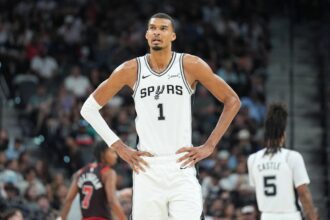
And let’s be honest, this game took a sharp turn when Victor Wembanyama exited early due to a concussion, completely altering San Antonio’s rhythm in the end.
Still, give Portland credit; they didn’t flinch. Behind a breakout night from their young backcourt and some rugged bench production, they capitalized on the moment and evened the series.
1. Scoot Henderson Looked Like The Best Player
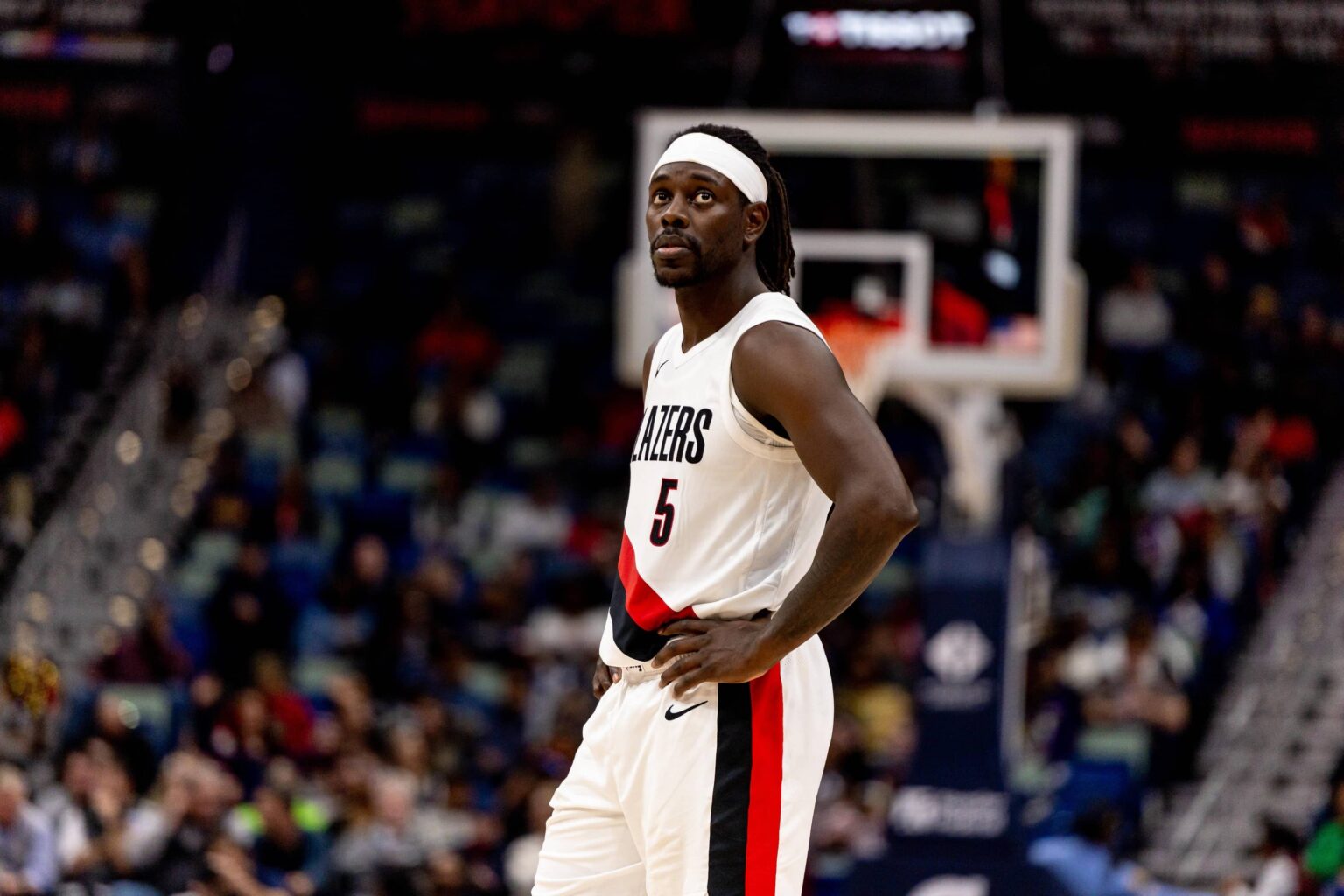
Scoot Henderson erupted for 31 points on 11-17 shooting, including 5-9 from three, and added 4 free throws. Efficient, aggressive, and completely in control- he dictated the pace in the second half and never looked rattled.
What stands out even more is how he scored. He was picking his spots, punishing drop coverage, and hitting big-time perimeter looks when the Spurs sagged.
Portland shot just 42.7% overall, but Henderson’s efficiency was the engine that made everything function. When the Blazers needed a bucket late, it was him. No hesitation. No fear.
2. Wembanyama’s Early Exit Changed Everything
There’s no way around it; this game shifted the moment Victor Wembanyama went out early with a concussion. In just 12 minutes, he had 5 points, 4 rebounds, and 2 blocks, already impacting the paint defensively before exiting. After that, San Antonio’s interior presence took a noticeable hit.
The Spurs still finished with 45 rebounds and actually won the glass, but the deterrence disappeared. Portland attacked more freely, scoring 40 points in the paint and grabbing 15 offensive rebounds.
Without Wembanyama anchoring the back line, those second-chance opportunities started to pile up, and in a three-point game, those possessions are everything.
3. Portland’s Frontcourt Controlled The Game
While Henderson grabbed headlines, Portland’s bigs did the dirty work that wins playoff games. Donovan Clingan pulled down 10 rebounds (5 offensive) and added 2 blocks, while Robert Williams III was huge off the bench with 11 points on 5-6 shooting, 9 rebounds, 4 assists, and 2 blocks in just 23 minutes.
That’s impact. That’s presence. That’s “we’re not letting this slip.” Portland finished with 11 blocks as a team, compared to San Antonio’s 5, and turned the paint into a battleground. Even when shots weren’t falling consistently, extra efforts kept Portland alive possession after possession.
4. Spurs Couldn’t Find An Offensive Rhythm
San Antonio had balanced scoring, but nothing that truly scared Portland. De’Aaron Fox led the way with 17 points on 6-16 shooting, while Stephon Castle added 18 points on 7-20. That’s volume without efficiency, and it showed.
As a team, the Spurs shot just 29.2% from three (7-24) and 44.2% overall, struggling to generate clean looks late. They did get to the line (20-28 FT), but couldn’t convert that into sustained runs.
Even with 20 fast-break points and 13 steals, they never fully seized control. It felt like they were always almost there, but never quite able to land the punch.
5. This Series Just Got Unpredictable In A Hurry
Game 1 felt like a Spurs statement. Game 2? Completely different story. The Portland Trail Blazers showed resilience, physicality, and just enough shot-making to flip the script, and now everything feels up in the air.
The big question, of course, is Wembanyama. If he misses time, this series changes dramatically. If he returns, it becomes a chess match again. But one thing is clear: Portland now believes.
They’ve seen that formula work – win the glass (43-45 but 15 OREB), protect the rim (11 blocks), and ride Henderson’s shot creation. And when a young team starts believing in the middle of a playoff series? That’s when things get dangerous.