The stretch after the NBA All-Star Weekend (Feb. 13–15) is when the season starts to feel like playoff prep. Rotations get shorter, game-planning gets sharper, and “bad” games stop being noise because there are fewer of them left.
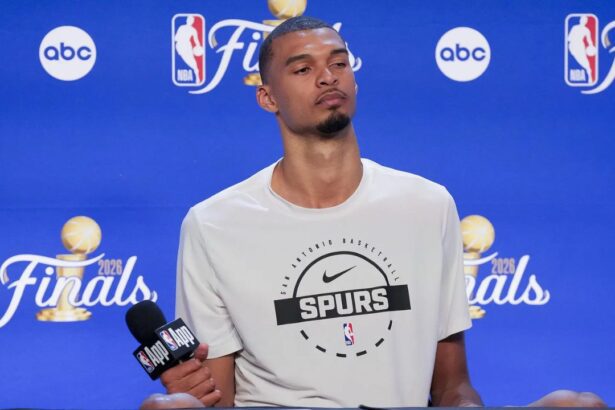
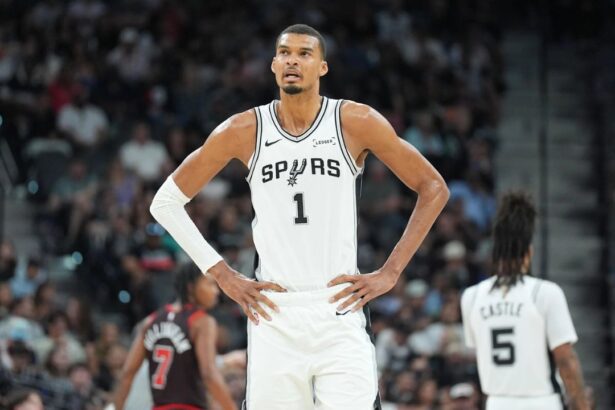
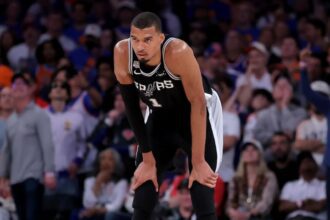
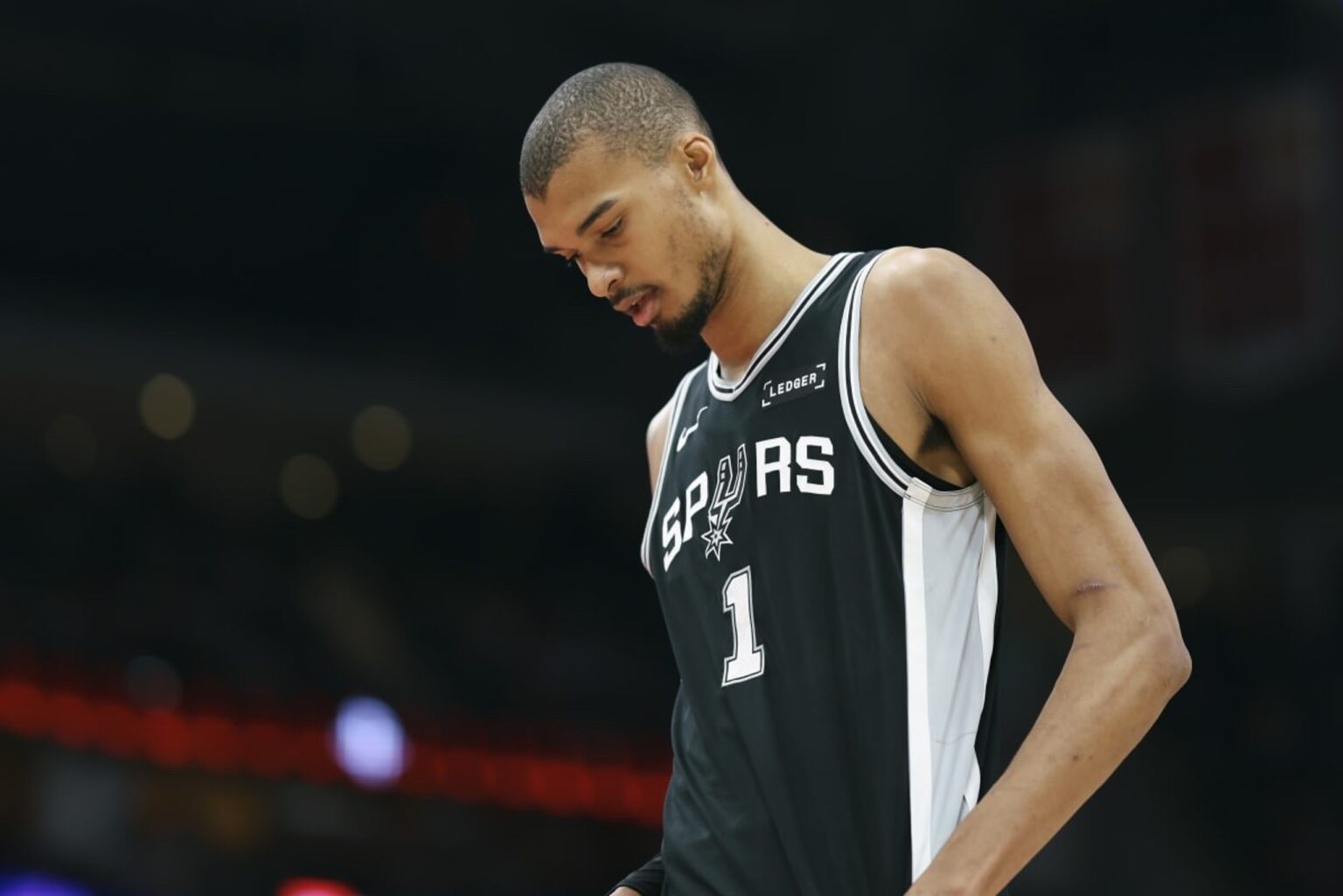
Victor Wembanyama is the cleanest example of how fast the conversation can change. He is No. 4 on the NBA’s Kia MVP Ladder, up from No. 5, and his season line still looks like a top-tier superstar: 23.7 points, 11.2 rebounds, 2.8 blocks.
But the post-break sample is what gets discussed daily. In his last six games, Wembanyama has averaged 19.2 points, which is a drop in scoring with elite defense still intact. He has also had games that show both sides of the debate, like 25 points, 13 rebounds, and four blocks in the loss to the Knicks, with the jumper running cold from three (1-for-7).
So, here are the All-Stars who have struggled since the break, and what Wembanyama’s dip means for his MVP chances.
1. Victor Wembanyama
The Spurs going 11-0 in February is the context for everything here. They did not just win games. They stacked wins while closing on the Thunder for the No. 1 seed, only 3 games back as of March kicks off. That matters for the MVP conversation because team success is the easiest way to keep your name near the top, even when the box score is not perfect every night.
Victor Wembanyama’s pre-break production looked like the clean “MVP big” template. Before All-Star, he averaged 24.4 points, 11.1 rebounds, 2.8 assists, and 2.7 blocks while shooting 51.1% from the field and 36.3% from three. Since the break, the line has shifted: 19.2 points, 12.0 rebounds, 4.0 assists, and 4.3 blocks, with his field goal rate down to 42.7% and his three-point shooting down to 19.4%. The defensive impact has climbed, but the offense has gotten less efficient.
What has changed is mostly shot-making, especially from deep. The volume is still there post-break (5.2 threes attempted per game), but the accuracy has not been. He’s been 8-for-40 from three over their recent seven-game stretch, and that matches the eye test: he is getting clean looks he usually converts, and they are not falling. When the three is not a threat, defenses can stay lower in the paint, send help earlier, and make his catches feel crowded. That is where the tougher misses show up, because more of his half-court touches become contested turnarounds, rushed finishes, or late-clock attempts.
There is also a “pressure” component in the games where the Spurs have looked less clean. In the loss to the Knicks that ended the 11-game streak, the Spurs committed a season-high 22 turnovers. Wembanyama still had 25 points and 13 rebounds, but the game tilted because the Knicks turned it into a turnover frenzy all night. Differently, the win over the Nets to finish the perfect month included another quiet scoring night from Wembanyama (12 points) even as the Spurs kept rolling. That is the pattern: the Spurs can win when he is not carrying the scoring, but the “struggling” label shows up because the points production has come less efficient than before.
I do not think this stretch is meaningfully detrimental to his MVP chances yet. The post-break sample is still small, the Spurs are still winning at a top-seed pace, and Wembanyama is still sitting No. 4 on the Kia MVP Ladder with the league’s loudest defensive production and a clean run at the Defensive Player of the Year award. If the jumper stays cold for weeks, the efficiency drop becomes harder to wave off. But if the Spurs keep pushing the Thunder and the defense stays this dominant, the MVP case survives a short scoring dip.
2. Donovan Mitchell
Before All-Star Weekend, Donovan Mitchell was producing at a clear MVP-candidate guard level: 29.0 points per game on 48.7% from the field and 37.6% from three across 51 games. Since the break, the scoring has dropped to 23.0 points on 42.3% shooting and 24.0% from three in four games. That is the case in one line: the jumper has not been there, and the overall efficiency has followed it down.
The recent evidence matches the numbers. Against the Thunder on February 22, Mitchell went 0-for-6 from three in 35 minutes in a one-possession loss. Two days later, against the Knicks, he scored 23 points but shot 5-for-18 overall and 2-for-8 from three. Those are not subtle declines. Those are the kinds of shooting lines that change how a defense guards you possession to possession.
The shooting is the main slide during this cold stretch. The volume and the accuracy are also down. Pre-break, he was taking 9.6 threes per game and making 3.6 of them. Post-break, that is 6.3 attempts and 1.5 makes per game. When a high-usage guard loses three-point efficiency, the ripple is predictable: fewer possessions end in clean, high-value jumpers, and more possessions turn into tough twos or bailout attempts late in the clock. You do not need theory to see it. The outputs have changed.
The James Harden layer is part of that context, too. With Harden on board, it was expected that Mitchell’s production would go down in volume, as we’ve seen in this sample, but the efficiency is not what the Cavaliers expected when they made the trade. Yes, his numbers were expected to go down, but it was also coming with an up in percentages, not this cold run.
The main constant is the health situation that makes this less about form and more about availability. Mitchell has missed three straight games with a groin injury and was ruled out again for the Pistons game on Tuesday night. The post-break sample is already tiny. Once the player is in and out, stats start reflecting interruptions as much as performance.
3. Norman Powell
Norman Powell went from a surprise All-Star story to an injury note in a matter of days. The Heat announced he has a Grade 1 right groin strain and will be out at least a week, with his status listed as week-to-week. The timing is crucial because his struggles happened in a short span and include the game where he got hurt early.
Before All-Star Weekend, Powell was producing like a clean top-option scorer for the Heat. In 45 games, he averaged 23.0 points in 30.6 minutes, shooting 47.4% from the field and 39.6% from three, plus 84.3% at the line. That is not just “hot shooting.” It is a stable profile: efficient threes, strong free-throw conversion, and enough volume to justify star usage.
After the break, the line drops hard, but the context is doing a lot of work. In four post-break games, he fell to 17.3 points in 23.0 minutes, with 45.8% shooting and 32.1% from three, and his free throws dipped to 66.7%. One of those games is the key one: Powell was already listed as questionable against the 76ers because of groin soreness, was cleared to play, then left in the first half with the strain. If you remove the injury game, his “struggling” narrative looks less dramatic, because the minutes and shot volume are not normal for a healthy, in-rhythm primary scorer.
What was actually changing on the floor before the injury became official is pretty straightforward. A groin issue hits the first step and the stop-start part of a scorer’s game. You see fewer clean rim attacks, fewer trips where the defender is beaten on the first move, and more possessions that end in pull-ups or contested catch-and-shoots. The efficiency drop from three is part of that. It is harder to generate the same quality threes when you cannot force as much help at the point of attack.
This is also why I do not treat it as a real “post-break decline” yet. It is four games, and the injury really lowered his statistical output. The bigger point is availability: the Heat are heavily tied to his scoring. They have been 22-16 when Powell scores at least 19, and 9-13 when he does not reach that mark or does not play. If he misses a full week or more, the story becomes less about “struggling” and more about how the Heat survive without their leading scorer, then whether Powell’s burst and free-throw touch look normal when he returns.
4. Scottie Barnes
Scottie Barnes’ post-break drop is driven by two measurable issues: lower scoring volume and a sharp decline in perimeter creation.
Since the All-Star Game, Barnes has averaged 15.5 points, 5.0 rebounds, and 4.5 assists in four games. His season line is 19.1 points, 8.2 rebounds, and 5.5 assists, so the current stretch is a clear dip across the board.
The most damaging change is the three-point output. Over his last five games, Barnes has made one three-pointer total in 12 attempts. That removes spacing from the Raptors’ half-court offense because opponents can help off him more aggressively without paying an immediate price. The impact is visible at the game level. Against the Thunder, Barnes went 0-for-3 from three and finished with 15 points on 7-for-17 shooting. Against the Spurs two nights later, he hit one three-pointer, but the bigger problem was possession quality: 15 points with seven turnovers. In the win over the Wizards, he scored 18 efficiently (7-for-13) but again committed seven turnovers, with no lift from the arc (0-for-1 from three).
That turnover spike is the second concrete issue. Barnes has 28 turnovers in his last 10 games. That is too many empty possessions for a primary connector, especially when the three-point shot is not forcing defenders to stay attached. When opponents are comfortable helping early, Barnes’ catches and drives happen in tighter spaces, and the decision window becomes smaller. The recent box scores reflect that tighter environment: solid point totals, but possessions lost.
There has also been a short-term health note. Barnes suffered a right quadriceps bruise against the Thunder and was listed as questionable immediately after. It should be treated as context, not an excuse, but it matters when evaluating a four-game sample.
The diagnosis since the break is straightforward: low three-point value and too many turnovers, which has pulled his overall impact below his season standard.
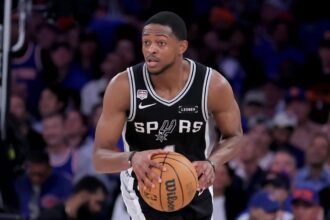
5. De’Aaron Fox
De’Aaron Fox’s post-All-Star dip is not subtle. It is a scoring and efficiency drop, with the biggest swing coming at the line.
Before the All-Star break, Fox was at 19.4 points, 6.3 assists, and 3.8 rebounds in 45 games, shooting 48.4% from the field, 35.3% from three, and 79.5% at the line. Since the break, he has fallen to 14.0 points, 5.5 assists, and 3.0 rebounds in six games, with his minutes down (28.2) and his shot volume down (11.7 attempts per game). The efficiency drop is the headline: 45.7% from the field is fine, but 29.6% from three and 54.5% on free throws is where the production bleeds out.
The free-throw issue has been visible in-game, not just in a split table. In the Spurs’ comeback win over the Raptors, the team went 13-for-23 at the line, and Fox went 2-for-8. That is not a spacing problem or a role problem. That is points left on the floor in a game the Spurs nearly gave away at the stripe.
The second concrete problem is perimeter value. His three-point accuracy is down from 35.3% pre-break to 29.6% post-break, and the volume has dipped from 5.7 attempts per game to 4.5. When Fox is not punishing defenses from above the break, it narrows the possessions where the Spurs can play five-out around Victor Wembanyama without grinding into late-clock shots. That matters for Fox specifically because his scoring is built on pressure. Fewer made threes means more possessions where defenders can sit a step lower, and the margin for clean paint touches gets smaller.
The “struggling” label also shows up in his low-output nights. In Sunday’s loss to the Knicks, Fox finished with seven points on 3-for-10 shooting and 1-for-6 from three in 31 minutes. If your lead guard gives you 10 shot attempts, misses five threes, and does not get to the line enough to offset it, the offense is forced into second and third options all night.
None of this erases his importance to the Spurs’ surge. During the 11-game winning streak, Fox had 20 points in the comeback win over the Raptors and hit key threes late. But the post-break sample is pointing to a specific weakness: scoring efficiency has dipped because the free throws have not been automatic and the threes have not been reliable, and that combination has cut his point total down to the mid-teens.