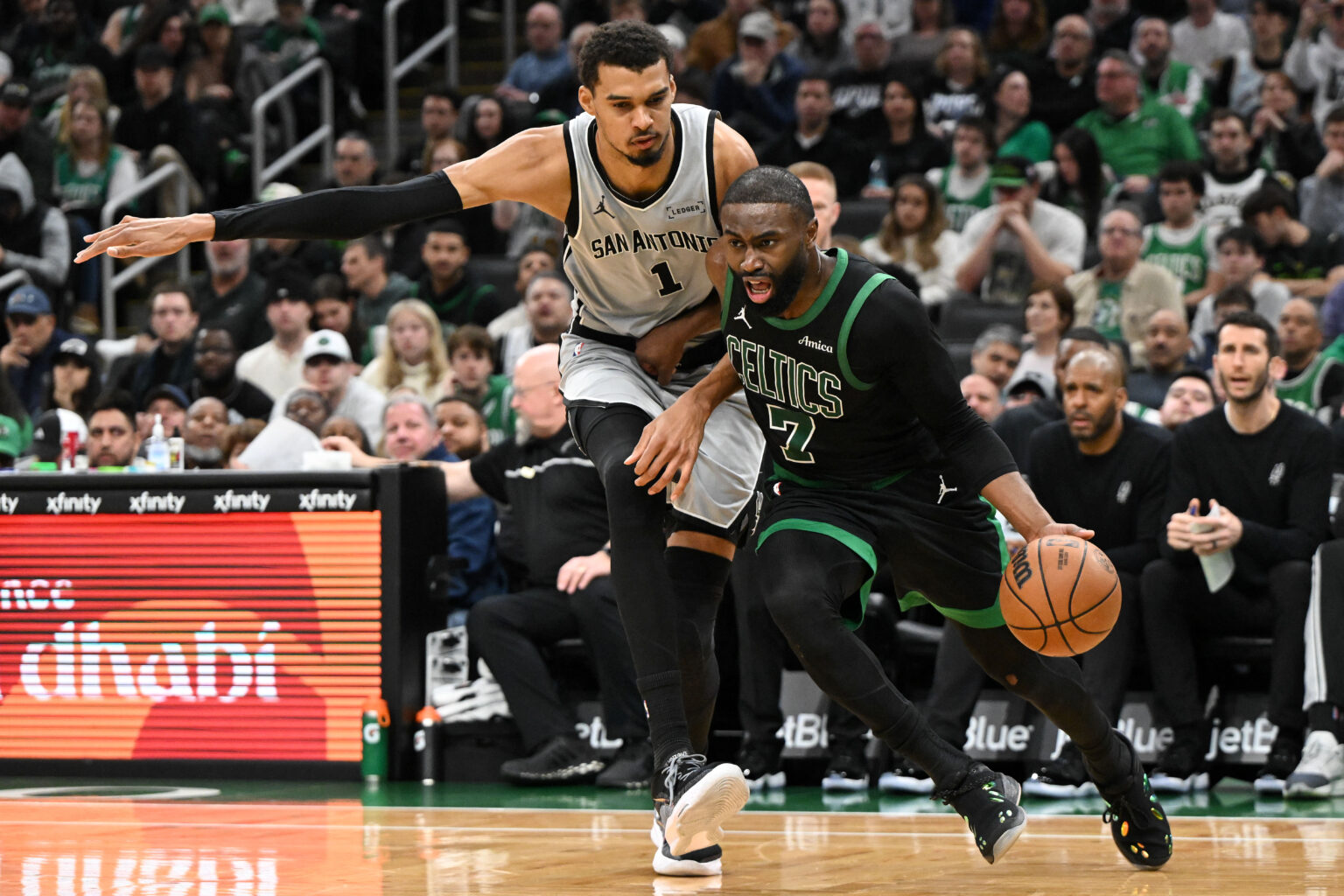
Nothing about this game came easily, and that’s exactly how San Antonio wanted it. The Spurs dragged the Boston Celtics into a slow, physical contest, turned every possession into work, and eventually walked out with a 100-95 win that was decided more by patience than firepower. Leads were small, runs were brief, and the margin for error stayed razor thin all night.
San Antonio didn’t shoot well and didn’t overwhelm anyone statistically, but it consistently made Boston uncomfortable. Victor Wembanyama’s scoring punch off the bench shifted the balance, and when the game tightened late, the Spurs were sharper with the ball, stronger on the glass, and more willing to absorb contact.
1. Victor Wembanyama Changed The Game Without Starting
Victor Wembanyama didn’t start, but the game clearly changed when he checked in. He scored 21 points in 26 minutes on 8-of-17 shooting, and his impact went far beyond the box score. Boston’s drives slowed down, cutters hesitated, and shots near the rim became contested decisions instead of routine looks.
The Spurs were at their best with him on the floor, outscoring Boston by 15 points during his minutes. His three blocks don’t fully capture how often he erased angles before shots ever went up. Even when he wasn’t scoring, the Celtics were forced to play sideways instead of downhill, a subtle edge that mattered in a five-point finish.
2. De’Aaron Fox Controlled Tempo Even Without Spectacular Numbers
De’Aaron Fox’s night wasn’t clean, but it was controlled. He finished with 21 points, nine rebounds, and six assists in 36 minutes, shouldering the responsibility of organizing an offense that rarely found rhythm. His jumper came and went, but his pressure never did.
What stood out most was Fox’s decision-making. Against a defense that switched often and crowded the lane, he picked his moments instead of forcing them. San Antonio turned the ball over just eight times as a team, and Fox’s calm handling late allowed the Spurs to get into their sets and burn valuable clock when Boston was trying to speed things up.
3. Spurs Won The Battle On The Glass
This wasn’t a shooting contest, it was a possession battle. San Antonio finished with 53 rebounds, including 12 on the offensive glass, and repeatedly gave itself extra chances in a game where neither side could afford empty trips.
Julian Champagnie grabbed 13 rebounds while playing 35 minutes, and Keldon Johnson added 10 boards off the bench. Several of the Spurs’ biggest buckets came immediately after offensive rebounds, moments that deflated Boston and forced the Celtics to defend longer than they wanted to.
4. Boston’s Stars Carried The Load, But Ran Out Of Gas
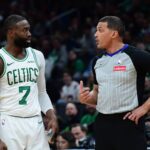
For most of the night, Jaylen Brown and Derrick White kept Boston afloat. Brown scored 27 points with seven assists, while White poured in 29 on 11-of-26 shooting and hit five threes. Without them, the Celtics would’ve been buried early.
But when the game tightened, the looks stopped falling. Boston went cold in the final stretch, missing key perimeter shots and failing to generate anything easy at the rim. Despite hitting 16 threes overall, the Celtics scored just 36 points in the paint and struggled to create separation once San Antonio packed the lane.
5. Free Throws And Discipline Made The Difference
One number loomed over the box score: free throws. San Antonio attempted 20, Boston attempted just four. The Spurs didn’t dominate at the line, they hit 14, but simply getting there mattered in a low-scoring game.
Discipline showed up elsewhere too. San Antonio committed fewer fouls, protected the ball better, and didn’t rush when the pressure rose. In a game where neither team led by more than single digit, those small advantages stacked quietly until the final horn made them official.