The Lakers keep circling the same deadline need: a real 3-and-D piece who can guard up a position, hit open threes, and make life easier for their stars.
They’ve sniffed around the dream fits, but it hasn’t gone anywhere. Herb Jones looks like a pipe dream because the Pelicans don’t want to move him, and the price talk around the league is basically “don’t even bother.” Andrew Wiggins also hasn’t felt realistic, with reports saying the Heat haven’t been moved by anything the Lakers have offered.
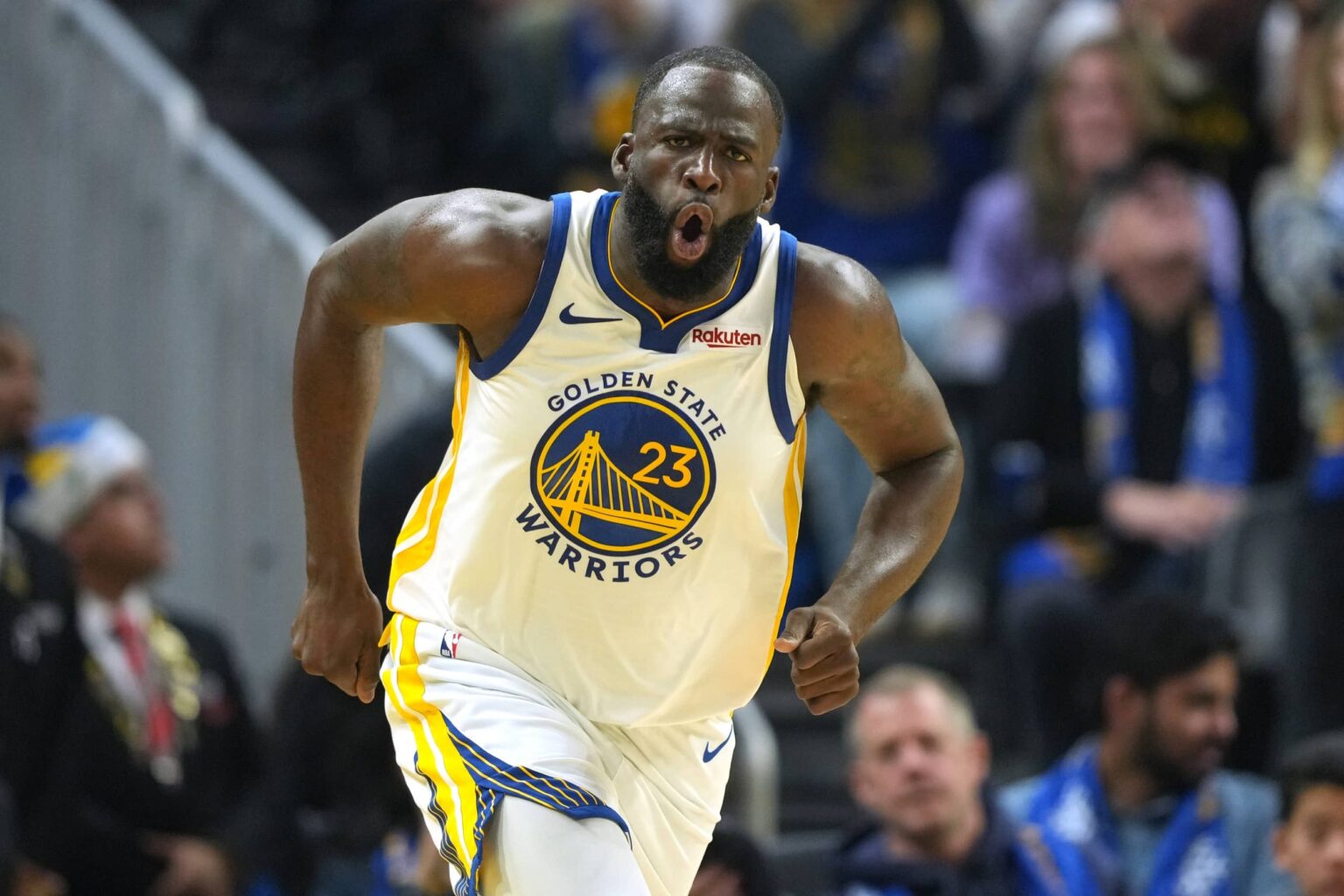
So what happens when you strike out on the clean, obvious 3-and-D names? You start thinking weirder. That’s where Draymond Green sneaks into the conversation. No, he’s not “3.” Not even close. But he still solves something the Lakers actually care about: defense that travels, communication that doesn’t break, and a guy who can quarterback possessions when things get chaotic.
Draymond can organize a unit, switch across multiple spots, blow up actions early, and basically act like a defensive coach in uniform. He also gives you playmaking from the frontcourt, the kind that can keep the offense moving without forcing the Lakers into late clock pick-and-rolls every time. It’s not pretty spacing, but it’s functional basketball, and it’s the kind of ugliness that can win playoff minutes if the defense is nasty.
And let’s not pretend the LeBron James angle isn’t real. Draymond has talked openly about how his relationship with LeBron flipped from straight-up hate to genuine closeness. If the Lakers ever became a real option, you can absolutely see Draymond leaning into it, and maybe even applying some pressure behind the scenes, because he clearly loves the idea of being in LeBron’s orbit.
The other part that makes this even remotely interesting: the Warriors aren’t sitting pretty. They’re 21-19 and currently eighth in the West, basically living in that “good enough to annoy you, not good enough to scare you” zone. If they decide they need a shakeup instead of more vibes, a Draymond conversation stops sounding impossible.
So yeah, it’s wild. But if the Lakers can’t land the perfect 3-and-D wing, a messy defensive superstar who wants the Lakers might be the next best thing.
The Mock Trade
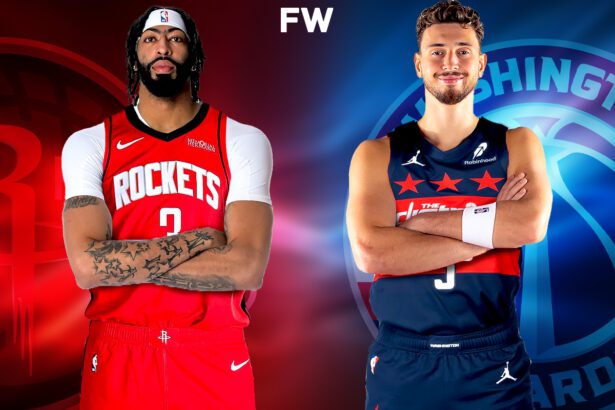
Los Angeles Lakers Receive: Draymond Green
Golden State Warriors Receive: Anthony Davis, Dante Exum
Dallas Mavericks Receive: Jonathan Kuminga, Rui Hachimura, Buddy Hield, Dalton Knecht, Jaxson Hayes, 2026 first-round pick (via GSW)
Why The Lakers Do This
The Lakers don’t need another “pretty good” defender. They need a defensive organizer. A grown-up on the floor who can call out actions, quarterback coverages, and drag everyone into the right spots when the game gets frantic. Draymond is still that guy, even at 35.
On paper, his box-score line looks modest, 8.6 points, 5.9 rebounds, 5.5 assists in 33 games. But the value is in everything that doesn’t show up as points. He’s still swiping possessions, still forcing bad shots late in the clock, still turning sloppy offense into transition chances with one read and one hit-ahead.
Now plug that next to Luka Doncic and LeBron James. The Lakers’ offense already has the brains. What it needs is a defender who can keep them from bleeding points when the stars rest, and someone who can cover for the mistakes that inevitably happen when you build around two offensive engines. Draymond makes that possible because he can play small-ball five, he can switch, and he can survive in scramble mode.
And this is the big one: Draymond reduces the workload. LeBron doesn’t need to be the back-line communicator every night. Luka doesn’t have to spend every other possession pointing and yelling and praying the weak-side tag happens. Draymond basically turns defense into a script. Guys know where to be because he’s screaming it at them early.
The Lakers are also 23-13, fifth in the West, which means they’re not buying because they’re desperate. They’re on the market because they can smell something real if they clean up the ugly parts. Their point differential is basically neutral, which tells you they’ve lived on thin margins even with star power.
This trade also sends out pieces that the Lakers can live without if the goal is to maximize the next two seasons. Rui Hachimura has been awesome as a scorer and spacer, 12.7 points while hitting 44.5% from three, but he’s not a defensive stopper and he’s not a connective passer.
Dalton Knecht is a useful cheap shooter at $4.0 million, but he’s giving them 5.2 points in 13.3 minutes and the playoff teams will hunt him defensively if he’s out there in big moments.
Jaxson Hayes has been efficient, 6.2 points on 76.2% from the field, but his role is replaceable, and the Lakers can always find a minimum big who runs, screens, and finishes.
So the Lakers’ logic is simple: you’re trading depth for a defensive identity. You’re trading “nice fits” for a guy who can actually change the way a playoff series feels possession-to-possession.
Why The Warriors Agree To The Deal
This is the hard part emotionally, because Draymond is a Warriors lifer type. But if you’re being cold about it, it’s also obvious why the conversation exists.
The Warriors are 21-19, eighth in the West. That’s not a disaster, but it’s also not “we’re one move away from the Finals.” And with the Warriors, the whole point is chasing titles while Stephen Curry is still Curry. Treading water does nothing.
If the Warriors are going to trade Draymond, it has to be for a star-level impact. Not picks. Not “flexibility.” A real name. Anthony Davis is that.
Even with the giant red flag attached, the injury. ESPN reported Davis suffered left-hand ligament damage and could miss “a number of months,” which is brutal timing and exactly why his value is complicated. But that complication is also what makes a wild deal like this feel more possible than if Davis were healthy.
When Davis plays, he changes everything. He averages 20.4 points, 11.1 rebounds, and 1.7 blocks per game in just 20 games this season. The Warriors have lived in small-ball for years. Davis lets them play big without losing speed. He protects the rim, he erases mistakes, he wins possessions that used to be layups for the other team. If he’s even close to his normal level, you’re talking about a defensive ceiling that’s way higher than what they’ve had lately.
You can also sell yourself on fit. Davis doesn’t need to dribble. He can screen for Curry, dive, punish switches, and clean up everything on defense. And if you’re tired of watching the Warriors get bullied in the paint on the nights the jumpers don’t fall, Davis is the antidote.
There’s also the business side. Draymond is at $25.9 million, and if the Warriors feel like their “all-in” construction isn’t enough, moving him is one of the only ways to legally change the core without tearing the whole thing down.
Finally, there’s the Kuminga angle. There’s been constant noise around what the Warriors do with Jonathan Kuminga long-term, and reports have pointed to the idea that his future has remained a question mark for them.
In this mock, they finally pick a direction. They stop straddling timelines, they cash the chip, and they turn it into a superstar frontcourt piece. Is it risky? Absolutely. But the Warriors don’t get rewarded for playing it safe right now. They get rewarded for chasing the highest possible peak.
Why This Is Great For The Mavericks
The Mavericks are 14-25, 12th in the West, and their point differential looks like a team that’s been taking body shots all season. When you’re in that range, the smartest play is to stop pretending you’re one tweak away. You either rebuild the roster balance, or you commit to the tank and stack assets.
This package is basically both.
Start with Kuminga. He’s at 11.8 points, 6.2 rebounds, 2.6 assists, and even in a messy role, he still flashes real creation and real athletic pressure. The Mavs need young legs and upside. Kuminga gives them a swing piece who can still pop into a bigger role if he gets consistent touches. Hachimura gives them efficient scoring and size. If you’re building around a young core, having a wing who can punish help defense matters. Rui can do that immediately.
Buddy Hield is the pure “keep the floor spaced” guy. He’s at 7.6 points in 17.8 minutes, taking 4.4 threes per game and hitting 32.4% this season, which is down for him, but defenses still respect the volume and the quick trigger. And if he heats up for a month, you can flip him again.
Knecht is a cheap developmental shooter. He’s at 5.2 points, 32.1% from three, and he’s on a $4.0 million deal. If he pops, great. If he doesn’t, you didn’t mortgage anything for him.
Hayes is a useful center rotation piece who actually gives effort every night, and he’s on $3.4 million. Even if he’s not your long-term answer, he’s the kind of contract you can carry without pain.
And then there’s the pick. That’s the real juice. If you’re moving a player with Davis’ name value, you need at least one clean first to tell your fanbase, “We didn’t get robbed.” This is how you do it.
The sneaky benefit is also salary structure. Davis is a mega-salary player at $54.1 million. Moving him for multiple mid-sized deals gives you options. You can keep the guys you like, flip the ones you don’t, and you’re not locked into one massive contract dictating every offseason decision.
So from the Mavericks’ perspective, this is a volume reset. You turn one risky, injured superstar into a pile of usable players plus a first. That’s how you survive a bad season and come out with flexibility, depth, and at least one upside bet that can hit.
Final Thoughts
This is the kind of trade that sounds insane until you stare at the incentives long enough. The Lakers get the defensive brain they’ve been hunting, even if Draymond isn’t the classic 3-and-D wing. The Warriors get a “big swing” star that keeps the Curry window alive without needing the Giannis dream to magically become real. And the Mavericks get a volume reset that looks a lot better than the typical “sell low” return you usually see when a star is hurt and the season is drifting.
Money-wise, it also explains why it’s even a conversation. Kuminga is sitting at $22.5 million, and Hachimura is at $18.2 million, which isn’t cheap, but it’s the kind of mid-tier salary structure that can be moved, consolidated, or rerouted later if the Mavericks want to pivot again. Those aren’t franchise-killing deals; they’re flexible chips, especially compared to one mega contract. And for the Lakers, moving multiple medium salaries to land one $25.9 million Draymond deal is basically a “consolidation” move, not a total teardown. It’s a bet that one elite defensive connector matters more than a handful of rotation pieces.
The biggest reason this probably doesn’t happen is the same reason every wild three-team mock dies: timing and risk. Anthony Davis just had the left-hand ligament issue, and if there’s even a chance he misses months, teams don’t like attaching their entire season to that uncertainty. On top of that, the Warriors moving Draymond is a cultural nuke, it’s not just a basketball trade. It’s the kind of thing you only do if the locker room feels like it needs a reset, or if the front office truly believes the current core has hit a ceiling.
That’s why I’d call the chances low. Not impossible, but low. You basically need three things to happen at once: the Warriors keep hovering in the play-in range and decide they need a star jolt, Draymond quietly pushes for the Lakers angle, and the Mavericks decide the best version of their Davis future is actually turning him into a pile of assets now instead of waiting. If even one of those ingredients isn’t there, the whole thing collapses.
But as a “wild trade idea,” it’s at least coherent. It’s not random names thrown in a blender. It’s three teams chasing three different goals, and everybody gets something they actually want, even if the real world rarely cooperates.