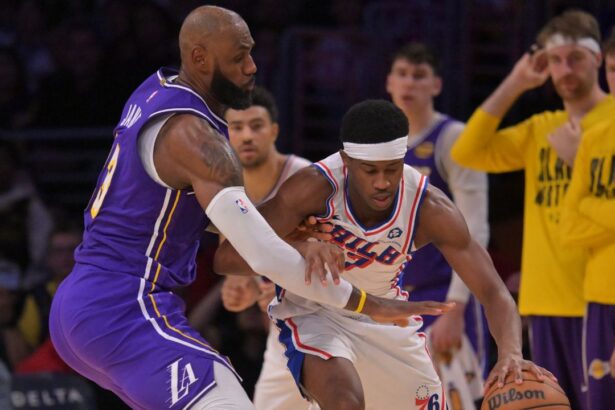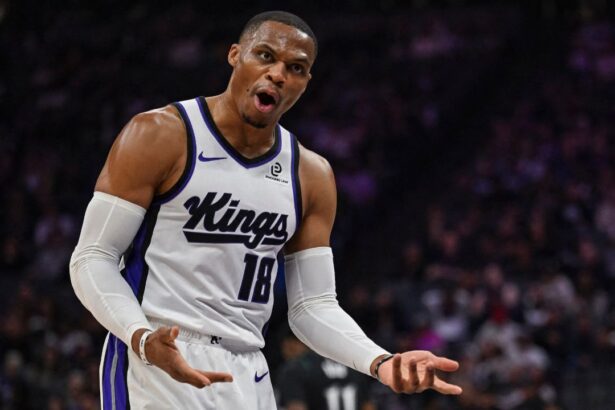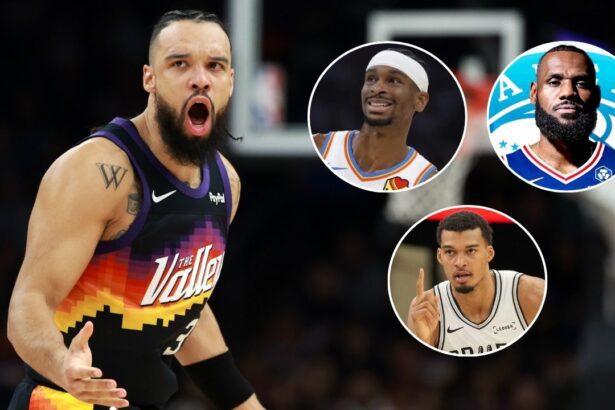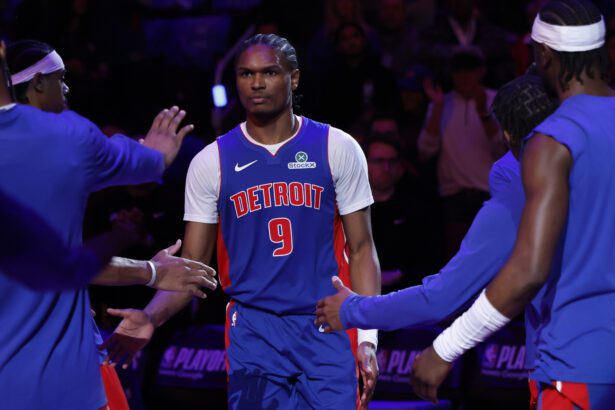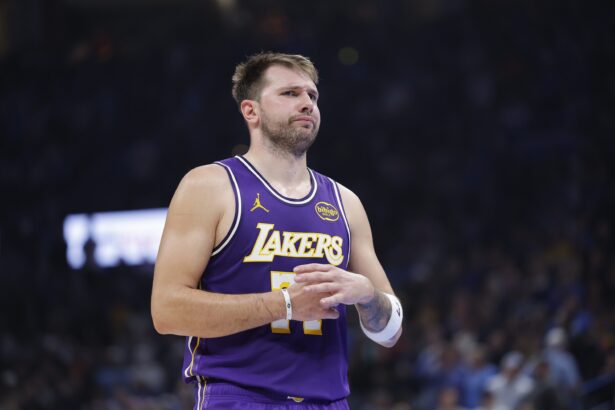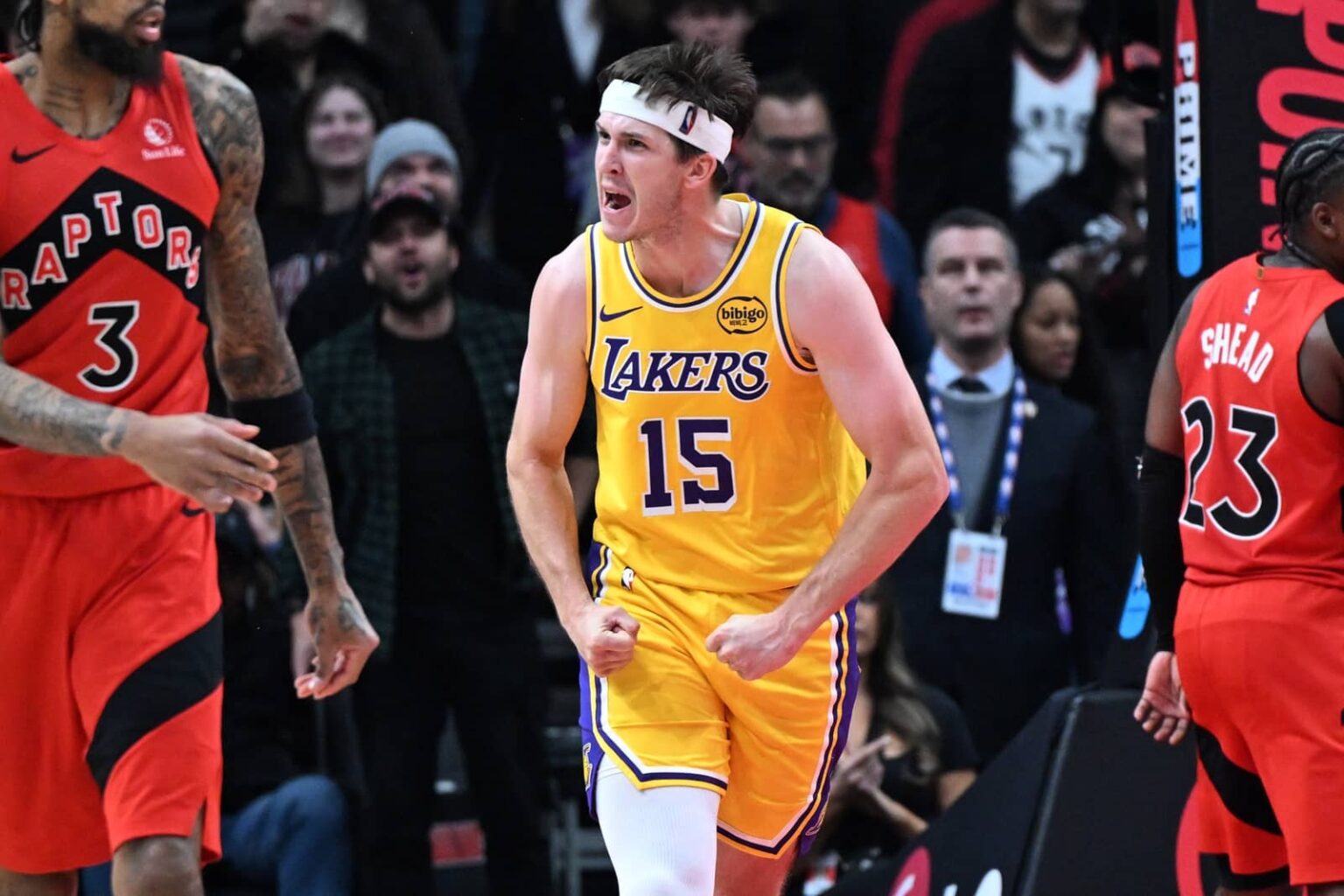
The Los Angeles Lakers are suddenly living in that uncomfortable zone where every loss turns into a trade debate at 23-14 (5th in the West), and three straight losses, with Austin Reaves chatter right in the middle of it.
He’s currently out with a left calf strain, and the league’s official injury report has him listed as out. Even with him sidelined, his season has been loud: 26.6 points, 5.2 rebounds, and 6.3 assists per game while shooting 50.7% from the field.
The spark for this whole conversation came from Rich Paul, who threw gasoline on it by suggesting the Lakers should consider flipping Reaves for Jaren Jackson Jr. on his “Game Over” podcast, basically treating Reaves as the kind of premium asset that could net a real defensive star.
“If I was the Lakers, I would probably be targeting the Memphis Grizzlies as a trade partner for Jaren Jackson,” Rich Paul stated.
That’s a wild idea on the surface, but it hits because the Lakers are trying to win now, and Reaves has played well enough to be viewed as a legitimate centerpiece in bigger talks.
So with that said, we’ll see if it actually makes sense for the Lakers to move Reaves for any of these NBA stars, or if this is just deadline noise getting louder because he’s that good.
Lakers Get Jaren Jackson Jr. For A Package Around Austin Reaves
Los Angeles Lakers Receive: Jaren Jackson Jr.
Memphis Grizzlies Receive: Austin Reaves, Jarred Vanderbilt, Maxi Kleber
On paper, this is the kind of trade that makes you stop scrolling. The Lakers turn one elite scorer-creator plus two role contracts into a legit two-way frontcourt monster.
Jaren Jackson Jr. is still giving you 18.5 points, 5.6 rebounds, and 1.5 blocks this season while shooting 47.9% from the field, and he’s had real “takeover” flashes like a 31-point night with four blocks. Put that next to the Lakers’ current core and you can see the dream: more rim protection, more athletic size, and a defensive anchor who can actually erase mistakes.
The problem is the price is brutal, because Reaves has turned into way more than a nice third option. He’s averaging 26.6 points, 5.2 rebounds, and 6.3 assists on 50.7% shooting. That is not “solid starter,” that is borderline star production, and the Lakers are doing it with him on a number that’s basically a steal at $13.9 million. If you’re the Lakers, you don’t casually trade that away unless you’re getting a clean, undeniable upgrade.
And Jackson, as good as he is, hasn’t been at that “undeniable” level this season offensively. The scoring is down, the rebounding is fine but not dominant, and his value is heavily tied to defense, which the Lakers absolutely need, but not at the cost of nuking their guard creation. Also, the Lakers would be tossing in Vanderbilt, one of their few real chaos defenders and rebounders, for a team that already allows 116.5 points per game and needs every defensive tool it can keep.
For the Grizzlies, the logic is easier. They’re 17-22, sitting 10th in the West, and if they pivot into “retool the roster” after trading Ja Morant, this is how you do it: you grab a young-ish high-level guard in Reaves, you take Vanderbilt as a defensive piece, and you treat Kleber as matching money. Reaves gives them a primary ball handler who can actually run offense, and that’s a big deal for a team that’s been stuck in mud too often.
Would the Lakers trade Austin Reaves in this deal? No.
The simple reason is value. Reaves is producing like a star on a bargain salary, and this trade also strips the Lakers of Vanderbilt, so it’s not just “Reaves for Jackson.” It’s “Reaves plus a key defender for Jackson,” and that’s too much of a hit to shot creation and depth unless Jackson is playing at an All-NBA level right now.
He isn’t, and the Lakers can’t afford to gamble away their most reliable advantage on offense for a defensive swing that might still leave them short in late-game creation.
The Two-Way Wing The Lakers Keep Getting Linked To
Los Angeles Lakers Receive: Dillon Brooks
Phoenix Suns Receive: Austin Reaves, Gabe Vincent
The funny part is this has already been floating around the Lakers rumor ecosystem. There’s been real trade buzz connecting the Lakers to Dillon Brooks as a “win-now wing” target, to the point where Suns owner Mat Ishbia even jumped in and basically shut it down publicly.
Now, the deal itself. Brooks is making $21.1 million this season, and he’s producing like a premium role wing with teeth: 21.2 points, 3.3 rebounds, and 1.8 assists while shooting 45.6% from the field.
He brings attitude, physicality, and the kind of point-of-attack defense the Lakers constantly chase at the deadline. The Suns are 24–15, and Brooks has been a huge part of why they’ve stayed afloat and then started stacking wins.
But this is where the Lakers have to be honest about value. Reaves is on $13.9 million and playing like a star this season. That’s not a piece you casually flip for a role wing, even a really good one.
Gabe Vincent also isn’t nothing as outgoing money, he’s at $11.5 million, and the Lakers would be stripping themselves of another guard body just to make the math work.
The core issue is playoff creation. Brooks can help you win matchups defensively, but he’s not replacing what Reaves gives you as a secondary creator and late-clock problem solver. In a tight series, the Lakers can’t afford to trade away a guy who consistently generates good looks, especially at a bargain number, for someone who’s mostly adding defense and toughness.
Would the Lakers trade Austin Reaves in this deal? No.
It’s the wrong trade-off. If the Lakers want Brooks, they should be trying to build a package around smaller contracts and draft value, not dumping their best value contract on the roster. Brooks is a great complementary piece, but Reaves at his current production and salary is exactly the kind of player contenders try to keep, not cash out.
The LaVine Splash That Costs Way Too Much
Los Angeles Lakers Receive: Zach LaVine
Sacramento Kings Receive: Austin Reaves, Jarred Vanderbilt, Gabe Vincent, Maxi Kleber
This is the kind of trade that looks sexy in a trade machine and then gets ugly the second you ask, “what are the Lakers actually giving up here?”
Zach LaVine is a real scorer, and he’s been efficient this season at 19.9 points, 3.0 rebounds, and 2.3 assists while shooting 48.4% from the field. But he’s also carrying a massive cap number; his 2025-26 cap hit is $47.5 million.
That’s the first red flag. The Lakers are not in a spot where they should be taking on a near-$50 million scorer if it means gutting depth and trading their best value contract. Reaves’ kind of production is what contenders dream about because it lets you spend big elsewhere.
And it’s not just Reaves in this deal. Jarred Vanderbilt is one of the Lakers’ few true “mess your whole offense up” defenders, Vincent is a real rotation guard salary slot, and Kleber is useful frontcourt spacing insurance. You’re basically trading a core chunk of your playable postseason pieces for one guy who overlaps with what the Lakers already do.
From the Kings’ perspective, the motivation is obvious. They’ve been a mess in the standings, and flipping LaVine’s huge number for a younger, cheaper, higher-impact guard in Reaves plus extra contracts is a clean reset.
The Kings are 9-30, and the vibes match the record. But the Lakers don’t get to care about the Kings’ logic. They have to care about winning a series, and this is the type of “big name, big price” move that can quietly make you worse where it matters most.
Would the Lakers trade Austin Reaves in this deal? No.
The Lakers would be paying superstar money for LaVine while trading away a star-level producer on a bargain contract, plus the defensive and rotation depth that makes a playoff run sustainable. It’s a headline move, not a smart one.
The Herro Swap That Doesn’t Actually Fix The Problem
Los Angeles Lakers Receive: Tyler Herro
Miami Heat Receive: Austin Reaves, Gabe Vincent, Jake LaRavia, 2032 first-round pick
If the Lakers are trading Reaves, the return has to be a clear tier upgrade or a perfect roster fit. Tyler Herro is neither. He’s a very good scorer, and his season line is strong: 21.8 points, 5.3 rebounds, and 2.7 assists while shooting 49.3% from the field. But he’s also on a much bigger number, $31.0 million in 2025-26.
And the availability context matters here. Herro missed the start of the season with ankle surgery, and then missed time in-season due to a right big toe contusion, which is exactly the kind of annoying injury that can linger and mess with rhythm. So the Lakers would be taking on a higher salary, more injury volatility, and then still sending out the better all-around player in Reaves.
Because that’s what this is. Reaves isn’t just scoring, he’s initiating, creating advantages, and closing games. All while making $13.9 million. That combination is basically gold in the current CBA. Even if you think Herro is a cleaner shooter type, the gap in contract value is insane.
Then there’s the pick. A 2032 first is the kind of asset you don’t casually toss in when you’re already giving up your best bargain contract. That’s the “we’re desperate” tax. And the Lakers aren’t desperate, they’re 23-14.
For the Heat, the appeal is clear. They’re 20-19 and stuck in the “good but not scary” middle, and a Reaves-led package gives them a cheaper creator plus an extra future pick to play with. That’s exactly why they’d say yes. Which is also why the Lakers should say no.
Would the Lakers trade Austin Reaves in this deal? No.
Herro is a good player, but the Lakers would be paying more money and adding a pick just to end up with a guard who doesn’t raise the ceiling enough to justify losing Reaves. That’s a sideways move dressed up like a blockbuster.
The Zion Gamble That Would Blow Up The Rotation
Los Angeles Lakers Receive: Zion Williamson
New Orleans Pelicans Receive: Austin Reaves, Jarred Vanderbilt, Maxi Kleber, Jaxson Hayes
If this were 2021 Zion Williamson, you’d at least have a real debate. But the version you’re buying now is still the same high-wire act, insane talent, constant availability anxiety, and a franchise that’s been stuck living day-to-day around his body.
Zion is putting up strong numbers when he plays, 22.8 points, 5.7 rebounds, and 3.4 assists on 57.7% shooting. He’s also on a massive number, $39.4 million in 2025-26, which matters because the Lakers would be committing real cap space to a player whose season-to-season reliability hasn’t matched the hype.
And the trade cost here is exactly what makes it a non-starter. This isn’t “one asset for one star.” This is Reaves plus Vanderbilt plus two frontcourt bodies, meaning the Lakers would be stripping themselves of depth, defense, and lineup flexibility for a player who absolutely requires careful management to survive a season.
The Pelicans’ angle is obvious because they’re 9-31 and in “rip it up” territory. But the Lakers don’t get to make trades based on the other team’s desperation. They have to make trades based on playoff math, and giving up that many rotation pieces for a constant health gamble is how you end up regretting February by April.
Would the Lakers trade Austin Reaves in this deal? No.
This is an absolute no because the downside is a cliff. If Zion misses time or isn’t himself, the Lakers have already sacrificed too many bodies to survive the grind.
A Big Upgrade That’s Tempting, But Still Too Expensive
Los Angeles Lakers Receive: Lauri Markkanen
Utah Jazz Receive: Austin Reaves, Jarred Vanderbilt, Gabe Vincent, Maxi Kleber, 2032 first-round pick
This one is way more serious, because Lauri Markkanen is playing like a true superstar this season. He’s at 27.9 points, 7.2 rebounds, and 2.2 assists on 48.3% from the field, and he’s been stacking monster nights, like 33 points against the Mavericks and 28 points with 12 rebounds against the Cavaliers.
He also comes with a gigantic price tag, $46.4 million in 2025-26. That’s exactly why the Jazz would ask for a haul, and why tossing in that 2032 first-round pick is realistic. They’re 14-25, and if they ever decide to cash out, they’re going to demand real value for a player producing like this.
The problem is the same thing that keeps showing up in these trade frameworks: bodies. The Lakers would be gutting their rotation to pull this off, and that makes the “upgrade” less clean than it looks. Markkanen raises your ceiling, but losing multiple playable pieces can lower your floor in a seven-game series, especially when you start dealing with foul trouble, matchup hunting, and the nightly grind of postseason minutes.
Would the Lakers trade Austin Reaves in this deal? No.
But this one is tight. If Reaves were entering the following season on a salary north of $30 million and the Lakers didn’t need to attach so many contracts to make the math work, this is exactly the kind of star trade that becomes extremely real.
The One Trade You Say Yes To Without Blinking
Los Angeles Lakers Receive: Giannis Antetokounmpo
Milwaukee Bucks Receive: Austin Reaves, Jarred Vanderbilt, Gabe Vincent, Maxi Kleber, Dalton Knecht, 2026 first-round pick, 2032 first-round pick
This is the deal that ends the debate. If Giannis Antetokounmpo is even remotely available, you don’t haggle over “too many bodies.” You do it, then you figure out the rest later.
Start with the reality in Bucks land: they’re 17–22 and sitting 11th in the East, which is miles away from where a Giannis team is supposed to live. Giannis is still doing his part, and then some, 29.2 points, 9.8 rebounds, and 5.7 assists per game while shooting an absurd 64.7% from the field. He even just flirted with a triple-double in a loss to the Nuggets, 31 points, 11 assists, eight rebounds, plus two blocks. So this isn’t about him falling off. This is about the team around him not matching the standard anymore.
If the Bucks decide they’re done trying to patch it together, this package is exactly the kind of “rip the band-aid off” offer that makes sense. It’s multiple rotation players plus real draft value, including a 2032 first that could be juicy as a long-range swing, and a 2026 first that gives them immediate flexibility. And financially, Giannis’ money is massive, he’s at $54.1 million in 2025-26, so any trade is going to look like a pile of contracts going the other way.
For the Lakers, the fit is simple and terrifying. Giannis gives you the best version of “playoff problem” basketball: rim pressure that never stops, transition nukes, and a defensive eraser who cleans up mistakes. You lose bodies, sure, but you gain a one-man system on both ends. That’s how championships happen. Not by protecting depth, by stacking the kind of top-end talent other teams can’t solve.
Would the Lakers trade Austin Reaves in this deal? Yes.
This is the rare scenario where the cost doesn’t matter because the return is Giannis. If the Bucks ever open the door, the Lakers should sprint through it.
Final Thoughts
This whole exercise comes down to one rule: you don’t trade a core creator for a sideways move. That’s why the Brooks, LaVine, and Herro ideas all land on the same answer, the Lakers would be changing names without actually changing their ceiling, and in some cases they’d be paying extra money to do it.
The Zion one is even simpler. The talent is ridiculous, but the risk profile is the exact thing you avoid when you’re trying to win a title. You can’t gut depth and then pray the most volatile health bet in the league holds up for four months.
The Markkanen deal is the one that actually makes you think. The fit is real, the scoring is real, and he’d make the frontcourt terrifying. The problem is the price in bodies. It’s the kind of trade that’s tempting but can still backfire when the rotation gets thin and the playoff margin shrinks. If the Lakers could do a cleaner version later, they’d probably be all over it.
And then there’s the obvious exception: Giannis. That’s the only type of return where you stop nitpicking, because you’re not buying a nice player, you’re buying a championship-level engine. If that door ever opens, you take the swing and live with whatever comes after.