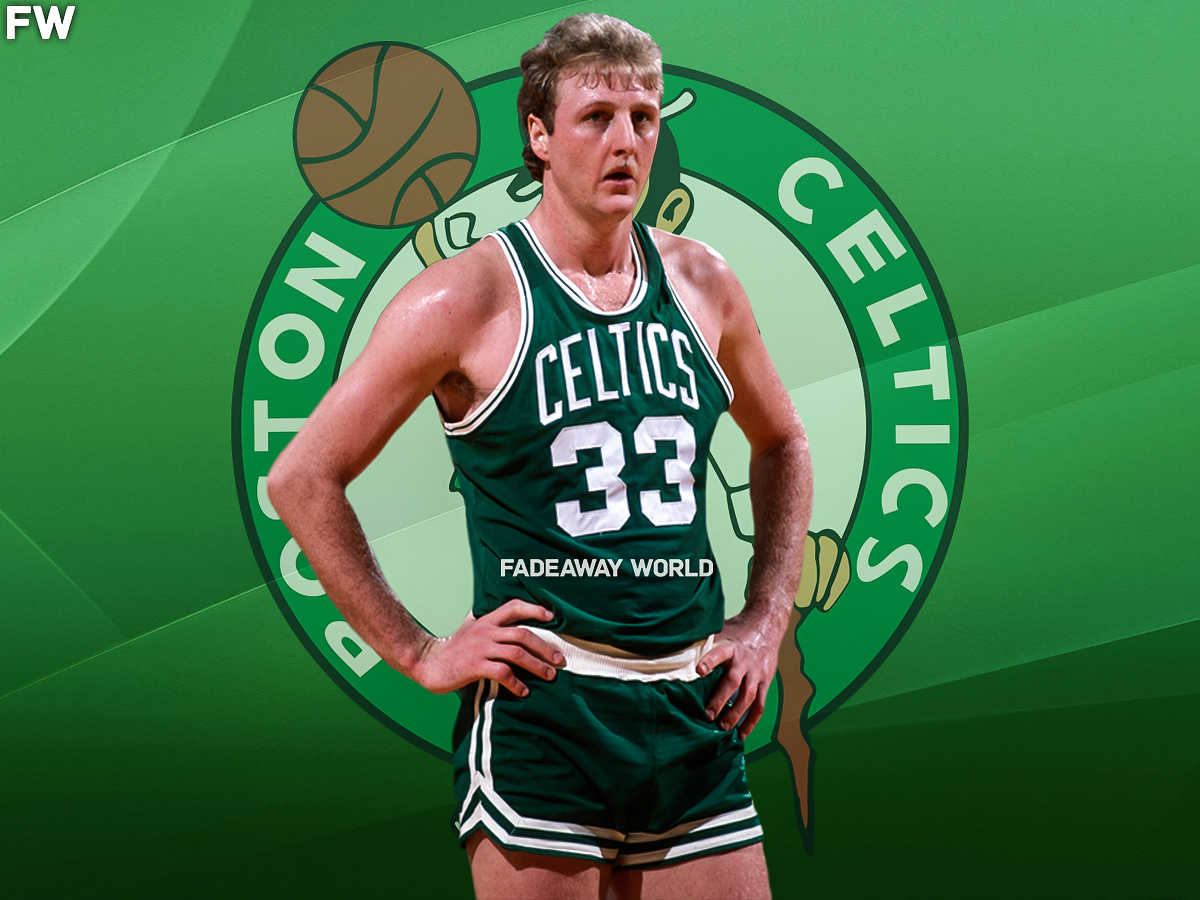
Vernon Maxwell has never been known for filtering his words, and during a recent appearance on the Million Dollars Worth of Game, he told a story that instantly lit up NBA circles. According to Maxwell, one of his most unforgettable on-court moments came at the hands of Larry Bird, and it had nothing to do with a box score.
“He called me a n***a. Larry Bird called us n****s. It was me and this n***a named Buck Johnson. I played with him when I first got traded over there to Houston. You know Larry Bird had that long-a** shot, like he’d go and let that motherf***er go. And he pump faked that s**t.”
“Me and Buck, I was coming from behind, and Buck was coming from the front because Buck was guarding the motherf***er. So I was getting ready to swipe that s**t and take that b***h down there and throw it down. I thought I was. S**t, he pump faked us, and me and him hit each other in the air. We fell out on the ground.”
“The white boy, Larry Bird, ‘n***a, get up off the ground’, knocked our heads off with a bam.”
The story is jarring, but it also fits into the long-established mythology of Bird as one of the most ruthless psychological competitors the league has ever seen. Bird’s trash talk was not polite, not friendly, and never accidental. Teammates and opponents alike have spent decades recounting stories of him calling shots before taking them, insulting defenders in real time, and using words specifically chosen to humiliate and dominate.
The context matters, and so do the numbers. Bird and Maxwell actually faced each other just three times in their NBA careers. Bird went a perfect 3-0 in those matchups, and the production gap tells its own story. Bird averaged 19.7 points, 12.3 rebounds, and 7.3 assists across those games, essentially flirting with a triple-double while controlling the pace. Maxwell, no slouch himself and a respected scorer in his own right, averaged 16.3 points, 4.0 rebounds, and 2.0 assists.
That said, Maxwell’s account hits differently because it crosses from standard trash talk into something far more uncomfortable. The language he described is not clever or witty. It is raw, racial, and deeply offensive, even if it was delivered in the heat of competition during an era when the NBA was far less sensitive, far less monitored, and far more permissive of behavior that would not be tolerated today.
Maxwell did not frame the story as a plea for sympathy. Instead, he told it matter-of-factly, almost as a reminder of how vicious those battles were in the 1980s and early 1990s. Players talked, crossed lines, and dared each other to respond. In that environment, Bird was feared not just for his jumper, but for his mouth. He wanted opponents rattled, embarrassed, and broken.
What Maxwell’s story ultimately highlights is how much the league has changed. Today, a moment like that would bring fines, suspensions, and public condemnation. Back then, it became just another story passed down in locker rooms in shock and awe.