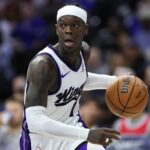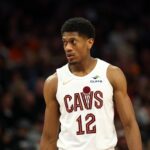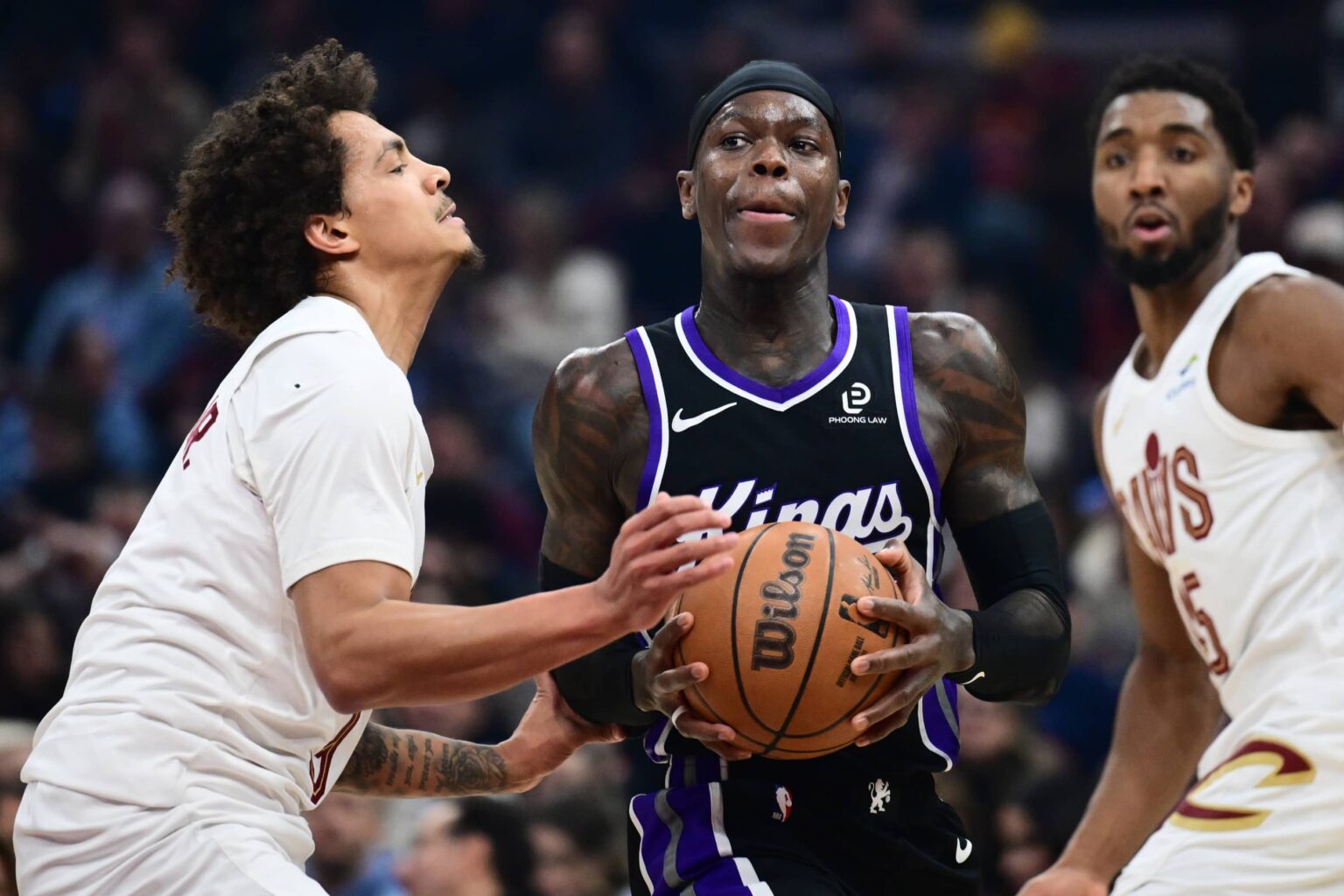
The Cleveland Cavaliers finally made a move as the 2026 trade deadline approached, acquiring Dennis Schroder and Keon Ellis in a three-team deal that sent De’Andre Hunter to the Sacramento Kings. It was one of the few meaningful trades of this season and a clear signal that Cleveland is trying to recalibrate without blowing things up.
At 29–21, the Cavaliers sit fifth in the East, a far cry from last season’s dominant 64–18 campaign when they finished first and posted the league’s best offensive rating. With largely the same core intact, the drop off has been jarring. Their offense has slipped to eighth, their defense from eighth to 13th, and their bench production has cratered. This move was less about star power and more about correcting structural issues.
Depth Chart
Point Guards: Darius Garland, Dennis Schröder, Craig Porter Jr., Lonzo Ball
Shooting Guards: Donovan Mitchell, Keon Ellis, Sam Merrill, Tyrese Proctor
Small Forwards: Dean Wade, Jaylon Tyson
Power Forwards: Evan Mobley, Nae’Qwan Tomlin, Larry Nance Jr.
Centers: Jarrett Allen, Thomas Bryant
The Staters
Darius Garland, Donovan Mitchell, Jalen Tyson, Evan Mobley, Jarrett Allen
For all of Cleveland’s inconsistencies this season, the starting unit has not been the core issue. The Cavaliers still have one of the most talented top fours in the conference, and on most nights, that group does enough to win games.
Donovan Mitchell has elevated his game to a different tier altogether. Averaging 29.1 points, 4.7 rebounds, and 5.8 assists per game, he is not just scoring efficiently but controlling the tempo of games. Cleveland’s offense still bends around his ability to create advantages late in the clock, attack mismatches, and bail out stagnant possessions. When the Cavaliers have looked competitive against elite teams, Mitchell has almost always been the reason. His shot profile has expanded, his decision-making has sharpened, and his leadership has become more visible during rough stretches.
Darius Garland’s season has been more uneven, largely due to injuries that delayed his rhythm early on. Even so, his 18.0 points and 6.9 assists reflect steady production rather than decline. Garland remains the team’s best pure organizer, and when he is aggressive, Cleveland’s offense looks far more fluid. The issue has been availability and continuity, not ability.
In the frontcourt, Evan Mobley continues to anchor everything defensively while slowly expanding his offensive responsibilities. As the reigning Defensive Player of the Year, Mobley still erases mistakes on the back line, but what matters more long term is his growth as a scorer and passer. His 17.9 points and 4.0 assists suggest a player becoming more comfortable initiating actions rather than simply finishing them.
Jarrett Allen remains a steady presence. He is not flashy, but his rim running, rebounding, and vertical spacing are essential to Cleveland’s identity. Allen’s 13.3 points and 7.8 rebounds come almost entirely within the flow of the offense, and his chemistry with Garland and Mitchell continues to be one of the team’s most reliable weapons.
The wildcard has been Jaylon Tyson. The sophomore’s leap into a starting role has been one of the few genuine positives of the season. At 13.9 points and 5.5 rebounds, Tyson brings energy, physicality, and defensive versatility that Cleveland badly needed on the wing. He is not a star, but he fills gaps that previously forced the Cavs into awkward rotations.
The Bench
Dennis Schorder, Keon Ellis, Sam Merrill, Craig Porter Jr., Lonzo Ball, Tyrese Proctor, Dean Wade, Nae’Qwan Tomlin, Larry Nance Jr., Thomas Bryant
This trade was never about touching the starting lineup. It was about fixing what happened the moment the starters sat down.
Dennis Schroder directly addresses Cleveland’s biggest bench problem: offensive organization. Too often this season, second units devolved into isolation basketball or rushed jump shots. Schroder gives the Cavaliers a guard who can run real sets, get downhill, and keep the offense functional without hijacking possessions. His 12.8 points and 5.3 assists are less important than his ability to stabilize minutes when Garland rests. The Cavaliers no longer have to survive those stretches. They can compete in them.
Schroder’s playoff experience also matters. With 74 postseason games under his belt, he understands pace, matchups, and situational basketball, something Cleveland’s young bench often lacked.
Keon Ellis fills a quieter but equally critical role. Cleveland’s perimeter defense slipped this season, especially against quicker guards and ball-dominant wings. Ellis brings point of attack defense, length, and discipline. Offensively, he does not demand touches, which makes him a clean fit next to high usage scorers. His career three-point shooting suggests he can punish teams for ignoring him, even if his current percentages lag behind.
Sam Merrill remains the microwave scorer off the bench. His 13.3 points per game are essential, but last season, he was supported by a deeper, more balanced second unit. That support vanished this year. Nae’Qwan Tomlin, Larry Nance Jr., and Thomas Bryant provide frontcourt depth, but without consistent guard play, their impact was limited.
Last season, Cleveland’s bench ranked eighth in the league. This year, it fell to 23rd, and that drop-off mirrors the team’s overall offensive regression. Schroder and Ellis are not stars, but they directly address the structural flaws that turned leads into deficits.
This is where the trade truly lives or dies. If the bench stabilizes, Cleveland’s ceiling rises quickly.
Can This Trade Save The Cavaliers’ Season?
This trade will not magically return Cleveland to last year’s level, but it addresses real weaknesses. Their starting lineup is still one of the best in the East, Mitchell is playing some of the best basketball of his career, and the added depth should stabilize lineups that were bleeding points.
This trade was also about flexibility. By turning Hunter’s contract into two rotation players, Cleveland saves close to $50 million in salary and luxury tax this season, dropping their tax bill from roughly $164 million to $120 million. That matters for a team already above the second apron and trying to remain competitive long term.
The Cavaliers are 7.5 games behind the top-seeded Detroit Pistons, but only two games back of the second seed. If injuries ease up and the bench finds consistency, Cleveland still has room to climb.
This move was not flashy. It was practical. And for a team that needed balance more than headlines, that might be exactly what keeps their season alive.