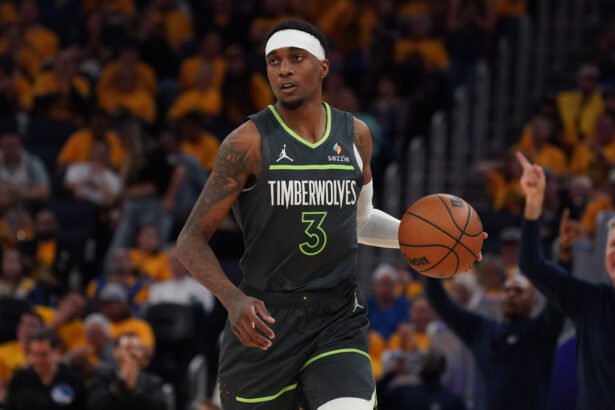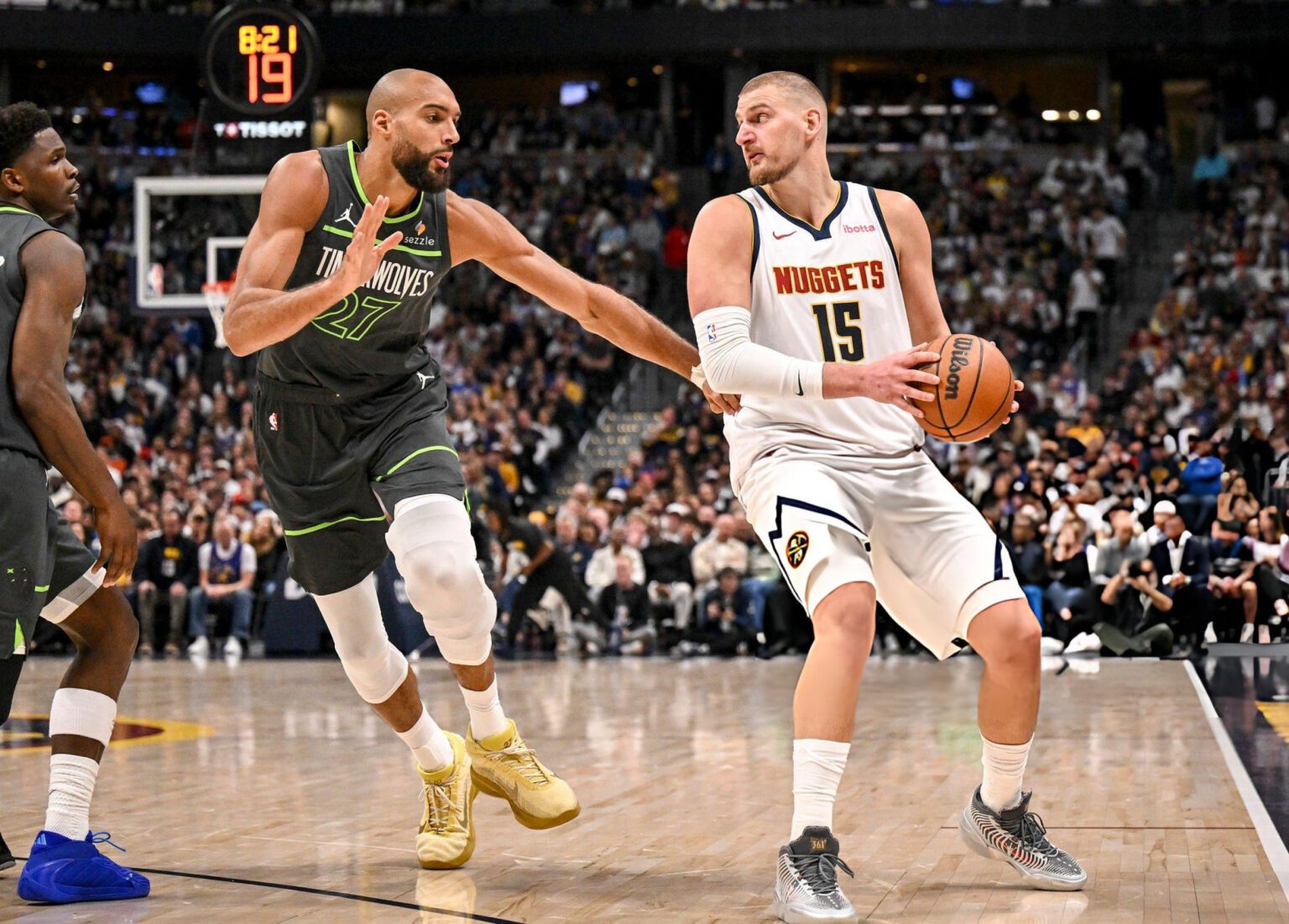
Anthony Edwards delivered a clear message to Rudy Gobert during Game 2 of the playoff series against the Denver Nuggets: Stay disciplined against Nikola Jokic and avoid giving away easy fouls.
Speaking after the Minnesota Timberwolves’ 119-114 win, Edwards explained exactly what he told Gobert in the third quarter.
“They don’t understand what he means to us when he’s on the floor. People don’t want to lay the ball up around him. People just don’t want to go at Rudy Gobert. Regardless of what they say about him on the offensive end, he’s a four-time Defensive Player of the Year for a reason. He’s been doing it at a high level for a long time, and we need him on the floor.”
“That’s why I challenged him at the end of the third. Because Nikola Jokic is a three-time MVP, but Rudy has four Defensive Player of the Year awards for a reason. He can guard. People have to start respecting him. Put some respect on his name. That’s what we do. We trust him.”
“I told him, we’re not bringing a double team. You’re going to guard him one-on-one all night. Stop fouling him. Stop reaching, because he’s going to draw the foul. Just play him straight up. If he makes a shot over you, cool. That’s what he does. He’s going to make those shots. So let’s go, Rudy. Let’s go.”
And Rudy Gobert responded to Ant’s call in the end. In the fourth quarter, Gobert held Jokic to 1-7 shooting from the field and 0-2 from three. Jokic managed only three points, three rebounds, and one assist in the final period. It was a sharp shift from his overall stat line.
For the game, Jokic still finished with 24 points, 15 rebounds, and eight assists on 8-20 shooting and 1-7 from three. But when it mattered most, Minnesota and Gobert slowed him down.
Rudy Gobert’s own numbers were modest. He finished with two points, seven rebounds, and two steals. But the impact went beyond the box score. His defensive presence changed how Denver attacked late in the game. Players hesitated around the rim, and the offense stalled at times. That allowed Minnesota to complete a 19-point comeback.
Edwards set the tone for that comeback. He scored 30 points and added 10 rebounds, attacking the basket far more aggressively than in Game 1. Julius Randle added 24 points and nine rebounds, while timely plays from role players closed the game. Still, Edwards’ leadership stood out just as much as his scoring.
His message to Gobert reflected a broader strategy. Jokic thrives on physical defenders who reach or overcommit. He uses positioning, timing, and subtle contact to draw fouls and control pace. Edwards recognized that early. Instead of trying to stop Jokic completely, Edwards wanted Gobert to be focused on limiting mistakes.
That approach worked late. Jokic and Jamal Murray combined to shoot just 2 for 12 in the fourth quarter. Denver lost control after leading by as many as 19 points while Minnesota stayed composed and executed down the stretch.
This win carried weight beyond one night. Denver entered the game with a perfect trend. They were 8-0 all-time when taking a 2-0 lead in a playoff series. Minnesota carried the opposite burden. They were 0-8 when falling behind 0-2. The stakes were pretty clear. Another loss would have pushed the Timberwolves toward elimination before the series even shifted home.
The series now shifts with momentum, even at 1-1. Edwards’ trust in Gobert could define the matchup going forward. If Gobert continues to defend without fouling, Minnesota gains a stable foundation. If Jokic finds ways to force contact again, the balance shifts back.
Game 2 was not only a comeback, but it was also a correction. A loss would have pushed Minnesota into a historical hole they have never escaped. Instead, they stayed alive and forced this series into a real fight.