The Philadelphia 76ers flipped the script in a major way, stunning the Boston Celtics with a confident, high-level Game 2 performance that we didn’t see coming.
After looking overwhelmed in the opener, Philadelphia responded with force, shooting a blistering 48.7% from three and out-executing Boston in nearly every decisive moment.
Now, what once felt like a series leaning heavily toward Boston suddenly feels wide open. Behind explosive shot-making, smarter decision-making, and a defensive edge that showed up at the right times, the Sixers are right back in the series.
Here are five key takeaways from a Game 2 that may have just redefined this matchup.
1. Tyrese Maxey And VJ Edgecombe Took Over
This was a full-on offensive takeover from Tyrese Maxey and VJ Edgecombe. Maxey poured in 29 points on 11-28 shooting, knocked down 5 threes, and added 9 assists while only turning it over once.
Even on a high volume of shots, he controlled tempo and consistently bent Boston’s defense, especially in the second half when the game started to tilt.
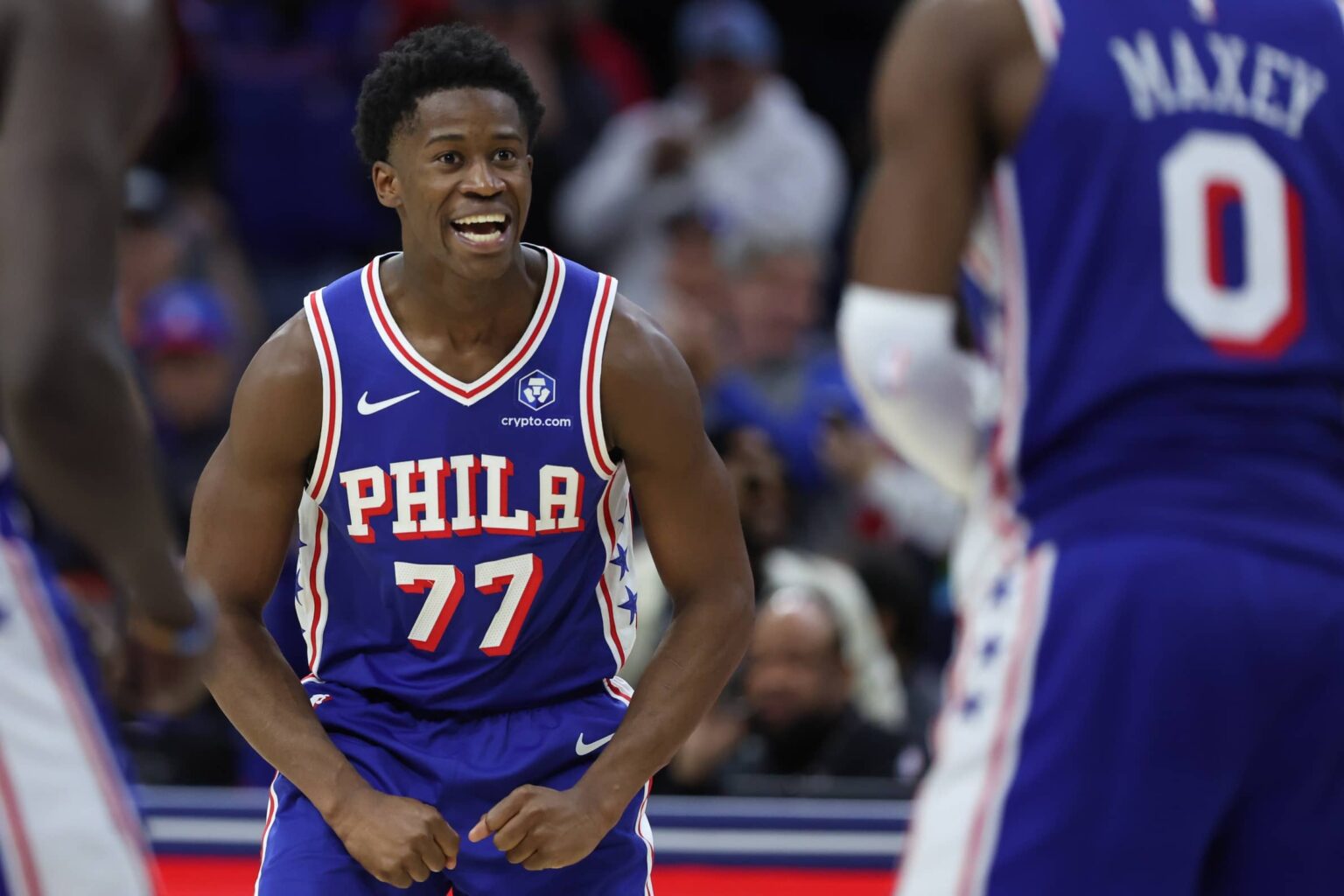
Edgecombe might’ve been even more impactful in terms of efficiency and feel. He dropped 30 points on 12-20 shooting, hit 6-10 from deep, and grabbed 10 rebounds, a monster two-way stat line that felt bigger than the box score.
Every time Boston threatened to go on a run, he answered. That kind of shot-making under pressure changes the geometry of a playoff series in a hurry.
2. Philadelphia’s Three-Point Shooting Was Hot
The Sixers dominated the shot chart. They shot 19-39 from three (48.7%), while the Celtics struggled at 13-50 (26.0%). That’s a +18 point swing from beyond the arc, and in a game decided by 14, that’s everything.
But it was also about timing. Maxey, Edgecombe, and even role guys like Quentin Grimes (10 points, 4-4 shooting) hit shots in momentum moments. Meanwhile, Boston kept firing but never found rhythm.
When a team takes 50 threes and hits just 13, it starts to feel less like stubbornness. Philadelphia stayed balanced.
3. Boston’s Offense Turned Into Jaylen Brown vs. Everyone
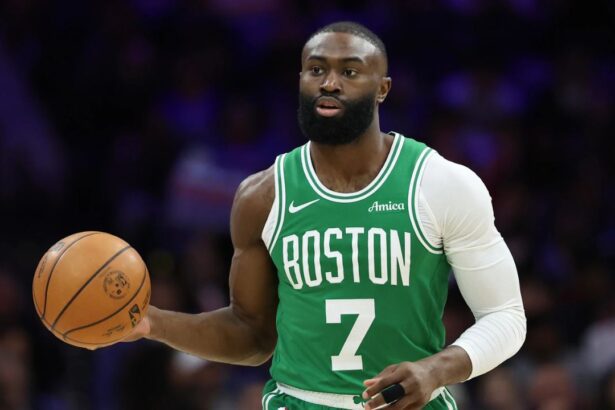
If not for Jaylen Brown, this could’ve gotten ugly much earlier. He finished with 36 points on 11-24 shooting, hit 5 threes, and got to the line 12 times, knocking down 9. He was aggressive, physical, and honestly the only Celtic who consistently looked comfortable.
The problem? Nobody else showed up. Jayson Tatum had 19 points but needed 19 shots, going 2-8 from three.
Derrick White added just 8 points on 3-12 shooting, including 2-10 from deep. When your top perimeter creators combine for inefficient shooting nights and your role players can’t capitalize, the offense bogs down fast.
4. The Sixers Won The Possession Battle
This is where the game really tilted under the surface. Philadelphia committed just 9 turnovers, compared to Boston’s 13, and turned those mistakes into 5 points.
Meanwhile, the Celtics couldn’t generate nearly the same level of punishment in transition or off giveaways.
Even more telling, Boston grabbed 18 offensive rebounds, but it didn’t matter because they couldn’t convert. That’s the frustrating part if you’re the Celtics: second chances were there, but the finishing wasn’t.
In a playoff game, that kind of control feels like oxygen – you can breathe, settle in, and dictate pace.
5. This Series Just Shifted And Anything Goes
Game 1 made it seem like the Boston Celtics had this matchup figured out. Game 2 completely erased that illusion.
The Philadelphia 76ers didn’t just adjust, they punched back with confidence, identity, and shot-making that travels.
Now the pressure flips. Boston suddenly has questions: Can they rely this heavily on three-point volume?
Can they get more consistent production outside of Brown? Meanwhile, Philadelphia heads into Game 3 knowing their formula works. It’s a series.