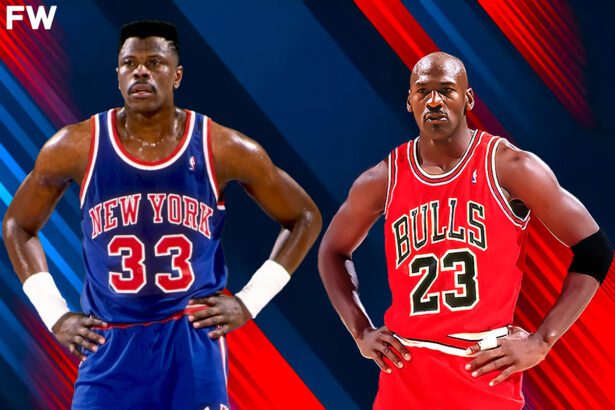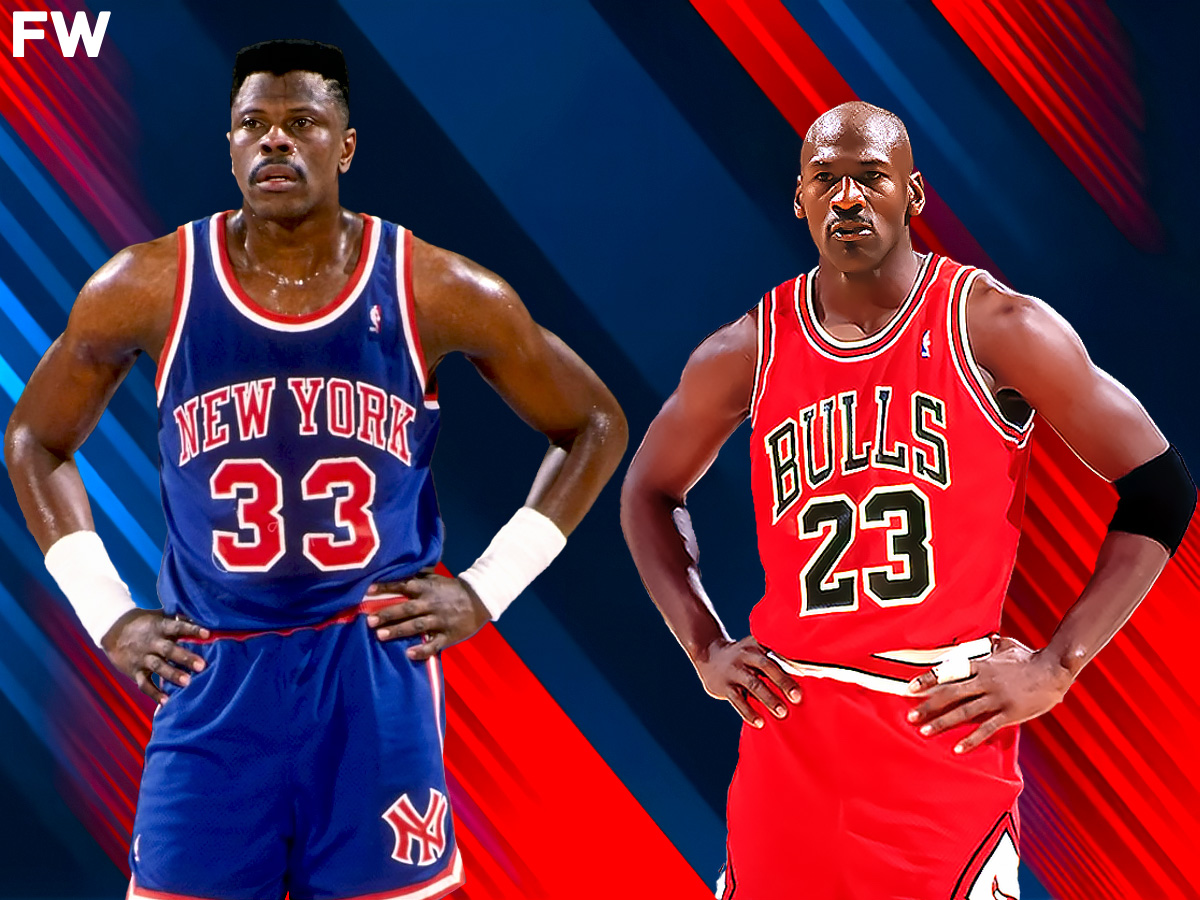
Patrick Ewing has spent decades competing against and studying greatness, and when he speaks about what separated Michael Jordan from everyone else, the answer goes deeper than skill or accolades. It starts with mindset.
Speaking on The Pivot podcast, Ewing reflected on his early experiences with Jordan, dating back to their high school and college days.
“You know he was good. You know he was athletic. You know he was talented. So we played in the McDonald’s games together. I also visited North Carolina when he was at North Carolina. He had already committed but I think they brought him back just to talk me into coming to North Carolina.”
“There were other guys that I thought might have been better than him at that time but the thing that separated him from a lot of people is that belief. He had a belief in himself. He had a drive and I think also the athleticism. I think all that separated him from everybody else.”
That belief showed up early in key moments. The 1982 NCAA Championship remains one of the first defining snapshots. Jordan hit the game-winning shot against Ewing’s Georgetown team, a moment that hinted at what would follow. From there, his progression accelerated once he entered the NBA.
Jordan’s rookie season with the Chicago Bulls set the tone. He averaged 28.2 points, 6.5 rebounds, and 5.9 assists, immediately becoming one of the league’s most dominant forces. Over the next decade, that belief translated into six championships, five MVP awards, and complete control over the league’s biggest stage.
For Ewing, that dominance came at a cost. As the franchise cornerstone of the New York Knicks, he repeatedly ran into Jordan’s Bulls during the 1990s. Those battles defined an era, and they also shaped Ewing’s legacy. He never won a championship, and he has been clear about why. He played in Jordan’s era.
That statement reflects both respect and frustration. Ewing was one of the most dominant centers of his time, yet he consistently faced a player whose mindset and execution were on a different level.
Beyond Jordan, Ewing used the same conversation to reflect on his own journey. He spoke about arriving in the United States from Jamaica at 12 years old, describing the cultural challenges and pressures that came with it. He acknowledged that without that move, his life could have taken a far different path, even suggesting he might not have avoided serious trouble.
He also addressed tensions he faced after moving to Boston, where he felt resistance as an outsider competing for opportunities. Those experiences shaped his toughness and perspective, reinforcing the importance of resilience.
Ewing did not stop there. He compared eras as well, stating his belief that the original Dream Team would dominate the Redeem Team in a seven-game series. That view aligns with his broader respect for players from his generation, particularly those who combined skill with physicality and mental edge.
When all of it is put together, his view on Jordan becomes clearer. Talent alone was never the separator. Many players had that. What set Jordan apart was how he paired belief, drive, and athletic ability with an unmatched competitive edge. Ewing saw it before the world fully understood it. Over time, that belief turned into sustained dominance, and it became the defining trait of Jordan’s career.