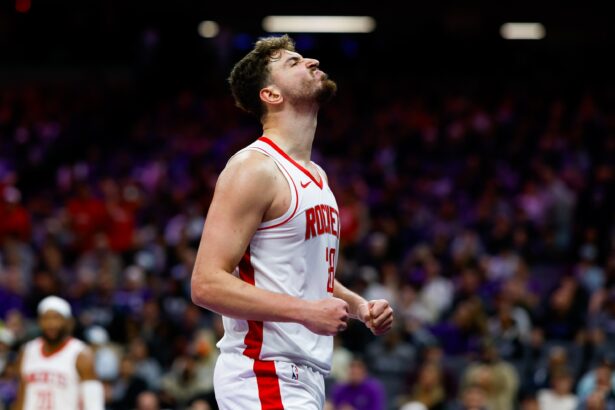
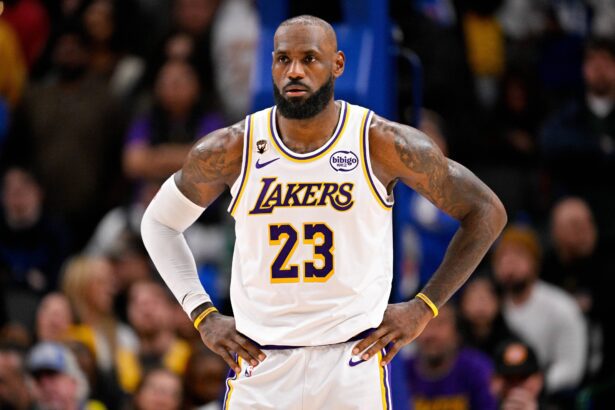
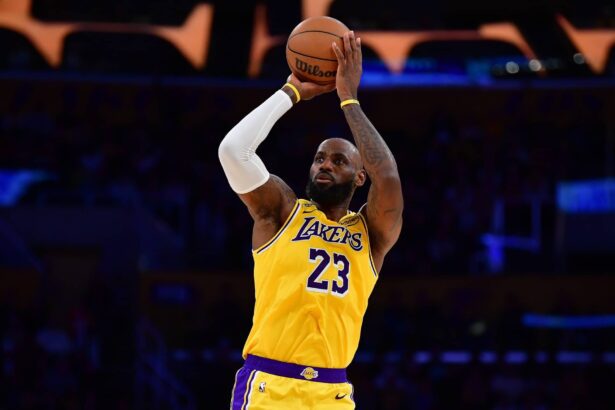
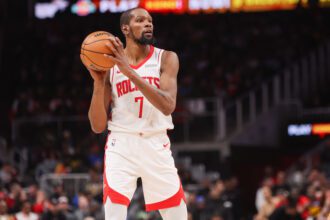
The gap between these two teams isn’t just 3-0 on paper, and it’s showing up in every possession, every quarter, and pretty much every stat column imaginable. The Los Angeles Lakers have beaten the Houston Rockets three times, and they’ve systematically exposed flaws that Houston simply doesn’t have the tools to fix mid-series.
From shot creation to decision-making to basic offensive structure, this matchup has tilted hard in one direction, and now the Rockets are staring at problems that feel bigger than just “make more shots.” Here are four brutal, undeniable problems Houston can’t seem to solve.
1. The Shooting Gap Is Flat-Out Unsustainable
You can survive one bad shooting night. Maybe even two. But three games of this? That’s a structural issue.
Houston is shooting:
Game 1: 38% FG, 33% from three (11-33)
Game 2: 40% FG, 24% from three (7-29)
Game 3: 41% FG, 28% from three (11-39)
Meanwhile, the Lakers:
Game 1: 61% FG, 53% from three
Game 2: 46% FG, 46% from three
Game 3: 48% FG, 41% from three
That’s simply shocking. Across the three games, the Lakers have consistently hovered around elite efficiency, while Houston keeps firing blanks from deep.
It’s not just misses, either, because it’s bad shot quality. Look at Game 3: Reed Sheppard goes 6-21, Amen Thompson doesn’t even take threes seriously, and the spacing collapses. When your offense produces 11-39 from deep in a must-win game, you’re not scaring anyone.
2. Turnovers Are Killing Any Momentum
Houston’s offense already struggles, and then they make it worse by giving the ball away at the worst times.
Game 1: 13 turnovers
Game 2: 15 turnovers
Game 3: 15 turnovers
That’s 43 total turnovers in three games, and many of them are live-ball giveaways that fuel the Lakers’ transition attack.
Even worse? The decision-makers are the culprits:
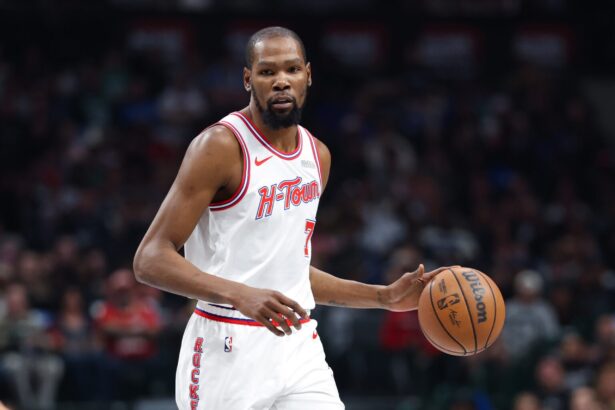
- Kevin Durant had 9 turnovers in Game 2 alone
- Amen Thompson has been loose with the ball despite solid assist numbers (9 assists, 3 turnovers in Game 2, but key mistakes late)
- Alperen Sengun, despite strong scoring (33 points, 16 rebounds in Game 3), still had 3 turnovers
Compare that to the Lakers’ control:
- 18 turnovers in Game 1 (only real sloppy game)
- 12 in Game 2
- 20 in Game 3 (and they still won comfortably)
The difference? The Lakers’ turnovers don’t derail their offense. Houston’s absolutely do.
3. Defensive Identity? It’s Gone
Coming into this series, the Rockets were supposed to lean on defense. That identity has completely disappeared.
Lakers scoring by game:
- Game 1: 107 points on 61% shooting
- Game 2: 101 points on 46% shooting
- Game 3: 112 points on 48% shooting
And it’s not like this is one guy going nuclear because it’s everyone:
- LeBron James: 19 – 28 – 29 across the three games, with 13 assists in Game 1
- Marcus Smart: 15, 25, 21 – including 5 steals in Game 2
- Luke Kennard: 27 points on 5-5 from three in Game 1, then 23 in Game 2
Houston can’t take away anything. Not the paint (Lakers shot 61% overall in Game 1), not the perimeter (13 threes in Game 2), not even basic actions.
When a team has no defensive counterpunch, every game starts to look the same.
4. No Offense, Just Chaos
Here’s the uncomfortable truth: Houston doesn’t know who they are offensively.
Yes, Sengun has been productive: 19 points (Game 1), 20 points (Game 2), and 33 points, 16 rebounds, 6 assists (Game 3)
But outside of him, it’s a guessing game every night.
Durant: 23 points in Game 2, but wildly inconsistent impact during the game as he missed Game 1 and Game 3 due to injury. Sheppard: 17 (Game 1), then inefficient volume shooting after, Amen Thompson: solid all-around numbers, but no spacing threat, and the bench, which is basically nonexistent, scoring across all three games.
Game 2 is the perfect example:
- Houston scores 94 points
- Shoots 7-29 from three
- Gets zero points from multiple rotation players
There’s no flow. No reliable second option. No identity. Just possessions that end in contested jumpers or late-clock bailouts.
Meanwhile, the Lakers? Everyone knows their role, and it shows in the efficiency and ball movement (29 assists in Game 1, 21 in Game 3).