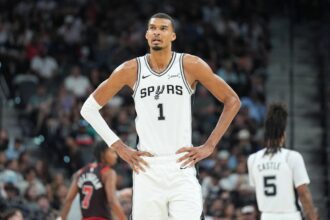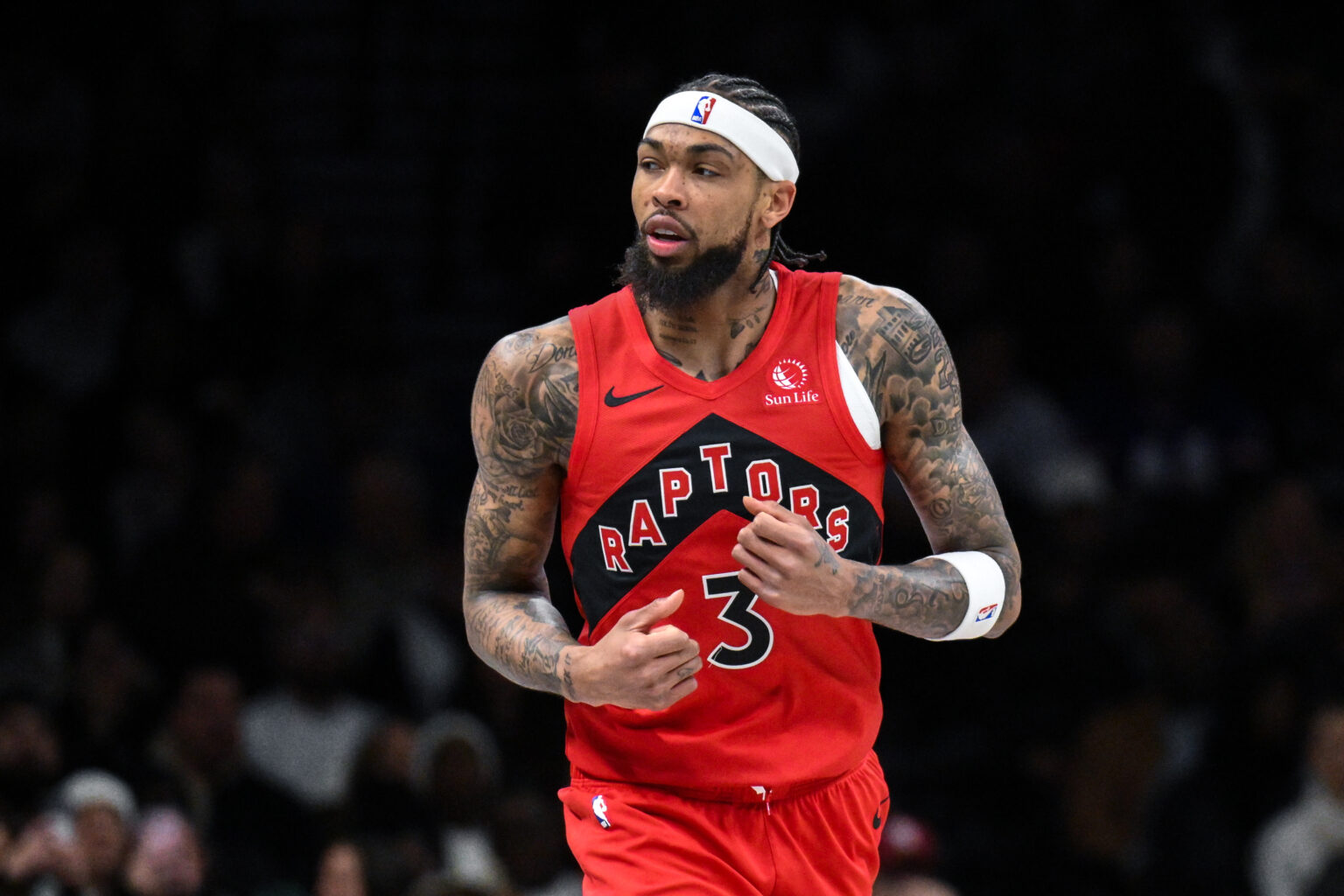
The Toronto Raptors do not need a reset. They need a better top-end structure to match their future expectations and roster construction over the long term.
That is the key distinction behind any Brandon Ingram trade conversation. The Raptors went 46-36, finished fifth in the East, ranked third in assists at 29.5 per game, and allowed 111.8 points per game, ninth-best in the league. That is not a broken team. It is a team with a clear regular-season floor and a clear playoff question: who creates efficient offense when the first action is taken away?
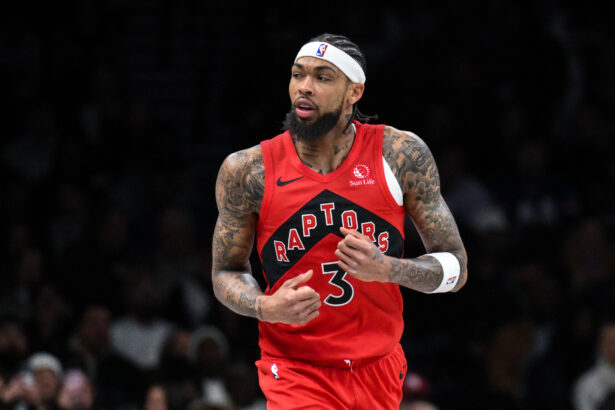
Ingram answered part of that during the regular season. He led the Raptors with 21.5 points, 5.6 rebounds, and 3.7 assists while shooting 38.2% from three in an All-Star season. The issue is not the baseline production. The issues are the contract, the overlap with Scottie Barnes and RJ Barrett, and the struggles in the playoffs, where he posted just 12.0 points on 32.8% from the field, making him one of the biggest disappointments of the postseason.
The Raptors also have a front office problem that is really an opportunity. Ingram is owed $40.0 million in 2026-27 and has a player option worth $41.9 million for 2027-28. That salary is large enough to match star money, but short enough that it does not automatically become toxic. If the Raptors want to chase a bigger name, Ingram is the best trade chip.
Brian Windhorst reported last offseason that the Raptors were looking for a “big fish.” Sportsnet’s Michael Grange has also just put Ingram in the conversation as a possible outgoing piece if the Raptors explore a larger acquisition. That does not mean Ingram is gone. It means the Raptors have a path to test the star market without touching Barnes. That should be the line. Barnes stays. Everything else should be on the table if the player coming back changes the franchise tier.
4. The Raptors Land Jamal Murray
Toronto Raptors Receive: Jamal Murray
Denver Nuggets Receive: Brandon Ingram, Gradey Dick, Ja’Kobe Walter, 2029 first-round pick, 2031 first-round pick
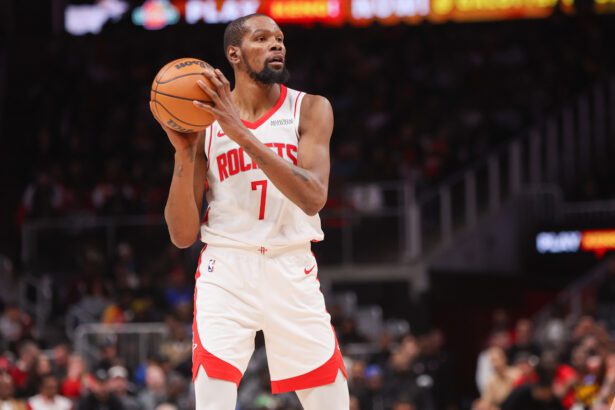
Jamal Murray is the best offensive fit because he fixes the Raptors’ biggest playoff issue while solving a major spacing problem. Murray averaged 25.4 points, 4.4 rebounds, and 7.1 assists in 75 games while shooting 48.3% from the field, 43.5% from three, and 88.7% from the line.
The Raptors need that type of player at the guard spot, with Immanuel Quickley having injury issues. Scottie Barnes is a power creator, not a pure half-court guard. Barrett is a downhill scorer. Ingram is a mid-range wing who can pass, but he does not create enough rim pressure or three-point volume to solve the Raptors’ late-clock offense. Murray does. He can run high pick-and-roll, punish drop coverage, shoot off movement, and handle the last five seconds of a possession.
The salary is workable. Murray is owed $50.1 million in 2026-27, $53.8 million in 2027-28, and $57.5 million in 2028-29. Ingram’s $40.0 million salary, combined with Gradey Dick and Ja’Kobe Walter, gets the Raptors close enough to structure a legal deal. The picks are the cost of moving from a high-level wing scorer to a playoff-level guard creator.
For the Nuggets, this is only a conversation if they decide the current build has reached its ceiling. They went 54-28 and finished third in the West, but their postseason ended in a big disappointment, and their defense was not championship level. They scored 122.1 points per game and shot 39.6% from three, but had a 117.4 defensive rating. That is a top-heavy offensive team with a real defensive problem.
Ingram would not replace Murray’s creation. That part is obvious. But he would give the Nuggets a bigger wing scorer next to Nikola Jokic, lower the long-term guard salary burden, and add two young rotation pieces plus two first-round picks. Dick gives them shooting and is a realistic trade candidate in the offseason. Walter gives them a controllable wing defender with developmental upside. The two picks give them flexibility if the front office wants another move around Jokic.
For the Raptors, the fit is stronger. A core of Murray, Barrett, Barnes, Collin Murray-Boyles, and Jakob Poeltl has more offensive order. Murray would be the primary guard. Barnes would be the second-side creator and defensive hub. Barrett would attack tilted defenses instead of forcing first-option reps. The Raptors would still need shooting, but Murray’s pull-up gravity changes the geometry.
There is one clear concern. Murray’s contract is expensive, and small guards on max money can become uncomfortable quickly if the burst slips. Still, this is not a declining player. Murray just produced the best regular season of his career with a first All-Star selection. If the Nuggets are willing to listen because of payroll pressure and postseason frustration, the Raptors should move first.
This is the trade that balances ambition and discipline. It costs two young players and two first-round picks, but it does not cost Barnes, Barrett, Murray-Boyles, or Poeltl. That is the correct level of aggression for a 46-win team trying to move into the top four of the East.
3. The Raptors Take The Anthony Davis Swing
Toronto Raptors Receive: Anthony Davis
Washington Wizards Receive: Brandon Ingram, Jakob Poeltl, Gradey Dick, 2029 first-round pick (lottery protected)
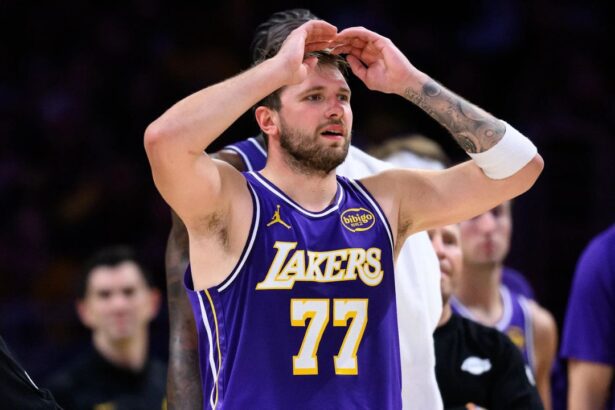
Anthony Davis is the highest-risk trade out there because there’s no guarantee his body will hold up again. He is also the most direct way to change the Raptors’ defensive ceiling.
Davis averaged 20.4 points, 11.1 rebounds, 2.8 assists, 1.1 steals, and 1.7 blocks in 20 games while shooting 50.6% from the field. The problem is the same as always: availability. He played only 20 games, and his season was complicated by injuries after the Wizards acquired him.
That is why this trade cannot be valued like a normal superstar deal. Davis is still a dominant interior defender when healthy. He can play center, switch in selective matchups, erase mistakes at the rim, and finish possessions on the glass. But he is 33, expensive, and not reliable enough to justify a blank-check package.
The contract is heavy. Davis is owed $58.5 million in 2026-27 and has a $62.8 million player option for 2027-28. The only reason the Raptors can make the salary match is that Ingram and Poeltl combine for roughly the same money, with Ingram’s $40.0 million deal and Poeltl’s $19.5 million for next season. Ingram gives the Wizards a younger scorer. Poeltl gives them a stable center. Dick and a first-round pick give them a future-facing component.
The Wizards’ side depends on direction. They went 17-65, worst in the East. A team with that record should not be building around an older, expensive big man unless it believes the roster can turn quickly. If they don’t look like an instant contender, rumors say Davis might ask out of the franchise before the midseason mark.
For the Raptors, the basketball logic is simple. Davis would give them an elite back-line defender and a real playoff frontcourt with Barnes. The Raptors were already solid defensively, but Davis would move them from solid to dangerous. Barnes could pressure the ball and roam more aggressively. Murray-Boyles could take physical wing assignments. Davis would clean up the back end.
The offensive fit is not as exciting. Davis is not a high-volume three-point shooter. Barnes is not a high-volume three-point shooter. If the Raptors move Poeltl for Davis, they improve talent but still need shooting at the other three spots. That puts major pressure on Immanuel Quickley, RJ Barrett, and the bench. It also means the Raptors would need to avoid playing Davis next to another non-shooting big.
The bigger concern is durability. The Raptors cannot trade Ingram, Poeltl, Dick, and a first-round pick unless the medical review is strong. This is not a regular star acquisition. This is a bet that Davis gives them 60 high-level games and then anchors a playoff defense. If the Raptors only get 40 games, the deal becomes a major drag.
The correct price is important. No Murray-Boyles. No big risk first-round pick. No extra premium swap. Davis is too old and too expensive for that. Ingram, Poeltl, Dick, and a protected first-rounder is already a serious offer for a rebuilding team.
If healthy, Davis gives the Raptors the best defense in this article. But he does not solve the guard-creation problem. He changes the ceiling through defense, not through late-game offense. That makes him a strong option, but not the best one.
2. Turning Ingram Into Austin Reaves And More Depth
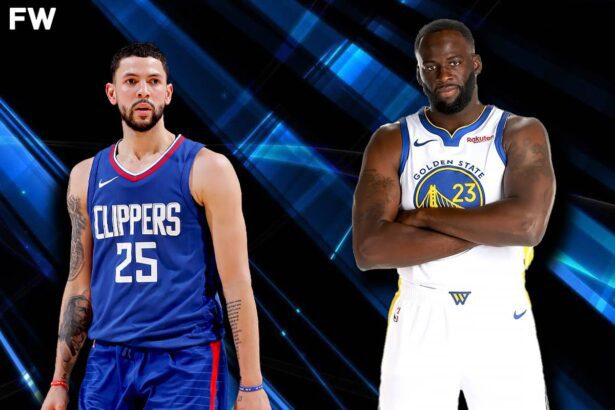
Toronto Raptors Receive: Austin Reaves, Jarred Vanderbilt
Los Angeles Lakers Receive: Brandon Ingram, 2029 first-round pick
This is the least glamorous trade. It might also be the greatest basketball fit if the Raptors decide they want efficiency, ball movement, and guard skill over name value.
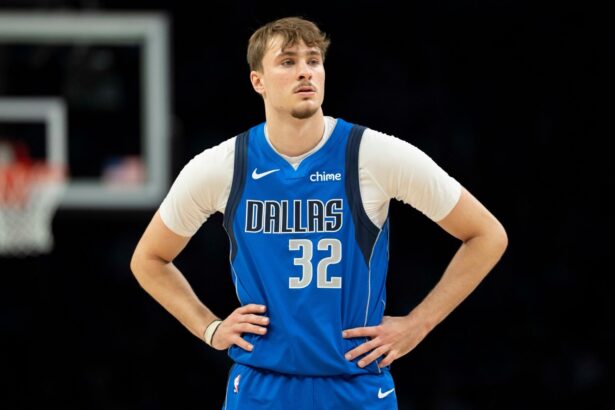
Austin Reaves averaged 23.3 points, 4.7 rebounds, and 5.5 assists while shooting 49.0% from the field, 36.0% from three, and 87.1% from the line. His true shooting percentage was 64.1%. That is not co-star production. That is franchise-level efficiency from a guard who can handle, pass, shoot, and play without owning every possession.
The Raptors need more of that. They were third in assists, but they were only 21st in points per game at 114.6. That points to a team with good structure but not enough high-end shot-making. Reaves helps because he creates efficient possessions without slowing the offense down. He can run second-side pick-and-roll, attack closeouts, draw fouls, and space the floor when Barnes initiates as a point-forward.
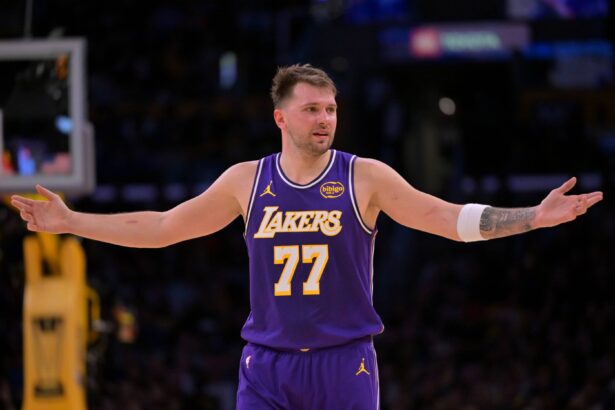
The Lakers’ side is about consolidation. They went 53-29 and finished fourth in the West, but their roster is now built around Doncic. If Reaves is about to become a $30.0 million to $35.0 million player, the Lakers have to decide whether that is the right use of money for a secondary guard. Ingram gives them a bigger scoring wing on a $40.0 million salary. He gives Doncic a frontcourt-sized scorer who can play from the mid-post, attack mismatches, and take pressure off the offense without forcing the Lakers into another long guard contract.
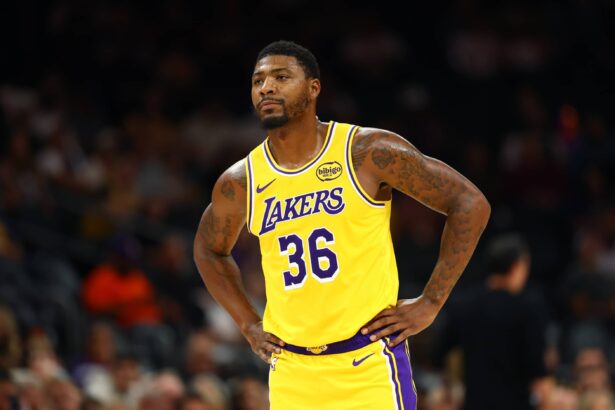
Vanderbilt is the leverage point. He is a strong defender and rebounder when healthy, but his contract has become uncomfortable. He is owed $12.4 million in 2026-27, and his four-year, $48.0 million extension is not cheap for a limited offensive player. He also suffered another injury setback with a severe right pinky dislocation last night, adding to a recent availability history that already made his deal harder to carry.
For the Lakers, attaching Vanderbilt to Reaves would clear a roster problem. They would avoid paying Reaves big-star money, remove Vanderbilt’s money, and turn both into Ingram. That gives them more size, more wing scoring, and a cleaner Doncic-centered offensive build.
For the Raptors, this is a fit play more than a headline play. Reaves is not as big or as proven as Ingram as a wing scorer, but he fits Barnes better. He plays faster. He gets to the line. He shoots efficiently. He can organize second units and close games as a secondary handler. The Raptors ranked near the top of the league in assists, but they still lacked enough efficient guard creation. Reaves directly addresses that.
1. Just Empty The Asset Cabinet For Giannis Antetokounmpo
Toronto Raptors Receive: Giannis Antetokounmpo
Milwaukee Bucks Receive: Brandon Ingram, RJ Barrett, Collin Murray-Boyles, Ja’Kobe Walter, Gradey Dick, 2028 first-round pick, 2029 first-round pick swap, 2030 first-round pick
This is the only trade that changes the Raptors’ franchise tier overnight.
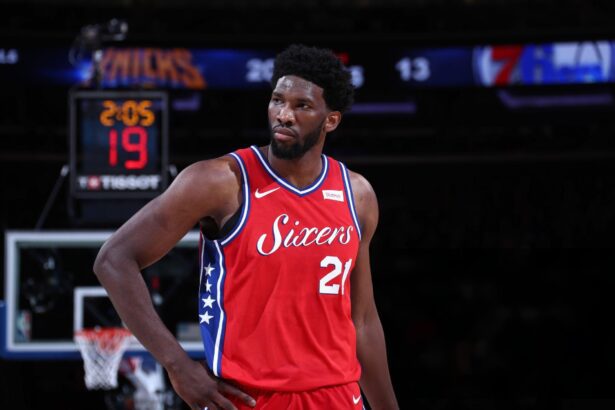
Giannis Antetokounmpo averaged 27.6 points, 9.8 rebounds, and 5.4 assists in 36 games while shooting 62.4% from the field. His true shooting percentage was 65.8%. Even in an unstable season, his production remained elite.
The Bucks’ season created the opening. They finished 32-50 and 11th in the East. That is not a season that makes Giannis want to run it back. It is also not the kind of result that lets a front office pretend everything is fine. If the Bucks explore a trade, the price will be enormous. ESPN has already discussed what teams could offer for Giannis, and any real deal would need a blue-chip young player, major salary, and long-term draft control.
The Raptors can make a serious offer because they have the correct mix: Ingram’s salary, Barrett’s salary, Murray-Boyles as the premium young piece, Walter and Dick as developmental wings, and enough first-round picks to stay in the conversation. The Raptors control all seven of their first-round picks through 2031 and have 13 total picks in that window. That matters in any Giannis auction.
The salary math is not the issue. Giannis is owed $58.5 million in 2026-27 and has a $62.8 million player option for 2027-28. Ingram and Barrett alone can cover the matching framework. The real issue is asset value. The Bucks will ask for Barnes. The Raptors should say no.
That is the entire negotiation. A Giannis trade makes sense only if he joins Barnes. It does not make sense if he replaces Barnes. The Raptors would not be trading for Giannis to start another rebuild. They would be trading for him to create a two-star frontcourt that can overpower the East.
The fit is imperfect, but the talent level is too high to overthink. Barnes and Giannis are not natural floor spacers. That would create half-court spacing stress, especially if Poeltl remains the starting center. The Raptors would probably need to move Poeltl later or shift toward a five-out center. They would also need to prioritize shooting in every smaller move.
But the defensive upside is extreme. Barnes, Giannis, and Murray-Boyles would give the Raptors size, transition speed, switchability, and force. The Raptors could pressure the ball, protect the rim by committee, and dominate the defensive glass. Offensively, Giannis would give them the rim pressure they do not currently have. Barnes could become the connector instead of carrying too many self-created possessions.
The Bucks’ side is a full reset. Ingram gives them a 21-point scorer. Barrett gives them a second starting-level wing. Murray-Boyles gives them the young centerpiece. Walter and Dick give them two controllable perimeter pieces. The picks give them long-term upside. It is not an actual star-for-star return, but it is deep and flexible to keep being competitive as the Bucks won’t have draft control in the next four years.
The Raptors should be willing to offer this exact type of package. They should not go much further. Adding another first-round pick is acceptable if it closes the deal. Adding Barnes is not. Adding Quickley would also be difficult because the Raptors would need shooting and guard play around Giannis.
This is the highest-ceiling move. It is also the least likely because every team with assets will call the Bucks. If Giannis is truly available, the Raptors should be aggressive enough to stay in the room until the final number becomes irrational.
Final Thoughts
The Raptors should not treat this as an Ingram problem. They should treat it as a roster-shaping decision.
The priority has to be raising Barnes’ ceiling. Giannis Antetokounmpo does that at the highest level. Austin Reaves does it through efficiency, spacing, and faster guard decisions. Anthony Davis does it through defense, size, and rim protection. Jamal Murray does it through shot creation, which is still the most difficult skill to find in the playoffs.
The order is Giannis, Reaves, Davis, and Murray. Still, Murray is the interesting swing. He may be the least attainable, but he answers the Raptors’ most direct weakness. Quickley’s injuries have made the backcourt less reliable, and the Raptors cannot enter another postseason without a guard who can control games late in the clutch.
That is the real test for the front office. The move cannot just be bigger. It has to make Barnes easier to build around.