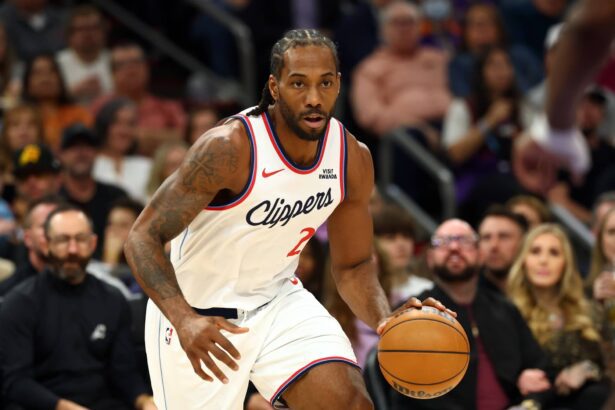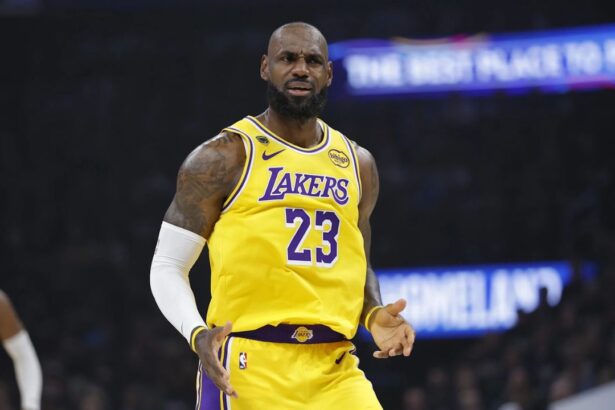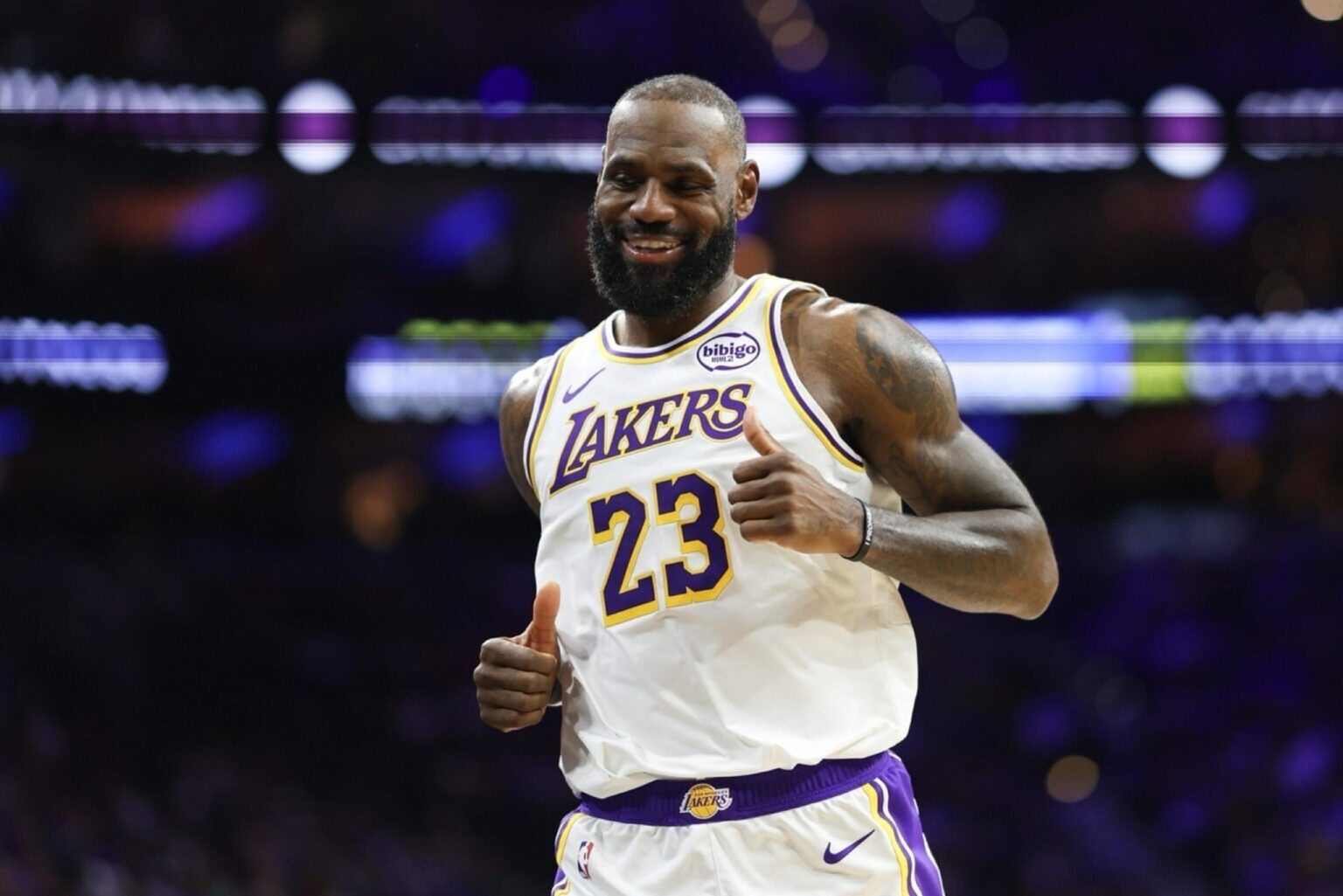
The LeBron James era with the Lakers has never been simple to grade. It started with pressure, injuries, and a missed playoff run. It reached the top with the 2020 championship. After that, it became a long mix of roster changes, short title windows, injuries, failed veteran experiments, and sudden runs that kept the era alive longer than expected.
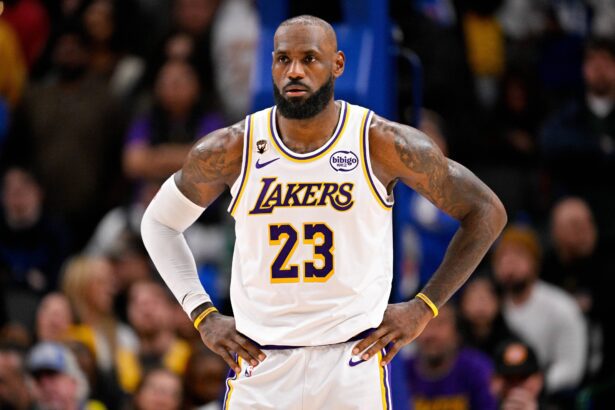
Now the evaluation feels more complete. James just finished his 23rd NBA season, and the Lakers were eliminated by the Thunder in the second round after a four-game sweep. James still had 24 points and 12 rebounds in the final game, but his future is uncertain as he enters unrestricted free agency at 41. The franchise also has a new timeline with Luka Doncic, which makes this the right moment to look back at every season of the James era.
This period had real success, but also many missed chances. The championship changed the value of everything, but it did not erase the bad years. Some seasons were destroyed by injuries. Others were damaged by roster mistakes. A few were better than the final result.
Here is every season of the LeBron James Lakers era, graded from the first year to now.
2018-19 NBA Season – Missed Playoffs
Regular Season Record: 37-45
Playoffs: N/A
The first season of the LeBron James era was disappointing, but not useless. The Lakers did not make the playoffs, finished 10th in the Western Conference, and ended with a 37-45 record. That was not close to the standard expected after James signed a four-year, $154.0 million contract. It was also not just a bad season. It was a year built on injuries, roster imbalance, and a young team that was not ready to win with James immediately.
James was still excellent when he played. He averaged 27.4 points, 8.5 rebounds, and 8.3 assists in 55 games, shooting 51.0% from the field and 33.9% from three. Those numbers were strong enough for an All-NBA level player, but his availability changed the season. He suffered a groin injury on Christmas Day against the Warriors, and that became the turning point. The Lakers were 20-14 after that win. After the injury, the season lost structure quickly.
The roster was not built with enough shooting or stability. Brandon Ingram and Lonzo Ball were still developing. Kyle Kuzma could score, but he was not ready to be a second option on a playoff team. The veteran additions around James, including Rajon Rondo, Lance Stephenson, JaVale McGee, and Michael Beasley, gave the team names but not a modern offensive identity. The Lakers had talent, but they did not have balance.
The trade noise around Anthony Davis also damaged the season. Once the young core was placed into public trade speculation, the group never looked the same. Injuries to Ball, Ingram, Rondo, and James made it worse. By March, the Lakers were out of the playoff picture, ending James’ long personal streak of postseason appearances. It was the first time he missed the playoffs since 2005.
This season gets some context because the Lakers were not supposed to be finished. They were still in the first step of a larger plan. But the grade cannot be generous. James came to change the franchise immediately, and the Lakers missed the playoffs completely.
Grade: C-
2019-20 NBA Season – NBA Champions
Regular Season Record: 52-19
Playoffs: 16-5, Won NBA Championship
The second season of the LeBron James era is the peak of the whole period. The Lakers finished 52-19, had the best record in the Western Conference, and won the championship inside the bubble. After the failed first year, the franchise did not make a small correction. It traded for Anthony Davis, hired Frank Vogel, built a defensive roster, and gave James the second star he needed. The result was the Lakers’ first title since 2010.
James was not just the older star managing the offense. He was still a top-five player in the league. He averaged 25.3 points, 7.8 rebounds, and a league-leading 10.2 assists in 67 games, shooting 49.3% from the field and 34.8% from three. He made First Team All-NBA and became the main organizer of a team that could win with size, transition offense, and half-court execution.
Davis changed the entire roster. He gave the Lakers elite rim protection, efficient scoring, and the defensive flexibility that the 2019 team did not have. He averaged 26.1 points, 9.3 rebounds, 3.2 assists, 1.5 steals, and 2.3 blocks in the regular season. In the playoffs, he was even more important because he could play center in the best lineups, protect the rim, switch when needed, and punish smaller defenders. The James-Davis partnership was the best duo in the league that season.
The Lakers were not a perfect shooting team, but they were balanced. They ranked fourth in opponent points allowed at 107.6 per game and had a defensive base that made the roster stable. Danny Green, Kentavious Caldwell-Pope, Alex Caruso, Dwight Howard, JaVale McGee, Rajon Rondo, and Kyle Kuzma all had clear roles. The roster was not built around names alone. It had size, defense, ball pressure, finishing, and enough shooting to survive.
The playoff run was decisive. The Lakers beat the Trail Blazers, Rockets, and Nuggets in five games each, then beat the Heat 4-2 in the Finals. James won Finals MVP after averaging 29.8 points, 11.8 rebounds, and 8.5 assists in the series. There is no serious argument against this being an elite season. It delivered the only thing that defines the top of the James era with the Lakers.
Grade: A+
2020-21 NBA Season – First-Round Exit
Regular Season Record: 42-30
Playoffs: Lost In First Round vs. Suns, 4-2
The 2020-21 season was not the title defense the Lakers expected. The Lakers entered the year with the same championship core at the top, but the conditions were bad from the start. The season began only 72 days after the 2020 NBA Finals, which gave the Lakers almost no real offseason after winning the title inside the bubble. The roster still had LeBron James and Anthony Davis, but the physical cost of the previous run showed quickly.
For the first two months, the team still looked like a contender. The Lakers started 21-7 and were near the top of the Western Conference. The defense remained strong, the James-Davis pairing still controlled games, and Dennis Schroder gave them another guard who could pressure the rim. Then the injuries changed the season. Davis suffered a calf strain in February and missed 30 games. James later suffered a high ankle sprain and missed 26 of the final 30 games. That took away the structure of the team. The Lakers finished 42-30 and fell to the No. 7 seed.
James was still very solid when available. He averaged 22.3 points, 7.7 rebounds, and 7.8 assists in 45 games, shooting 51.3% from the field and 36.5% from three. Davis averaged 21.8 points, 7.9 rebounds, 3.1 assists, 1.3 steals, and 1.6 blocks in 36 games. The numbers were not as good as in other seasons, but they were not the problem. Availability was the problem. The Lakers could not build rhythm with both stars missing long stretches.
The playoffs confirmed the bad timing. The Lakers beat the Warriors in the play-in to reach the first round, then took a 2-1 lead over the Suns. At that point, the series still looked manageable. Then Davis suffered a groin injury in Game 4. He missed Game 5, tried to return in Game 6, and lasted less than six minutes before leaving again. The Lakers lost the final three games of the series and were eliminated in the first round.
This season is hard to punish too much because the injuries were real. But the result was still a first-round exit for the defending champions. The roster was good enough when healthy, but the season never gave them enough time to prove it.
Grade: B-
2021-22 NBA Season – Missed Playoffs
Regular Season Record: 33-49
Playoffs: N/A
This was definitely the worst year of the LeBron James era with the Lakers. The team finished 33-49, 11th in the Western Conference, and missed even the play-in tournament. This was not a rebuilding roster. It was a veteran team built with championship expectations after trading for Russell Westbrook and adding Carmelo Anthony, Malik Monk, Dwight Howard, Trevor Ariza, Wayne Ellington, DeAndre Jordan, and Rajon Rondo. The idea was experience. The result was a slow roster with poor spacing, weak point-of-attack defense, and no stable identity.
James had one of the best scoring seasons of his career. He averaged 30.3 points, 8.2 rebounds, and 6.2 assists in 56 games, shooting 52.4% from the field and 35.9% from three. He was still good enough to carry long stretches of offense, but the Lakers needed too much from him at 37. Anthony Davis averaged 23.2 points, 9.9 rebounds, 3.1 assists, and 2.3 blocks, but played only 40 games. The James-Davis foundation was still strong when available, but it was not available enough.
Westbrook became the symbol of the season. He averaged 18.5 points, 7.4 rebounds, and 7.1 assists, but shot 44.4% from the field and 29.8% from three. The numbers were not terrible in isolation. The fit was terrible. The Lakers did not have enough shooting to protect his weaknesses, and Westbrook was not efficient enough to justify taking the ball away from James. The roster also lost defensive balance after moving away from the 2020 formula. Alex Caruso went to the Bulls in free agency. Kentavious Caldwell-Pope and Kyle Kuzma were gone in the Wizards trade. The Lakers had bigger names, but worse basketball structure.
The injuries were not fake, but they do not explain everything. The Lakers used 41 different starting lineups, and the trio of James, Davis, and Westbrook played only 21 games together. Still, even when they played, the team never looked like a serious contender. They finished 21st in offensive rating and 21st in defensive rating, which showed that the problems were on both ends. Frank Vogel was fired after the season, only two years after winning the championship.
This grade has to be harsh. James was great, but the roster construction failed. The Lakers tried to force star power into a team that needed shooting, defense, and younger legs.
Grade: D
2022-23 NBA Season – Western Conference Finals
Regular Season Record: 43-39
Playoffs: Lost In Western Conference Finals vs. Nuggets, 4-0
One of the strangest recoveries of the LeBron James era happened in 2022-23. The Lakers started 2-10, spent most of the first half trapped by the same roster problems from the year before, and still ended up in the Western Conference Finals. That does not make the season perfect. It makes it one of the better salvage jobs of this period.
The original roster did not work. Russell Westbrook was still a difficult fit next to James and Anthony Davis, the spacing was poor, and the guard defense was not good enough. The Lakers were not built like a modern playoff team. They had star talent, but the floor was crowded and the supporting pieces did not fit the two best players.
The trade deadline changed the season. The Lakers moved Westbrook and added D’Angelo Russell, Jarred Vanderbilt, Malik Beasley, Rui Hachimura, and later had Austin Reaves take a larger role. The Lakers went 17-9 after the deadline, the second-best record in the Western Conference over that stretch. They also became the fourth team since 1981 to start 2-10 or worse and still finish above .500. That is the main reason this season grades well.
James averaged 28.9 points, 8.3 rebounds, and 6.8 assists in 55 games, shooting 50.0% from the field. Davis averaged 25.9 points, 12.5 rebounds, 2.6 assists, 1.1 steals, and 2.0 blocks in 56 games. The stars were still the foundation, but Reaves became a real third piece. He averaged 13.0 points, 3.0 rebounds, and 3.4 assists in the regular season, then raised his level in the playoffs.
The playoff run had real value. The Lakers beat the Grizzlies in six games, then eliminated the defending champion Warriors in six. That Warriors series was the strongest moment of the season. James controlled pace, Davis protected the rim, and the Lakers defended with real size.
The sweep against the Nuggets showed the limit. The Lakers were competitive in games, but not close enough in the series. Nikola Jokic and Jamal Murray had more answers, and the Nuggets had the better structure. Still, after a 2-10 start, reaching the Western Conference Finals was a strong result.
Grade: B+
2023-24 NBA Season – First-Round Exit
Regular Season Record: 47-35
Playoffs: Lost In First Round vs. Nuggets, 4-1
The 2023-24 season had two different readings. The Lakers won the first NBA In-Season Tournament, gave LeBron James another individual stage, and finished with a 47-35 record. That was a clear improvement from the previous regular season. It was also not enough. The Lakers still ended as the No. 7 seed, had to go through the play-in again, and lost to the Nuggets in the first round for the second straight postseason.
The NBA Cup run was the strongest part of the year. James won the first In-Season Tournament MVP after averaging 26.4 points, 8.0 rebounds, and 7.0 assists in tournament play, shooting 56.8% from the field and 60.6% from three. Anthony Davis had 41 points, 20 rebounds, and four blocks in the championship game against the Pacers. That stretch showed the best version of the team: James controlling pace, Davis dominating inside, and the role players defending.
The full season was less convincing. James averaged 25.7 points, 7.3 rebounds, and 8.3 assists in 71 games, shooting 54.0% from the field and 41.0% from three. Davis averaged 24.7 points, 12.6 rebounds, and 3.5 assists in 76 games, with 2.3 blocks per game. The two stars were healthy enough and productive enough. That is why the final result feels limited. This was not like 2020-21, when the season broke because both stars missed huge time. The Lakers had their two best players available, and the roster still did not rise above the play-in tier.
The main issue was consistency. The Lakers had size, but not enough reliable shooting. They had defensive talent, but not enough stable perimeter containment. D’Angelo Russell had strong regular-season stretches, Austin Reaves continued to grow, and Rui Hachimura gave them scoring on the wing. Still, the group never looked like a complete contender. Too many games depended on James and Davis solving problems late.
The Nuggets series confirmed that gap. The Lakers were competitive in several games, but that was not the same as controlling the series. They lost 4-1, and the matchup again showed that the Nuggets had the better structure, better late-game execution, and more dependable offensive hierarchy. The Lakers avoided a full collapse, but they also did not move closer to the title standard.
This season deserves credit for the NBA Cup and for a stronger regular season. It also deserves criticism because the main goal was not reached. The Lakers had a healthy James-Davis season and still won only one playoff game.
Grade: B-
2024-25 NBA Season – First-Round Exit
Regular Season Record: 50-32
Playoffs: Lost In First Round vs. Timberwolves, 4-1
For most of the year, the Lakers looked like a strong veteran team trying to squeeze one more serious run out of the LeBron James and Anthony Davis partnership. Then the whole era changed in one move. The Anthony Davis-for-Luka Doncic trade turned the season into something much bigger than a normal playoff push. It gave the Lakers a new franchise player, but it also removed the defensive center of the roster in the middle of a 50-win year.
That is why this season is difficult to judge with one simple label. The Lakers finished 50-32, won the Pacific Division, and earned the No. 3 seed in the Western Conference. That was their best regular-season position since the 2020 title team. James was still excellent, averaging 24.4 points, 7.8 rebounds, and 8.2 assists while shooting 51.3% from the field. He was not carrying the same burden as before, but he was still one of the best offensive players on the roster.
Doncic gave the Lakers the future immediately. In 28 regular-season games with the Lakers, he averaged 28.2 points, 8.1 rebounds, and 7.5 assists. The offense had a different ceiling with him because he could control tempo, create shots late in the clock, and take pressure off James. But the roster around him was built for a different version of the team. That became clear in the playoffs.
The Timberwolves series exposed what the trade cost in the short term. The Lakers had elite shot creation, but they lost the size, rim protection, and defensive stability that Davis had given them for years. The Timberwolves attacked that weakness, won the series in five games, and made the Lakers look unfinished. A No. 3 seed losing 4-1 in the first round cannot be graded too generously.
Still, this was not a failed year in the larger picture. The Lakers won 50 games and landed Doncic. That alone changed the next decade of the franchise. But the playoff exit showed that collecting stars is not the same as building a complete team.
Grade: B
2025-26 NBA Season – Second-Round Exit
Regular Season Record: 53-29
Playoffs: Lost In Western Conference Semifinals vs. Thunder, 4-0
This was the first season where the Lakers could not be judged only through LeBron James. The team had moved into the Luka Doncic era, won 53 games, finished fourth in the Western Conference, and captured another Pacific Division title. On paper, that was a strong regular season. In reality, the ending showed how incomplete the roster still was without its new franchise player available in the playoffs.
Doncic was the biggest reason the season had a high ceiling. He averaged 33.5 points per game and led the NBA in scoring, but a Grade 2 hamstring strain in April kept him out of the entire postseason. That changed everything. The Lakers still beat the Rockets in six games in the first round, but the Thunder were a different level. Without Doncic, the Lakers did not have enough creation, pressure, or late-clock offense to survive four quarters against the best team in the West.
James had to take on more responsibility again, even at 41. He averaged 20.9 points, 6.1 rebounds, and 7.2 assists during the regular season, then raised his level to 23.2 points, 6.7 rebounds, and 7.3 assists in the playoffs. That was impressive, but also a sign of the roster’s problem. At this stage of his career, James should not have been asked to rescue a playoff offense without Doncic. The Lakers needed him as a high-level veteran piece, not as the last remaining organizer.
Austin Reaves also made a major jump. He averaged 23.3 points per game during the season and became the clearest internal piece next to Doncic for the next phase. In Game 4 against the Thunder, he scored 27 points, while Rui Hachimura added 25 and James had 24 points and 12 rebounds. That final game was competitive, but the series was not. Shai Gilgeous-Alexander, Chet Holmgren, and the Thunder had more depth, more athleticism, and more defensive balance.
This season gets credit for the regular-season record, the first-round win without the two younger stars, and the fact that the Lakers were missing Doncic when it mattered most. But a sweep in the second round still lowers the grade. The Lakers were good, not complete. They entered the summer with Doncic as the future, Reaves needing a new deal, and James facing unrestricted free agency.
Grade: B
LeBron James’ Lakers Era
The LeBron James era with the Lakers is not simple, but getting to the promised land is the biggest win. LeBron James delivered a championship. That is the first point and the most important one. The Lakers had missed the playoffs for six straight seasons before James arrived. Two years later, they won the 2020 NBA championship with James as Finals MVP and Anthony Davis as an elite second star. That alone makes the era successful.
But it was not a dominant era. The Lakers won the title, then spent most of the next six seasons trying to rebuild the right roster around James and Davis. Some problems were injuries. Some were bad timing. Some were front-office mistakes. The 2020-21 title defense was damaged by a short offseason and injuries.
The 2021-22 season collapsed because the Russell Westbrook trade destroyed the roster balance. The 2022-23 team recovered after the deadline and reached the Western Conference Finals, but the Nuggets showed the gap. The 2023-24 and 2024-25 teams had strong moments, but both lost in the first round. The 2025-26 season ended with a second-round sweep against a better Thunder team.
James’ individual level was never the problem. Even in his final Lakers season so far, he averaged 20.9 points, 6.1 rebounds, and 7.2 assists, then raised his playoff numbers to 23.2 points, 6.7 rebounds, and 7.3 assists. He is no longer the same player who controlled every matchup in 2020, but he is still far above normal aging curves. The Lakers did not lose this era because James declined too fast. They lost years because the team around him was rarely stable enough.
The final view should be fair. One championship, one Western Conference Finals run, multiple playoff disappointments, and two missed playoff seasons. That is not a dynasty. It is not a failure either. The title protects the era from harsh judgment, but the seasons after 2020 keep it below the level of the greatest franchise stretches.
Now the Lakers are moving toward Luka Doncic’s timeline. James may return, leave, or retire, but the center of the franchise has already changed. If this is the end, his Lakers chapter should be remembered as successful, imperfect, and defined by one banner that made the risk worth it.
Overall Grade: B+