The NBA still needs guards who can create offense, but the league has become much less forgiving with size. A point guard listed at 6’0″ or shorter has to bring a clear NBA weapon. He has to shoot at a high level, break down defenses, defend with heart, or organize possessions with insane turnover control. If not, the physical limits become too easy to attack.
That is why this list is important. The last player 6 feet or under drafted in the first round was Shane Larkin in 2013. Since then, teams have mostly avoided that archetype early in the draft. Small guards still enter the league, and some still become useful players, but front offices have pushed the risk later.
The results explain the change. Chris Paul became one of the greatest point guards ever. Kyle Lowry became a champion and a six-time All-Star. Jameer Nelson became an All-Star and started on a Finals team. But other names had short peaks, limited roles, or careers that never matched their draft slot.
The pattern is direct. If a small guard is elite, he can still control games. If he is only solid, the league usually finds the weakness.
Here are the last 10 NBA players under 6 feet drafted in the first round, from No. 10 to No. 1.
10. Jameer Nelson – 6’0″, 20th Pick, 2004
A late-first pick becoming a long-term starter is already a strong result. Jameer Nelson went further than that. He played 15 seasons, averaged 11.3 points, 3.0 rebounds, and 5.1 assists for his career, and became a major part of a Magic team that reached the NBA Finals.
Nelson was not drafted because of elite size or rare athletic tools. He was drafted because he knew how to play point guard. He had strength, patience, a strong handle, and a reliable pull-up jumper. Those traits allowed him to run offense without needing to dominate every possession.
His best basketball came next to Dwight Howard. That was not an easy role. The Magic needed spacing, entry passes, pace control, and a guard who could punish teams for loading up on Howard. Nelson gave them that. He could come off screens, hit threes, and create enough offense to keep the defense honest.
His 2008-09 season showed the ceiling. Nelson made the All-Star team before an injury interrupted his year. The Magic still reached the Finals, but his absence changed the balance of the team. That says a lot about his value.
Nelson’s case also shows how much the league has changed. A strong, experienced college guard could go in the first round then if teams trusted his decision-making and shooting. Today, that same prospect would face harder questions. Can he guard bigger guards? Can he survive switches? Can he finish over long defenders? Can he shoot enough threes to offset the size?
For Nelson, the answer was production. He was not a star for a decade, but he was a real starting guard and later a respected veteran. For the 20th pick, that is a clear win.
9. Nate Robinson – 5’9″, 21st Pick, 2005
No player on this list had a more unusual physical profile than Nate Robinson. At 5’9″, he should have been easy to dismiss. Instead, he built an 11-year NBA career because his athleticism was not normal.
Robinson averaged 11.0 points, 2.3 rebounds, and 3.0 assists in his career, but the numbers do not fully explain his role. He was a bench scorer who could change the energy of a game. Coaches used him when they needed pace, shot creation, and emotion.
That was the attraction. Robinson played bigger than his height because he had elite vertical pop and real burst. He could get separation, attack in transition, and make difficult shots when the offense stalled. His scoring was not always efficient, but it was dangerous enough to win minutes.
The defensive side was always the price. Bigger guards could shoot over him. Stronger guards could move him. Playoff teams could drag him into actions and force his coach to make a decision. If Robinson was scoring, he stayed useful. If he was not, the matchup became hard.
That is the modern problem for a guard that small. The NBA now attacks weak defenders with more planning. Teams hunt mismatches late in games. A 5’9″ guard has to score at a very high level or force turnovers to stay on the floor.
Robinson still beat the odds. His career lasted longer than many taller first-round guards. He was not a franchise player, but he was not a gimmick either. He could play.
His path is also almost impossible to copy. Most guards his size do not have that explosion. That is why Robinson did not create a trend. He was an exception built on speed, power, and confidence.
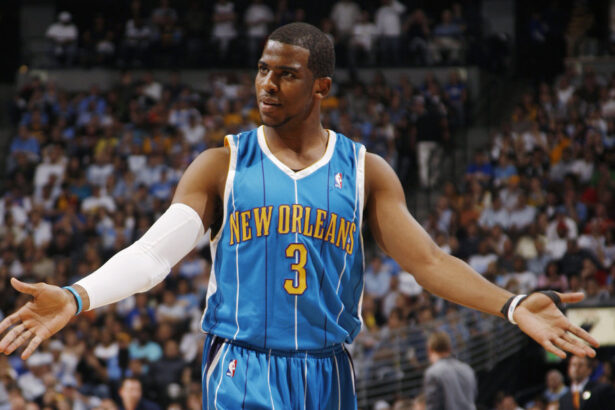
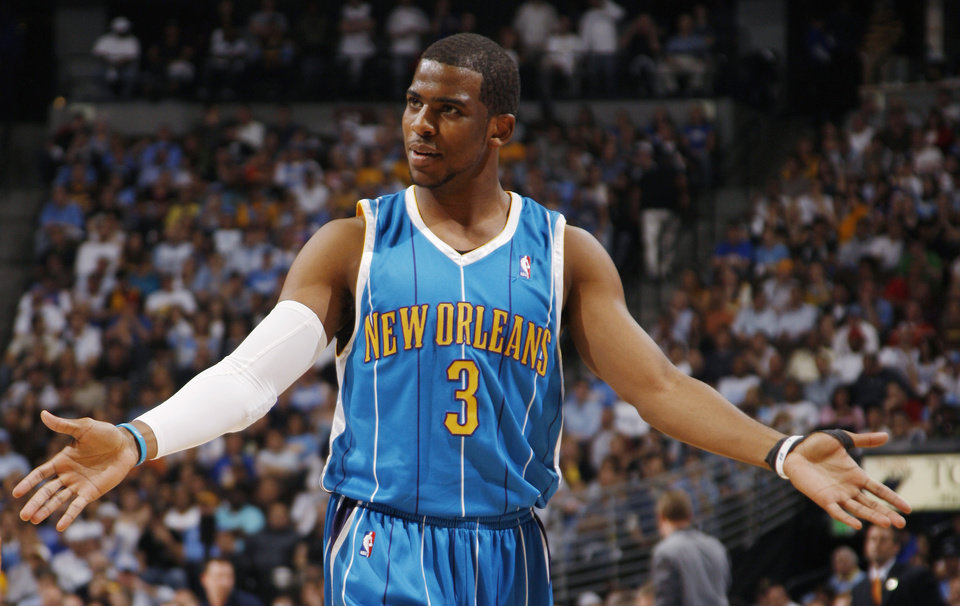
8. Chris Paul – 6’0″, 4th Pick, 2005
The obvious counterargument to the small-guard fear is Chris Paul. He was taken fourth in 2005 and became one of the best point guards in league history. His career averages of 16.8 points, 4.4 rebounds, and 9.2 assists only show part of his impact.
Paul was small by NBA standards, but he never played like a limited prospect. He orchestrated the offense from the first day. His handle was tight, his passing was advanced, and his pick-and-roll command was already elite. He understood pace better than most veterans.
That is why his size did not scare teams the same way. Paul did not need height. He won with timing, strength, balance, and decision-making. He could turn the corner, stop in the mid-range, find the roll man, hit the weak-side shooter, or reset the possession if nothing was there.
Defensively, he also made the equation easier. Paul had strong hands, a strong base, and elite anticipation. He was not a switch defender, but he was not someone teams could casually target. He fought through screens and created steals without gambling out of structure.
The lesson from Paul is not that every 6’0″ guard can be worth a top-five pick. The lesson is the opposite. A guard that size has to be special. Paul had several elite skills at once. Most small guards do not.
That is why his career did not lead to many similar lottery bets. Teams respected him, but they also understood he was not common. He was not a short guard who survived. He was a complete point guard who happened to be short.
Paul remains the best possible outcome for this group. He is also the reason the standard is so high. If a small guard is going to be drafted early, he must create real control over the game.
7. Kyle Lowry – 6’0″, 24th Pick, 2006
Development changed everything for Kyle Lowry. He entered the league as a physical guard with defensive edge and transition speed. He became a six-time All-Star, a champion, and one of the best late-first-round picks of his era.
Lowry averaged 13.8 points, 4.2 rebounds, and 6.0 assists across his career. Those numbers are strong, but his value was always bigger than the box score. He took charges, defended bigger players, organized offense, and made winning plays in tight games.
The key was strength. Lowry was listed at 6’0″, but he never played soft. He had a low center of gravity, a strong frame, and enough toughness to absorb contact. That made him different from smaller guards who need to be hidden.
His shooting growth gave him a second career. Early Lowry was more downhill and physical. Prime Lowry became a real pull-up and spot-up threat. That allowed him to play next to other creators and still remain valuable.
The Raptors version of Lowry is the one that changed his legacy. He became the emotional and tactical center of a winning team. During the championship run, he was not carried. He defended, passed, shot, and became a vocal leader.
That is why Lowry is such a useful example for current teams. Small guards can survive if they have strength, shooting, feel, and defensive pride. But that combination is not easy to find.
At No. 24, a team can wait for a player to develop. In the top 10, patience is harder. Lowry needed time before he became the best version of himself.
By the end, the pick was a major success. Lowry became a real winning guard, not just a productive small player.
6. Aaron Brooks – 6’0″, 26th Pick, 2007
Speed gave Aaron Brooks his NBA path. The 26th pick in 2007 became a real scorer because he could attack before defenses were set. He was not a big guard, and he was not a complete defender, but he had one trait that translated: he could put pressure on the defense with the ball.
Brooks averaged 9.7 points, 1.7 rebounds, and 3.0 assists over 11 seasons. His peak came with the Rockets, where he became a starting guard and won Most Improved Player in 2009-10.
That season showed why he was worth the first-round pick. Brooks could shoot off the dribble, turn the corner, and create points in a hurry. He forced defenders to respect his pull-up. If bigs sat too deep, he could rise into a jumper. If they stepped up late, he could use speed to get inside.
His problem was the other side of the same profile. Brooks was not strong enough to defend bigger guards. He was not tall enough to contest easily. If his offense dipped, his value dropped fast.
This is the risk with small scoring guards. They need to be efficient. They need to make shots. They need to create enough offense to cover the defensive cost. If they do not, the lineup math becomes hard.
Brooks still had a good career for his draft slot. A guard taken 26th who plays 11 seasons and has a real peak as a starter is a positive outcome. Teams would take that return.
But his career also explains why the first round moved away from this archetype. A small guard who is mostly a scorer has to be very good at scoring. Solid is not enough anymore. Defenses are too long, and playoff teams are too deliberate.
Brooks had enough speed and shooting to make it work for a long time. That gave him a place in the league. It did not make him a model teams can easily repeat.
5. D.J. Augustin – 5’11”, 9th Pick, 2008
A 15-year NBA career should never be treated lightly. D.J. Augustin stayed in the league because he could shoot, run offense, and make good decisions. He became such an interesting prospect that he was selected ninth.
Augustin averaged 9.5 points, 1.8 rebounds, and 3.9 assists in his career. He rapidly found a place as a trusted rotation guard, not a franchise point guard. That is a good career, but the 9th draft spot changes the expectations.
The Hornets took him because he was polished. Augustin had a strong college profile, a good feel for pick-and-roll, and enough shooting touch to project as a safe NBA guard. In many ways, that projection was correct. He was safe. He lasted. Coaches trusted him.
The missing part was high-end advantage creation. Augustin could run an offense, but he did not bend defenses like the best small guards. He was not powerful like Lowry, not explosive like Robinson, and not in control like Paul. He was skilled, but not overwhelming.
That difference is why he became a long-term backup and spot starter. He helped teams, especially as a second-unit guard. He could calm games down, take care of the ball, and hit open shots. That has value over a long season.
In playoff or high-leverage settings, the limits were more visible. Bigger guards could pressure him. Defenses could contest over the top. He needed the right lineup around him to reduce the size problem.
If Augustin came into the draft now, teams would likely view him differently. They would still like the skill, but taking a 5’11” guard in the top 10 would require a stronger argument. The shooting would have to be elite. The creation would have to be elite. The defensive projection would have to be better.
Augustin was a good NBA player. The issue is not the career. The issue is the lottery investment. That distinction is why his name fits the trend.
4. Ty Lawson – 5’11”, 18th Pick, 2009
At his peak, Ty Lawson gave the Nuggets great offensive direction. He was not just a small guard trying to survive. He was a starting point guard who played with speed, pressure, and control.
Lawson averaged 12.7 points, 2.7 rebounds, and 6.0 assists over his career. His best seasons were much stronger than those career numbers suggest, with four straight years averaging over 15 points. He could get into the paint, force rotations, and create shots for himself or teammates.
The pace was the separator. Lawson did not only run fast in transition. He played fast in the half-court. He could use a screen, reject it, split defenders, or attack a gap before the help arrived. That made him difficult to guard when his burst was at its best.
His fit with the Nuggets worked because the roster had movement, athleticism, and spacing. Lawson could push the ball, create early offense, and keep defenses from getting organized. He gave the team a real identity.
The weakness was the durability. A small guard who depends heavily on burst has a thin margin. If the speed drops, the size becomes more of an issue. Lawson was not a large defender. He was not a pure off-ball shooter. He needed the ball and needed speed to create his full value.
That is why his career arc is important. The peak justified the 18th pick. The decline showed the risk. Small guards who rely on quickness can lose value fast if anything affects their first step or role.
Lawson still belongs among the stronger names here. He became a starting-level guard and produced on good teams. He was not a miss. He was a real first-round success for a period.
Modern teams would still be interested in that speed. They would just ask harder questions about shooting volume, defensive survival, and postseason translation. For a 5’11” guard, those questions decide everything.
Lawson had enough talent to answer them for several years. Not every prospect with his size can.
3. Jonny Flynn – 6’0″, 6th Pick, 2009
The danger of drafting a small guard early is clear with Jonny Flynn. The Timberwolves took him sixth in 2009, expecting a lead guard with speed, confidence, and offensive upside. The career never reached that level. And who got drafted behind him made it even worse for the Timberwolves.
Flynn averaged 9.2 points, 1.9 rebounds, and 3.9 assists over four NBA seasons. His rookie year had some production, but the foundation did not hold. Hip injuries hurt him, and the efficiency never became strong enough to support his case while the Warriors became a dynasty with Stephen Curry, the 7th pick in that Draft.
This is the type of pick front offices remember. It was not a late-first swing. It was a top-six investment. When a small guard goes that high, he has to become a real offensive engine. If he does not, the risk becomes obvious.
Flynn had speed and creation ability, but he did not create easy enough shots at the NBA level. The finishing was difficult. The jumper was not reliable enough. The defensive limitations were real. Once the offense failed to separate him, there was no second role waiting.
That is one of the biggest problems for smaller guards. A bigger player can sometimes survive by changing position. A wing can become a defender. A guard with size can move off the ball. A small guard usually needs the ball or elite shooting. If neither becomes strong enough, the minutes disappear.
Flynn was not a talentless pick. He was productive in college and had real athletic juice. But the NBA translation did not work. Injuries made it worse, but the size made every weakness harder to hide.
His case explains why teams are more cautious now. College production is not enough. A small guard must show an elite NBA skill. Not a good one. An elite one.
Flynn did not become that. That is why his career remains one of the strongest warnings on this list.
2. Trey Burke – 6’0″, 9th Pick, 2013
The college accolades made Trey Burke a logical first-round target. He had led Michigan, controlled big games, hit tough shots, and looked like a polished point guard. The Jazz took him ninth in 2013, betting that his scoring and command would translate.
The NBA version was useful, but not enough for that draft slot. Burke averaged 9.6 points, 1.8 rebounds, and 3.1 assists over his career. He had real scoring stretches, but he did not become a franchise guard.
The problem was separation. Burke could shoot and handle, but NBA defenders made every shot harder. The pull-up jumpers that worked in college became more contested. The drives that opened clean lanes became attempts over length. His skill was real, but the physical gap was large.
That is the lesson with small college stars. They can dominate because they are more skilled than most opponents. In the NBA, skill has to create a real advantage against longer and faster defenders. If it does not, the player becomes a difficult-shot maker rather than an offensive engine.
Burke found ways to stay useful. His stretches with the Knicks and Mavericks showed that he could score when given freedom. He could help second units. He could make shots and create some offense late in the clock.
But a top-10 guard has to be more than a bench scorer. He has to organize a team or score efficiently enough to justify defensive concessions. Burke never reached that tier.
That does not make him a bad player. Ten years in the league means he had NBA-level skill. The issue is draft value. At 6’0″, with limited defensive impact, he needed to become a high-level creator. He became a useful scorer instead.
His career came near the end of the small-guard first-round era. After him, teams became less willing to trust college guard production without elite physical or shooting indicators.
Burke was not the only reason for the shift, but his outcome helped support the change.
1. Shane Larkin – 5’11”, 18th Pick, 2013
The streak stopped with Shane Larkin. Since his selection at No. 18 in 2013, no player under 6 feet has been drafted in the first round. That is the point of the whole list.
Larkin averaged 5.5 points, 1.9 rebounds, and 2.9 assists over four NBA seasons. The Mavericks, Knicks, Nets, and Celtics all gave him chances, but he never became a stable rotation guard.
The appeal was clear at the draft. Larkin had speed, athletic testing, and a strong season at Miami. He could push pace, pressure the ball, and create movement. For a late-first pick, teams were still willing to bet on that kind of guard.
The NBA exposed the limitations. Larkin was quick, but he was not big enough to finish through length. He could handle, but defenders could crowd him. On defense, the size problem was constant. Bigger guards could shoot over him or force switches.
That is where the league changed. Quickness alone is no longer enough for a small guard. The player has to shoot at a high level, pass at a high level, or score efficiently enough to force defensive changes. Larkin had talent, but he did not have one elite NBA weapon.
His post-NBA career also gives the story more depth. Larkin became a very good player in Europe, which proves the skill was real. The issue was not that he could not play basketball. The issue was the NBA’s physical standard for small guards.
Larkin became the last first-round pick in this category because his career arrived at the exact moment teams were changing their priorities. The league wanted bigger ball-handlers, longer defenders, and more switchable lineups. A 5’11” guard needed a special skill to stay ahead of that shift.
More than a decade later, no one has changed the pattern. The next small guard taken in the first round will have to be very different. He will need elite shooting range, elite pick-and-roll command, or rare pressure at the rim.
Until then, Larkin remains the last name in a draft archetype the league no longer trusts the same way.