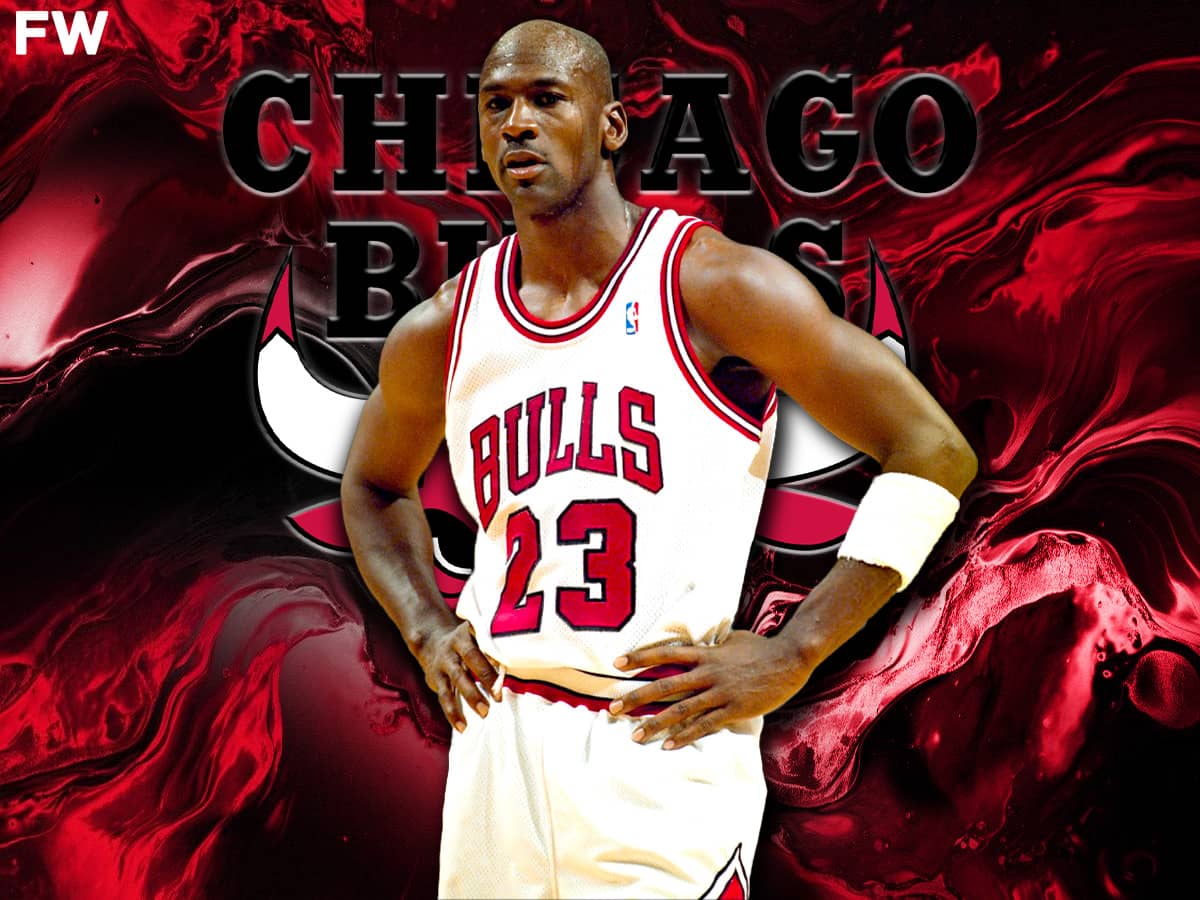
Michael Jordan won six titles with the Chicago Bulls in his storied NBA career, but his former teammate John Salley thinks he wouldn’t have had all that success without Phil Jackson and Tex Winter’s triangle offense. Salley made the bold claim when he appeared on the latest episode of the Stepping Into The Fire podcast.
“If you’re talking about Chicago, Michael doesn’t win without that system,” Salley said.
Host Jamie Blyth wasn’t buying this, but Salley wasn’t backing down. Blyth asked him if he truly believes the Bulls wouldn’t have won had Doug Collins remained the head coach instead of Jackson, and he does.
“If you don’t have that system, we are knowing how to play Michael,” Salley said. “He catch the ball, double-team him. When he picks the ball up, he got to dribble out when you’re double-teaming. If he puts two hands on the ball, you just run back. He’s not going to make the right pass. He’s mad he’s not scoring.”
Salley reckons he and his Detroit Pistons would have continued to have success against Jordan if not for the triangle. The Bulls first faced the Pistons in the playoffs during the Jordan era in the Eastern Conference Semifinals in 1988 and lost 4-1. The teams then met in the Eastern Conference Finals in 1989, and while they fared better, they still lost 4-2.
Collins was fired after the season, and Jackson, who had been his assistant, was promoted to head coach. Jordan, though, wasn’t a fan at first of this triangle offense that he and his assistant Winter wanted to run. This “equal opportunity” offense, where the ball was moving around, and everyone was touching it, wasn’t his cup of tea.
Jordan wanted the ball to be in his hands more often than not in an isolation-heavy offense, but that made it easier for the Pistons to guard him with their infamous “Jordan Rules.” The Bulls would face them again in the Eastern Conference Finals in 1990, and lost in seven games.
Things had to change, and Jordan began embracing the triangle more as he played out of the post. The results were phenomenal. The Bulls went 61-21 in 1990-91 and lost just one playoff game on their way back to the Conference Finals. The Pistons stood in their way again, but they swept them this time around and went on to win the title.
The Bulls would go on to three-peat, triumphing in 1992 and 1993 as well. Jordan retired after their third championship run, but returned in 1995. He then led the Bulls to another three-peat from 1996 to 1998.
Now, Jordan and the Bulls might not have won six titles without the triangle, but they would have won a couple at the very least. Those Pistons weren’t going to be standing in their way forever.
John Salley On Michael Jordan’s Competitiveness
Despite the rivalry between the Bulls and Pistons, Salley and Jordan were on good terms and eventually became teammates. With how far back these two go, Salley was asked here how intense Jordan was behind the scenes.
“He’s intense when he’s on a basketball court,” Salley said. “He’s intense on a golf course. He’s intense pitching pennies. He’s intense playing blackjack, playing poker, playing whatever he plays. When it’s in a competition against somebody else, he wants to win.”
Jordan hated losing at anything. He even once tried to cheat in a game of cards against a teammate’s old mother.
It was that intense competitive nature that drove Jordan to greatness. To go with the six titles, he won six Finals MVPs, five MVPs, one DPOY, and 10 scoring titles. That spectacular resume has led to him being regarded as the greatest of all time.