The No. 1 pick is not only about talent. It is about direction. When a team gets the first pick, the hope is not to find a good player. The hope is to find the player who can carry a title build.
That does not happen often. Many No. 1 picks become stars, but only a smaller group become the center of a championship team. Others win later in smaller roles, but that is not the same thing. This list is about the champions where the No. 1 pick was a true pillar of the roster.
We are starting after the NBA-ABA merger, from the 1976-77 season forward. That keeps the focus on the modern NBA and avoids older league-context issues. From Bill Walton’s Trail Blazers to LeBron James and Anthony Davis with the Lakers, these are the champions built around a former No. 1 overall pick.
1977 Trail Blazers – Bill Walton
Bill Walton is the first post-merger case that fits this list. The Trail Blazers selected him with the No. 1 pick in the 1974 NBA Draft. Three years later, he was the main piece of their first and only championship.
Walton was not a volume scorer. His value was larger than that. He gave the Trail Blazers passing, rebounding, rim protection, and control from the center position. The offense worked through movement and decisions, not only individual scoring. Walton made that style possible because he could pass from the high post, find cutters, and punish late rotations.
In the 1977 playoffs, Walton averaged 18.2 points, 15.2 rebounds, 5.5 assists, and 3.4 blocks. Those numbers show the type of impact he had. He was involved in every important area: scoring enough, controlling the glass, protecting the rim, and creating shots for others.
The Finals against the 76ers were his strongest stage. Walton averaged 18.5 points, 19.0 rebounds, 5.2 assists, and 3.7 blocks in six games. The Trail Blazers lost the first two games, then won four straight. Walton was named Finals MVP because he controlled the series without needing to dominate the ball.
Game 6 was the clearest example. Walton finished with 20 points, 23 rebounds, seven assists, and eight blocks in the title-clinching win. That is the profile of a player who was not only important, but central.
That is why the 1977 Trail Blazers belong here. Walton was not just a former No. 1 pick on a title team. He was the reason the roster had championship structure.
1980-1988 Lakers – Magic Johnson, Kareem Abdul-Jabbar, And James Worthy
The Lakers are the strongest dynasty example on this list because they were not built around one No. 1 pick. They had three. Kareem Abdul-Jabbar was the No. 1 pick in 1969. Magic Johnson was the No. 1 pick in 1979. James Worthy was the No. 1 pick in 1982.
That became the base of five championships in nine years: 1980, 1982, 1985, 1987, and 1988. It was not a three-peat, but it was one of the clearest title structures in NBA history. The Lakers had a dominant center, a 6-foot-9 point guard, and later a wing who became one of the best transition finishers and playoff forwards of his era.
The first title came in 1980, before Worthy arrived. Kareem was still the best player on the team for most of that run. He led the 1980 playoffs in total points, and in the Finals he averaged 33.4 points, 13.6 rebounds, and 4.6 blocks through the first five games. Then he missed Game 6, and Magic gave the series its defining moment. As a rookie, Magic had 42 points, 15 rebounds, and seven assists in the title-clinching game. He won Finals MVP with series averages of 21.5 points, 11.2 rebounds, and 8.7 assists.
By 1982, Magic had become the center of the identity. The Lakers won another title, and Magic was again Finals MVP after averaging 16.2 points, 10.8 rebounds, and 8.0 assists in the series. Kareem still gave them elite interior scoring, but the team was now shaped more by Magic’s speed, size, passing, and control.
The 1985 title brought the full version closer together. Kareem won Finals MVP at 38 years old, averaging 25.7 points, 9.0 rebounds, and 5.2 assists in the Finals. Magic averaged 18.3 points, 6.8 rebounds, and 14.0 assists in that series, while Worthy added 23.7 points per game. That is the key for this list. All three No. 1 picks were not just names on the roster. They were central pieces in the title.
In 1987, Magic took the lead fully. He was Finals MVP against the Celtics, averaging 26.2 points, 8.0 rebounds, and 13.0 assists. Kareem was older, but still important as a half-court scorer and interior presence. Worthy gave the Lakers another major forward who could run, finish, and score without stopping the offense.
The last title came in 1988. Worthy was Finals MVP after averaging 22.0 points, 7.4 rebounds, and 4.4 assists in the Finals. Magic still led the postseason in assists, and the Lakers became the first team since the 1969 Celtics to repeat as champions.
1994-1995 Rockets – Hakeem Olajuwon
The Rockets’ back-to-back titles are one of the clearest examples of a championship team being carried by a No. 1 pick at his peak. Hakeem Olajuwon was not only the best player on both teams. He was the system on both ends.
The Rockets selected Olajuwon with the No. 1 pick in the 1984 NBA Draft. Ten years later, he delivered the first title in franchise history. The timing matters because the 1994 title came in a season where the Rockets did not have another All-NBA teammate. Olajuwon was the scorer, defender, rebounder, late-game option, and matchup answer.
In the 1994 playoffs, he averaged 28.9 points, 11.0 rebounds, 4.3 assists, and 4.0 blocks. The Finals against the Knicks were a defensive series, and Olajuwon still finished with 26.9 points, 9.1 rebounds, 3.6 assists, and 3.9 blocks. He won Finals MVP and beat a Knicks team built around Patrick Ewing, another great center from the same era. The Rockets won Game 7, 90-84, and Olajuwon closed the series as the most important player on the floor.
The 1995 run made the case even stronger. The Rockets were not a dominant regular-season team. They went 47-35, entered the playoffs as the No. 6 seed, and had to beat the Jazz, Suns, Spurs, and Magic. That path included three teams with at least 59 wins and a Finals sweep over a Magic team led by Shaquille O’Neal and Penny Hardaway. It remains one of the hardest title runs ever.
Olajuwon raised his level again. In the 1995 playoffs, he averaged 33.0 points, 10.3 rebounds, 4.5 assists, and 2.8 blocks. In the Finals, he averaged 32.8 points, 11.5 rebounds, 5.5 assists, and 2.0 blocks. The Magic had the young Shaq, but Olajuwon controlled the series with footwork, touch, passing, and defensive timing. The Rockets swept the series, and Olajuwon won his second straight Finals MVP.
Clyde Drexler was important in 1995. Robert Horry, Mario Elie, Kenny Smith, Sam Cassell, and Vernon Maxwell all had moments across the two runs. But the structure was still Olajuwon. The Rockets spaced the floor around him, trusted him in the post, and let his rim protection define the defense.
That is why these titles belong high in history. Olajuwon was not only a former No. 1 pick who won. He was a No. 1 pick who became the full championship identity of his team.
2000-2002 Lakers – Shaquille O’Neal
There is no complicated explanation for this one. The Lakers won three straight championships because Shaquille O’Neal was the most dominant player in the league.
The Lakers had Kobe Bryant, Phil Jackson, elite role players, size, defense, and shot-making. All of that mattered. But the base of the three-peat was Shaq’s physical pressure. Every defense started the same way: how to keep him away from deep position, how much help to send, and how to survive the fouls. Most teams had no real answer.
O’Neal was the No. 1 pick in the 1992 NBA Draft. By the time the Lakers reached their title peak, he was not just a star center. He was a complete matchup problem. He controlled the restricted area, forced double teams, broke frontcourts, and created open shots for everyone around him.
The 2000 Finals against the Pacers were his most brutal series. Shaq averaged 38.0 points, 16.7 rebounds, 2.3 assists, and 2.7 blocks. He won Finals MVP, and the Lakers ended a 12-year title drought. That series showed the simple truth of the era. If Shaq caught the ball near the rim, the possession was almost finished. If the defense helped, the Lakers could play out of the rotation. If it fouled, he still lived at the line enough to control the game.
The 2001 title was even cleaner as a team run. The Lakers went 15-1 in the playoffs. Shaq averaged 30.4 points, 15.4 rebounds, 3.2 assists, and 2.4 blocks across that postseason. In the Finals against the 76ers, he put up 33.0 points, 15.8 rebounds, and 4.8 assists, winning Finals MVP again. Allen Iverson took Game 1, but the series turned back to the Lakers because Shaq controlled the paint every night.
In 2002, the Lakers completed the three-peat. The road was harder, especially the seven-game Western Conference finals against the Kings, but the ending was the same. Shaq dominated the Nets in the Finals with 36.3 points, 12.3 rebounds, and 3.8 assists. He won his third straight Finals MVP.
Bryant was already a superstar during this run. That has to be clear. But the team was still built around Shaq’s interior dominance. The Lakers’ offense started with his post gravity. Their playoff identity started with the pressure he put on opposing bigs. Their margin came from the fact that nobody could defend him straight up.
That is why the 2000-2002 Lakers fit this list without debate. O’Neal was not only a No. 1 pick who won titles. He was the strongest force in the league during a three-year championship run.
2006 Heat – Shaquille O’Neal
The 2006 Heat is the first case that needs a little more context. Dwyane Wade was the best player in the Finals. That is not debatable. He averaged 34.7 points, 7.8 rebounds, and 3.8 assists against the Mavericks, won Finals MVP, and gave the Heat the late-series scoring explosion that decided the title.
But that does not remove Shaquille O’Neal from this list.
The Heat did not win with O’Neal as a passenger. They had traded for him in 2004 to give Wade a championship-level interior star, and the whole roster was shaped around that pairing. O’Neal was no longer the same player from the Lakers three-peat, but he was still a top-two figure on the team and still the reason the Heat had real size, post pressure, and defensive weight.
By 2006, Shaq was past his peak, but still highly productive. During the 2006 playoffs, he averaged 18.4 points, 9.8 rebounds, and 1.5 blocks while shooting 61.2% from the field. That was not empty production. He still forced double teams, created foul pressure, and gave the Heat a direct way to punish smaller frontcourts.
His strongest work came before the Finals. In the Eastern Conference finals against the Pistons, O’Neal averaged 21.7 points and 10.5 rebounds. That series mattered because the Pistons were still the defensive standard in the East. O’Neal gave the Heat a physical base against them, and his Game 6 was decisive: 28 points, 16 rebounds, and five blocks to close the series.
The Finals were different. Wade became the main engine, and O’Neal’s scoring dropped to 13.7 points per game. But he still averaged 10.2 rebounds and gave the Heat the interior size they needed. The Mavericks could not defend Wade without worrying about O’Neal’s position near the rim. Even when Shaq was not dominating the box score, his presence changed the spacing of the defense.
This title belongs on the list because the Heat were built around two stars, not one. Wade was the closer and the Finals MVP. O’Neal was the interior foundation, the veteran star, and the player who had pushed the franchise into title expectations when he arrived.
1999-2007 Spurs – Tim Duncan
Tim Duncan gave the Spurs a championship identity almost immediately. He did not need years of development before becoming the center of the build. By his second season, the Spurs were already champions, and Duncan was already the best player on a title team.
The Spurs selected Duncan with the No. 1 pick in the 1997 NBA Draft. That pick became the base of four championships in nine seasons: 1999, 2003, 2005, and 2007. The constant was simple. Duncan gave them elite post scoring, rebounding, rim protection, and defensive stability. The supporting cast changed. The system changed. His value did not.
The 1999 title came fast. Duncan averaged 23.2 points, 11.5 rebounds, and 2.6 blocks in the playoffs. In the Finals against the Knicks, he raised that to 27.4 points, 14.0 rebounds, and 2.2 blocks, winning Finals MVP. The Spurs won the series in five games, and Duncan was already the clear foundation of the team.
The 2003 run was probably his peak title run. Duncan averaged 24.7 points, 15.4 rebounds, 5.3 assists, and 3.3 blocks in the playoffs. He led that postseason in total points and total rebounds. In the Finals against the Nets, he averaged 24.2 points, 17.0 rebounds, 5.3 assists, and 5.3 blocks. That is one of the most complete Finals performances ever by a big.
The 2005 title was more difficult and less pretty. The Spurs beat the Pistons in seven games, and Duncan won Finals MVP again. He averaged 20.6 points, 14.1 rebounds, and 2.1 blocks in the Finals. The efficiency was not clean, but the series was built on defense, size, and execution. Duncan was still the piece that gave the Spurs their shape.
By 2007, Tony Parker won Finals MVP, and the Spurs were no longer only Duncan’s team offensively. But Duncan was still a top-three player on the roster and still the defensive anchor. He led the 2007 playoffs in total rebounds with 229, while the Spurs swept the Cavaliers in the Finals. That title still fits the list because the Spurs’ structure was still built on Duncan’s interior presence.
Manu Ginobili, Parker, Bruce Bowen, David Robinson, Robert Horry, and Gregg Popovich all shaped the dynasty. But Duncan was the main pillar. He made the Spurs stable every year. He gave them a playoff floor that almost never disappeared. From 1999 to 2007, this was one of the cleanest examples of a No. 1 pick turning into a long championship build.
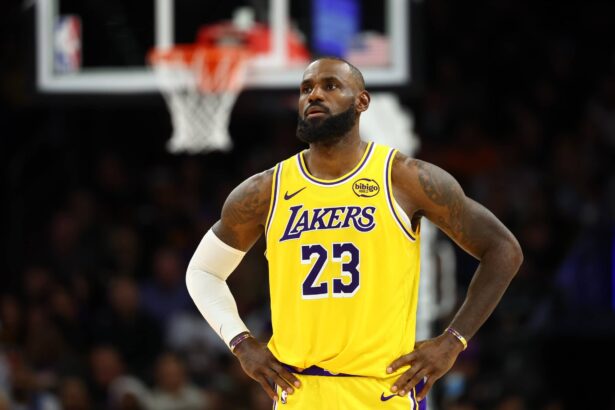
2012-2013 Heat – LeBron James
The Heat titles were built around a different type of No. 1 pick. LeBron James was not a center like Bill Walton, Kareem Abdul-Jabbar, Hakeem Olajuwon, Tim Duncan, or Shaquille O’Neal. He was the main scorer, the main passer, the best transition player, and the defensive piece who let the Heat change shape from series to series.
James was the No. 1 pick in the 2003 NBA Draft. By the time the Heat won in 2012 and 2013, he was the best player in the league. The whole roster worked around his pressure. The Heat spaced the floor, played fast after turnovers, used him as a forward creator, and trusted him to guard several positions. Dwyane Wade and Chris Bosh were stars, but the system belonged to LeBron.
The 2012 playoffs were the first full proof. LeBron averaged 30.3 points, 9.7 rebounds, and 5.6 assists across the postseason. He led all players in total points and total rebounds. In the Finals against the Thunder, he averaged 28.6 points, 10.2 rebounds, and 7.4 assists, winning Finals MVP as the Heat took the series in five games.
That run also had the defining Game 6 against the Celtics in the Eastern Conference finals. The Heat were one loss from elimination, and LeBron responded with 45 points, 15 rebounds, and five assists. It remains one of the most important games of his career because it kept the Heat project alive before the first title. Without that game, the entire era is viewed differently.
The 2013 title was not as direct, but it may have required more control. The Heat won 66 games, but the playoffs became harder than expected. The Pacers pushed them to seven games in the Eastern Conference finals. The Spurs pushed them to seven in the Finals. LeBron averaged 25.3 points, 10.9 rebounds, and 7.0 assists in the Finals, again winning Finals MVP.
Game 7 against the Spurs closed the case. LeBron finished with 37 points, 12 rebounds, and four assists in a 95-88 win. He made five threes and hit the late jumper that helped seal the title. The Heat needed his scoring, but also his rebounding, defensive strength, and decision-making against a Spurs team that forced every possession to be precise.
The 2012 and 2013 Heat belong here because LeBron was not only the best player on a champion. He was the reason the roster had its identity. Wade still had major moments. Bosh changed the spacing as a small-ball center. Ray Allen, Shane Battier, Mario Chalmers, and Udonis Haslem all had roles. But LeBron was the engine.
2014 Spurs – Tim Duncan
The 2014 Spurs were not a one-man team. That is exactly why they were special. The ball moved faster than the defense, the floor was spaced correctly, and almost every rotation player made the right read. Still, Tim Duncan kept the team connected to its championship base.
This is the most borderline Duncan title on the list, but it still qualifies. Kawhi Leonard won Finals MVP. Tony Parker was the lead guard. Manu Ginobili and Boris Diaw shaped the passing game. The Spurs’ offense became the main story because of its spacing, pace, and decision-making. But Duncan was still a central player, not a symbolic veteran.
In the 2014 playoffs, Duncan averaged 16.3 points, 9.2 rebounds, and 1.3 blocks. He led the entire postseason in total rebounds with 211. That number is important because it shows his role was still structural. The Spurs were not asking him to be the same player from 1999 or 2003. They needed him to finish inside, protect the paint, screen, rebound, and give the team a stable frontcourt against every matchup. He did that.
The Finals against the Heat made the case. Duncan averaged 15.4 points, 10.0 rebounds, and 2.0 assists while shooting 56.9% from the field. Leonard was the series’ breakout star, averaging 17.8 points on 61.2% shooting, but Duncan led all players in the Finals with 50 total rebounds. His plus-minus for the series was also +46, tied to how stable the Spurs were when he anchored the frontcourt.
This was not a Duncan carry job. It was not close to 2003. But the question is whether the champion was still built around a No. 1 pick as one of its pillars. For 2014, the answer is yes. Duncan was still one of the core pieces, and the team’s defensive floor still depended heavily on his positioning and rebounding.
The Spurs destroyed the Heat with collective basketball. They won the series in five games and took the last three games by 19, 21, and 17 points. The style was modern, but the foundation still had Duncan inside. That is why the 2014 Spurs belong here, even if they represent a different type of No. 1 pick champion.
2016 Cavaliers – LeBron James And Kyrie Irving
The 2016 Cavaliers are different from the other champions on this list because the title was built around two No. 1 picks in the same perimeter offense. LeBron James was the No. 1 pick in 2003. Kyrie Irving was the No. 1 pick in 2011. Both were central, and both were needed for the Cavaliers to finish the job.
LeBron was the main player. That is clear. In the 2016 playoffs, he averaged 26.3 points, 9.5 rebounds, and 7.6 assists. In the Finals against the Warriors, he went higher: 29.7 points, 11.3 rebounds, and 8.9 assists. He led all players in the series in points, rebounds, assists, steals, and blocks, then won Finals MVP. That is one of the strongest two-way Finals runs ever.
The Cavaliers needed all of it because the opponent was not normal. The Warriors had won 73 regular-season games and led the Finals 3-1. No team had ever come back from a 3-1 deficit in the Finals before. The Cavaliers did it by slowing the series down, attacking mismatches, and trusting LeBron and Irving to create enough offense against a defense that had been elite all season.
Irving’s role was not secondary in a weak sense. He was the shot-maker who made the offense survive when the game became tight. In the 2016 playoffs, he averaged 25.2 points and 4.7 assists. In the Finals, he averaged 27.1 points and 3.9 assists while shooting 46.8% from the field and 40.5% from three. That was not support scoring. That was star scoring next to LeBron.
Game 5 was the turning point. LeBron and Irving both scored 41 points in the same road elimination game. That changed the pressure of the series. Game 6 pushed it further, with LeBron scoring 41 again and the Cavaliers forcing Game 7. By then, the Warriors were no longer controlling the matchup the same way. The Cavaliers had dragged the series into individual creation, physical defense, and half-court execution.
Game 7 made the title permanent. LeBron had 27 points, 11 rebounds, and 11 assists. Irving had 26 points and hit the decisive three over Stephen Curry with less than a minute left. LeBron’s chase-down block on Andre Iguodala protected the tie. Irving’s shot gave the Cavaliers the lead. Those two plays are the cleanest summary of the whole title: LeBron controlled everything, and Irving delivered the biggest shot.
Kevin Love, Tristan Thompson, J.R. Smith, Richard Jefferson, and Tyronn Lue all mattered. The Cavaliers do not win without the full rotation. But the title structure was built around LeBron and Irving. Two No. 1 picks carried the creation burden, solved the late-clock offense, and broke a 73-win team from a 3-1 deficit. That is why the 2016 Cavaliers are one of the strongest modern examples on this list.
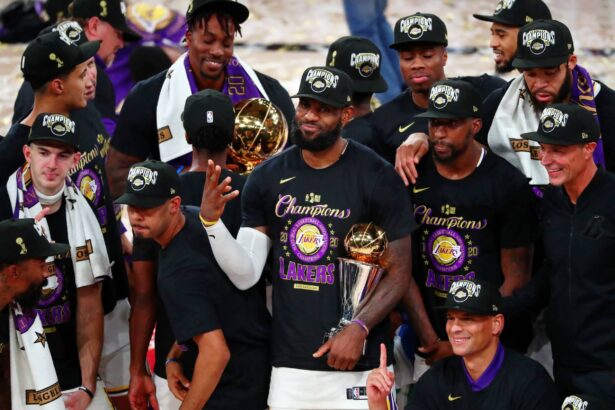
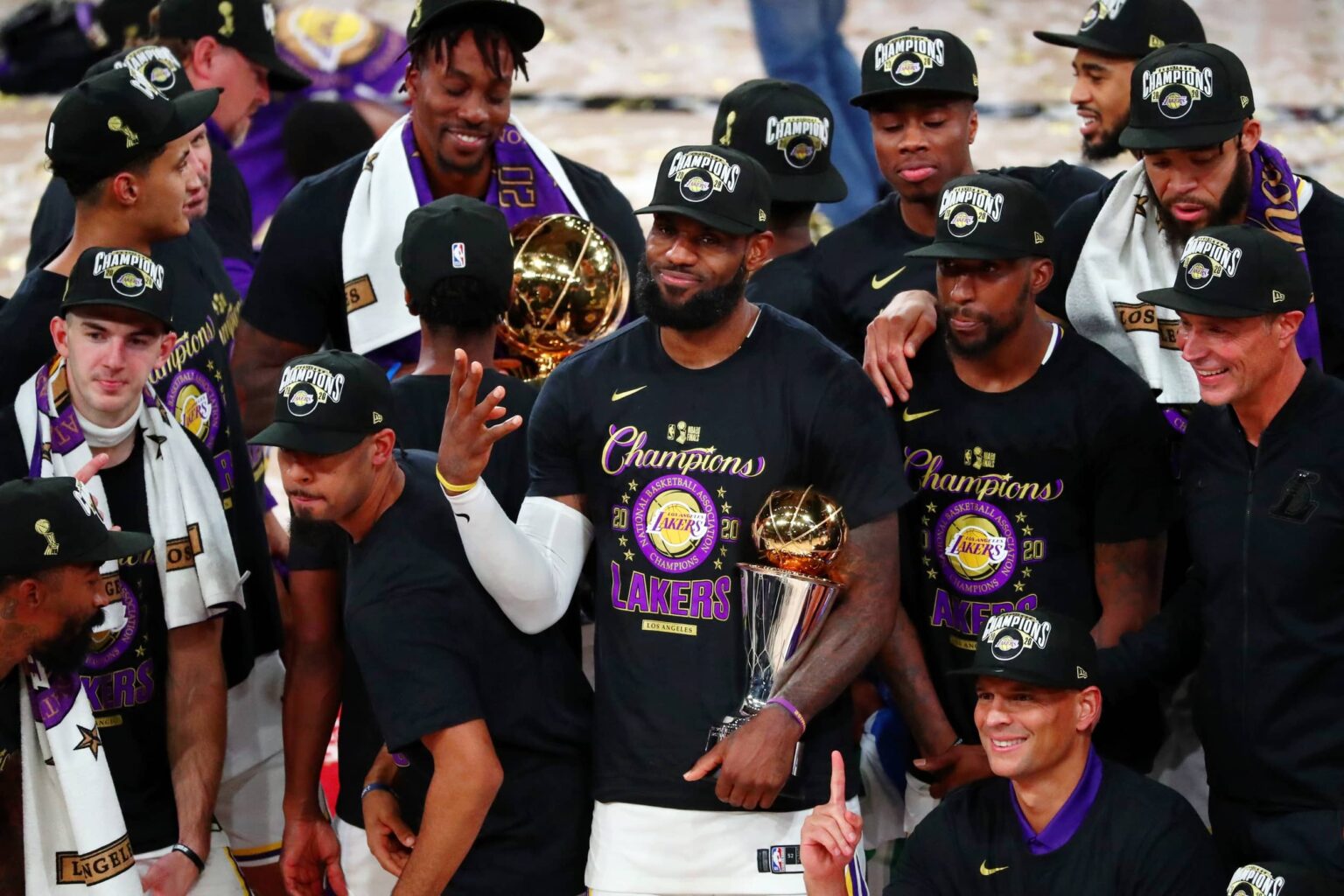
2020 Lakers – LeBron James And Anthony Davis
The 2020 Lakers were built in a direct way. They had LeBron James, then they traded for Anthony Davis. Two former No. 1 picks became the whole title plan.
LeBron was the No. 1 pick in 2003. Davis was the No. 1 pick in 2012. By 2020, they were at different points of their careers, but the fit was exact. LeBron controlled the offense. Davis protected the rim, finished inside, switched defensively, and gave the Lakers a second elite scorer. The rest of the roster was built to support that two-man structure with size, defense, and enough shooting.
The playoff numbers show how balanced the build was. LeBron averaged 27.6 points, 10.8 rebounds, and 8.8 assists in the 2020 playoffs. Davis averaged 27.7 points, 9.7 rebounds, and 3.5 assists. Davis led the entire postseason in total points with 582. LeBron led the postseason in total rebounds with 226 and total assists with 184. That is not one star carrying the other. That is two No. 1 picks controlling different parts of the same championship run.
The Finals against the Heat gave the same picture. LeBron won Finals MVP after averaging 29.8 points, 11.8 rebounds, and 8.5 assists. He controlled tempo, punished switches, attacked in transition, and kept the Lakers organized. Davis averaged 25.0 points, 10.7 rebounds, 3.2 assists, 1.3 steals, and 2.0 blocks while shooting 57.1% from the field and 42.1% from three. His defense gave the Lakers their real edge.
Game 6 closed the argument. The Lakers started smaller, moved Davis to center, and destroyed the Heat defensively. LeBron finished with 28 points, 14 rebounds, and 10 assists. Davis had 19 points and 15 rebounds. The Lakers won 106-93 and secured their 17th championship.
This title belongs clearly on the list. LeBron was the main engine and Finals MVP. Davis was the defensive anchor and almost equal postseason scorer. The Lakers did not simply have two former No. 1 picks. They were built around them completely.