MVP value is usually judged through stats, team record, role, efficiency, and context. This ranking uses one specific number: team net rating when the MVP was off the court.
The idea is simple. If a team had a strong net rating with its MVP on the bench, that player had more support than other winners. It does not mean the MVP was undeserving. It only means his team still performed at a high level without him during the regular season.
This list ranks the MVP winners whose teams had the best off-court net rating since 1997. The higher the number, the better the team played when its MVP sat.
Note: On/off net rating data is only available from the NBA’s play-by-play tracking era (1996-97 onward).
10. Allen Iverson
Off-court net rating: +1.6
MVP Stats: 31.1 PPG, 3.8 RPG, 4.6 APG, 0.3 BPG, 2.5 SPG, 3.3 TOV, 32.0% 3PT, 42.0% FG, 81.4% FT
The 2000-01 76ers were built in a very direct way: defense first, size inside, and Allen Iverson carrying the offense for almost the whole game. It was not a balanced scoring team. It was not a deep shot-creation team. It was a roster that asked Iverson to take difficult shots, play 42.0 minutes per game, and keep the offense alive through volume.
That worked. The 76ers finished 56-26, took the No. 1 seed in the East, and reached the NBA Finals. Their playoff road was heavy. They beat the Pacers in four games, then needed seven games against the Raptors and seven more against the Bucks before losing to the Lakers in five.
Iverson led the league with 31.1 points per game and had a 35.9% usage rate. He attempted 25.5 shots per game, drew constant defensive attention, and gave the 76ers their only reliable source of high-volume offense. Their team offensive rating was only 13th in the league, but that was still enough because the defense carried the other side.
For the minutes data, the 76ers were +5.7 with Iverson on the floor and still +1.6 when he was off. That gives him a +4.1 on/off swing. The drop existed, but it was not massive compared to other MVP winners.
That number is not an argument against his MVP case. It shows the 76ers were not empty behind him. Dikembe Mutombo, Aaron McKie, Eric Snow, George Lynch, and Tyrone Hill gave them defense, rebounding, and lineup stability. McKie also won Sixth Man of the Year.
Iverson was still their offense. But when he sat, the team defense was strong enough to keep the game under control.
9. Michael Jordan
Off-court net rating: +1.7
MVP Stats: 28.7 PPG, 5.8 RPG, 3.5 APG, 0.5 BPG, 1.7 SPG, 2.3 TOV, 23.8% 3PT, 46.5% FG, 78.4% FT
Michael Jordan’s 1997-98 MVP season came at the end of a dynasty, not at the start of one. The Bulls were old, famous, and under pressure, but they were still better than almost everyone. They went 62-20, tied the Jazz for the best record in the league, and won their sixth title in eight years.
Jordan was still the center of the team. He led the league in scoring at 34 years old, played all 82 games, and averaged 38.8 minutes. He also made First Team All-NBA and First Team All-Defense. The workload was not light, especially because Scottie Pippen missed the early part of the season after foot surgery.
The Bulls did not play through Jordan in a modern way. There was no spread pick-and-roll attack built around four shooters. He worked from the post, mid-range, isolation touches, and late-clock possessions. He took hard shots, and the offense depended on him when games slowed down.
The playoff run confirmed that. The Bulls swept the Nets, beat the Hornets in five, survived the Pacers in seven, and then beat the Jazz in six. Jordan won Finals MVP after averaging 33.5 points in the series and closing Game 6 with one of the most famous sequences in NBA history.
The Bulls’ depth shows up clearly in the split. They posted a +8.4 net rating in Jordan’s minutes, but their non-Jordan minutes were still +1.7. His on/off difference was +6.7, strong but not enough to keep him off this list.
That speaks to the roster around him. Pippen, Dennis Rodman, elite defense, Phil Jackson, and years of continuity kept the Bulls positive without Jordan. He was still the best player. But the team structure was strong enough to survive his bench minutes.
8. Kobe Bryant
Off-court net rating: +2.0
MVP Stats: 28.3 PPG, 6.3 RPG, 5.4 APG, 0.5 BPG, 1.8 SPG, 3.1 TOV, 36.1% 3PT, 45.9% FG, 84.0% FT
The 2007-08 Lakers were not supposed to look this stable when the season started. Kobe Bryant had pushed for changes, the roster was still being questioned, and the West was loaded. By the end of the year, the Lakers were 57-25, first in the conference, and back in the NBA Finals.
Bryant was the main reason they had a title ceiling. He averaged 28.3 points, 6.3 rebounds, and 5.4 assists while playing 38.9 minutes per game. He was still the first option, the late-clock scorer, and the player defenses built their whole game plan around. He also played strong defense and made First Team All-NBA and First Team All-Defense.
The season turned when Pau Gasol arrived in February. Gasol gave the Lakers another high-level frontcourt scorer and passer. Lamar Odom shifted into a more natural role, Derek Fisher gave them steady guard play, and the triangle offense had better spacing and more size. Andrew Bynum was productive before his knee injury, but he played only 35 games.
Bryant’s number is close to Jordan’s. The Lakers were +9.0 when he played and +2.0 when he sat, which produced a +7.0 on/off swing. That still shows clear value, but the bench and second units held up well.
Bryant was the best player on the Lakers and deserved the MVP. The point of this list is narrower. The Lakers still had enough talent, size, passing, and structure to survive without him for short stretches. Gasol, Odom, Fisher, and the system kept them positive in non-Bryant minutes.
That does not reduce Bryant’s season. It just shows the Lakers were not fully dependent on him by this specific metric.
7. Kevin Durant
Off-court net rating: +2.0
MVP Stats: 32.0 PPG, 7.4 RPG, 5.5 APG, 0.7 BPG, 1.3 SPG, 3.5 TOV, 39.1% 3PT, 50.3% FG, 87.3% FT
Kevin Durant’s 2013-14 MVP season was built on scoring volume, efficiency, and availability. He averaged 32.0 points per game, won the scoring title, played 81 games, and kept the Thunder near the top of the West while Russell Westbrook missed 36 games.
That was the main argument for Durant. The Thunder finished 59-23 and earned the No. 2 seed even with Westbrook in and out of the lineup. Durant had to handle more offense than usual. He took 20.8 shots per game, posted a 33.0% usage rate, and also averaged 5.5 assists, the best mark of his career at that point.
The shooting made the season special. Durant hit 50.3% from the field, 39.1% from three, and 87.3% from the line while carrying a superstar shot diet. He scored from pull-ups, post-ups, transition, isolations, and late-clock possessions. He did not need perfect spacing to produce.
The Thunder reached the West Finals. They beat the Grizzlies in seven games, beat the Clippers in six, and lost to the Spurs in six. Westbrook was back by then, and Serge Ibaka remained a major defensive piece. Reggie Jackson also gave them solid guard minutes during the season.
Durant had a +8.0 on-court net rating, while the Thunder stayed at +2.0 without him. The difference was +6.0.
Durant’s MVP case was strong. He carried the offense for long parts of the season. But the Thunder still had a positive net rating without him, mostly because of defense, athleticism, and enough creation from Westbrook and Jackson when available.
6. Giannis Antetokounmpo
Off-court net rating: +3.1
MVP Stats: 29.5 PPG, 13.6 RPG, 5.6 APG, 1.0 BPG, 1.0 SPG, 3.7 TOV, 30.4% 3PT, 55.3% FG, 63.3% FT
The 2019-20 Bucks were dominant before the bubble changed the season. They finished 56-17, had the best record in the league, and ranked first in defensive rating. Giannis Antetokounmpo was the MVP and Defensive Player of the Year, so his case was not only scoring. He was the main transition threat, the best rim pressure player, and the defensive center of the system.
His regular season was massive. He averaged 29.5 points and 13.6 rebounds in only 30.4 minutes per game. That detail is important. The Bucks were so strong that Giannis did not need to play huge minutes. He produced MVP numbers while sitting more than other stars at the same level.
The team structure helped. The Bucks had Khris Middleton, Brook Lopez, Eric Bledsoe, George Hill, Donte DiVincenzo, and a clear defensive system under Mike Budenholzer. Lopez protected the rim, Middleton gave them half-court scoring, and the bench won many regular-season minutes.
The Bucks were dominant in Giannis minutes at +15.8, but the key part is the off-court number. They were still +3.1 without him, leaving a +12.7 swing. That roster was powerful even when the MVP sat.
The playoffs damaged the season’s final image. The Bucks beat the Magic in five games, then lost to the Heat in five in the second round. Giannis also missed time late in that series with an ankle injury.
Still, the regular-season MVP case was clear. He was the best player on the best team. But the Bucks were also a complete regular-season machine without him for short stretches. That puts his 2019-20 MVP season at No. 6 here.
5. Giannis Antetokounmpo
Off-court net rating: +3.2
MVP Stats: 27.7 PPG, 12.5 RPG, 5.9 APG, 1.5 BPG, 1.3 SPG, 3.7 TOV, 25.6% 3PT, 57.8% FG, 72.9% FT
Before Giannis Antetokounmpo won the title and his second MVP award, the 2018-19 Bucks were his first MVP team. They finished 60-22, had the best record in the league, and became the top seed in the East. The jump was clear. The Bucks went from good to elite because Giannis became the full engine of their offense and defense.
He averaged 27.7 points, 12.5 rebounds, and 5.9 assists while shooting 57.8% from the field. He attacked the rim, created open threes, pushed the ball in transition, and forced defenses to build a wall in the paint. His usage rate was 32.3%, but the offense was not only isolation. The Bucks spaced the floor around him and let him attack with shooters on both sides.
The roster was strong. Middleton was an All-Star. Lopez changed the floor with his shooting and rim protection. Bledsoe pressured the ball. Malcolm Brogdon gave them efficient guard play. Nikola Mirotic, George Hill, Ersan Ilyasova, and Pat Connaughton gave them real depth. This was not a weak roster being dragged to 60 wins.
This season is not here because Giannis lacked impact. It is here because the Bucks remained very good in non-Giannis minutes. They had a positive off-court net rating of +3.2, which is high for an MVP team.
The Bucks reached the East Finals. They swept the Pistons, beat the Celtics in five, then lost to the Raptors in six after taking a 2-0 lead. That loss showed some limits in late-series half-court offense, but it does not erase the regular season.
Giannis was the correct MVP. He changed the Bucks’ level. But his team was still strong when he sat, which is why this season ranks fifth by this metric.
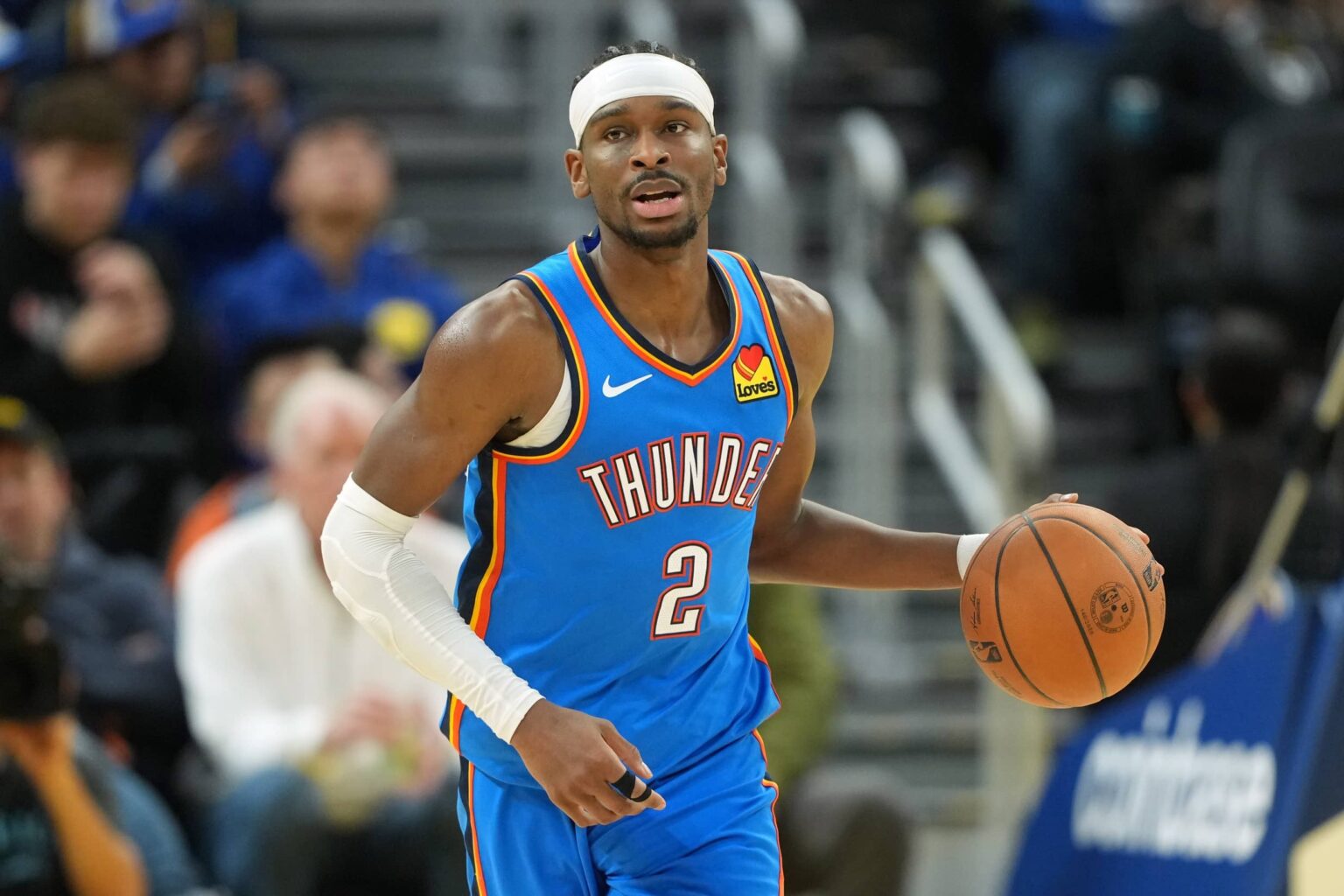
4. Shai Gilgeous-Alexander
Off-court net rating: +4.2
MVP Stats: 31.1 PPG, 4.3 RPG, 6.6 APG, 0.8 BPG, 1.4 SPG, 2.2 TOV, 38.6% 3PT, 55.3% FG, 87.9% FT
A 64-win team creates a strange MVP case. Shai Gilgeous-Alexander has been great, but the Thunder were also great in almost every lineup in the regular season. That is why his 2025-26 season is this high.
Gilgeous-Alexander won his second straight MVP after leading the Thunder to the best record in the league. He played 68 games, averaged 31.1 points, 6.6 assists, and shot 55.3% from the field. He also won Clutch Player of the Year, which fits the season. He’s been the best player on the best team, and he’s given the Thunder a late-game scorer when tight games slowed down.
The Thunder are also much more than one player. Chet Holmgren gives them rim protection. Jalen Williams is another scorer and defender. Cason Wallace, Alex Caruso, Aaron Wiggins, Isaiah Hartenstein, and Lu Dort add defense, depth, and lineup flexibility. They swept their first two playoff rounds and entered the West Finals without a loss.
The Thunder thrives when Gilgeous-Alexander goes to the bench. Their off-court net rating was +4.2, one of the best marks among MVP teams in this sample. That speaks to the roster quality around him.
That is not normal. Most MVP teams become average or bad when the MVP sits. The Thunder stayed strong because they have defense, shooting, ball pressure, and several players who can keep the game favorable.
Gilgeous-Alexander was still the clear MVP. But by this metric, the Thunder were strong enough without him to put his season at No. 4.
3. James Harden
Off-court net rating: +5.2
MVP Stats: 30.4 PPG, 5.4 RPG, 8.8 APG, 0.7 BPG, 1.8 SPG, 4.4 TOV, 36.7% 3PT, 44.9% FG, 85.8% FT
Few MVP teams were as strong as the 2017-18 Rockets. They went 65-17, had the best record in the league, and set a franchise record for wins. That is the first reason James Harden ranks this high. The team around him was not weak. It was elite.
Harden won MVP because he was the center of everything. He led the league in scoring, ranked near the top in assists, and controlled one of the most dangerous offenses in the NBA. He averaged 30.4 points and 8.8 assists, took 10.0 threes per game, and lived at the free-throw line. His isolation game was the base of the Rockets’ attack.
But the Rockets also had Chris Paul, Clint Capela, Eric Gordon, P.J. Tucker, Trevor Ariza, and Luc Mbah a Moute. Paul gave them another elite ball-handler. Capela finished at the rim and defended. Tucker, Ariza, and Mbah a Moute gave them strong wing defense. Gordon gave them scoring off the bench. This was a complete regular-season team.
The playoff run proved the level. The Rockets beat the Timberwolves in five, beat the Jazz in five, and pushed the Warriors to seven games in the West Finals. Paul’s hamstring injury changed that series, but the Rockets were still the best regular-season team in the league.
Harden’s Rockets were +10.5 in his minutes. They did not collapse when he rested, sitting at +5.2 without him, with a +5.3 on/off swing.
That is a very strong number. Harden was the MVP, but the Rockets had enough creation, defense, and spacing to win non-Harden minutes. That puts him at No. 3.
2. Shai Gilgeous-Alexander
Off-court net rating: +5.7
MVP Stats: 32.7 PPG, 5.0 RPG, 6.4 APG, 1.0 BPG, 1.7 SPG, 2.4 TOV, 37.5% 3PT, 51.9% FG, 89.8% FT
The 2024-25 Thunder were one of the best regular-season teams of this era. That is the main reason Shai Gilgeous-Alexander ranks this high. He had an MVP season, but the team around him was also very strong.
The Thunder went 68-14, finished first in the West, and had the best record in the NBA. They also had the league’s best net rating, the best defensive rating, and one of the deepest rotations in the league. Gilgeous-Alexander was the main scorer, but the Thunder did not need to play through only one player to win games.
His production was still elite. He led the league in scoring at 32.7 points per game, played 76 games, and shot 51.9% from the field. He lived in the paint, attacked the mid-range, got to the line, and rarely wasted possessions. His 2.4 turnovers per game were low for a player with that much usage.
The Thunder also had real support. Jalen Williams became an All-NBA-level wing. Chet Holmgren gave them rim protection and spacing. Lu Dort, Cason Wallace, Alex Caruso, Aaron Wiggins, Isaiah Joe, and Isaiah Hartenstein gave them defense, shooting, and lineup options. This was not a thin roster.
The Thunder were +16.8 with Gilgeous-Alexander on the court. The off-court number was still elite at +5.7, while his on/off differential was +11.1.
That is a huge off-court mark for an MVP season. Gilgeous-Alexander was clearly the best player, and the Thunder needed him to win the championship. But in the regular season, their defense and depth kept them elite even without him.
By this metric, his 2024-25 MVP season ranks as the second-least valuable since 1997.
1. Derrick Rose
Off-court net rating: +6.1
MVP Stats: 25.0 PPG, 4.1 RPG, 7.7 APG, 0.6 BPG, 1.0 SPG, 3.4 TOV, 33.2% 3PT, 44.5% FG, 85.8% FT
No MVP winner since 1997 had a stronger team in his bench minutes than Derrick Rose in 2010-11.
That sounds strange because Rose was the face of the Bulls. He was the youngest MVP in NBA history, the best offensive player on the team, and the guard who gave them late-game scoring. The Bulls went 62-20, finished first in the East, and had a better record than the Heat team with LeBron James, Dwyane Wade, and Chris Bosh.
Rose’s role was large. He averaged 25.0 points and 7.7 assists, played 37.4 minutes per game, and had to create most of the offense. The Bulls were not built around shooting or multiple high-level creators. They were built around defense, rebounding, and Rose breaking pressure off the dribble.
That is why his MVP case made sense. The Bulls had the league’s best record, Rose had the biggest offensive job on the team, and Carlos Boozer and Joakim Noah both missed time during the season. Rose carried the scoring and playmaking load through that.
Rose had the highest off-court number on the list. The Bulls were +8.7 with him on the floor and still +6.1 without him, leaving only a +2.6 on/off swing.
That is the highest off-court net rating on this list. The reason was defense. Tom Thibodeau built an elite regular-season machine. Luol Deng, Noah, Boozer, Taj Gibson, Omer Asik, Ronnie Brewer, Kyle Korver, and C.J. Watson gave the Bulls size, depth, and strong bench units. They finished first in defensive rating and controlled games even when Rose rested.
Rose was the correct offensive center of the team. But by this specific measure, the Bulls were still excellent without him. That makes his 2010-11 season the least valuable MVP season since 1997 by off-court net rating.